
Ideogram 4 LoRA Training Now Runs on Under 8GB GPUs
The tech world just got a serious wake-up call. A new tutorial from the channel Aitrepreneur shows exactly how to train LoRA models on Ideogram 4, one of the strongest open-source image generators available, and it runs on everyday GPUs with less than 8GB of VRAM. No enterprise clusters. No six-figure hardware bills. Just practical steps that turn advanced AI customization into
The tech world just got a serious wake-up call. A new tutorial from the channel Aitrepreneur shows exactly how to train LoRA models on Ideogram 4, one of the strongest open-source image generators available, and it runs on everyday GPUs with less than 8GB of VRAM. No enterprise clusters. No six-figure hardware bills. Just practical steps that turn advanced AI customization into something regular creators can actually do.
Why This Tutorial Matters Right Now
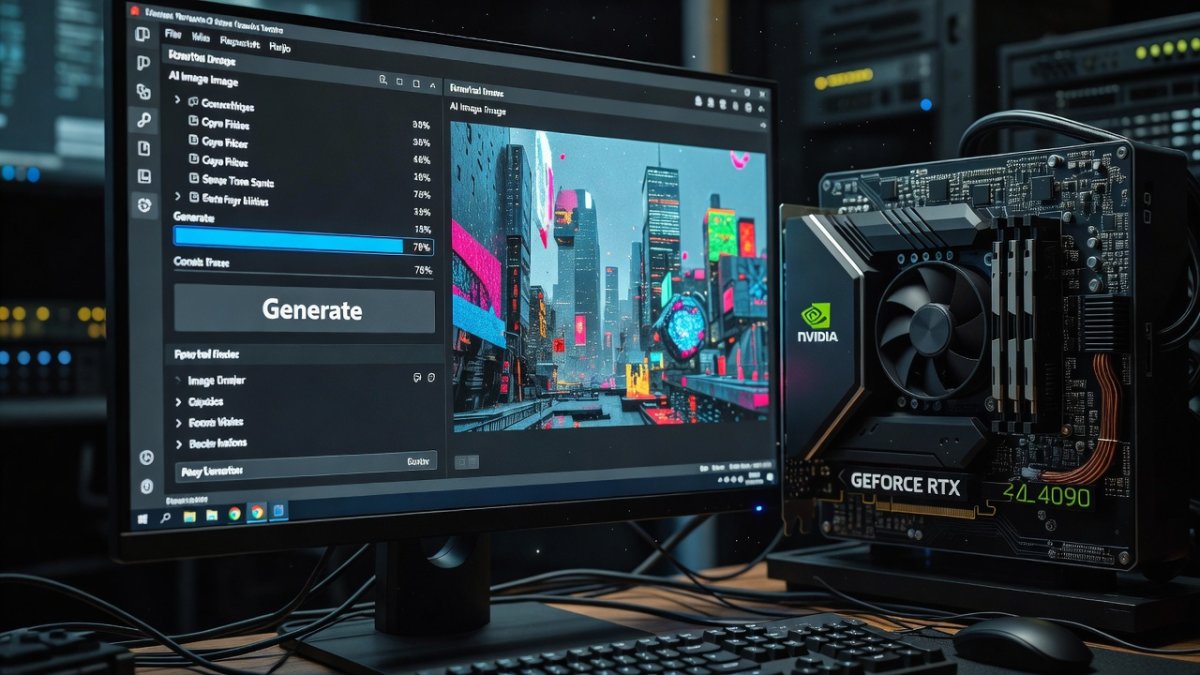
Ideogram 4 already punches above its weight in text rendering and prompt adherence. Pairing it with LoRA fine-tuning has always been the missing piece for hobbyists who want models that actually reflect their own style or niche subjects. Until now, that process demanded serious VRAM and cloud credits that most independent creators simply do not have. Aitrepreneur's walkthrough cuts through the usual gatekeeping by demonstrating viable training on consumer cards most people already own or can buy used for a few hundred dollars.
This is not vaporware or a proof-of-concept that only works in lab conditions. The video walks through every step with real outputs, making the claim verifiable for anyone willing to follow along. In an industry that loves to hype "democratization" while keeping the real tools behind paywalls, this release actually delivers.
Breaking Down the Technical Approach
LoRA training works by updating only a small subset of parameters instead of the entire model. That efficiency is what makes sub-8GB training possible. Aitrepreneur shows how to leverage optimized libraries and careful batch sizing to keep memory usage low without sacrificing meaningful adaptation quality. The tutorial covers dataset preparation, learning rate schedules, and checkpoint saving strategies that prevent the common crashes hobbyists hit when they try to wing it.
Viewers see side-by-side comparisons of base Ideogram 4 outputs versus the fine-tuned versions. The differences are not subtle. Custom subjects, consistent character designs, and improved prompt control all emerge after relatively short training runs. The fact that this happens on hardware most gamers already own is the real headline.
Accessibility for Independent Creators
Enterprise AI labs can throw money at the problem. Independent artists, indie game developers, and small content studios cannot. This tutorial levels that field by removing the hardware tax that has kept advanced customization out of reach. A creator with a mid-range laptop or a used RTX 3060 can now experiment with the same techniques previously reserved for well-funded teams.
The ripple effects are obvious. More diverse voices get to shape the models they actually use instead of relying on generic outputs from big-company services. Niche aesthetics, cultural references, and personal art styles become trainable rather than impossible. That shift matters more than any single benchmark number.
The NSFW Angle and What It Really Means
The video title leans hard into the NSFW use case, and there is no point pretending otherwise. Plenty of creators want fine-tuned models for adult content, and this workflow supports that. At the same time, the same pipeline works for any subject matter. The underlying technique does not care whether the goal is tasteful illustration or explicit material. What matters is that the barrier to entry just dropped dramatically for everyone.
Responsible creators will still need to handle dataset ethics and output moderation themselves. The tutorial does not hand out moral guidance, and it should not have to. Technology this accessible puts the onus on users to decide what they build with it. That is how open tools have always worked.
Hardware Reality Check
Claims of "runs on anything" usually fall apart under real testing. This one holds up because the optimizations are explicit. Users with 6GB or 8GB cards are shown viable settings that avoid out-of-memory errors. The tutorial also flags when certain steps benefit from a bit more headroom and offers workarounds such as gradient checkpointing and reduced resolution during initial training passes.
That transparency is rare. Most tutorials either assume high-end cards or gloss over the memory math entirely. Aitrepreneur's approach respects the actual constraints hobbyists face and still produces usable results.
Where This Leaves the Broader AI Landscape
Big labs will continue releasing larger models that require serious infrastructure. That is fine. The real story is the parallel track where smaller, highly customized models become practical for individuals. Ideogram 4 plus accessible LoRA training accelerates that track. Expect more creators to release their own fine-tunes, more niche communities to maintain specialized datasets, and more experimentation that never would have happened under the old hardware requirements.
The industry narrative that "you need a data center to do serious AI work" just took another hit. Tools like this keep proving that narrative was always more about control than capability.
Practical Next Steps for Viewers
Anyone interested should watch the full Aitrepreneur video and replicate the workflow on their own hardware before making assumptions. Start with a small dataset, follow the exact settings shown, and scale up only after confirming stability. The tutorial includes troubleshooting for the most common failure points, which saves hours of trial and error.
Creators who succeed with this method should document their results and share settings. That kind of community knowledge sharing is what turns one tutorial into a lasting capability rather than a one-off experiment.
The bottom line is straightforward. Advanced AI image customization just became realistic for people without enterprise budgets. Aitrepreneur's tutorial proves it with working examples instead of promises. That is the kind of development worth paying attention to.
By Jessica Ali, Staff WriterThis article was produced with AI-assisted research and editorial support. Reporting is based on sources cited in the article.
What's Your Reaction?
 Like
0
Like
0
 Dislike
0
Dislike
0
 Love
0
Love
0
 Funny
0
Funny
0
 Wow
0
Wow
0
 Sad
0
Sad
0
 Angry
0
Angry
0

Editor-in-Chief at Global1.News. Atlanta-based journalist who cuts through the BS and tells it like it is. Lead anchor, host, and the voice you hear when the spin stops and the truth starts.















Comments (0)