
House Passes Anti-Political Dynasty Bill, Leaving Many Filipinos Seeking Stronger Change
House Passes Anti-Political Dynasty Bill, Leaving Many Filipinos Seeking Stronger Change The Bill Clears the House The House of Representatives approved House Bill No. 8389, the Anti-Political Dynasty Bill, on its third and final reading on June 3, 2026. The measure received 271 affirmative votes, 16 negative votes, and seven abstentions. House Speaker Faustino "Bojie" Dy III a
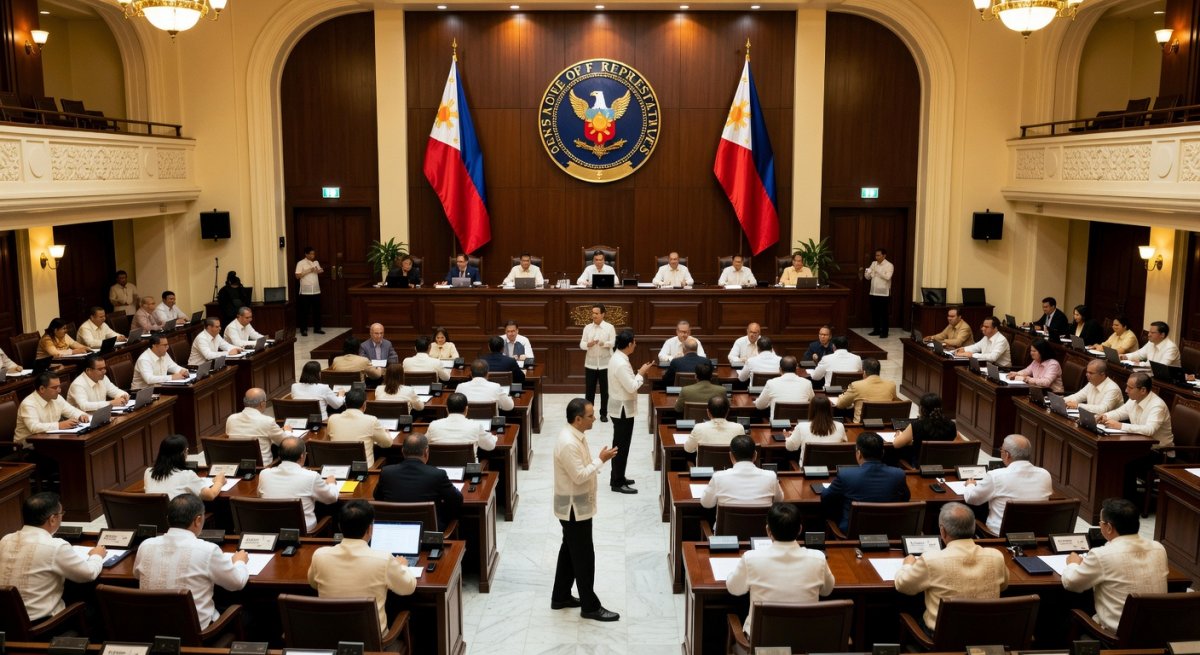
The Bill Clears the House
The House of Representatives approved House Bill No. 8389, the Anti-Political Dynasty Bill, on its third and final reading on June 3, 2026. The measure received 271 affirmative votes, 16 negative votes, and seven abstentions. House Speaker Faustino "Bojie" Dy III and House Majority Leader Ferdinand Alexander "Sandro" Marcos authored the bill, which President Ferdinand Marcos Jr. identified as a priority measure.
Speaker Dy stated that the measure aims to keep public office open to all Filipinos and ensure leadership rests on public trust rather than clan power. One hundred seventy-three lawmakers signed on as co-authors. The bill now moves to the Senate for consideration, where further debate is expected.
Key Provisions and Their Reach
The legislation prohibits relatives of currently elected officials from running for elective positions within the same jurisdiction. Coverage extends only to relatives up to the second degree of consanguinity or affinity, covering spouses, children, parents, and siblings. The rule applies to positions at the same level of government where the relative already serves.
Supporters argue the restrictions mark a first step toward reducing family dominance in local politics. They note that the bill responds to long-standing calls from civil society groups and ordinary citizens who view political dynasties as barriers to broader participation. In many provinces, families have held multiple posts across decades, shaping access to jobs, contracts, and services.
Opposition Voices Highlight Shortcomings
Opposition lawmakers described the bill as "watered-down" and "pro-dynasty." ML Party-list Rep. Leila de Lima pointed to several gaps, including the lack of a succession ban and no rules against family members holding simultaneous posts across an entire province. She also noted the absence of restrictions on families occupying positions in multiple districts.
Rep. de Lima added that the measure leaves out party-list representatives and fails to address wider family networks or alternative routes into public office. She called for legislation that fulfills the mandate of the 1987 Constitution rather than falling short of it. Akbayan Reps. Chel Diokno and Perci Cendaña voted against the bill, warning that families could still concentrate power across different government levels.
Kabataan Party-list Rep. Renee Co also opposed the measure, stating it does not deserve the label "anti-political dynasty." She described dynasties as symptoms of a larger system where government functions like a business, limiting genuine competition and accountability for everyday citizens.
Everyday Filipinos and the Cost of Concentrated Power
Many ordinary Filipinos have long pushed for an end to political dynasties because these structures often limit who can run for office and win. In towns and cities across the country, residents see the same family names on ballots year after year, controlling budgets that affect roads, schools, and health centers. This concentration can reduce the space for new leaders who might bring different priorities.
Voters in provinces where one or two clans dominate frequently report feeling that their choices are narrowed before election day arrives. Young professionals and community organizers who want to serve sometimes decide against running because family networks control campaign resources and local influence. The result is slower turnover in leadership and fewer fresh ideas reaching local government units.
Public support for stronger anti-dynasty rules has remained consistent across surveys and community discussions. Citizens link the issue to daily concerns such as fair access to government jobs, transparent use of public funds, and responsive services. When power stays within a small circle, residents say it becomes harder to hold officials accountable for unfulfilled promises on poverty reduction or infrastructure.
Connection to Broader Democratic Reform
The 1987 Constitution explicitly called for a law banning political dynasties, yet Congress has not passed a robust version in nearly four decades. The current bill represents movement on that constitutional directive, but critics argue it stops short of the comprehensive change the framers envisioned. This gap fuels ongoing debates about whether political institutions can deliver reforms that match public expectations.
Groups advocating for systemic change see the anti-dynasty effort as part of a larger push that includes stronger party-list representation, campaign finance rules, and measures against bureaucrat capitalism. They note that dynasties often intersect with these other issues, making isolated reforms less effective at opening the system to wider participation.
Ordinary citizens who follow these debates express hope that future versions of the bill will close existing gaps. They point to the need for rules that prevent families from simply shifting members between executive and legislative posts or moving across neighboring districts while retaining influence over the same communities.
Looking Ahead for Legislation and Accountability
The bill now faces Senate review, where amendments could address some of the limitations raised by opposition members. Lawmakers in both chambers will need to weigh public demand for meaningful restrictions against concerns that overly broad rules might exclude capable candidates from political families. The outcome will shape how soon Filipinos see concrete changes in who holds local power.
Community leaders and advocacy networks continue to monitor the process, urging Congress to produce a law that reduces clan dominance rather than codifying limited versions of it. They emphasize that genuine reform requires closing back doors that allow families to maintain control across multiple jurisdictions and government levels.
For many Filipinos, the passage of any anti-dynasty measure brings cautious optimism, yet they remain clear that stronger provisions will be needed before the constitutional promise is fully met. The coming months of Senate deliberation will test whether lawmakers can deliver legislation that expands opportunities for new leaders and restores greater trust in the electoral process.
By Bella Reyes, Staff WriterThis article was produced with AI-assisted research and editorial support. Reporting is based on sources cited in the article.
What's Your Reaction?
 Like
0
Like
0
 Dislike
0
Dislike
0
 Love
0
Love
0
 Funny
0
Funny
0
 Wow
0
Wow
0
 Sad
0
Sad
0
 Angry
0
Angry
0

Philippines/Southeast Asia Correspondent at Global1.News. Manila-based journalist covering Philippine politics, environment, maritime security, and social issues. Passionate about marine conservation and the communities protecting the Philippines' natural heritage.















Comments (0)