
Bangladesh at a Crossroads: Economic Revival and Great Power Balancing
The Political Transition and Its Implications Bangladesh is entering a decisive phase in its political and economic evolution after the upheavals that began with the fall of Sheikh Hasina's government in August 2024. This was followed by a period of interim government rule under Muhammad Yunus and then the formation of a new Bangladesh Nationalist Party-led government under Tar
The Political Transition and Its Implications
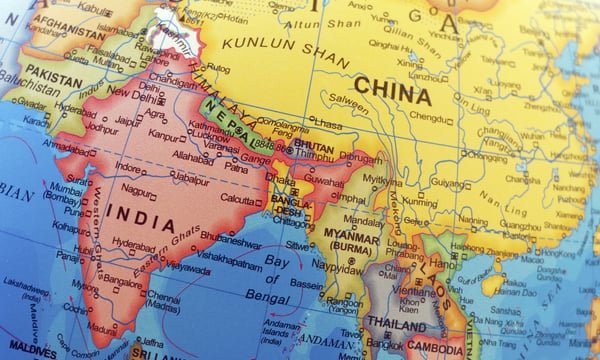
Bangladesh is entering a decisive phase in its political and economic evolution after the upheavals that began with the fall of Sheikh Hasina's government in August 2024. This was followed by a period of interim government rule under Muhammad Yunus and then the formation of a new Bangladesh Nationalist Party-led government under Tariq Rahman. Dhaka now confronts two urgent tasks that shape its trajectory within South Asian diplomacy.
Prioritizing Economic Recovery for Domestic Stability
The most important priority for Bangladesh must be the economy. Foreign policy realignment may attract headlines, but for ordinary Bangladeshis the central issues remain jobs, growth, inflation, exports, investment, and the fair distribution of public goods. The anger that brought down the previous order was not only about authoritarianism but also about a perception that the benefits of growth were distributed selectively, with young people especially from Gen Z feeling excluded from opportunity.
Growth Trends and Investment Requirements
Bangladesh's recent growth figures show both vulnerability and resilience. In 2022 the economy grew at more than 7 percent partly as a post-COVID recovery effect. Growth then fell to around 5.8 percent in 2023, dropped further in 2024, and declined to roughly 3.5 percent during the period of political uncertainty under the interim government. The first quarter of 2026 however suggested a modest recovery with growth rising to around 4.5 percent. Foreign direct investment inflows have hovered around 1.2 billion to 1.7 billion dollars in recent years and remained resilient even during political turmoil with higher figures recorded in 2025 under the Yunus interim period.
Shifts in Relations with Nuclear Powers
The external challenge involves managing relations with four nuclear powers India, China, Pakistan, and the United States without becoming subordinate to any one of them. Under Sheikh Hasina Bangladesh enjoyed exceptionally close relations with India including resolved border issues and deepened security cooperation though the Teesta water-sharing issue and migration disputes remained unresolved. The new government appears to be moving away from that India-centric posture partly reflecting suspicion in Dhaka that New Delhi may have preferred the return of Hasina and a desire to diversify options and signal independence.
Balancing Symbolism with Regional Realities
This shift has produced visible consequences including deepening ties with China, exploring symbolic and administrative cooperation with Pakistan, and expanding energy and trade relations with the United States. One example is the reported decision to send Bangladeshi civil servants for training in Lahore rather than in India's Mussoorie. Bangladesh has outperformed Pakistan on many developmental indicators including growth, gender empowerment, women's participation in the economy, and per capita income. Improved Bangladesh-Pakistan ties may be useful for regional normalization but they must be built on economic substance not merely anti-India signaling especially since mutual trade remains below 1 billion dollars.
Implications for Broader Asian Geopolitics
Given Bangladesh's geographical as well as cultural ties to India its future remains inextricably linked to New Delhi even as Dhaka seeks greater autonomy. The new leadership must avoid confusing symbolism with national interest if it hopes to sustain export competitiveness and attract diversified investment in sectors such as energy, logistics, digital services, pharmaceuticals, agro-processing, and higher-value manufacturing. These choices will influence how Bangladesh positions itself amid the strategic competitions unfolding across Asia.
By Prof. David Park, Staff WriterThis article was produced with AI-assisted research and editorial support. Reporting is based on sources cited in the article.
What's Your Reaction?
 Like
0
Like
0
 Dislike
0
Dislike
0
 Love
0
Love
0
 Funny
0
Funny
0
 Wow
0
Wow
0
 Sad
0
Sad
0
 Angry
0
Angry
0

East Asia/Technology Correspondent at Global1.News. Seoul-based voice covering Korean politics, technology, business, and culture. Analyzes how technology and geopolitics intersect across East Asia.













Comments (0)