
Gazprom to Form Military Reserve Units to Guard Energy Infrastructure From Drone Attacks
The Agreement Details Between Gazprom and the Defense Ministry Russian gas giant Gazprom has reached an agreement with the Defense Ministry to create mobile firing groups tasked with protecting the company's infrastructure, including from Ukrainian drone attacks, independent outlet Ekho reported, citing internal company documents. This arrangement involves the formation of spec
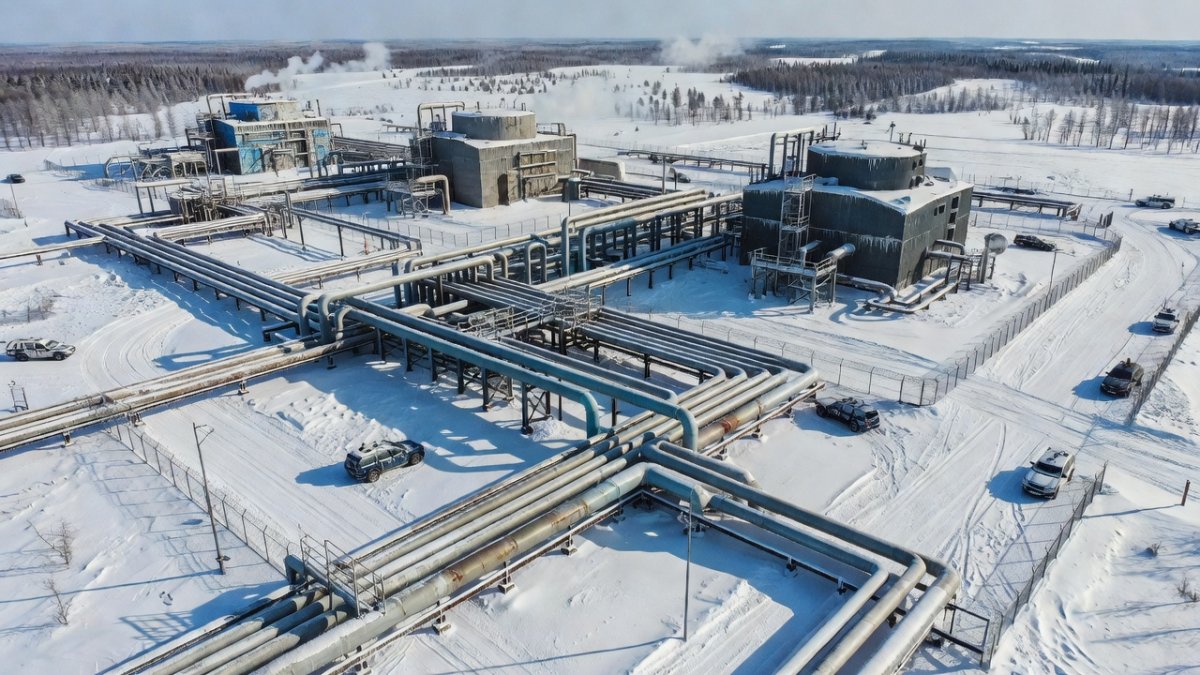
The Agreement Details Between Gazprom and the Defense Ministry
Russian gas giant Gazprom has reached an agreement with the Defense Ministry to create mobile firing groups tasked with protecting the company's infrastructure, including from Ukrainian drone attacks, independent outlet Ekho reported, citing internal company documents. This arrangement involves the formation of specialized units drawn from volunteers who will operate under contracts with the mobilization reserve. The primary focus remains on safeguarding Gazprom facilities across key regions rather than deploying these groups as active-duty forces in broader operations.
The move highlights Moscow's growing efforts to harden critical energy infrastructure against increasingly frequent long-range drone strikes, which have disrupted oil and gas facilities across Russia since the start of the full-scale war in Ukraine. Rather than relying solely on regular military forces, authorities have increasingly turned to regional volunteer units and reserve formations to bolster air defense around strategic sites. Gazprom's role as a major exporter through pipelines such as TurkStream and Blue Stream adds layers of complexity to these protection measures within the Kremlin's energy politics framework.
According to the documents, the agreement specifies that these mobile firing groups will patrol and defend gas infrastructure while allowing participants to maintain ties to their civilian employment. This structure reflects the Kremlin's approach to integrating corporate resources with military needs amid ongoing conflict dynamics. Independent analysts note that such pacts could signal deeper integration between state energy firms and defense structures, though Ukrainian perspectives emphasize the defensive nature of their strikes on Russian targets.
Recruitment and Training Processes for the Reserve Units
Volunteers would undergo medical examinations, a rigorous selection process and two months of training before signing three-year contracts to join Russia's mobilization reserve. The arrangement would allow participants to continue their civilian jobs while periodically attending military training. During training exercises, reservists could also be assigned to guard other critical infrastructure, but only within the region where their contract was signed.
The selection emphasizes physical fitness and commitment, with medical checks serving as an initial filter to ensure suitability for the demands of mobile firing group duties. Training spans two months and focuses on skills relevant to infrastructure protection, including patrol tactics and coordination with existing security measures. This process occurs under the oversight of the Defense Ministry while Gazprom provides logistical support for the sessions.
Participants retain their civilian status even after completing training, distinguishing these roles from full mobilization. The contracts tie individuals to specific regions, limiting their deployment scope and preserving some normalcy in daily life. Kremlin power structures benefit from this model by expanding defensive capacity without immediate full-time military commitments, though analysts suggest it may reflect underlying strains in regular forces.
Compensation Structure Including Salaries, Benefits and Age Limits
Participants would retain their average salary and receive a monthly payment of 200,000 rubles (about $2,560) from Gazprom while attending training, in addition to payments from the Defense Ministry. The company also plans to provide three meals a day, uniforms, medical treatment, life insurance and free transportation to and from training sites. Although members would serve under contracts with the mobilization reserve, they would not be considered active-duty military personnel.
The initial contracts would last three years and could later be extended by another three years, five years or for shorter periods, depending on the participant's age. The upper age limit is 52 for enlisted personnel and warrant officers, 57 for junior officers and 62 for senior officers. These terms aim to attract experienced individuals while capping service based on rank and physical considerations.
Benefits such as life insurance and medical treatment underscore the risks involved in defending against drone threats. Gazprom's contributions supplement standard Defense Ministry payments, creating a hybrid compensation model tied to corporate interests. This structure could indicate efforts to maintain workforce stability in energy sectors amid war-related economic pressures, with independent observers pointing to potential impacts on household finances in affected regions.
The Drone Threat to Russian Energy Infrastructure
Gazprom has repeatedly reported Ukrainian drone strikes on its facilities since the start of 2026, including compressor stations that support gas exports through the TurkStream and Blue Stream pipelines. In May, drones struck the company's Astrakhan Gas Processing Plant, one of Russia's largest gas processing facilities. Drones also targeted Gazprom's gas processing and helium plants in the Orenburg region in late June.
These incidents illustrate the vulnerability of dispersed energy assets to long-range attacks, disrupting operations at critical nodes. The strikes on compressor stations directly affect export routes, highlighting the strategic value of the targeted sites. Ukrainian forces have framed such actions as responses to Russian aggression, while Russian authorities describe them as threats to civilian infrastructure.
The pattern of attacks since the full-scale invasion has prompted shifts in defensive strategies across the energy sector. Facilities in Astrakhan and Orenburg represent key processing hubs, and their exposure underscores broader challenges in securing remote installations. Analysts suggest these events signal evolving tactics in the conflict, with implications for Russia's ability to sustain energy flows.
Parallel Initiatives in Other Russian Regions Such as Leningrad
The reported initiative follows similar measures adopted elsewhere in Russia. Earlier this year, authorities in the Leningrad region announced recruitment for volunteer mobile firing groups to defend against drone attacks. Volunteers signing contracts through the regional military enlistment office were promised a one-time payment of 250,000 rubles (about $3,200), a monthly salary starting at 200,000 rubles (about $2,560) and a bonus of 100,000 rubles (about $1,280) for each drone they shoot down.
Leningrad region's program mirrors Gazprom's approach by emphasizing volunteer reserves for localized defense. The bonuses for successful engagements add an incentive layer not detailed in the Gazprom documents. Regional military enlistment offices handle recruitment, aligning with national efforts to distribute protective responsibilities.
Such parallel programs reflect coordinated responses across different administrative levels under Kremlin guidance. They target drone threats in varied geographic contexts while offering comparable financial structures. Independent analysts observe that these initiatives may ease pressure on central military resources, though they also reveal the widespread nature of infrastructure vulnerabilities.
Implications for Russia's War Economy and Military Strain
This could indicate increasing reliance on corporate-backed reserve formations to supplement regular forces amid prolonged conflict. The integration of Gazprom resources with Defense Ministry contracts suggests a blending of economic and military priorities that may strain overall mobilization capacity. Analysts suggest this signals efforts to mitigate shortages in active-duty personnel by drawing on civilian volunteers.
Russia's war economy faces added layers as energy firms assume defensive roles traditionally held by state military units. The three-year contract model allows continued civilian employment, potentially preserving some economic output while building reserves. Ukrainian perspectives highlight how such measures underscore the costs of the invasion on Russian domestic structures.
Broader military strain appears evident in the shift toward regional and corporate initiatives rather than centralized deployments. Kremlin power structures navigate these dynamics by leveraging entities like Gazprom for infrastructure security. This approach might sustain short-term stability but could complicate long-term resource allocation in the energy and defense sectors.
What This Means for Energy Security and Exports
The focus on protecting compressor stations along TurkStream and Blue Stream points to concerns over export reliability. Strikes on Astrakhan and Orenburg facilities have already demonstrated potential disruptions to processing and helium production. Analysts suggest these developments could affect Russia's positioning in global energy markets.
Energy security gains new dimensions when private companies like Gazprom establish dedicated firing groups. The regional limitations on reservist assignments help maintain localized control but may limit flexibility against widespread threats. Independent observers note that sustained drone activity challenges the Kremlin's ability to guarantee uninterrupted flows.
Exports through key pipelines remain central to Russian economic strategies, making their defense a priority within war dynamics. The agreement details reveal a proactive stance on hardening sites, yet the pattern of attacks since 2026 indicates ongoing risks. This situation could influence pricing and supply negotiations with international partners.
The Broader Picture of How Ordinary Russians Are Affected
Ordinary Russians encounter these developments through recruitment drives that offer financial incentives alongside service obligations. The compensation packages, including Gazprom's monthly payments and benefits, may appeal to those balancing civilian careers with reserve duties. However, the upper age limits and contract extensions introduce considerations for long-term personal planning.
Communities near energy facilities in regions like Astrakhan and Orenburg face indirect effects from heightened security measures and potential disruptions. The Leningrad region's parallel bonuses illustrate how such programs extend across the country, touching diverse populations. Analysts suggest these initiatives reflect wider societal adjustments to the demands of the conflict.
Daily life incorporates elements of the war economy as volunteers navigate medical exams, training periods and periodic duties. Kremlin policies on energy politics intersect with individual choices, potentially shaping employment patterns in affected areas. Ukrainian viewpoints frame the overall context as consequences stemming from the full-scale invasion, while Russian citizens weigh the offered benefits against associated risks.
By Irina Volkov, Staff WriterThis article was produced with AI-assisted research and editorial support. Reporting is based on sources cited in the article.
What's Your Reaction?
 Like
0
Like
0
 Dislike
0
Dislike
0
 Love
0
Love
0
 Funny
0
Funny
0
 Wow
0
Wow
0
 Sad
0
Sad
0
 Angry
0
Angry
0
Russia/Eastern Europe Correspondent at Global1.News. Covering Russian politics, energy, security, and the shifting dynamics of the post-Soviet space. Provides clear-eyed analysis on one of the world's most opaque regions.











Comments (0)