
Nathu La Border Trade Resumes August 2026: Analysis
India and China are set to reopen the Nathu La Pass for border trade on August 1, 2026, ending a six-year suspension that began with the Galwan clash and Covid-19 disruptions. This revival through the historic Himalayan route promises renewed economic lifelines for Sikkim traders while signaling cautious diplomatic progress between the two nations.
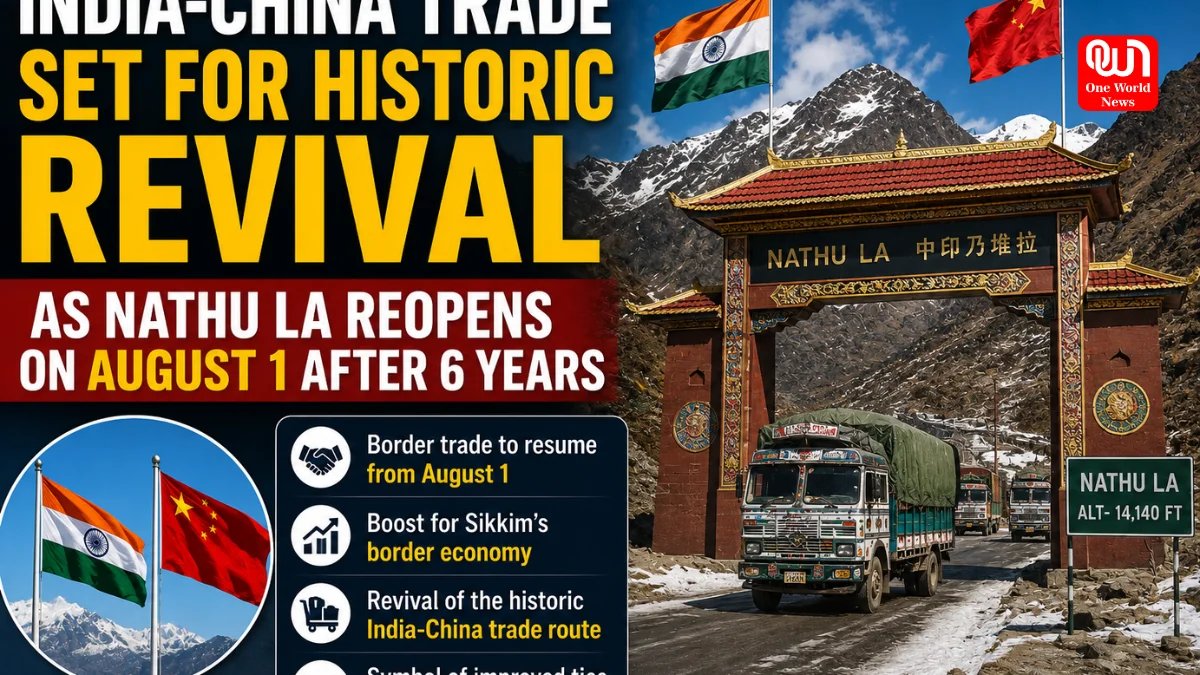
India and China are set to reopen the Nathu La Pass for border trade on August 1, 2026, ending a six-year suspension that began with the Galwan clash and Covid-19 disruptions. This revival through the historic Himalayan route promises renewed economic lifelines for Sikkim traders while signaling cautious diplomatic progress between the two nations. The move follows the 24th Special Representatives dialogue and infrastructure upgrades that position the pass as a key connector once more.
India-China Nathu La Trade Resumes August 2026
New Delhi, India – July 27, 2026 — After six years of closure, India and China will resume border trade at Nathu La Pass starting August 1, 2026, restoring a vital economic link for Sikkim communities and marking a measured step toward stabilized Himalayan relations.
Historical Significance of the Nathu La Pass in Bilateral Trade
The Nathu La Pass, situated in East Sikkim at an altitude of 4,310 metres, served as a vital artery on the ancient Silk Route for centuries before its closure following the 1962 India-China war. Nathu La's role as a conduit on the ancient Silk Route dates to the 7th century, linking the Tibetan plateau with the Gangetic plains through the exchange of silk, salt, wool, and spices. British records from the 1890s document annual caravans carrying over 1,200 mules laden with goods, underscoring its commercial centrality until the 1950s. The 1962 Sino-Indian war abruptly severed this artery; the pass remained militarised for four decades, with trade volumes dropping to zero and local economies in Sikkim's border villages contracting sharply as yak herders and traders lost cross-border markets. Formal revival occurred on July 6, 2006, allowing limited border commerce that benefited local economies until the 2020 suspension triggered by the Covid-19 pandemic and the Galwan Valley clash. Initial expectations projected annual trade reaching ₹200 crore within five years, yet actual figures from the Ministry of Commerce show cumulative trade between 2006 and 2019 averaged only ₹18–25 crore annually. Primary commodities included Indian agricultural produce (ginger, oranges, pulses) and Chinese consumer items (blankets, crockery, yak wool). Volumes peaked at ₹38 crore in 2018 before declining amid rising tensions after the 2017 Doklam standoff, when Indian traders reported a 40% drop in permitted trading days. This resumption on August 1, 2026, restores a direct link between Indian traders and Tibetan markets, underscoring the pass's enduring role in regional connectivity.
The 2020 Suspension and Path to 2025 Dialogue
The June 2020 Galwan clash froze bilateral diplomacy for nearly five years, with both sides maintaining forward deployments exceeding 50,000 troops along the Line of Actual Control. After the Galwan clash, the number of trading days was halved and the list of permitted items was restricted, reducing trade to ₹9 crore in the truncated 2019–20 season. The August 2025 Special Representatives meeting between NSA Ajit Doval and Foreign Minister Wang Yi produced a limited disengagement protocol covering the Depsang and Demchok friction points, creating the political space for Nathu La's reopening. Economic pressures appear to have driven the compromise. China's 2025 GDP growth slowed to 4.1% amid property-sector stress and export headwinds, while India faced elevated defence outlays exceeding 2.4% of GDP. Both capitals therefore sought to stabilise at least one sector of the border to reduce fiscal strain.
Key Agreements from the 24th Special Representatives Dialogue
The decision stems directly from the 24th round of the India-China Special Representatives' dialogue held in August 2025, co-chaired by National Security Advisor Ajit Doval and Chinese Foreign Minister Wang Yi. Both nations committed to reopening trade through three Himalayan passes: Nathu La in Sikkim, Shipki La in Himachal Pradesh, and Lipulekh in Uttarakhand. Sikkim Chief Minister Prem Singh Tamang had projected a June 1, 2026, start during assembly proceedings, yet the final August 1 date reflects coordinated logistical preparations. Approximately 600 registered Indian traders now stand positioned to resume exchanges of agricultural products, textiles, and household goods. In comparison, Shipki La in Himachal Pradesh and Lipulekh in Uttarakhand handle far smaller annual volumes—₹4–6 crore each—making Nathu La the only route with meaningful commercial scale. The earlier 2026 resumption of the Kailash Mansarovar Yatra via Nathu La served as a low-risk confidence-building measure, allowing 750 Indian pilgrims to cross in May.
Economic Boost for Sikkim's Border Traders and Local Markets
Resumption will inject immediate revenue into East Sikkim communities long reliant on cross-border flows. Traders based in Gangtok and nearby Rongli can now access Tibetan buyers, potentially increasing annual turnover that had stagnated since 2020. Sikkim's 600 registered traders, concentrated in Gangtok and the border town of Rongli, have operated under severely constrained conditions since 2020. Pre-pandemic data from the Sikkim Chamber of Commerce indicate average annual earnings of ₹3–4 lakh per trader from Nathu La transactions; the closure eliminated this income stream for most households. Primary goods historically included Indian ginger, oranges, and textiles exported northward, with yak wool, blankets, and electronic components imported from Tibet. The move aligns with India's broader economic policies under the Ministry of Commerce, where border trade supports rural livelihoods and reduces dependence on distant supply chains. For Sikkim's 600 registered participants, this translates to restored income streams that fund education and healthcare access in remote Himalayan villages.
Strategic Infrastructure Upgrades and Connectivity Enhancements
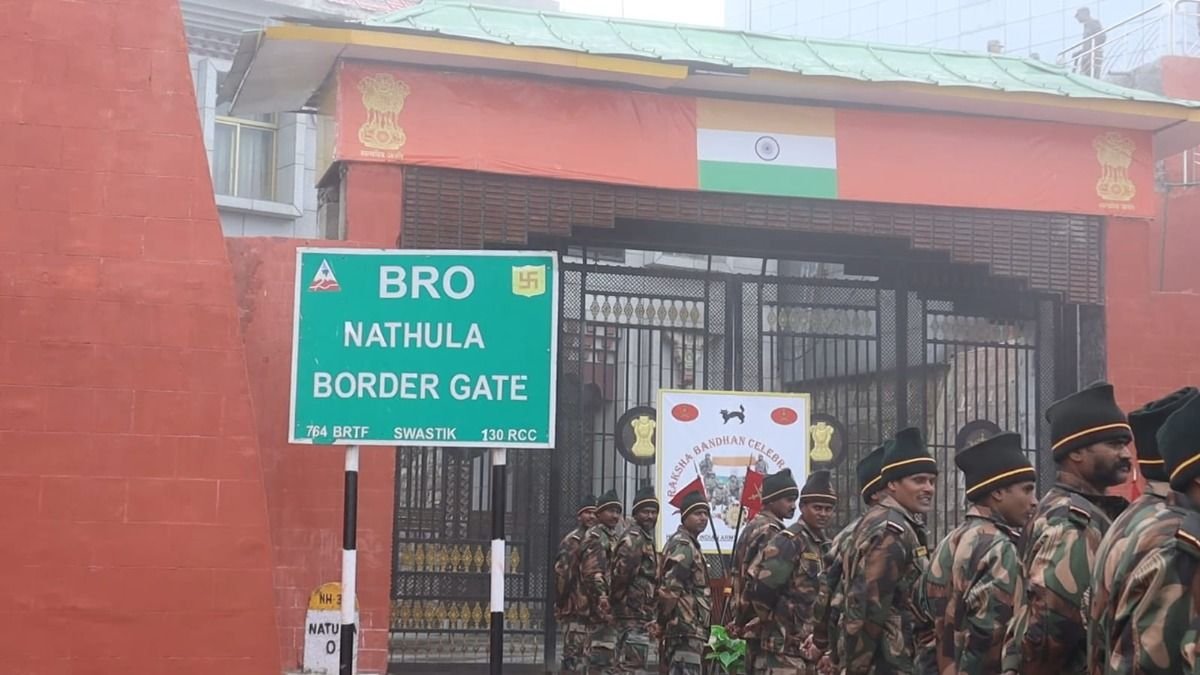
A new highway linking Rongli and Menla is under construction to facilitate smoother access to Nathu La and the Indo-Tibet border region. The Rongli-Menla highway upgrade, completed in 2024 at a cost of ₹1,850 crore, now provides all-weather connectivity to the pass, cutting transit time from 6 hours to under 3. This infrastructure project strengthens both commercial logistics and strategic mobility for Indian security forces. The revival also follows the earlier restoration of the Kailash Mansarovar Yatra through Nathu La, ending its five-year suspension and demonstrating phased normalization of Himalayan routes. These developments reflect New Delhi's integrated approach to border management, combining economic incentives with improved physical connectivity.
Geopolitical Implications for India-China Relations and Regional Policy
The August 1, 2026, reopening serves as a barometer of thawing bilateral ties after years of tension. The Nathu La resumption reflects tactical recalibration rather than a fundamental thaw. India continues to insist on verifiable disengagement and buffer zones at remaining friction points, while China seeks to normalise economic ties to ease domestic pressures. For Indian policymakers in New Delhi, successful trade resumption through Nathu La, Shipki La, and Lipulekh could ease pressures on border communities in Sikkim, Uttarakhand, and Himachal Pradesh while signaling diplomatic progress. Traders in these areas gain predictable market access, yet the arrangement remains sensitive to future security developments. This step supports India's Act East policy extensions into the northeast, where economic engagement with neighbors bolsters internal stability and counters external influence in the Himalayas. Both positions are consistent with the pattern observed after Doklam (2017) and Galwan (2020), where limited trade or pilgrimage steps followed military de-escalation without resolving underlying territorial claims. New Delhi's approach emphasises 'coexistence with competition': maintaining robust economic engagement in non-sensitive sectors while investing in border infrastructure and diversified supply chains. Beijing, facing a property crisis and export slowdown, appears willing to accept this framework provided it secures stable borders and incremental market access.
Long-Term Prospects for Border Economies and Healthcare Linkages
Over the next decade, sustained Nathu La operations could generate measurable growth in Sikkim's GDP contribution from border trade, with ripple effects on local education and healthcare infrastructure funded by increased trader incomes. State officials project that restored trade could add 1.2–1.5% to Sikkim's GSDP within two years. Tourism linkages are also expected to expand, with the route's reopening coinciding with plans to extend the Kailash Mansarovar pilgrimage into a broader Buddhist circuit, potentially attracting 5,000–7,000 additional visitors annually. The 600 registered participants represent a core economic base whose revival may attract ancillary investments in cold storage and transport facilities near Menla. Indian health frameworks stand to benefit indirectly as prosperous border districts allocate more resources to primary care centers in East Sikkim. Continued dialogue between Ajit Doval and Chinese counterparts will determine whether this August 1 milestone expands into broader economic corridors or remains limited to seasonal exchanges.
— By Dr. Raj Patel, Staff Writer
This article was produced with AI-assisted research and editorial support. Reporting is based on sources cited in the article.
What's Your Reaction?
 Like
0
Like
0
 Dislike
0
Dislike
0
 Love
0
Love
0
 Funny
0
Funny
0
 Wow
0
Wow
0
 Sad
0
Sad
0
 Angry
0
Angry
0

India/South Asia Correspondent at Global1.News. Analytical voice with a background in science and health journalism. Based in New Delhi, covering Indian politics, education, healthcare, technology, and policy. Breaks down complex data into clear, actionable reporting.















Comments (0)