
Millions Mourn Khamenei as Iran Stages 'Funeral of the Century' Through Tehran
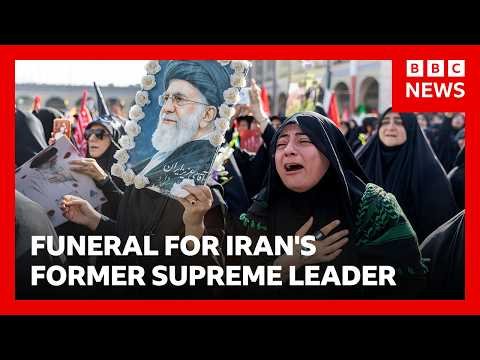
In a recent BBC News report, the funeral of Iran's former Supreme Leader Ayatollah Ali Khamenei drew millions of mourners to the streets of Tehran in a carefully choreographed display of national unity and political resilience. The BBC's chief international correspondent Lyse Doucet described the scene as "the spectacle Iran wants the world to see," as the Islamic Republic mark
In a recent BBC News report, the funeral of Iran's former Supreme Leader Ayatollah Ali Khamenei drew millions of mourners to the streets of Tehran in a carefully choreographed display of national unity and political resilience. The BBC's chief international correspondent Lyse Doucet described the scene as "the spectacle Iran wants the world to see," as the Islamic Republic marked the beginning of its most significant state funeral since the death of Ayatollah Ruhollah Khomeini in 1989.
Millions Mourn Khamenei as Iran Stages 'Funeral of the Century' Through Tehran
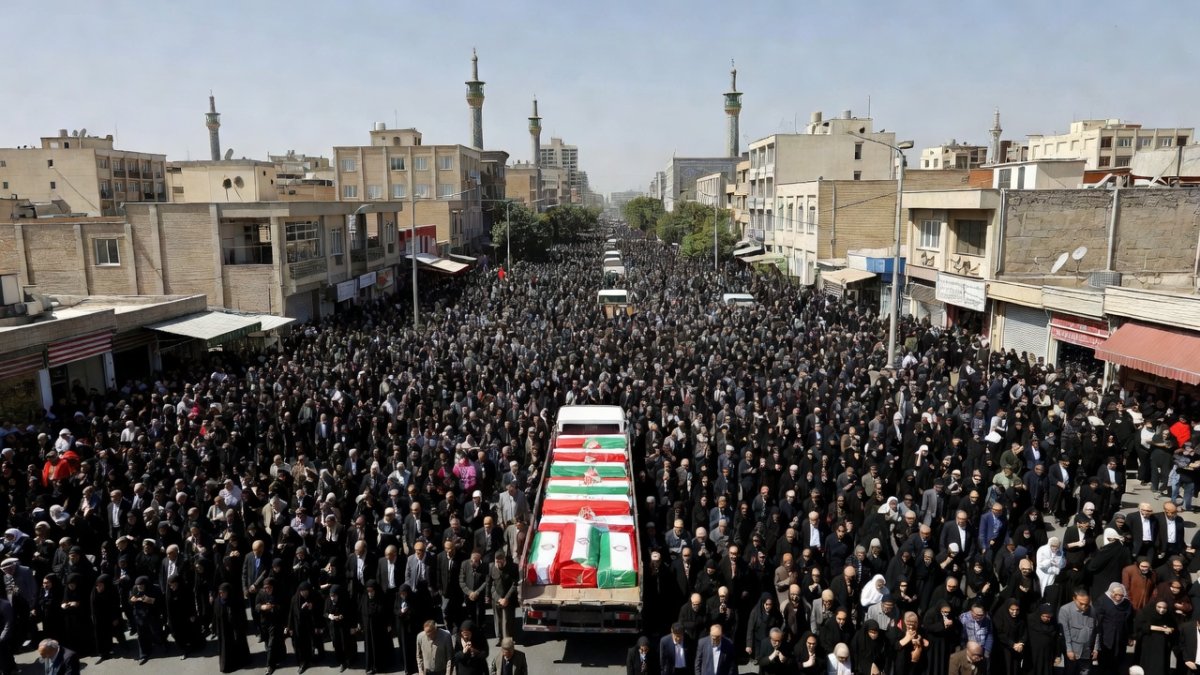
Tehran, Iran – 6 July 2026 — The funeral procession for Iran's late Supreme Leader wound through the capital's streets on Monday, the third day of a state funeral that Iranian authorities have called "the funeral of the century." Khamenei, who ruled Iran for more than 35 years, was killed on 28 February in US-Israeli air strikes that marked the opening of a five-week war between Iran and a US-Israeli coalition.
A Display of Strength After War
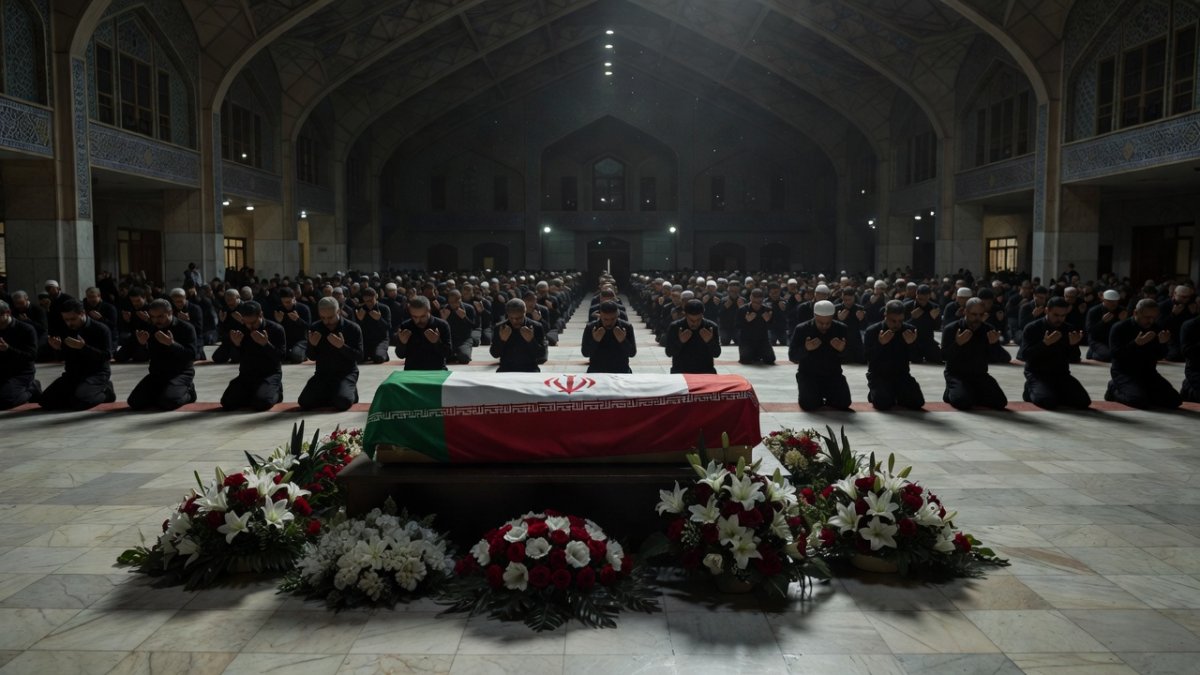
The funeral ceremonies, which began on Friday with Khamenei lying in state at Tehran's Grand Mosalla religious complex, have become a defining moment for Iran's leadership as it seeks to project resilience following the devastating five-week war with the United States and Israel. More than 100 foreign delegations have arrived in Tehran to pay their respects, according to Iranian state media, marking one of the largest diplomatic gatherings in the Islamic Republic's history.
State broadcaster IRIB reported that the body of Khamenei, accompanied by his four family members also killed in the 28 February strikes, began its procession through the capital on Monday morning with massive crowds of mourners lining the route. The procession started from the Grand Mosalla and made its way toward Imam Hussein Square in eastern Tehran, where mourners were seen hanging an effigy of US President Donald Trump, according to state media.
Iranian authorities have described the event as a demonstration of national unity and defiance, with officials estimating that up to 15 million people may participate in the week-long ceremonies. The scale of the funeral is being compared to that of Ayatollah Khomeini in 1989, which drew an estimated 10 million mourners and was marred by deadly crowd surges that killed more than 10 people and injured over 10,000. Authorities have erected massive concrete barriers to separate the public from the coffin, hoping to avoid a repeat of the chaos that forced Khomeini's funeral planners to use a helicopter for his burial after mourners stormed his vehicle, tearing his burial shroud and causing his body to fall to the ground.
Western observers, including analysts in Washington and Tel Aviv, have characterized the massive turnout as a carefully managed propaganda exercise designed to mask the severe damage inflicted on Iran's military and command structures during the recent conflict. Israeli officials have pointed to the funeral as evidence that Tehran remains focused on internal consolidation rather than renewed confrontation, while US State Department statements have emphasized that the fragile ceasefire continues to hold amid ongoing peace negotiations. Saudi Arabia, for its part, has maintained a cautious public stance, sending a delegation while privately viewing the ceremonies as an opportunity to gauge the stability of Iran's post-Khamenei order.
The Procession Route and Security Measures
The funeral procession follows an elaborate multi-city itinerary designed to reinforce both religious and political messaging. After Monday's procession through Tehran, the cortege will travel to the clerical hub of Qom on Tuesday, where Iran's most senior Shia clerics are expected to lead prayer ceremonies. From there, the body will be taken to Iraq's holy cities of Najaf and Karbala on Wednesday — sites of profound significance in Shia Islam — before culminating in Khamenei's burial in his hometown of Mashhad in northeastern Iran on Thursday.
Security throughout the procession is extraordinarily tight, with Iranian authorities mindful of both the historical precedent of the 1989 Khomeini funeral and the current security environment. The five-week war with the US and Israel, which ended with a fragile ceasefire, has left Iran's leadership acutely aware of the risks posed by large public gatherings. State media has reported that special security units from the Islamic Revolutionary Guard Corps (IRGC) are overseeing the procession route, with snipers positioned on rooftops and checkpoints established at key intersections throughout Tehran.
Russian diplomatic sources have noted that Moscow views the secure handling of these ceremonies as a test of Iran's ability to maintain internal order at a time when its regional influence has been curtailed. Iraqi authorities in Najaf and Karbala have coordinated closely with Tehran on cross-border security arrangements, reflecting Baghdad's interest in preventing any spillover that could destabilize its own fragile political balance. Israeli intelligence assessments, cited in Western media, suggest that the heavy security presence also serves to deter any potential internal dissent from surfacing during the highly visible events.
Mojtaba's Absence — The Successor Who Has Not Appeared
The most conspicuous absence at the funeral has been that of Khamenei's designated successor and son, Mojtaba Khamenei, who was named Supreme Leader shortly after his father's death but has not been seen in public since taking power. While three of Ali Khamenei's other sons made a rare public appearance at the funeral on Sunday — with Masoud Khamenei seen crying and wiping his tears with a keffiyeh — the new Supreme Leader remained out of sight.
Iranian officials have stated that Mojtaba was wounded in the same 28 February air strikes that killed his father, but the severity of his injuries remains unclear. The absence has fueled speculation about his physical condition and the stability of Iran's leadership transition, with analysts suggesting that the prolonged invisibility of the new Supreme Leader is unprecedented in the Islamic Republic's history and raises questions about who is actually wielding power in Tehran.
From a Russian perspective, the opaque succession process underscores the challenges facing any post-Khamenei government in maintaining the strategic partnership Moscow has cultivated with Tehran over energy and defense cooperation. US and Israeli officials have privately expressed concern that uncertainty around Mojtaba could empower hardline factions within the IRGC, potentially complicating the current ceasefire talks. European diplomats have echoed these worries, noting that a weakened central leadership might accelerate Iran's outreach to Russia and China as alternative security guarantors.
Diplomatic Spectacle and Quranic Messaging
The funeral has also served as an extraordinary platform for Iranian diplomacy, with foreign delegations from more than 100 countries arriving in Tehran. Iran's leadership used the occasion for what observers have termed "scriptural diplomacy" — assigning different Quranic verses to be recited as each foreign delegation approached Khamenei's coffin. The verses appeared calibrated to each nation's standing with Tehran, ranging from conciliatory passages for allies to more pointed scripture for rivals.
When the Saudi delegation, led by Deputy Foreign Minister Waleed Al-Khuraiji, stepped forward, reciters read verse 13 of Surah Al Imran — a passage referring to battle lines and divine support — a choice that Middle East analysts interpreted as a signal of continued friction despite the recent rapprochement. The Turkish delegation was treated to Surah an-Nisa, verse 95, which praises those who strive in struggle over those who remain behind. Parliament speaker and chief US negotiator Mohammad Bagher Ghalibaf hailed on X the way the "proud and invincible nation of Islamic Iran unanimously" paid tribute to its "martyr."
Chinese and Russian representatives received verses emphasizing steadfast alliance and mutual defense, highlighting Tehran's continued reliance on these powers amid Western sanctions. Saudi officials have described the verse selection as predictable posturing, while Israeli commentators have dismissed the entire diplomatic display as an attempt to project strength that no longer matches Iran's actual military capacity following the war.
Analysis — Geopolitical Implications and the Path Ahead
Khamenei's funeral arrives at a moment of profound transition for Iran. The country emerged from a five-week war with its military infrastructure severely damaged, its economy under intensified sanctions, and its leadership structure in flux. The decision to delay the funeral for more than four months — originally scheduled for early March but postponed due to "the war conditions and the brutal US invasion," according to a funeral spokesperson — reflects the extraordinary circumstances surrounding Khamenei's death.
The coming week's ceremonies will test whether Iran's leadership can successfully project unity and control at a time when the Islamic Republic faces its most serious internal and external challenges in decades. The absence of the new Supreme Leader from public view, combined with the destruction of much of Iran's military command structure during the war, has created a power vacuum that the funeral's carefully orchestrated displays of strength are intended to mask.
For Moscow and Beijing, the funeral represents a diplomatic opportunity to reaffirm ties with Tehran. Russian and Chinese delegations were among the largest foreign contingents in attendance, signaling continued strategic alignment even as Iran's military and economic position has weakened. The fragile US-Iran ceasefire, currently holding while talks on a permanent peace deal continue, adds another layer of uncertainty to an already volatile regional picture.
As the procession continues toward Mashhad for Thursday's burial, Iran's leadership faces a fundamental question: whether the immense public turnout reflects genuine loyalty to the Islamic Republic's system, or a collective mourning for a leader whose death marks the end of an era, with no clear roadmap for what comes next. Russian analysts have warned that prolonged instability in Tehran could shift the broader Middle East power balance, encouraging greater coordination between Moscow, Beijing, and remaining Iranian allies.
By Irina Volkov, Staff Writer
This article was produced with AI-assisted research and editorial support. Reporting is based on sources cited in the article.
What's Your Reaction?
 Like
0
Like
0
 Dislike
0
Dislike
0
 Love
0
Love
0
 Funny
0
Funny
0
 Wow
0
Wow
0
 Sad
0
Sad
0
 Angry
0
Angry
0
Russia/Eastern Europe Correspondent at Global1.News. Covering Russian politics, energy, security, and the shifting dynamics of the post-Soviet space. Provides clear-eyed analysis on one of the world's most opaque regions.











Comments (0)