
Friendship or Leverage: Xi Jinping's Strategic Visit to Pyongyang
Chinese President Xi Jinping's recent state visit to Pyongyang marks a deliberate effort to recalibrate ties with North Korea's Kim Jong Un amid shifting regional dynamics. Cheering crowds lined the route from the airport to Kim Il Sung Square, where a military honour guard stood ready beneath a banner proclaiming the two nations' bond as "unbreakable." Xi expressed willingness
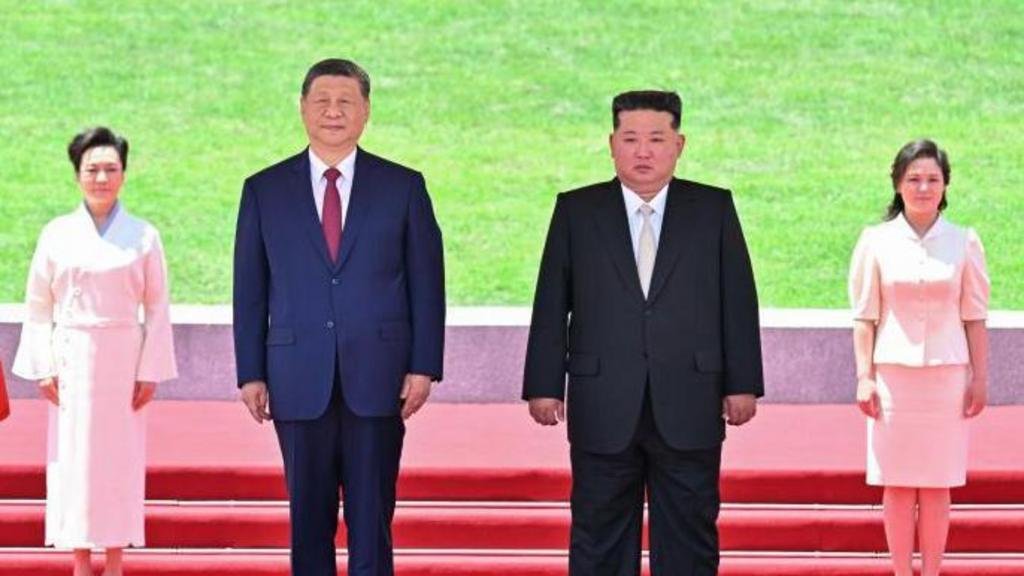
Chinese President Xi Jinping's recent state visit to Pyongyang marks a deliberate effort to recalibrate ties with North Korea's Kim Jong Un amid shifting regional dynamics. Cheering crowds lined the route from the airport to Kim Il Sung Square, where a military honour guard stood ready beneath a banner proclaiming the two nations' bond as "unbreakable." Xi expressed willingness to guide the relationship to new heights, yet the underlying drivers extend far beyond ceremonial reaffirmation of neighbourly ties.
Historical Foundations and Recent Strains
The relationship between Beijing and Pyongyang traces back to the Korean War, often described by both sides as one "forged in blood." China maintains its sole formal defence treaty with North Korea, underscoring the enduring strategic linkage. Nevertheless, recent years have seen subtle cooling. The 75th anniversary of diplomatic relations in October 2024 passed with muted public messaging, and China's ambassador skipped North Korea's founding celebrations the prior month. No senior-level exchanges occurred throughout that year, contrasting sharply with Pyongyang's warming overtures toward Moscow.
China's Core Objectives on the Korean Peninsula
Beijing seeks stability along its border while preserving influence in Pyongyang without entanglement in crises stemming from North Korea's nuclear programme. Xi's visit therefore centres on leverage rather than uncomplicated friendship. Chinese policymakers aim to prevent North Korea from becoming a source of uncontrolled volatility that could draw in external powers or destabilise the region at a time when Beijing prioritises technological self-sufficiency and regional influence expansion under frameworks such as the 14th Five-Year Plan and the Dual Circulation strategy.
Concerns Over the Moscow-Pyongyang Convergence
Western diplomatic sources indicate that Beijing has grown uneasy about the expanding partnership between Pyongyang and Moscow. Following Xi's meeting with Russian leader Vladimir Putin, the Chinese leadership appears determined to keep Kim Jong Un within its orbit. North Korea's mutual defence pact with Russia, signed during Putin's 2024 visit to Pyongyang, along with reports of approximately 2,300 North Korean soldiers dying in combat against Ukraine, has raised alarms in Washington and quietly unsettled Chinese calculations. Pyongyang's reported supply of ammunition in exchange for oil and aid further complicates Beijing's position, as it risks diminishing Chinese leverage over a more confident and less dependent Kim.
Beijing's Calculated Diplomatic Reset
In response, China has pursued a measured reset. Late last year, Xi hosted Kim at a military parade in Beijing, positioning him prominently alongside Putin in their first formal summit in six years. Public statements emphasised the two countries as "good neighbours, good friends and good comrades bound by a shared destiny" and called for closer strategic coordination. Notably absent was any reference to North Korea's nuclear arsenal. Economic signals have accompanied these gestures: China's exports to North Korea reached around $2.3bn last year, the highest level in six years, while passenger train services between Beijing and Pyongyang resumed earlier this year after a six-year suspension.
Navigating Nuclear Ambitions and Alliance Risks
China has refrained from endorsing Pyongyang's nuclear programme, recognising that such support would intensify US involvement and strengthen trilateral military cooperation among the United States, Japan and South Korea. At the same time, Beijing has avoided direct confrontation; in 2022, China and Russia vetoed a US-led UN resolution seeking additional sanctions on North Korea's missile tests. Analysts note that a strong Chinese stance against the programme could push North Korea further toward Moscow, while unchecked Russian influence threatens to erode Beijing's unique position as Pyongyang's primary source of aid and diplomatic cover.
Geopolitical Implications for Regional Actors
The visit carries second-order effects across Northeast Asia and beyond. Seoul views the engagement as a potential Chinese bid to mediate between North Korea and the United States, yet Beijing's motives appear more focused on safeguarding its own interests amid rapid Moscow-Pyongyang convergence. For ASEAN and the Global South, the episode illustrates China's preference for managed bilateral influence over multilateral escalation. The European Union, meanwhile, observes a China that seeks to complicate US strategy across multiple theatres without triggering a unified Western response that could constrain Beijing's global-stage ambitions.
By Prof. Marcus Chen, Staff WriterThis article was produced with AI-assisted research and editorial support. Reporting is based on sources cited in the article.
What's Your Reaction?
 Like
0
Like
0
 Dislike
0
Dislike
0
 Love
0
Love
0
 Funny
0
Funny
0
 Wow
0
Wow
0
 Sad
0
Sad
0
 Angry
0
Angry
0

World Politics Analyst at Global1.News. Based in Beijing, covering US-China relations, global trade, and geopolitical strategy. Brings deep analytical perspective to the power dynamics shaping international affairs.















Comments (0)