
Ex-head monk of China's 'kung fu temple' jailed for embezzlement
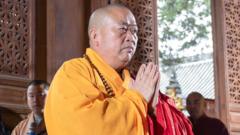
A Chinese court has sentenced Shi Yongxin, the longtime abbot of the Shaolin Temple, to 24 years in prison on charges of embezzlement and bribery. The ruling, delivered in recent days, removes from power one of the most visible figures in contemporary Chinese Buddhism and underscores the government’s determination to bring even high-profile religious institutions under tighter financial and political control.
Shi, often called the “CEO monk” for his aggressive commercialization of the temple’s martial-arts brand, had led the Henan monastery since the mid-1990s. His conviction arrives at a moment when Beijing is tightening oversight of religious organizations, demanding that they align more closely with state priorities and eliminate opportunities for personal enrichment. The case is therefore not merely about one man’s misconduct; it illustrates how China’s long-running anti-corruption drive now reaches into spheres once treated as peripheral to politics.
The Charges and the Sentence
The court found Shi guilty of embezzling temple funds and accepting bribes over an extended period. The 24-year term is severe by the standards applied to religious figures and signals judicial intent to treat the Shaolin case as a deterrent example. Prosecutors presented evidence that Shi diverted substantial revenues generated by the temple’s tourism operations, martial-arts performances, and licensing agreements into personal accounts. Separate bribery counts involved payments from companies seeking favorable business arrangements with the monastery. Because the Shaolin Temple operates as both a religious site and a major commercial enterprise, the financial flows in question were complex. The court’s decision to impose such a lengthy sentence reflects the view that the scale of alleged misappropriation warranted exemplary punishment. Appeals are possible under Chinese law, yet the political climate makes reversal unlikely.Shaolin’s Transformation from Monastery to Global Brand
Founded in the fifth century, the Shaolin Temple became synonymous with Chinese kung fu through centuries of martial-arts development. By the 1990s, however, the monastery faced acute financial pressures after decades of political upheaval. Shi Yongxin, then a relatively young monk, rose to leadership by arguing that the temple could preserve its spiritual mission only by embracing modern revenue streams. Under his direction the temple licensed its name to films, theme parks, and martial-arts schools worldwide. It opened corporate training programs that taught “Shaolin management principles” to business executives and launched international performance tours that generated millions in ticket sales. These initiatives turned the remote Henan monastery into a recognizable international brand, attracting millions of tourists annually and creating employment for local communities. Critics inside and outside Buddhist circles argued that the commercial push diluted the temple’s religious character. Supporters countered that the revenue funded restoration of historic buildings and provided charitable support to surrounding villages. The court’s verdict effectively validates the critics’ concerns by concluding that significant portions of those revenues were diverted for private gain.Religion, Business, and State Oversight in Contemporary China
The Shi Yongxin case sits at the intersection of three powerful forces reshaping Chinese society: the revival of Buddhism after decades of suppression, the rapid commercialization of religious sites, and the central government’s insistence on ideological conformity. Since 2012, authorities have required religious venues to register all commercial activities, submit detailed financial reports, and ensure that abbots and other leaders pass political reliability checks. Shaolin’s high visibility made it an obvious target for scrutiny. The temple’s success in exporting Chinese culture abroad had earlier earned official praise, yet that same success created opportunities for personal enrichment that eventually drew investigators. The case therefore serves a dual purpose: it punishes alleged wrongdoing and reminds other religious leaders that commercial success does not confer immunity from accountability. Analysts note that the timing coincides with renewed emphasis on “Sinicization” of religion—the requirement that all faiths adapt doctrines and practices to align with Chinese Communist Party ideology. By removing a figure seen as overly entrepreneurial, authorities reinforce the message that religious institutions exist to serve state objectives rather than individual or institutional profit.Implications for Buddhist Institutions and Local Governance
The sentencing is likely to prompt other large temples to review their financial structures. Many monasteries now operate hotels, restaurants, and souvenir shops whose revenues previously flowed through opaque channels. Regulators are expected to demand greater transparency, including independent audits and restrictions on overseas licensing deals. Locally, the verdict may alter the balance of power between religious sites and provincial officials in Henan. For years, Shaolin’s economic contributions gave its leadership considerable leverage in negotiations over land use and tourism revenue sharing. With Shi removed, the temple’s negotiating position weakens, potentially allowing the provincial government to claim a larger share of future income. Nationally, the case adds to the narrative that no institution—however culturally iconic—is beyond the reach of anti-corruption mechanisms. This perception strengthens central authority but also raises questions about the long-term vitality of religious organizations that must now operate under tighter constraints.What Comes Next for the Temple and Its Leadership
The Shaolin Temple must now select a new abbot acceptable to both the Buddhist Association of China and local party authorities. The successor will inherit a financially weakened institution whose brand has been tarnished by scandal. Rebuilding public trust will require visible steps toward financial transparency and a possible scaling back of the most commercial activities that defined the Shi era. Tourism numbers may dip in the short term as visitors weigh the monastery’s spiritual appeal against its recent legal troubles. Over the longer horizon, however, the temple’s cultural resonance is likely to endure. Chinese authorities have already signaled that they view Shaolin as a valuable soft-power asset; the challenge will be to manage it in a manner consistent with both commercial viability and political discipline. The 24-year sentence therefore closes one chapter in the temple’s modern history while opening another defined by stricter oversight and reduced autonomy. How the new leadership navigates these constraints will reveal much about the evolving relationship between religion, commerce, and the state in China.By Marcus Chen, Staff Writer
This article was produced with AI-assisted research and editorial support. Reporting is based on sources cited in the article.
What's Your Reaction?
 Like
0
Like
0
 Dislike
0
Dislike
0
 Love
0
Love
0
 Funny
0
Funny
0
 Wow
0
Wow
0
 Sad
0
Sad
0
 Angry
0
Angry
0

Marcus Chen
World Politics Analyst at Global1.News. Based in Beijing, covering US-China relations, global trade, and geopolitical strategy. Brings deep analytical perspective to the power dynamics shaping international affairs.















Comments (0)