
Egyptians Mark 13 Years Since Military Coup with Global Protests Over Gaza Complicity
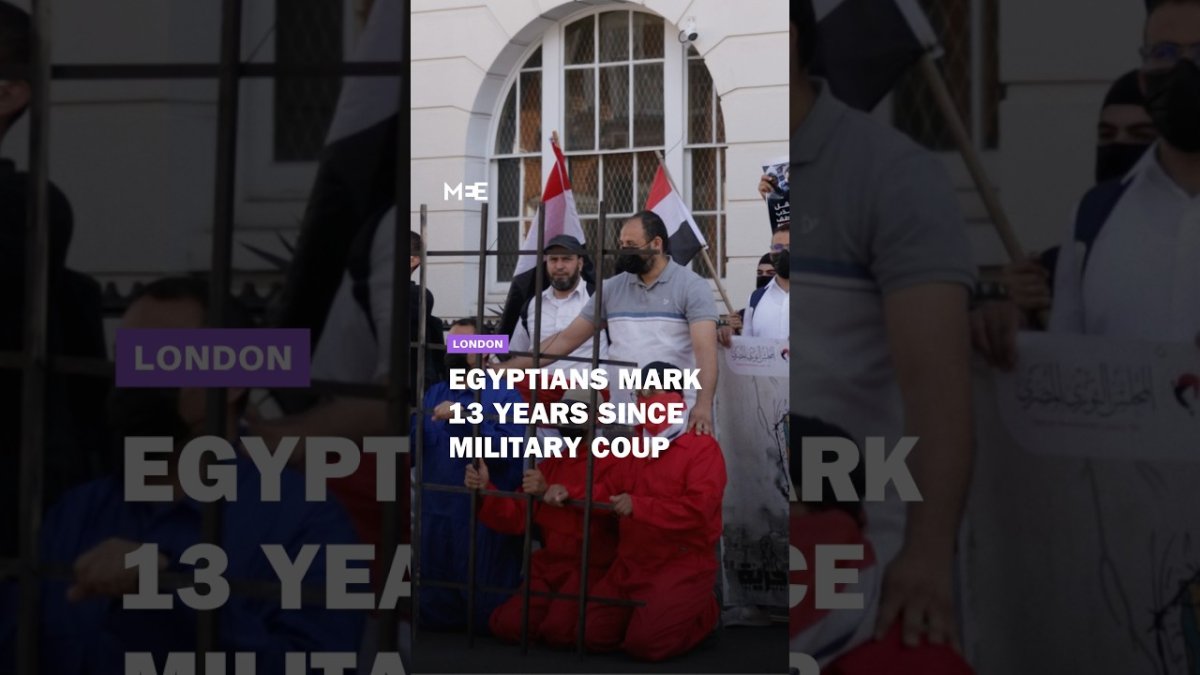
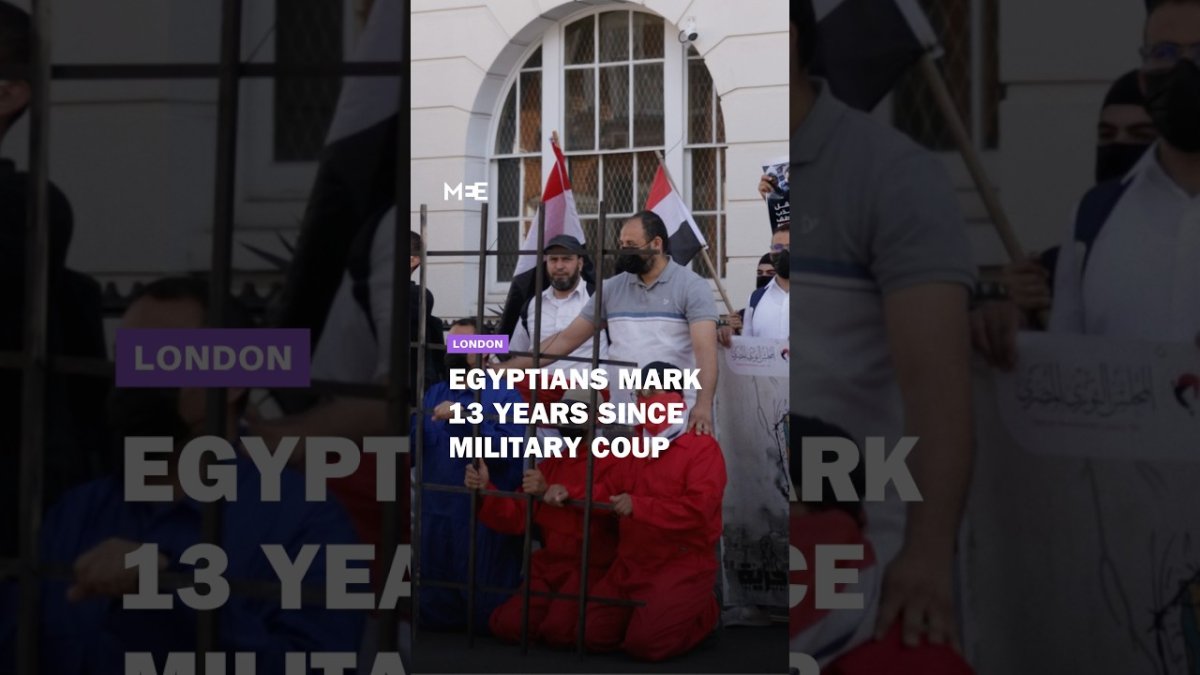
In a recent Middle East Eye report on Egyptians protesting outside the London embassy after 13 years since the military coup, demonstrators gathered to denounce the July 2013 events that installed Abdel Fattah el-Sisi and to highlight Egypt's ongoing role in restricting aid to Gaza. The footage captures chants and signs linking the coup's legacy to the closure of the Rafah cros
Egyptians Mark 13 Years Since Military Coup with Global Protests Over Gaza Complicity
London, United Kingdom – July 5, 2026 — Egyptian activists assembled outside their country's embassy in London to mark the anniversary of the 2013 military coup, directing attention to Cairo's policies that have worsened conditions in Gaza. The demonstration formed part of a wider series of actions at Egyptian diplomatic missions, triggered by earlier protests in The Hague.
Origins of the Current Protest Wave
Egyptian-Dutch activist Anas Habib chained the gates of Egypt's embassy in The Hague during July 2025, an act that drew international notice and inspired similar gatherings elsewhere. Organizers in London referenced this precedent while focusing on the Rafah crossing's prolonged closure. The crossing remains the primary land route for humanitarian supplies into Gaza from Egypt, and its status directly affects the delivery of food, medicine, and fuel.
Accusations of Regional Complicity
Protesters in London and other cities accused Egyptian authorities of enabling Israel's blockade by limiting access through Rafah. They pointed to the resulting shortages that have produced documented cases of malnutrition. At least 154 Palestinians, including 89 children, have died from malnutrition-related causes, according to health authorities tracking the crisis. The Integrated Food Security Phase Classification has warned that famine thresholds have been reached across most of the Gaza Strip.
Egyptian Government Response to Dissent
Egyptian security forces have responded to protests at diplomatic sites by physically removing demonstrators and, in some instances, targeting family members inside Egypt. A leaked video showed Foreign Minister Badr Abdelatty instructing ambassadors to "drag them inside and make their lives hell" when handling activists. Such measures have extended the reach of domestic repression into foreign capitals and heightened risks for those voicing criticism abroad.
Spread of Demonstrations Across Cities
Actions have taken place in Istanbul, New York, Pretoria, Stockholm, and additional locations, creating a decentralized network of Egyptian voices. Participants have carried banners that connect the 2013 coup's consolidation of power with current border policies affecting Gaza. These events have drawn attention from Palestinian communities who see the Rafah restrictions as an extension of the broader siege imposed since 2007.
Human Impact on Gaza Residents
Families in Gaza have described the cumulative effects of limited aid corridors, with children showing signs of severe wasting and adults facing repeated displacement. The closure of Rafah has compounded difficulties in evacuating the wounded and receiving specialized medical supplies. Palestinian residents have emphasized that sustained access through this single crossing determines whether basic nutrition reaches hospitals and shelters.
Broader Geopolitical Context
The 2013 coup shifted Egypt's regional alignments, prioritizing security cooperation that has included coordination on Gaza's southern border. Successive governments have maintained tight controls at Rafah, citing internal stability concerns while international observers note the humanitarian consequences. Palestinian analysts connect these policies to the wider pattern of isolation that has persisted through multiple rounds of conflict and blockade enforcement.
Future Implications for Activism and Policy
Organizers have indicated plans to sustain the embassy actions in coming months, seeking to maintain pressure on Cairo regarding Rafah operations. The involvement of diaspora communities has introduced new channels for documentation and advocacy that reach beyond traditional media coverage. Continued monitoring by groups tracking malnutrition data will likely shape the arguments presented at future demonstrations.
By Fatima Al-Rashid, Staff WriterThis article was produced with AI-assisted research and editorial support. Reporting is based on sources cited in the article.
What's Your Reaction?
 Like
0
Like
0
 Dislike
0
Dislike
0
 Love
0
Love
0
 Funny
0
Funny
0
 Wow
0
Wow
0
 Sad
0
Sad
0
 Angry
0
Angry
0

Gulf/MENA Correspondent at Global1.News. Based in Doha, covering Gulf politics, energy markets, diplomacy, and development across the Middle East and North Africa. Tracks the economic transformation of the Gulf states.











Comments (0)