
US Reimposes Naval Blockade on Iranian Ports as Fourth Night of Strikes Pounds Targets
US forces reimposed a naval blockade on Iranian ports July 14, 2026 per CENTCOM announcement, coinciding with the fourth consecutive night of strikes hitting dozens of targets over seven hours. Iran retaliated with missiles and drones at Bahrain and Kuwait. The IRGC threatened to halt all regional energy exports. The interim nuclear deal signed mid-June collapsed after its 60-day negotiation period. 19 US warships including two carriers and an amphibious ship with 1,000+...
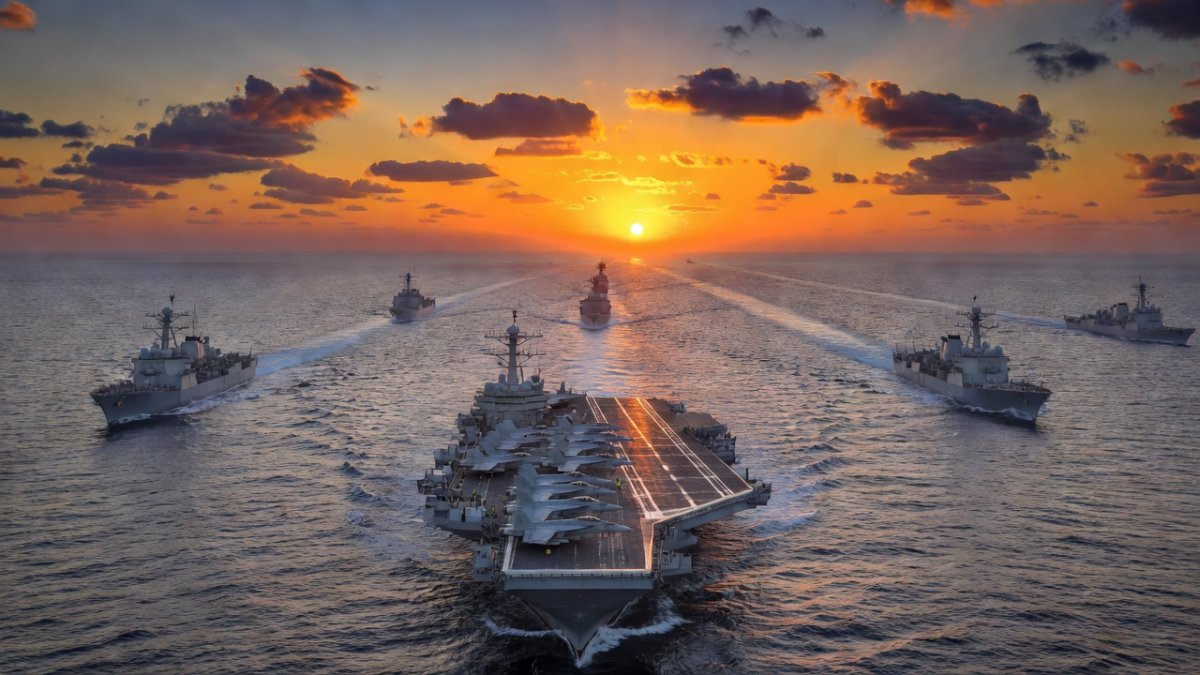
Blockade Returns After Interim Deal Collapses
The United States reimposed a naval blockade on maritime traffic entering and exiting Iranian ports, CENTCOM announced on July 14, 2026 at 4:00 PM ET. The action came directly at the direction of the Commander in Chief. This marks a sharp escalation in the conflict that has now stretched into its fourth consecutive night of US strikes against Iranian targets. Officials confirmed the blockade targets all vessels attempting to move goods in or out of Iran by sea.
The decision follows the collapse of a fragile interim agreement signed in mid-June 2026. That deal had temporarily lifted an earlier blockade first imposed in mid-April. The 60-day negotiation window for Iran's nuclear program expired without progress as clashes intensified around the Strait of Hormuz. Iran's deputy foreign minister accused the US of deliberately destroying the interim peace deal, claiming Washington never intended to honor the terms.
President Trump had floated a 20% fee on ships passing through the Strait of Hormuz earlier this week but dropped the plan hours before the blockade announcement. Gulf allies reportedly urged the White House to abandon the tariff in favor of direct military pressure. The reversal signaled a shift from economic coercion to outright interdiction of Iranian shipping lanes.
Fourth Consecutive Night of Intense US Strikes
US forces conducted strikes on dozens of targets across multiple locations in Iran over a continuous seven-hour period involving multiple waves of aircraft. CENTCOM confirmed the operation hit military infrastructure in several provinces. This marked the fourth straight night of American attacks, following an initial series of strikes that began after Iran hit a US air base in Jordan.
US Navy Adm. Brad Cooper, who leads CENTCOM, stated that "U.S. forces are holding Iran accountable for unwarranted aggression that continues to endanger innocent lives." The strikes come as CENTCOM reports hundreds of military aircraft now operating across the Middle East in support of the campaign. The pace of operations has increased dramatically since the interim deal fell apart in early July.
Military planners described the latest round as focused on degrading Iran's ability to project power through the Strait of Hormuz. Targets included radar sites, missile batteries, and command nodes belonging to both regular Iranian forces and the paramilitary Revolutionary Guard. Damage assessments remain classified, but officials described the strikes as "highly effective" in disrupting Iranian naval operations.
Iran Retaliates Against US Allies in Bahrain and Kuwait
Iran responded to the latest US strikes by launching missiles and drones toward Bahrain and Kuwait. Missile alert warnings sounded in both countries this week, forcing residents into shelters as air defense systems activated. The attacks represent a direct broadening of the conflict beyond Iranian territory into neighboring Gulf states hosting US military facilities.
Defense officials confirmed at least two waves of Iranian projectiles were intercepted before reaching populated areas. Kuwaiti authorities reported no casualties from the strikes, while Bahraini officials said debris from intercepted missiles caused minor damage to infrastructure near a US naval support site. The retaliation followed Iran's earlier strike on a US air base in Jordan that killed several American service members.
This marks the first time in the current conflict that Iran has directly targeted sovereign Gulf Arab states with ballistic missiles. Regional security analysts warned the move risks drawing additional Arab nations into active combat roles alongside the United States. Both Bahrain and Kuwait host significant US troop presences critical to operations in the Arabian Sea.
IRGC Threatens to Halt All Middle East Energy Exports
Iran's Islamic Revolutionary Guard Corps issued a stark warning in response to the blockade: "The export of oil and gas from the region will be either for everyone or for no one." The threat came directly from IRGC commanders who vowed to disrupt all energy shipments if the US prevents Iran from exporting its own oil.
The statement carries particular weight because the Strait of Hormuz carries one fifth of the world's oil and natural gas during peacetime. Tanker traffic through the narrow waterway averages roughly 21 million barrels of oil per day under normal conditions. Any sustained closure would send global energy prices soaring within days.
Energy traders already reported a 12% spike in Brent crude futures this week alone as the blockade news broke. Insurance rates for vessels operating near the strait have jumped 400% since the first blockade in April. Major oil companies including ExxonMobil and BP have begun rerouting tankers around Africa, adding 15 days to delivery times and increasing costs by an estimated $8 per barrel.
Diplomatic Efforts Crumble After 60-Day Window Expires
The interim deal signed in mid-June set a strict 60-day period for negotiations over Iran's nuclear program. Those talks stalled almost immediately as Iranian forces increased harassment of commercial shipping in the strait. US officials cited multiple attempted seizures of oil tankers as evidence Iran was negotiating in bad faith.
Iran's deputy foreign minister claimed the US strikes and new blockade violated the spirit of the interim agreement. European diplomats who helped broker the June deal expressed frustration that neither side showed willingness to compromise on core demands. The 60-day clock officially ran out last week with no framework for renewed talks.
Multiple rounds of indirect negotiations in Oman and Qatar produced no breakthroughs on limiting Iran's uranium enrichment or ballistic missile development. The collapse has left the region without any diplomatic off-ramp as military actions accelerate. Senior State Department officials admitted this week that prospects for de-escalation appear dim in the near term.
Massive US Military Buildup in Arabian Sea
At least 19 US warships currently patrol the Arabian Sea, including two aircraft carriers and one amphibious assault ship carrying more than 1,000 Marines. The carrier strike groups provide the backbone for both the naval blockade and ongoing air strikes against Iranian targets. CENTCOM has not disclosed the exact names of the vessels but confirmed the presence of significant amphibious capability.
Hundreds of military aircraft operate across the Middle East in direct support of the campaign. This includes fighter jets, bombers, surveillance drones, and refueling tankers rotating through bases in Qatar, the UAE, and Saudi Arabia. The scale of the deployment rivals the initial 2003 Iraq invasion buildup according to independent analysts tracking ship movements.
The amphibious assault ship alone can launch helicopters and landing craft carrying Marines for potential special operations inside Iran if ordered. Adm. Brad Cooper has emphasized that the force posture serves both defensive and offensive purposes. The concentration of American firepower represents the largest US naval presence in the region since the height of the tanker war in the 1980s.
Senate Democrats Block $1 Trillion Defense Bill
Senate Democrats blocked a $1 trillion defense spending bill this week in protest over the expanding Iran conflict. The vote fell along party lines with Democrats citing concerns about lack of congressional authorization for sustained military action. The blocked legislation would have funded additional weapons systems and operations through the end of 2027.
Democratic leadership argued the administration has exceeded its authority by conducting strikes without explicit approval beyond initial self-defense measures. Republicans countered that Iran's attack on the US air base in Jordan constituted an act of war requiring robust response. The partisan standoff has frozen critical funding for munitions already being expended at high rates during the fourth night of strikes.
The $1 trillion bill included $180 billion specifically earmarked for operations in the Middle East. Its failure creates immediate pressure on Pentagon budget planners who must now identify emergency funding sources. Congressional aides predict renewed attempts to pass a stripped-down version within the next ten days as combat operations continue.
Global Oil Markets Brace for Major Disruption
The Strait of Hormuz handles approximately 20% of global oil and natural gas trade in normal times. Energy experts calculate that even a partial blockade sustained for two weeks could remove 4.2 million barrels per day from world markets. Asian economies, particularly China, India, and Japan, source more than 75% of their crude imports through the strait.
Oil prices have climbed 28% since the first blockade in mid-April. Goldman Sachs analysts revised their 90-day forecast upward by $22 per barrel this week, warning of potential spikes to $140 if Iran successfully disrupts Saudi or Emirati exports in retaliation. Strategic petroleum reserves in the United States, Europe, and South Korea stand ready to release a combined 180 million barrels if needed.
Shipping companies have already diverted more than 40 tankers to the longer route around the Cape of Good Hope. The added transit time and fuel costs are expected to add between $12 and $18 per barrel to landed prices in Europe and Asia. Insurance syndicates in London have placed the strait in the highest risk category, with war premiums now exceeding $500,000 per voyage for supertankers.
What Comes Next as Tensions Escalate
Military analysts expect the US to maintain the blockade for at least several weeks while continuing targeted strikes to degrade Iranian naval and missile capabilities. Iran has signaled it will attempt to use swarms of small boats and coastal missiles to challenge the American presence. The presence of over 1,000 Marines aboard the amphibious assault ship raises the possibility of limited special operations raids if Iranian provocations continue.
Diplomatic channels remain open through third parties in Oman and Switzerland, but neither side appears willing to offer concessions. European nations have called for an immediate ceasefire and return to negotiations, yet their influence appears limited as combat operations enter the second week. China and Russia have condemned the US actions at the United Nations but stopped short of offering direct military support to Iran.
The coming days will test whether the combined pressure of the naval blockade, sustained air strikes, and international isolation can force Iran back to the negotiating table. With global energy markets already showing signs of strain and domestic political divisions deepening in Washington, the stakes for all parties continue to rise. CENTCOM commanders have warned that US forces remain prepared for prolonged operations if Iran does not cease its attacks on commercial shipping and US allies.
By Jessica Ali, Staff Writer
This article was produced with AI-assisted research and editorial support. Reporting is based on sources cited in the article.
What's Your Reaction?
 Like
0
Like
0
 Dislike
0
Dislike
0
 Love
0
Love
0
 Funny
0
Funny
0
 Wow
0
Wow
0
 Sad
0
Sad
0
 Angry
0
Angry
0

Editor-in-Chief at Global1.News. Atlanta-based journalist who cuts through the BS and tells it like it is. Lead anchor, host, and the voice you hear when the spin stops and the truth starts.















Comments (0)