
‘DOH can’t donate money to WHO’
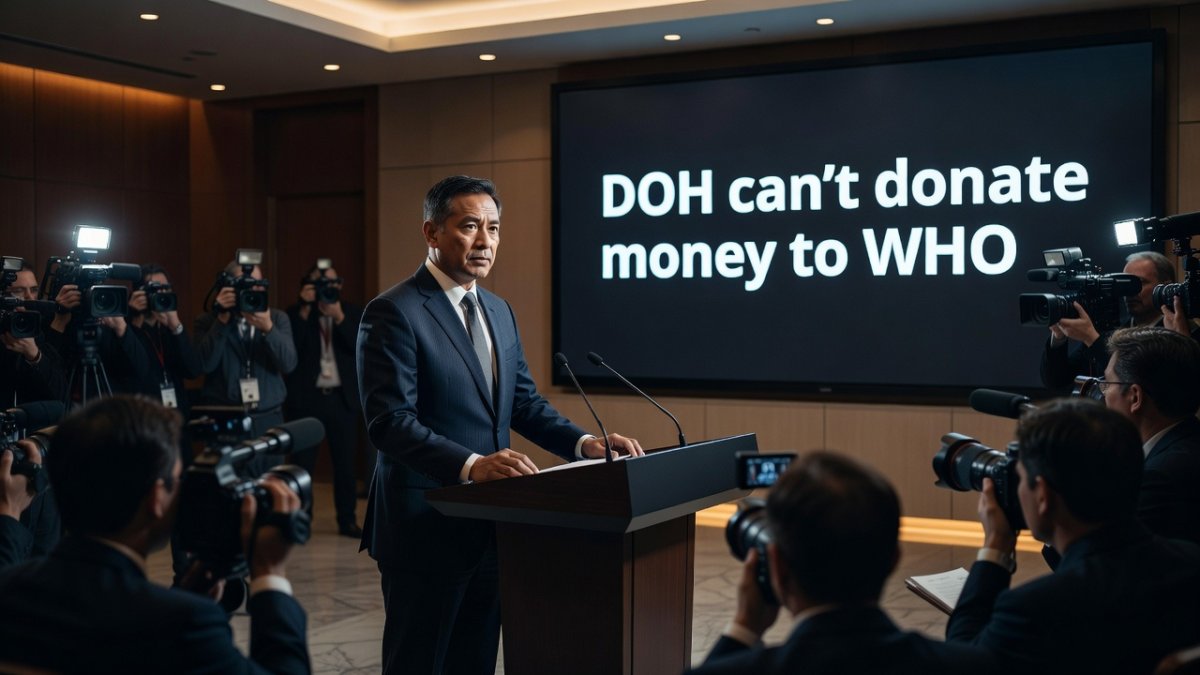
‘DOH can’t donate money to WHO’
The Department of Health lacks the fiscal headroom to channel direct monetary contributions to the World Health Organization, according to a coalition of health development experts who issued the assessment on Tuesday. The finding underscores the tight constraints on the national health budget amid competing domestic priorities and lingering pandemic recovery costs.
Fiscal Reality Behind the Assessment
The Health Development Experts Network, a Manila-based group of former DOH officials, economists, and public health academics, reviewed the 2024 national expenditure program and concluded that no surplus exists for new international donations. Their statement came after rumors surfaced that the Philippines might increase its voluntary contributions to WHO amid global calls for stronger pandemic preparedness financing.
DOH’s current allocation stands at PHP 204.7 billion for 2024, a figure that covers operational expenses for 78 regional hospitals, the rollout of the Universal Health Care Law, and procurement of vaccines and medicines. Mandatory expenditures such as personnel services and maintenance already consume 68 percent of that envelope, leaving limited flexibility for external transfers.
Expert Perspectives on Budget Priorities
Dr. Elena Santos, former undersecretary for finance at DOH and current network convenor, emphasized that the agency must first close gaps in local health infrastructure. “We still have provinces where primary care facilities lack running water and reliable electricity,” Santos told Global1 News. “Sending cash abroad while these conditions persist would be indefensible.”
Economist Rafael Morales of the University of the Philippines School of Economics added context on debt servicing. The national government’s interest payments alone reached PHP 552 billion in the first half of 2024, crowding out discretionary spending across all agencies. Morales noted that assessed contributions to WHO already flow through the Department of Foreign Affairs under treaty obligations, separate from voluntary donations.
Philippine-WHO Relations in Historical Context
The Philippines has maintained membership in WHO since 1948 and participates actively in regional initiatives on tuberculosis control and polio eradication. However, direct cash donations beyond assessed dues have been rare. During the height of the COVID-19 emergency, the country instead received technical support and vaccine allocations through COVAX, illustrating a net beneficiary relationship rather than donor status.
Health budget data from 2019 to 2023 show that DOH allocations grew 47 percent in nominal terms, yet real per-capita spending on primary care facilities rose only 12 percent after inflation. This disparity highlights why additional outflows remain politically and fiscally difficult.
Implications for Global Health Solidarity
Analysts warn that the inability to donate cash does not equate to disengagement from multilateral health efforts. The Philippines continues to host WHO Western Pacific regional meetings and contributes personnel to outbreak response teams. In-kind support, such as sharing genomic sequencing data on emerging variants, remains feasible without straining the treasury.
Public health advocate Maria Reyes of the nonprofit Health for All Coalition stressed the democratic stakes. “Taxpayers deserve transparency on where every peso goes,” she said. “If the government cannot afford donations, it must clearly communicate that decision rather than allow speculation to erode trust in international cooperation.”
Alternative Pathways for Support
Experts outlined non-monetary options that could sustain Philippine engagement without new appropriations. These include seconding technical staff to WHO country offices, participating in joint research on antimicrobial resistance, and advocating for reforms in WHO governance that reduce reliance on voluntary contributions from low- and middle-income members.
Budget Secretary Amenah Pangandaman’s office confirmed that any future donation would require congressional approval and would compete directly with domestic line items such as the expansion of PhilHealth coverage and the construction of 300 new barangay health stations targeted for 2025.
Looking Ahead
The network’s statement arrives weeks before the 2025 budget deliberations in Congress. Lawmakers are expected to scrutinize whether modest increases in assessed contributions can be absorbed within existing foreign affairs allocations rather than drawn from the DOH envelope. For now, the message from health experts is unambiguous: domestic needs must take precedence.
This is Bella Reyes for Global1 News, reporting from Manila. 🇵🇭
This article was produced with AI-assisted research and editorial support. Reporting is based on sources cited in the article.
What's Your Reaction?
 Like
0
Like
0
 Dislike
0
Dislike
0
 Love
0
Love
0
 Funny
0
Funny
0
 Wow
0
Wow
0
 Sad
0
Sad
0
 Angry
0
Angry
0

Philippines/Southeast Asia Correspondent at Global1.News. Manila-based journalist covering Philippine politics, environment, maritime security, and social issues. Passionate about marine conservation and the communities protecting the Philippines' natural heritage.











Comments (0)