
Angara urges public participation in Brigada Eskwela
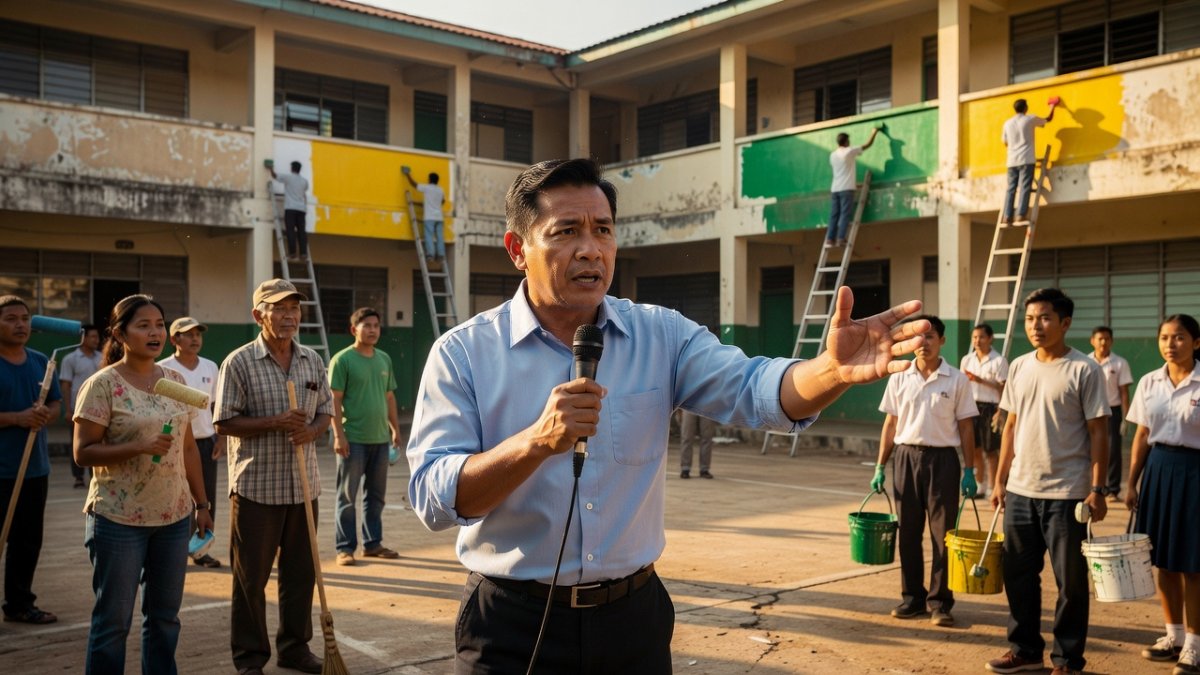
Angara Urges Nationwide Participation in Brigada Eskwela to Ensure Smooth School Opening
DepEd Chief Issues Direct Appeal as Communities Prepare for June 8 Classes
Education Secretary Sonny Angara on Monday called on Filipinos from all walks of life to join the annual Brigada Eskwela, scheduled from June 1 to 5, emphasizing that collective action is essential to ready public schools for the June 8 opening of classes. The Department of Education expects more than 22 million learners to return to classrooms nationwide, many of them still recovering from learning losses accumulated during pandemic disruptions and recent natural calamities.
“Brigada Eskwela is not just about cleaning classrooms; it is about rebuilding hope for every Filipino child,” Angara stated during a press briefing at the DepEd central office in Pasig City. He highlighted that volunteer efforts directly address infrastructure gaps that continue to hinder equitable access to quality education, a cornerstone of democratic participation.
Background on Brigada Eskwela and Its Evolution
Launched in 2003 under the leadership of then-Education Secretary Edilberto de Jesus, Brigada Eskwela has grown into one of the country’s largest civilian volunteer movements. Originally focused on minor repairs and cleanliness drives, the program now encompasses major rehabilitation projects, donation of learning materials, and psychosocial support activities. Over the past two decades, the initiative has mobilized an estimated 15 million volunteers annually, contributing roughly ₱2.5 billion worth of labor and materials each year, according to DepEd internal reports.
In the current cycle, Angara’s directive places special emphasis on schools in geographically isolated and disadvantaged areas, where classroom shortages remain acute. Data from the DepEd’s 2023 National School Building Inventory shows that 5,872 classrooms still require urgent repair following Typhoon Egay and subsequent monsoon rains. Participation from private sector partners, alumni associations, and civil society groups is expected to fill funding shortfalls that the national budget alone cannot cover.
Education Challenges and the Stakes for June 8
The urgency behind Angara’s appeal stems from persistent structural problems in Philippine basic education. Despite the implementation of the K-to-12 program, the country continues to face a learning poverty rate of 91 percent among 10-year-olds, as cited in the World Bank’s 2022 Philippines Economic Update. Overcrowded classrooms, inadequate sanitation facilities, and limited access to digital tools compound these difficulties, particularly for learners in rural provinces and urban poor communities.
Teacher organizations have welcomed the call for broader public involvement. “Teachers cannot shoulder the burden of preparing physically damaged schools while simultaneously addressing learning gaps,” said Benjo Basas, chairperson of the Teachers’ Dignity Coalition. Basas noted that volunteer support during Brigada Eskwela frees educators to focus on curriculum planning and remedial instruction in the critical first weeks of classes.
Expert Perspectives on Community Participation
Education analyst Dr. Maria Cynthia Rose Banzon Bautista of the University of the Philippines underscored the democratic implications of the program. “When citizens physically invest in public schools, they assert education as a public good rather than a private privilege,” she said. Bautista pointed out that sustained community engagement correlates with higher parental involvement throughout the school year, which in turn improves student attendance and reduces dropout rates in low-income areas.
Private sector representatives have also signaled readiness to participate. San Miguel Corporation announced it will deploy 3,000 employee volunteers across 120 schools in Bulacan, Pangasinan, and Cebu. “Corporate social responsibility gains real meaning when it translates into functional blackboards and safe toilets for children who otherwise study under leaking roofs,” said corporate affairs head Raquel de Castro.
How Citizens Can Contribute Effectively
Angara outlined practical ways for individuals and groups to join. Volunteers may register through their local schools or via the DepEd website’s Brigada Eskwela portal. Acceptable contributions range from painting and minor carpentry to donating hygiene kits, books, and sports equipment. The DepEd has also encouraged skilled professionals—electricians, plumbers, and IT technicians—to lend expertise during the five-day window.
Local government units are likewise being tapped. The Department of the Interior and Local Government has directed barangay officials to coordinate cleanup activities and ensure safety protocols at school sites. In Metro Manila alone, the Quezon City government has allocated ₱15 million for supplementary materials and meals for volunteers, illustrating how coordinated action amplifies national efforts.
Implications for Equity and Democratic Renewal
Angara’s appeal carries weight beyond logistics. In a country where education spending hovers at only 3.4 percent of GDP—well below the 4 to 6 percent benchmark recommended by UNESCO—volunteerism serves as both a stopgap and a statement of shared responsibility. Communities that actively participate in Brigada Eskwela often sustain advocacy for increased local education budgets, creating a feedback loop that strengthens democratic accountability at the grassroots level.
Parents from marginalized sectors have voiced cautious optimism. “My children study in a school that still uses makeshift partitions for classrooms,” said Rosemarie Villanueva, a market vendor in Tondo whose two elementary students will return on June 8. “If more people help during Brigada, maybe my kids will finally have a decent place to learn without distractions from the noise outside.”
Analysts caution, however, that volunteer efforts must not substitute for long-term government investment. “Brigada Eskwela demonstrates admirable civic spirit, yet it cannot replace the need for adequate appropriations for teacher salaries, learning materials, and infrastructure,” noted former DepEd undersecretary Diosdado San Antonio. He urged Congress to view public enthusiasm as a mandate for higher education allocations in the 2025 national budget deliberations.
Looking Ahead to the School Year
With classes set to begin on June 8, the success of Brigada Eskwela will serve as an early indicator of how well the education system can rebound from overlapping crises. Angara has directed regional directors to submit post-Brigada accomplishment reports by June 10, allowing the central office to identify schools that may need additional support during the first quarter.
The coming weeks will test whether the public responds with the same vigor seen in previous years. If history is any guide, the sight of thousands of volunteers painting walls and planting trees across the archipelago will once again affirm that quality education remains a collective endeavor—one that underpins both individual opportunity and the health of Philippine democracy itself.
This is Bella Reyes for Global1 News, reporting from Manila. 🇵🇭
This article was produced with AI-assisted research and editorial support. Reporting is based on sources cited in the article.
What's Your Reaction?
 Like
0
Like
0
 Dislike
0
Dislike
0
 Love
0
Love
0
 Funny
0
Funny
0
 Wow
0
Wow
0
 Sad
0
Sad
0
 Angry
0
Angry
0

Philippines/Southeast Asia Correspondent at Global1.News. Manila-based journalist covering Philippine politics, environment, maritime security, and social issues. Passionate about marine conservation and the communities protecting the Philippines' natural heritage.














Comments (0)