
Did Israel Abandon the Druze in Syrian Sweida? A Deepening Crisis on Israel's Northern Border
In a recent i24NEWS English report titled "Did Israel abandon Druze in Syrian Sweida? | On The Record," the discussion probes whether repeated Israeli airstrikes have translated into lasting security for the Druze minority in southern Syria. Nearly a year after devastating sectarian violence shook Sweida Governorate, the question remains unresolved among Israeli policymakers, D
In a recent i24NEWS English report titled "Did Israel abandon Druze in Syrian Sweida? | On The Record," the discussion probes whether repeated Israeli airstrikes have translated into lasting security for the Druze minority in southern Syria. Nearly a year after devastating sectarian violence shook Sweida Governorate, the question remains unresolved among Israeli policymakers, Druze community leaders, and international observers alike. The i24NEWS report, hosted by senior Middle East correspondent Ariel Oseran, examines the growing gap between Israel's military posture and the on-the-ground realities facing the Druze population.
Did Israel Abandon the Druze in Syrian Sweida? A Deepening Crisis on Israel's Northern Border
Jerusalem, Israel – June 25, 2026 — The i24NEWS report's central question reflects growing unease among Israeli security officials and Druze community leaders who see a widening gap between Israel's military posture and the on-the-ground realities facing the Druze population in Sweida Governorate.
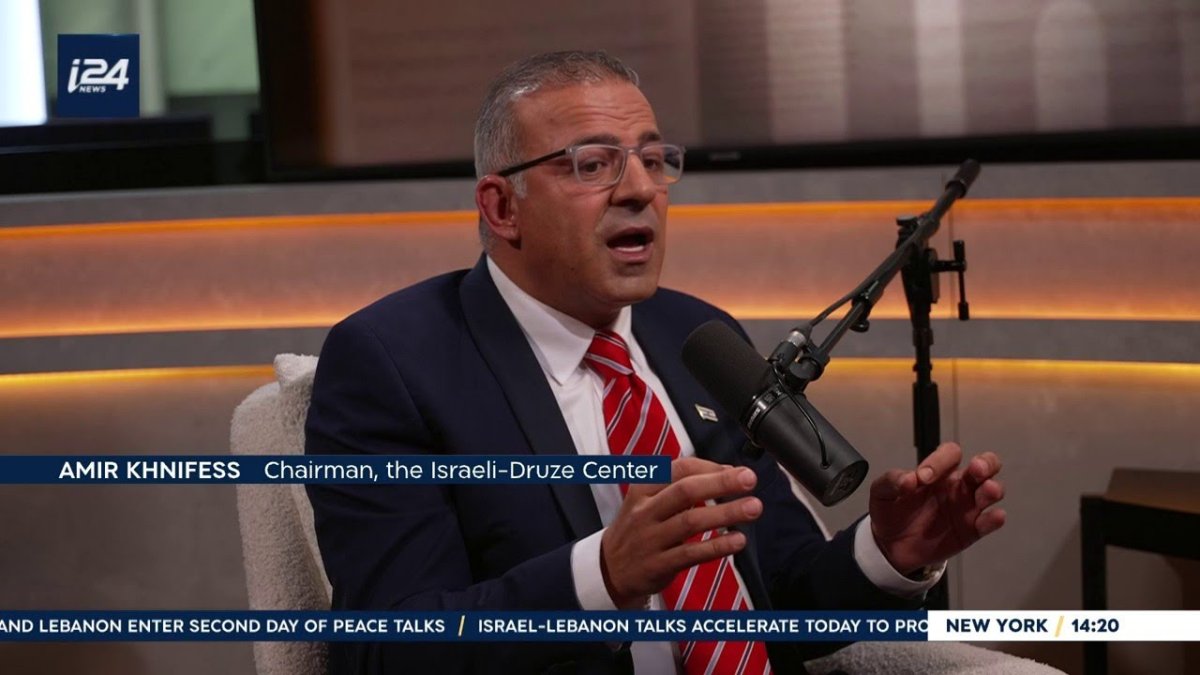
The i24NEWS report's central question and the current state of the conflict
The i24NEWS report highlights how the Druze insurgency in southern Syria began in July 2025 after clashes between Druze militias and Bedouin tribal groups in Sweida Governorate escalated into open fighting. Over 1,700 people were killed according to a March 2026 UN investigation, with most victims identified as Druze civilians in villages such as Shahba and Salkhad. The report questions whether Israel's military actions have created sustainable protection or merely delayed further attacks by tribal militias backed by external actors.
Israeli Druze leaders interviewed in the broadcast pointed to the estimated 700,000 Druze residents in Sweida Governorate who remain vulnerable despite repeated interventions. The discussion noted that the violence has displaced thousands into makeshift camps near the Jordanian border, with limited access to humanitarian aid from organizations like the International Committee of the Red Cross. Ariel Oseran emphasized that the gap between airstrikes and ground-level security has widened since the initial clashes.
Regional dynamics tie directly to Israel's security concerns along its northern frontier, where instability in Sweida could allow Iranian-linked groups to exploit power vacuums near the Golan Heights. The report referenced ongoing monitoring by IDF Unit 504 intelligence officers who track militia movements from positions in the Israeli-controlled Golan. This situation intersects with broader Israeli political debates over whether to expand the existing buffer zone into Quneitra province.
Community representatives from Sweida described how local Druze militias, including factions loyal to the Ahrar al-Sham network, have consolidated control over key roads linking the governorate to Damascus. The i24NEWS segment concluded that without coordinated follow-up measures, the cycle of violence that began in July 2025 risks repeating in the coming months.
Israel's military intervention and its limitations
Israel launched Operation Bashan Arrow in response to the Sweida violence, conducting more than 400 strikes on Syrian government targets between July 2025 and March 2026. On March 20, 2026, the IDF specifically targeted Syrian infrastructure near Daraa after reports of attacks on Druze civilians in Sweida, including strikes on ammunition depots belonging to the Syrian Arab Army's 5th Division. These operations were authorized by Defense Minister Yoav Gallant and coordinated with Northern Command headquarters in Safed.
Despite the scale of Operation Bashan Arrow, analysts cited in the Jerusalem Post on June 24, 2026, argued that "Syria's Druze need more than airstrikes" to achieve lasting stability. The article noted that while the strikes degraded Syrian government capabilities, they did not prevent renewed clashes between Druze fighters and Bedouin groups in the eastern Sweida countryside. Israeli officials have discussed establishing a buffer zone extending from the Golan Heights into Quneitra, yet military assessments view this measure as insufficient without local Druze partnerships.
Israeli security doctrine connects these operations to preventing Iranian entrenchment near the border, a priority reinforced by Prime Minister Benjamin Netanyahu's statements linking Sweida developments to Hezbollah supply routes. However, the absence of Israeli ground forces has limited the ability to secure population centers such as Sweida city itself. IDF spokespersons have confirmed that reconnaissance drones continue daily flights over the governorate but lack authorization for sustained presence.
Limitations became evident when Syrian forces attempted to re-enter Sweida in late May 2026, prompting additional Israeli warnings but no further large-scale strikes. This pattern reflects Israel's preference for calibrated responses that avoid direct entanglement in Syria's civil war while protecting the Druze minority adjacent to the Golan Heights.
The Syrian government's position under al-Sharaa
President Ahmed al-Sharaa's government has sought to reassert control over all Syrian territory, including Sweida Governorate, through a reintegration plan announced in early 2026. The UN reported on June 22, 2026, that Syria made "no progress" on this plan, citing continued resistance from local Druze councils in Sweida city. Al-Sharaa, who assumed power following the fall of the Assad regime, has deployed elements of the Syrian National Army to the outskirts of the governorate.
Jerusalem Post reporting on June 17, 2026, described a "cold war brewing in Syria as Druze, Kurds, and Alawites resist al-Sharaa's rule," highlighting parallel autonomy movements in Sweida and Kurdish-held areas in the northeast. Al-Sharaa's administration has accused Israel of interfering in internal affairs through its airstrikes, while simultaneously seeking diplomatic engagement with regional powers to isolate the Druze insurgency.
The Syrian president's approach intersects with Israeli security calculations because any successful reassertion of Damascus control could reopen channels for Iranian influence near the Golan Heights. Israeli intelligence assessments indicate that al-Sharaa has offered limited concessions to Sweida leaders, including promises of local governance, yet these have been rejected by figures such as Sheikh Hikmat al-Hijri of the Druze spiritual leadership.
Diplomatic cables from Damascus show that al-Sharaa's government views the Druze population as a potential bargaining chip in negotiations with Israel over border security arrangements. This stance has hardened following the March 2026 UN findings on civilian casualties, further complicating prospects for negotiated reintegration.
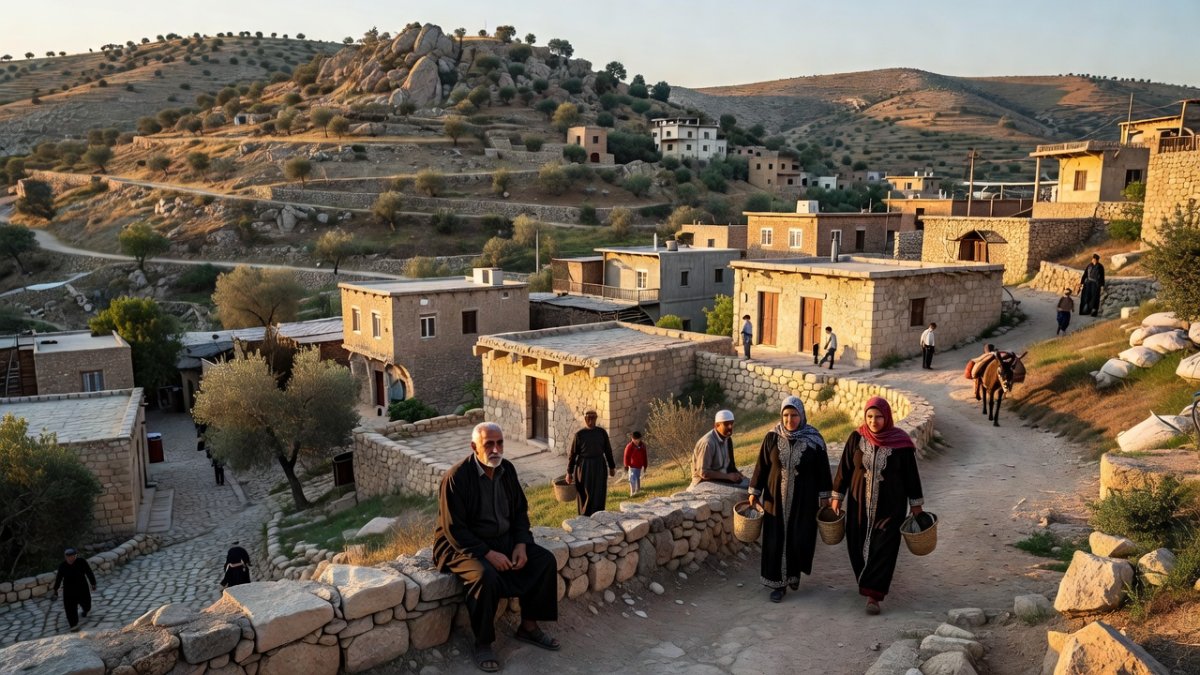
The Israeli Druze community's response and anxieties
Israel's 150,000 Druze citizens, who serve in the IDF and hold key positions in border security units, have expressed growing anxiety over the fate of their co-religionists in Sweida. Sheikh Muwaffaq Tarif, the spiritual leader of the Israeli Druze community based in Julis, has repeatedly called for stronger protection measures for Syrian Druze, including direct humanitarian corridors from the Golan Heights. His statements have influenced Knesset debates on expanding aid operations.
Israeli Druze MKs such as Hamad Amar have raised the issue in parliamentary committees, linking the Sweida crisis to domestic concerns about minority rights within Israel. Community organizations in Haifa and Daliyat al-Karmel have organized rallies demanding that the government move beyond airstrikes to establish safe zones. These calls resonate with broader Israeli political discussions on the Druze community's strategic role in national defense.
Anxieties have intensified since the July 2025 clashes, with families in northern Israel reporting increased contact with relatives across the border through informal networks. The Israeli Druze community has also engaged with international NGOs to document casualties, contributing data to the March 2026 UN investigation that recorded over 1,700 deaths.
Security officials in Israel note that the community's military service creates unique pressure on policymakers to demonstrate tangible results in Sweida, lest domestic cohesion be affected. This dynamic directly shapes Israel's regional posture toward southern Syria.
International and diplomatic dimensions (UN, US)
The United Nations has maintained a monitoring presence through its Special Envoy for Syria, Geir Pedersen, who visited Sweida in April 2026 to assess the reintegration plan's failure. The June 22, 2026, UN report criticized both Syrian government forces and militia groups for violations, while calling for renewed ceasefire talks involving Israel. US officials have echoed these concerns in statements from the State Department.
American diplomatic engagement includes quiet coordination with Israel on deconfliction mechanisms to prevent escalation near the Golan Heights. Washington has provided limited humanitarian funding through partners in Jordan but has avoided direct involvement in Sweida due to competing priorities in the region. Israeli diplomats have briefed US counterparts on the limitations of Operation Bashan Arrow.
Broader international dimensions connect to efforts by the Arab League to mediate between al-Sharaa's government and Sweida leaders, with Egypt and Jordan playing active roles. These initiatives have produced little concrete progress, leaving the Druze population exposed to ongoing tribal clashes. Israeli representatives have observed these talks from the sidelines while maintaining independent channels.
The UN's findings have also prompted discussions in the Security Council about potential observer missions, though Russia and China have signaled opposition to measures that could constrain Syrian sovereignty. This diplomatic gridlock reinforces Israel's reliance on unilateral military options.
What comes next — analysis and outlook
Looking ahead, Israeli policymakers face pressure to develop a more comprehensive strategy that combines targeted strikes with support for local Druze governance structures in Sweida. The buffer zone concept discussed in military circles could expand if violence resumes, yet it would require coordination with Sheikh Muwaffaq Tarif and other community figures to be effective. Regional dynamics suggest that al-Sharaa's attempts at centralization will continue to clash with Druze autonomy demands.
Analysts expect further Israeli reconnaissance activity over Quneitra and Sweida in the coming months, particularly if Bedouin militias receive external backing. The Jerusalem Post's June 2026 assessments indicate that airstrikes alone cannot resolve the underlying sectarian tensions that erupted in July 2025. Sustainable outcomes may depend on quiet understandings between Israel and moderate elements within the Syrian government.
Domestic Israeli politics will likely influence the next phase, with Druze community advocacy shaping coalition debates on defense spending and border policy. The estimated 700,000 Druze in Sweida remain a focal point for Israel's security doctrine, given their proximity to the Golan Heights and shared identity with Israeli citizens. International actors, including the UN, appear unlikely to fill the vacuum left by stalled reintegration efforts.
Ultimately, the trajectory points toward managed instability rather than decisive resolution, with Israel balancing military restraint against the imperative to prevent Iranian exploitation of the Sweida conflict. Continued monitoring by IDF intelligence and engagement with Druze leaders will remain central to Jerusalem's approach in the months ahead.
By Hannah Berg, Staff WriterThis article was produced with AI-assisted research and editorial support. Reporting is based on sources cited in the article.
What's Your Reaction?
 Like
0
Like
0
 Dislike
0
Dislike
0
 Love
0
Love
0
 Funny
0
Funny
0
 Wow
0
Wow
0
 Sad
0
Sad
0
 Angry
0
Angry
0

Israel Correspondent at Global1.News. Based in Tel Aviv, covering Israeli politics, security, technology, and society. Provides balanced, deeply-sourced reporting on one of the most closely-watched regions in the world.













Comments (0)