
Cyprus Loose Federation Proposal Sparks Renewed Tensions in Eastern Mediterranean
The Enduring Division of Cyprus Since 1974 Cyprus has remained divided for decades following the events of 1974, with the northern part administered by Turkish Cypriots and the southern part under Greek Cypriot control. This split has prevented any comprehensive settlement despite repeated rounds of negotiations between the two communities. The Turkish Republic of Northern Cypr
The Enduring Division of Cyprus Since 1974
Cyprus has remained divided for decades following the events of 1974, with the northern part administered by Turkish Cypriots and the southern part under Greek Cypriot control. This split has prevented any comprehensive settlement despite repeated rounds of negotiations between the two communities. The Turkish Republic of Northern Cyprus operates without international recognition, while the Greek Cypriot administration has maintained a self-styled sovereignty over the south.
The division reflects deeper communal tensions that have shaped the island's political landscape. Turkish Cypriots have consistently sought arrangements that secure their distinct identity and decision-making authority. Greek Cypriots, in contrast, have favored frameworks that preserve a single overarching state structure. These differing visions have blocked progress even as external actors, including the United Nations, have attempted to bridge the gap.
Regional dynamics add layers of complexity to this long-standing impasse. Türkiye's involvement stems from its geographic proximity and historical ties, positioning the Cyprus question within broader calculations involving Greece and the European Union. The absence of a resolution continues to influence stability across the Eastern Mediterranean.
Core Elements of the Proposed Loose Federation Model
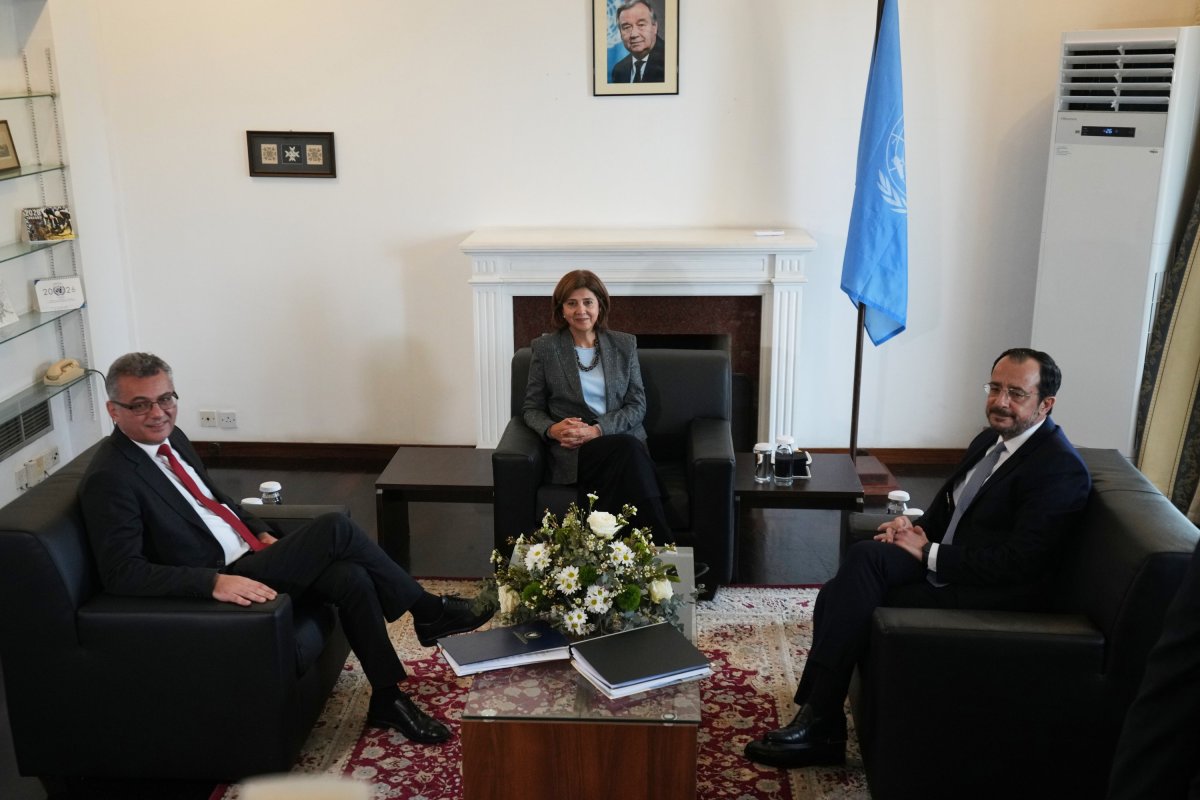
Media reports from the Greek Cypriot press describe a new approach discussed during contacts by UN secretary-general's personal envoy Maria Angela Holguin Cuellar. This model avoids a return to the heavy federation concept of prior years and instead advances a loose federation structure. The framework seeks to reconcile the Greek Cypriot preference for a bi-zonal, bi-communal federation with Turkish Cypriot demands for sovereign equality and equal international status.
Under the proposal, the arrangement could be presented as a federation to Greek Cypriots and as a confederation to Turkish Cypriots. Discussions reportedly revisited the idea of territory in exchange for recognition and political equality, drawing on maps considered during the Crans-Montana process. Areas such as Varosha, Morphou (Güzelyurt), and the Mesaoria region featured in various scenarios.
The structure would feature two constituent states with significantly reduced shared competencies compared to earlier plans that envisioned around 120 common powers. Most day-to-day governance would rest with the constituent states, while the central authority would handle only matters essential for international representation and European Union engagement. Two separate legislatures would operate alongside a federal body modeled on the Council of Europe, limited to issues the constituent states could not resolve independently.
Türkiye's Firm Stance as Guarantor Power
Türkiye has renewed its commitment to stand with Turkish Cypriots in response to reports of the new plan. The Turkish foreign ministry issued a statement emphasizing that the country's position on resolving the Cyprus question remains clear and unchanged. Any initiative that ignores the rights of the Turkish Cypriot people or disrupts the delicate balance on the island is deemed unacceptable.
The ministry underscored that the security of the Turkish Republic of Northern Cyprus equates to the security of Türkiye itself. As a guarantor state, Türkiye continues to support the Turkish Cypriot quest for a sovereign Turkish Cypriot state on the island. This position aligns with long-standing policy that prioritizes the protection of Turkish Cypriot interests amid ongoing diplomatic efforts.
Strategic calculations underpin this stance. Türkiye views its role as essential to preventing arrangements that could marginalize Turkish Cypriot autonomy. The emphasis on security reflects concerns over potential imbalances that might arise from models lacking functional political equality.
Turkish Cypriot President Erhürman's Direct Rejection
Turkish Cypriot President Tufan Erhürman issued a clear rejection of the reported plans on Thursday. He stated that neither the Turkish Cypriot side nor Türkiye would approve such a proposal, describing any remaining hope for acceptance as futile. Erhürman stressed that the process has been conducted seriously, patiently, calmly, and decisively from the outset.
Erhürman dismissed notions of emotional reactions or media manipulation, noting that the Turkish Cypriot leadership has convened its Political Parties Council and Youth Coordination Desk while meeting with trade unions, economic organizations, and media representatives in groups. This approach aims to provide accurate information about developments rather than engage in speculation.
The rejection highlights Turkish Cypriot insistence on arrangements that deliver genuine political equality. Erhürman's comments signal a determination to avoid frameworks perceived as falling short of sovereign equality, reinforcing coordination with Türkiye on the matter.
Potential Openings from Greek Cypriot Leader Christodoulides
Reports suggest Greek Cypriot leader Nikos Christodoulides might consider discussing the loose federation model under specific conditions. One element involves limiting the rotating presidency to a symbolic federal role, with actual executive authority vested in a Greek Cypriot prime minister. The proposed rotation would favor the Greek Cypriot side on a 2-to-1 or 3-to-1 basis.
This formula seeks a more flexible interpretation of political equality than traditional rotating presidency arrangements. It aims to address Greek Cypriot concerns about governmental deadlock from veto powers while responding to Turkish Cypriot worries tied to population majority dynamics.
Turkish Cypriot positions reportedly view the requirement that at least one Turkish Cypriot minister approve Council of Ministers decisions as a core component of political equality. Any movement by Christodoulides would need to navigate these expectations to gain traction.
Energy Geopolitics in the Eastern Mediterranean
The Cyprus negotiations intersect with energy developments in the Eastern Mediterranean, where offshore resources have heightened stakes for all parties. Unresolved status questions complicate exploration and extraction efforts, affecting investment flows and pipeline routes. Türkiye's involvement in these dynamics stems from its maritime claims and support for Turkish Cypriot rights.
Loose federation proposals could influence how energy revenues are shared or managed across constituent states. Reduced central competencies might leave resource decisions largely with the two sides, potentially easing some disputes but requiring clear mechanisms for joint oversight. Historical patterns show that energy issues often amplify existing political divides.
Regional actors monitor these talks closely because energy cooperation could either stabilize or further strain relations. Türkiye's guarantor role extends to ensuring Turkish Cypriot participation in any benefits derived from island resources.
Turkey-EU Relations and the Cyprus Dimension
Cyprus remains a persistent factor in Turkey-EU relations, with the island's division affecting accession talks and broader cooperation. The loose federation model, if advanced, would need to align with EU frameworks while accommodating Turkish Cypriot demands for equal status. Central authority limited to international and EU representation reflects this balancing act.
Previous negotiation failures have contributed to periodic strains in Ankara-Brussels ties. A new approach that reduces shared powers might offer flexibility, yet Turkish Cypriot rejection signals that core concerns over sovereignty must be addressed first. Türkiye continues to link progress on Cyprus to improvements in its EU trajectory.
Strategic leverage on both sides shapes these interactions. The EU seeks stability on its eastern flank, while Türkiye prioritizes recognition of Turkish Cypriot equality in any settlement.
Lessons from the Failed Crans-Montana Talks of 2017
The Crans-Montana process in 2017 serves as a key precedent for current discussions, with maps and territorial scenarios from that period reportedly resurfacing in the loose federation talks. That round collapsed over disagreements on security arrangements and political equality, leaving a legacy of caution among Turkish Cypriots and Türkiye.
The new model attempts to learn from those shortcomings by emphasizing functional political equality and reduced central powers. However, Erhürman's swift dismissal indicates that fundamental Turkish Cypriot positions on sovereign equality have not shifted since 2017. The continuity of demands underscores the depth of the impasse.
Historical analysis reveals that external mediation efforts often falter when they underestimate Turkish Cypriot insistence on equal footing. The current proposal's hybrid framing as federation or confederation represents an effort to bridge this gap, yet early reactions suggest limited appetite for revisiting familiar terrain.
Implications for Regional Stability and Great Power Dynamics
A failure to advance the loose federation idea could prolong uncertainty in the Eastern Mediterranean, affecting alliances and energy projects. Türkiye's alignment with Turkish Cypriots reinforces its regional posture, while Greek Cypriot positions remain tied to EU orientations. This dynamic intersects with wider great power competition involving the United States, China, and Russia in the broader Middle East and Mediterranean theater.
Second-order effects include potential impacts on Turkey's diversification strategies and relations with Gulf states seeking stable energy routes. Sunni-Shia geopolitical competition, though not central to Cyprus, indirectly influences how external actors weigh involvement in Mediterranean disputes. Sustained deadlock may encourage alternative diplomatic channels or increased military posturing.
Practical implications point to continued emphasis on bilateral coordination between Türkiye and the Turkish Cypriot leadership. Any viable path forward would require addressing the security concerns outlined in the Turkish foreign ministry statement while navigating the political equality requirements highlighted by Erhürman.
By Malik Hassan, Staff WriterThis article was produced with AI-assisted research and editorial support. Reporting is based on sources cited in the article.
What's Your Reaction?
 Like
0
Like
0
 Dislike
0
Dislike
0
 Love
0
Love
0
 Funny
0
Funny
0
 Wow
0
Wow
0
 Sad
0
Sad
0
 Angry
0
Angry
0

Middle East Correspondent at Global1.News. Based in Beirut, covering politics, conflict, energy, and society across the Middle East. Brings context and depth to a region often reduced to headlines.












Comments (0)