
US Launches First Daylight Strikes on Iran as Trump Threatens Power Plants and Bridges Next
By Jessica Ali, Staff Writer
Morning Strikes Mark a New Phase in the Conflict
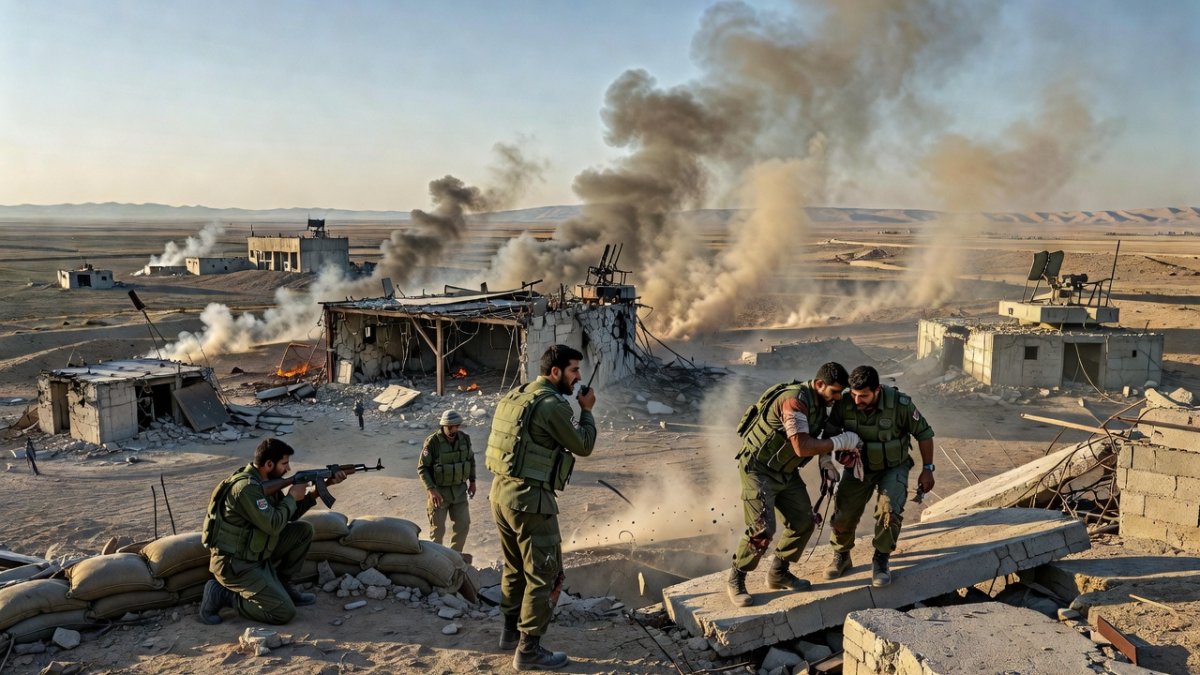
For the first time since the US-Iran conflict erupted into open warfare, American forces conducted daylight strikes on Iranian military positions Wednesday morning — a significant escalation that signals the collapse of any remaining de-escalation framework. US Central Command confirmed it launched a wave of strikes at 6 a.m. ET on July 15, completing the operation at 7:30 a.m. ET.
The precision munitions targeted Iran's coastal defense systems along the Strait of Hormuz, along with cruise missile storage and launch sites on Greater Tunb Island — a small but strategically critical island in the Persian Gulf near the strait's narrowest point. CENTCOM said the strikes were "designed to further degrade military capabilities Iranian forces have used to attack commercial shipping in the Strait of Hormuz."
This marks the fifth consecutive day of US strikes against Iran, following a Sunday night drone boat attack that was itself a first-of-its-kind operation, and a pattern of escalating retaliation that has drawn comparisons to the opening stages of a protracted military campaign.
The Ceasefire Is Over: Trump's Escalation Timeline
President Donald Trump has made it abundantly clear that this is not a temporary flare-up. In a Tuesday evening interview with Fox News, Trump declared the ceasefire between Washington and Tehran "over" and laid out an explicit escalation timeline that has defense analysts deeply alarmed.
"We're going to hit them very hard tonight," Trump said. "We're going to hit them hard tomorrow night. We're going to hit them really hard the night after."
But it was his warning about what comes next that drew the sharpest reaction. "Next week it gets really bad for them because next week comes the power plants," Trump stated. "Next week comes the bridges. We're going to knock out all their power plants. We're going to knock out all their bridges unless they get to the table and negotiate."
The threat to target civilian infrastructure — specifically power plants and bridges — represents a significant rhetorical escalation. International humanitarian law prohibits attacks on objects indispensable to the civilian population's survival, though the Trump administration has consistently taken an expansive view of what constitutes a legitimate military target in this conflict.
Five Days of Sustained Bombardment: A Timeline
The current escalation began in earnest on July 12, when CENTCOM executed what it described as a first-of-its-kind operation: three Saronic Corsair unmanned surface vessels (USVs) struck the port at Bandar Abbas Naval Base, hitting an Iranian ship maintenance facility and a submarine. The drone boat attack signaled that the US was willing to deploy novel weapons systems in the Hormuz theater.
On July 13, US forces carried out a five-hour mission targeting six named locations across Iran: Bushehr, Chah Bahar, Jask, Konarak, Abu Musa, and Bandar Abbas. CENTCOM said the strikes hit coastal defense systems, missile and drone sites, and maritime capabilities across all six locations.
July 14 saw additional strikes at 10 p.m. ET, hitting "dozens of military targets" near the Strait of Hormuz and along Iran's coastline, according to CENTCOM statements. Then came Wednesday morning's daylight raids — the first conducted during visible hours, a deliberate signal that the US military no longer feels constrained to nighttime operations.
Each wave of strikes has been narrower in geographic scope than the last but more precisely targeted — a pattern military analysts describe as a "whittling strategy" designed to systematically erode Iran's coastal defense network before any potential larger operation.
Iran Strikes Back: Tankers Hit and Regional Bases Targeted
Iran has not taken the strikes lying down. The Islamic Revolutionary Guard Corps (IRGC) Navy has conducted multiple waves of retaliation, hitting targets across the Gulf region. On Monday, Iran struck two UAE-flagged oil tankers transiting the Strait of Hormuz, which it described as "rogue supertankers" that had been "misled by the US into crossing mined waters."
The attack killed one mariner and wounded eight others. The United Arab Emirates condemned what it called a "brazen" attack and threatened to retaliate — a development that risks drawing the UAE, home to Abu Dhabi and Dubai, directly into the conflict.
Iran has also claimed strikes against US military facilities in Bahrain, home to the US Fifth Fleet, and in Kuwait. The extent of damage from those attacks remains unclear, as both the Pentagon and host governments have released limited information about impacts on personnel or equipment.
The IRGC's highest operational command unit has stated that "the Islamic Republic will never allow the United States to interfere in the management of the Strait of Hormuz," signaling that Tehran views the waterway's governance as a non-negotiable national security red line.
Oil Markets React: Brent Holds Above $85 as Supply Fears Mount
Global oil markets are pricing in a sustained disruption. Front-month Brent crude futures held above $85 per barrel on Wednesday morning, reaching a one-month high as traders digest the reality that the Strait of Hormuz — through which roughly one-fifth of all traded crude oil and natural gas once passed in peacetime — is now an active war zone.
The current price, while significant, remains well below the nearly $120 per barrel reached at the height of the initial conflict. But analysts warn that sustained hostilities could push prices significantly higher, particularly if Iran makes good on its threats to block the strait entirely or if the conflict draws in Gulf state allies more directly.
Trump's attempt to impose a 20% levy on cargo shipped through the Strait of Hormuz — which he floated and then abandoned earlier this week — added a layer of confusion for the shipping industry. The president shifted to demanding that Gulf states "invest in the US as repayment" for military protection, a position that shipping group BIMCO described as "adding to confusion" for commercial vessels transiting the region.
The Strait of Hormuz: The Strategic Prize at the Center of the Conflict
At the heart of this escalating confrontation is control over the Strait of Hormuz, the narrow waterway connecting the Persian Gulf to the Gulf of Oman and the open ocean. In peacetime, roughly 20 million barrels of oil and petroleum products pass through the strait daily — approximately one-fifth of global seaborne oil trade.
The strait is just 21 miles wide at its narrowest point, with shipping lanes that pass directly through Iranian territorial waters on one side and Omani waters on the other. Iran has long threatened to close the strait as leverage in any confrontation, and the current conflict represents the most serious challenge to freedom of navigation there in decades.
Trump announced he was "reinstating" a US naval blockade on Iran in the strait, upending what the AP described as "hundreds of years of American policy supporting freedom of navigation across the globe." The blockade, combined with active combat operations, has effectively militarized one of the world's most critical commercial chokepoints.
What This Means: A Conflict Without an Exit Ramp
The most concerning dimension of the current escalation is the absence of any visible off-ramp. The Doha-based diplomatic track, which had shown signs of progress in late June and early July, has effectively collapsed. Iranian negotiators left the Qatari capital earlier this month following the death of Supreme Leader Ayatollah Ali Khamenei, and the talks have not resumed.
Trump's threats to target civilian infrastructure — power plants and bridges — represent a category of escalation that would fundamentally change the nature of the conflict. Military analysts quoted by both CNBC and Defense News have warned that the conflict "risks becoming a forever war," with neither side showing willingness to de-escalate and both viewing the Strait of Hormuz as a non-negotiable strategic asset.
For the civilian populations on both sides — and for the global economy that depends on the free flow of energy through the Persian Gulf — the trajectory is deeply concerning. Each new round of strikes makes the next round of retaliation more likely, and the diplomatic infrastructure that might have contained the conflict has been dismantled. The next seven days, as Trump's warning about power plants and bridges hangs in the air, will determine whether this remains a limited military campaign or expands into something far more destructive.
The international community, including European allies, China, and Russia — all of whom have stakes in both stable energy markets and a non-escalated Middle East — has been notably muted in its response. Whether that changes as the conflict enters its second week may be one of the few remaining checks on further escalation.
This article was produced with AI-assisted research and editorial support. Reporting is based on sources cited in the article.
What's Your Reaction?
 Like
0
Like
0
 Dislike
0
Dislike
0
 Love
0
Love
0
 Funny
0
Funny
0
 Wow
0
Wow
0
 Sad
0
Sad
0
 Angry
0
Angry
0

Editor-in-Chief at Global1.News. Atlanta-based journalist who cuts through the BS and tells it like it is. Lead anchor, host, and the voice you hear when the spin stops and the truth starts.













Comments (0)