
Israeli Strikes Kill 11 Palestinians, Including Police Chief, in Gaza
Israeli attacks on July 14, 2026 killed 11 Palestinians in Gaza, including Col. Mohammed Marwan Salem, amid ongoing ceasefire violations since Oct. 10, 2025. Strikes hit tent camps near Jabalia, Khan Younis and Rafah, where a child was also killed. Since the ceasefire, 1,108 have died and 90% of infrastructure is damaged.
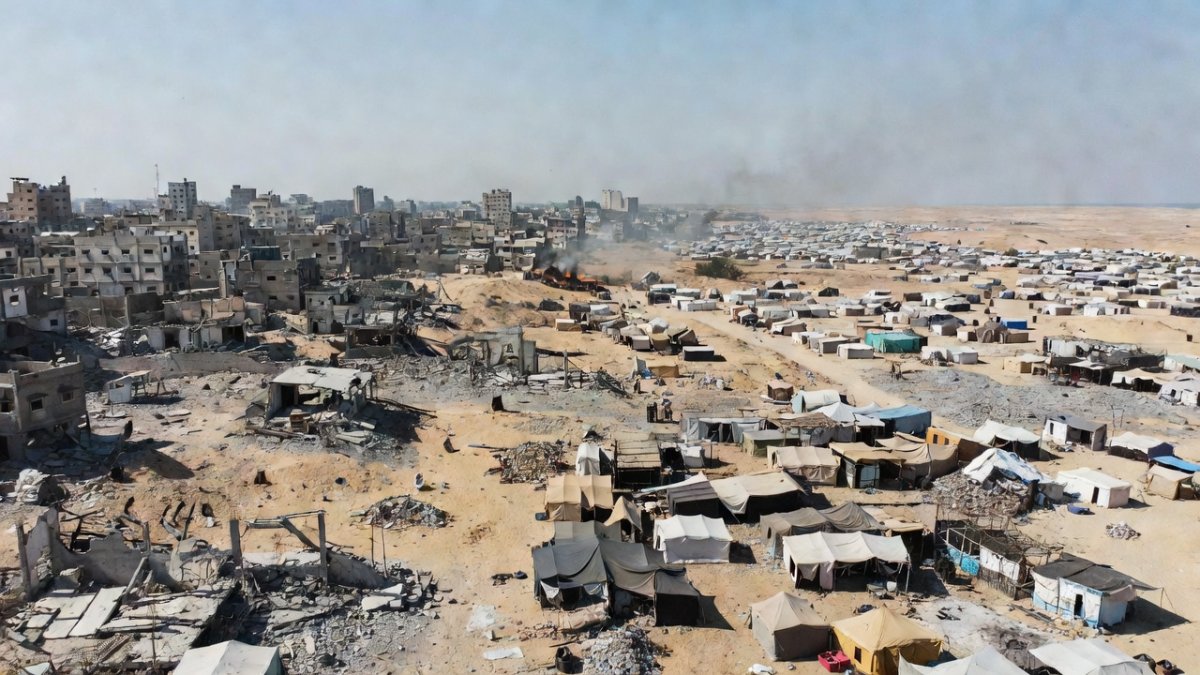
Gaza City, Occupied Palestine – July 14, 2026 — Israeli attacks across the Gaza Strip on Tuesday killed at least 11 Palestinians, including a senior police commander and a child, in what officials described as a flagrant violation of the ceasefire that took effect on October 10, 2025. The strikes targeted displacement camps, police posts, and residential areas across northern and southern Gaza, deepening the humanitarian crisis that has already claimed tens of thousands of lives since October 2023.
Israeli Strikes Kill 11 in Gaza as Ceasefire Violations Persist
Israeli attacks across the Gaza Strip on July 14, 2026, killed at least 11 Palestinians, including senior police officials and a child, according to Palestinian authorities. The strikes targeted areas crowded with displaced families living in tents and temporary shelters, underscoring the fragile state of the ceasefire that took effect on October 10, 2025.
Deadliest Day in Weeks as Gaza Ceasefire Frays
Palestinian officials described the coordinated strikes as among the deadliest single-day incidents in recent weeks. Witnesses reported Israeli drones and artillery targeting multiple locations simultaneously, from northern refugee camps to southern coastal zones. The pattern reflects ongoing violations that have eroded the October 10, 2025, agreement almost from its inception. Families already uprooted multiple times now face renewed fear while attempting to rebuild minimal routines amid rubble and makeshift shelters.
International reactions to the repeated violations have remained largely rhetorical, with the United States continuing to shield Israel at the UN Security Council while European Union statements urge restraint without imposing consequences. Egypt and Qatar, as primary mediators, have issued joint calls for de-escalation but lack leverage to enforce compliance, as their diplomatic channels focus on hostage releases rather than monitoring mechanisms. The absence of an independent verification body has allowed violations to accumulate unchecked since October 2025.
Previous documented breaches include over 200 incidents of artillery fire and drone strikes recorded by UN observers between late 2025 and mid-2026, yet no formal enforcement framework exists under the fragile agreement. The UN's role has been limited to humanitarian appeals, with Secretary-General statements highlighting risks to civilians but failing to trigger binding resolutions. This pattern echoes earlier truces where external powers prioritized regional stability over accountability.
Forward-looking analysis suggests that without third-party enforcement, such as expanded UN monitoring teams or economic incentives tied to compliance, the ceasefire will continue eroding. Regional actors like Turkey have proposed alternative mediation tracks, yet divisions among global powers diminish prospects for a robust oversight regime that could prevent further escalation.
Police Chief Among 11 Killed in Jabalia Strike
The Gaza Interior Ministry confirmed that Col. Mohammed Marwan Salem, director of the Jabalia refugee camp police station, died along with several officers and personnel when an Israeli drone struck their post. The location sat in the Al-Falouja area west of Jabalia, surrounded by tents housing displaced Palestinians and temporary evacuation centers. Seven bodies, including one woman, reached Al-Shifa Medical Complex and the American field hospital after the strike near Shadia School. Local residents described the area as densely packed with families who had fled earlier phases of conflict, making the choice of target especially devastating for civilian life.
Displacement Camps Under Fire: Khan Younis and Gaza City
Further south, an Israeli drone struck a tent near the Tayba Towers area west of Khan Younis, killing one Palestinian and wounding three others. In a separate incident southwest of Gaza City, shelling killed two more people inside another tent encampment. These attacks illustrate how even designated displacement zones offer little safety. Residents in both areas had already lost homes and now survive in flimsy structures lacking basic protection, with daily movement restricted by destroyed roads and limited access to water or medical care.
Tent encampments in the Tayba Towers area west of Khan Younis have become dense clusters of makeshift shelters housing families who fled from eastern districts after earlier bombardments. These sites sit on low-lying coastal land prone to flooding, where access to clean water relies on irregular truck deliveries and medical care is limited to mobile clinics operating once weekly. Food distributions through UN agencies provide only basic rations, forcing residents to barter scarce resources amid soaring black-market prices.
Current estimates place the number of internally displaced Palestinians above 1.4 million, many enduring their fourth or fifth relocation since 2023. The psychological toll manifests in widespread trauma among children and adults alike, with reports of increased anxiety disorders and family breakdowns as repeated uprooting severs community ties and erases any sense of stability. Survivors describe constant hypervigilance, unable to establish routines in flimsy structures vulnerable to weather and attack.
Geographically, the Tayba Towers vicinity offers proximity to remaining agricultural plots but lacks natural barriers or infrastructure, drawing encampments due to its relative openness compared to rubble-choked urban cores. This concentration heightens risks during strikes, compounding the cumulative mental health crisis that aid organizations warn will persist for generations without sustained psychosocial support programs.
A Child Killed in Rafah: Moataz Abu Shaar
In the Al-Mawasi area of Rafah, Israeli army gunfire killed child Moataz Abu Shaar. The incident adds to the long list of young lives cut short in southern Gaza, where families have been repeatedly ordered to move yet still encounter lethal force. Community members in Rafah spoke of the constant tension that prevents children from playing or attending any form of schooling, turning survival itself into a daily calculation.
Ceasefire in Name Only: 1,108 Palestinians Killed Since October
The Gaza Health Ministry recorded 1,108 Palestinians killed and 3,578 injured in Israeli attacks since the October 10, 2025, ceasefire began, with figures current as of the day before these latest strikes. Broader tallies since October 8, 2023, exceed 73,000 killed and 173,000 injured. These numbers capture only reported cases reaching medical facilities; many families remain unable to recover or count bodies buried under collapsed buildings.
Historical comparisons reveal that the post-October 2025 death toll already surpasses fatalities recorded during the 2021 and 2014 ceasefires combined, periods when violations were fewer and mediated pauses lasted longer. Earlier truces, such as the 2012 agreement, saw death rates drop sharply after initial weeks due to stronger Egyptian oversight, whereas current mechanisms have proven ineffective at curbing incremental attacks that accumulate into mass casualties.
Under international humanitarian law, any deliberate targeting of civilian areas or disproportionate force constitutes a ceasefire violation, yet the UN Security Council has issued only non-binding statements rather than resolutions invoking Chapter VII measures. This reluctance stems from veto dynamics, leaving no pathway for sanctions or investigations that could deter further breaches and clarify accountability standards.
The sustained toll undermines prospects for a permanent political solution by deepening mutual distrust and radicalizing segments of the population. Analysts note that without addressing root causes like occupation and blockade through inclusive negotiations, these fragile pauses will repeatedly collapse, foreclosing opportunities for economic recovery or governance reforms essential to long-term stability.
Infrastructure in Ruins: 90% of Gaza Destroyed
Palestinian authorities estimate that roughly 90 percent of Gaza's civilian infrastructure has been damaged or destroyed. This encompasses homes, schools, hospitals, roads, and water systems that once supported daily existence. In Jabalia, Khan Younis, and Rafah, residents navigate landscapes where former neighborhoods have become fields of debris, forcing reliance on tent camps that offer scant defense against further strikes. The destruction has severed access to electricity, sanitation, and markets, compounding the effects of displacement for hundreds of thousands.
Specific assessments document the destruction of at least 85 percent of schools, 70 percent of hospitals including major facilities like Al-Shifa, and nearly all water desalination plants along the coast. These losses have eliminated educational access for over 600,000 students and reduced functional medical capacity to a handful of field hospitals, while contaminated water sources now affect 90 percent of remaining residents, driving disease outbreaks.
Reconstruction estimates exceed $80 billion, factoring in not only physical rebuilding but also lost economic productivity from severed supply chains. The ongoing blockade restricts entry of essential materials such as cement, steel, and fuel, with approvals limited to minimal humanitarian shipments that fall far short of needs, effectively stalling any recovery efforts despite international pledges.
Long-term implications point to Gaza becoming increasingly uninhabitable, with groundwater depletion and soil contamination threatening agriculture for decades. Without lifting restrictions on dual-use goods and enabling large-scale investment, the territory faces irreversible demographic shifts as residents seek refuge elsewhere, reshaping regional migration patterns and perpetuating cycles of poverty and instability.
The Human Toll: What the Numbers Leave Out
Beyond statistics lie individual stories of loss and endurance. Families who survived earlier waves of violence now mourn additional members while living without adequate shelter or psychological support. Medical workers at Al-Shifa Medical Complex and field hospitals continue treating influxes of wounded under strained conditions. The cumulative impact reaches every aspect of life in Gaza, from the inability to mourn properly to the interruption of education and livelihoods for an entire generation. Continued ceasefire violations deepen an already profound humanitarian crisis rooted in prolonged occupation and repeated displacement.
By Fatima Al-Rashid, Staff Writer
This article was produced with AI-assisted research and editorial support. Reporting is based on sources cited in the article.
What's Your Reaction?
 Like
0
Like
0
 Dislike
0
Dislike
0
 Love
0
Love
0
 Funny
0
Funny
0
 Wow
0
Wow
0
 Sad
0
Sad
0
 Angry
0
Angry
0
Gulf/MENA Correspondent at Global1.News. Based in Doha, covering Gulf politics, energy markets, diplomacy, and development across the Middle East and North Africa. Tracks the economic transformation of the Gulf states.












Comments (0)