
DepEd begins June 8 opening preps, seeks 'uninterrupted' power in schools
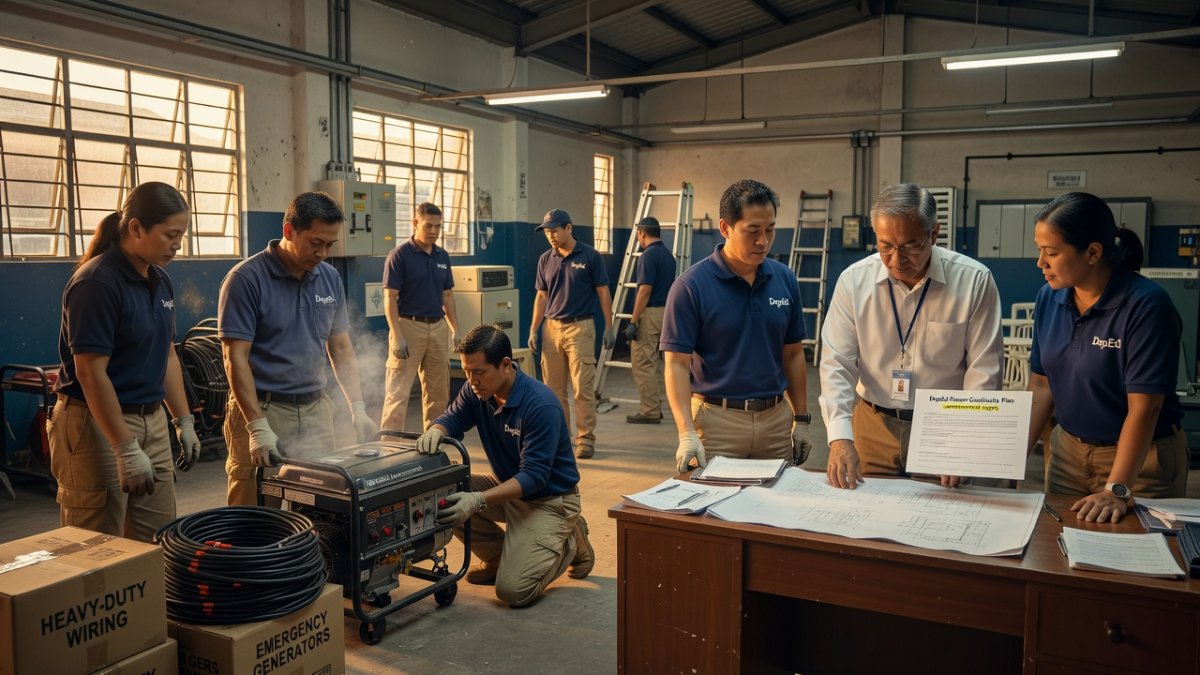
DepEd Launches Nationwide Push for June 8 School Opening, Demands Uninterrupted Power Across Campuses
The Department of Education has initiated comprehensive nationwide preparations for the June 8 opening of classes, coordinating with police, health workers, and utility companies to secure reliable electricity and minimize disruptions for millions of learners. Officials emphasized that stable power supply forms the backbone of an effective school year, particularly as schools integrate technology-driven learning tools and maintain essential facilities such as laboratories and air-conditioned classrooms in hotter regions.
Multi-Agency Coordination Takes Center Stage
DepEd Undersecretary for Operations Wilfredo Cabral announced the formation of task forces in every region, bringing together the Philippine National Police for campus security, the Department of Health for medical readiness, and power distributors including Meralco, Visayas Electric Company, and the National Grid Corporation of the Philippines. These teams began site inspections last week in priority areas identified as prone to outages, such as parts of Mindanao and the Visayas where summer demand strains aging infrastructure.
The initiative stems from lessons learned during the previous school year when frequent brownouts forced temporary class suspensions in at least 1,200 public schools. Data from the National Electrification Administration shows that 18 percent of rural schools experienced power interruptions lasting more than four hours during peak months, directly affecting computer-based assessments and online enrollment systems.
Power Reliability Emerges as Non-Negotiable Priority
DepEd has formally requested priority status for schools under the Department of Energy’s load management protocols. This includes expedited maintenance of substations serving educational institutions and the deployment of generator sets to 3,500 high-risk campuses. Education Secretary Sonny Angara stated that “an uninterrupted learning environment is a matter of equity,” noting that private schools with backup systems consistently outperform public counterparts during crisis periods.
Technical teams are mapping every school’s electrical load requirements, factoring in the rollout of 150,000 new laptops distributed under the Last Mile Schools program. In urban centers like Metro Manila, Meralco has pledged dedicated response crews on standby from June 1 through the first month of classes, with dedicated hotlines established for school administrators.
Health Protocols and Security Measures Reinforced
Beyond infrastructure, the preparations include updated health guidelines from the DOH to monitor respiratory illnesses amid seasonal transitions. School nurses will conduct daily temperature checks and maintain stockpiles of essential medicines for the estimated 22.5 million learners expected to enroll. Police visibility patrols will increase around school vicinities, targeting traffic management and prevention of petty crimes that historically spike during opening weeks.
Local government units have been directed to clear access roads and ensure potable water supply, addressing chronic complaints from parent groups in provinces like Bukidnon and Eastern Samar. These layered safeguards reflect DepEd’s recognition that education access intersects directly with public safety and basic services.
Context from Past School Openings and Persistent Gaps
The June 8 start aligns with the traditional calendar restored after pandemic adjustments. Enrollment figures from last year reached 21.8 million in public schools alone, yet learning poverty rates remain elevated at 91 percent for Grade 5 students according to World Bank assessments. Unreliable electricity compounds these deficits by limiting after-hours study and digital resource utilization.
Teacher organizations have welcomed the advance planning but caution that manpower shortages persist. The Alliance of Concerned Teachers reports a deficit of over 40,000 educators, with many handling multi-grade classes in areas where power instability already hinders lesson preparation.
Implications for Equity and Democratic Participation
Stable school operations carry broader stakes for Philippine democracy. Consistent education builds informed citizenry capable of engaging with governance and holding leaders accountable. Disruptions disproportionately affect low-income families who lack alternatives such as private tutoring or home generators, widening the opportunity gap that undermines social mobility.
Analysts at the Philippine Institute for Development Studies note that every day of lost instruction correlates with measurable declines in literacy and numeracy scores. With national elections approaching in subsequent cycles, the quality of foundational education directly influences voter awareness and participation rates.
DepEd’s current approach signals a shift toward proactive governance rather than reactive crisis management. By embedding utility firms into planning from the outset, the agency aims to convert infrastructure reliability into sustained academic gains across socioeconomic lines.
Regional directors have scheduled weekly progress briefings through the end of May, with public dashboards tracking compliance metrics on power readiness and personnel deployment. Parents and civil society organizations are invited to submit feedback through official channels to ensure transparency.
This coordinated push underscores education as a national priority that requires cross-sectoral commitment. When power flows steadily and support systems operate seamlessly, schools can focus on their core mandate of shaping capable, critically thinking citizens.
This is Bella Reyes for Global1 News, reporting from Manila. 🇵🇭
This article was produced with AI-assisted research and editorial support. Reporting is based on sources cited in the article.
What's Your Reaction?
 Like
0
Like
0
 Dislike
0
Dislike
0
 Love
0
Love
0
 Funny
0
Funny
0
 Wow
0
Wow
0
 Sad
0
Sad
0
 Angry
0
Angry
0

Philippines/Southeast Asia Correspondent at Global1.News. Manila-based journalist covering Philippine politics, environment, maritime security, and social issues. Passionate about marine conservation and the communities protecting the Philippines' natural heritage.















Comments (0)