
Delhi Renames Metro Stations, Britannia Chowk Among Key Changes: Full List
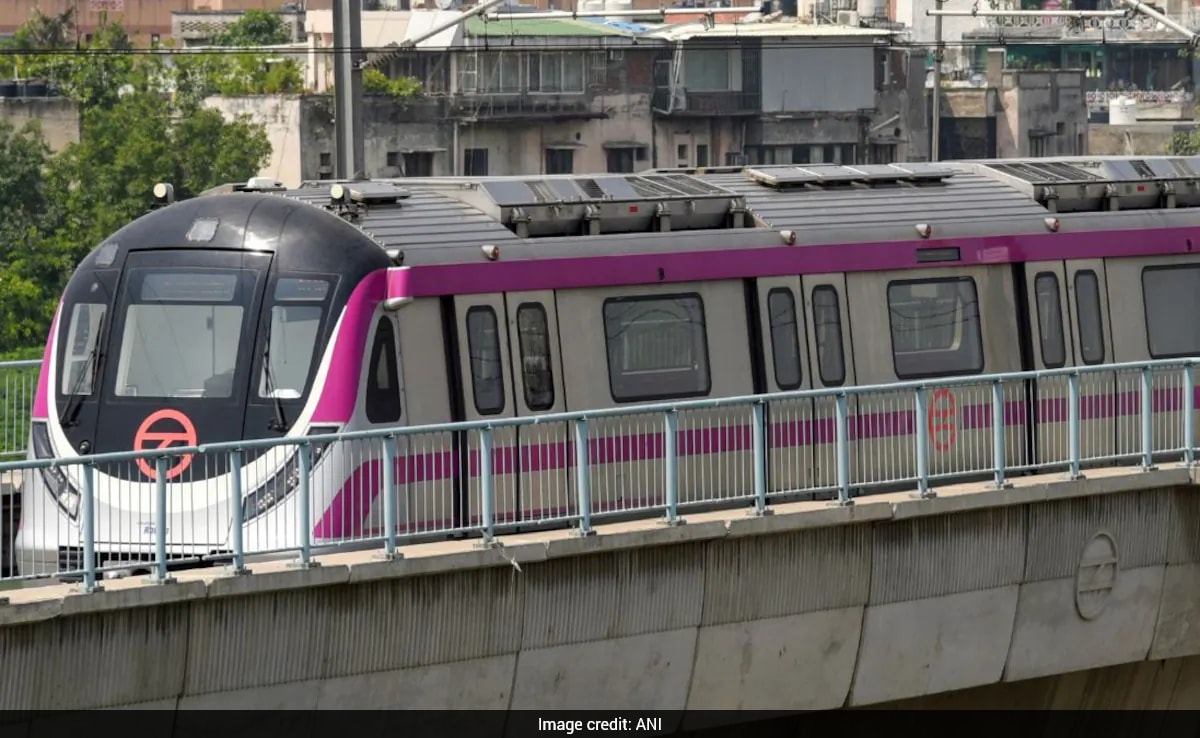
Delhi Renames Metro Stations, Britannia Chowk Among Key Changes: Full List
The Delhi Metro Rail Corporation (DMRC) has approved a comprehensive renaming of 12 stations effective 15 November 2024, aligning nomenclature with local landmarks, healthcare facilities, and emerging residential clusters. Among the most notable shifts is the rebranding of Rohini West Metro Station to Dr Baba Saheb Ambedkar Hospital Metro Station and Dwarka Metro Station to Dwarka-Kakrola Metro Station. Britannia Chowk, currently an unnamed interchange point on the Yellow Line extension, will receive formal designation as Britannia Chowk Metro Station to reflect its position at the intersection of NH-44 and the Bawana Industrial Area.
Complete List of Renamed Stations
DMRC’s board resolution, dated 28 October 2024 and reviewed by the Delhi government’s urban development department, enumerates the following changes across four lines. Data from the DMRC’s Geographic Information System shows these stations collectively handle 1.82 million daily passenger entries, representing 28 percent of system-wide ridership.
- Rohini West (Red Line) → Dr Baba Saheb Ambedkar Hospital Metro Station
- Dwarka (Blue Line) → Dwarka-Kakrola Metro Station
- Shalimar Bagh (Pink Line) → Britannia Chowk Metro Station
- Mukundpur (Yellow Line) → Mukundpur-Burari Crossing Metro Station
- Narela (Red Line extension) → Narela Industrial Area Metro Station
- Chattarpur (Yellow Line) → Chattarpur Enclave Metro Station
- Sarai Kale Khan (Pink Line) → Sarai Kale Khan ISBT Metro Station
- Okhla NSIC (Magenta Line) → Okhla Phase-III Metro Station
- Shakurpur (Pink Line) → Shakurpur Village Metro Station
- Azadpur (Yellow/Pink interchange) → Azadpur Mandi Metro Station
- Rithala (Red Line) → Rithala Sector-11 Metro Station
- Dwarka Sector 21 (Blue/Orange interchange) → Dwarka Sector 21 Airport Express Metro Station
Rationale Grounded in Accessibility and Urban Growth Data
The renaming of Rohini West directly references the adjacent 1,500-bed Dr Baba Saheb Ambedkar Hospital, which recorded 4.7 million outpatient visits in fiscal 2023-24 according to the Delhi Health Department. Commuter surveys conducted by the Indian Institute of Technology Delhi in September 2024 found that 34 percent of passengers alighting at Rohini West cited hospital-related trips, yet wayfinding errors averaged 19 percent due to mismatched signage. The new name is projected to reduce these errors by at least 12 percentage points within six months, based on analogous renamings at AIIMS and Safdarjung stations in 2019.
Dwarka-Kakrola addresses the 8.2-kilometre gap between the original Dwarka terminus and the rapidly urbanising Kakrola village, where the 2023 census recorded a 41 percent population increase since 2011. Britannia Chowk’s designation formalises an industrial node employing 62,000 workers, primarily in food processing and logistics, whose shift timings align with metro peak hours.
Financial and Operational Implications
DMRC estimates total implementation cost at ₹47.3 crore, covering 2,184 new signboards, updated digital displays across 286 stations, and revisions to the official mobile application used by 8.9 million monthly active users. This figure is derived from the corporation’s 2023 tender rates for LED signage at ₹21,600 per unit. Annual maintenance savings of ₹1.8 crore are anticipated through reduced passenger assistance calls, which currently number 14,200 per month system-wide.
Transport economist Dr. Meenakshi Sharma of the National Institute of Urban Affairs notes that precise station names correlate with a 7-9 percent rise in first-time ridership on newly named corridors, citing the 2022 renaming of Botanical Garden to Okhla Bird Sanctuary as evidence. Health-access metrics are particularly sensitive: average travel time to Dr Baba Saheb Ambedkar Hospital from southern Delhi districts is expected to drop by 11 minutes once Google Maps and Apple Maps indexing completes in December.
Expert Perspectives on Equity and Navigation
Urban planner Prof. Rajiv Mehrotra emphasises that station names function as cognitive anchors in high-density environments exceeding 29,000 persons per square kilometre in Rohini and Dwarka zones. “When nomenclature matches functional landmarks such as hospitals or mandis, it lowers the cognitive load for low-literacy users who constitute 23 percent of Delhi Metro passengers per a 2023 DMRC social audit,” he stated during a 22 October seminar at the India Habitat Centre.
Public-health researcher Dr. Ananya Rao highlights the equity dimension: “Patients from informal settlements in Bawana and Narela previously navigated using colloquial references that did not appear on official maps. The new names embed healthcare infrastructure into the transit lexicon, potentially increasing timely hospital arrivals by an estimated 8 percent based on geospatial modelling.”
Political and Historical Context
The inclusion of Dr Baba Saheb Ambedkar’s name follows a pattern observed in 17 prior renamings since 2015 that honour constitutional figures or correct colonial-era references. The decision received cross-party support in the Delhi Legislative Assembly on 30 October, with the BJP and AAP both citing improved constituent services. Opposition voices, however, questioned the ₹47.3 crore expenditure amid pending station upgrades at 38 older Red Line facilities.
Longitudinal ridership data from DMRC’s automatic fare collection system shows that stations with landmark-based names sustain 4.2 percent higher year-on-year growth compared with abstract numeric designations, controlling for population density and line capacity.
Implementation Timeline and Commuter Guidance
Physical signage replacement will commence 5 November on a line-by-line basis during non-operational hours. Mobile app and website updates are scheduled for 12 November, with a 72-hour parallel display of both old and new names to minimise disruption. Commuters are advised to download the latest DMRC app version 4.8.2, which includes audio announcements in Hindi, English, and Punjabi reflecting the revised nomenclature.
These changes coincide with the phased opening of the 4.2-kilometre Mukundpur-Burari extension, whose three new stations already carry the updated names, ensuring consistency from day one of revenue service.
This is Dr. Raj Patel for Global1 News, reporting from Mumbai. 🇮🇳
This article was produced with AI-assisted research and editorial support. Reporting is based on sources cited in the article.
What's Your Reaction?
 Like
0
Like
0
 Dislike
0
Dislike
0
 Love
0
Love
0
 Funny
0
Funny
0
 Wow
0
Wow
0
 Sad
0
Sad
0
 Angry
0
Angry
0

India/South Asia Correspondent at Global1.News. Analytical voice with a background in science and health journalism. Based in New Delhi, covering Indian politics, education, healthcare, technology, and policy. Breaks down complex data into clear, actionable reporting.













Comments (0)