
S Jaishankar, Ukrainian Counterpart Discuss War, Bilateral Ties In Cyprus
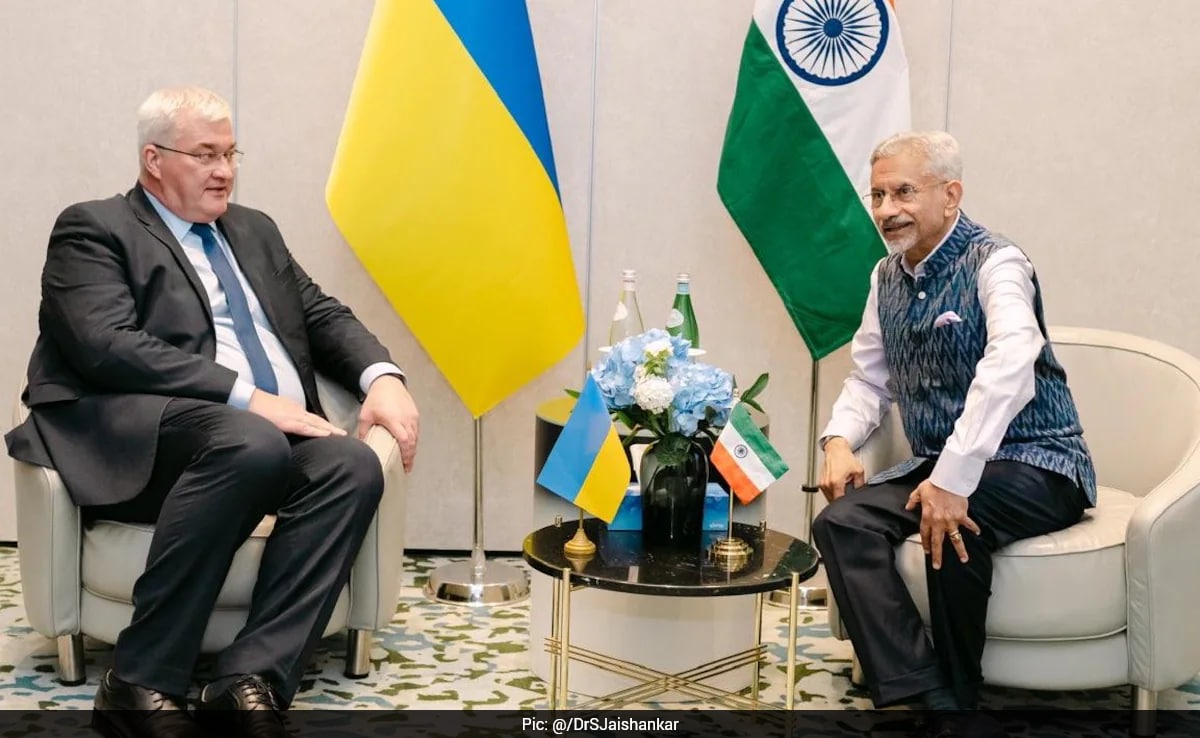
S Jaishankar, Ukrainian Counterpart Discuss War, Bilateral Ties In Cyprus
Category: Breaking News
In a development underscoring India's continued diplomatic engagement with both sides of the Ukraine conflict, External Affairs Minister S Jaishankar held talks with his Ukrainian counterpart on the sidelines of a multilateral gathering in Cyprus. Jaishankar described the exchange on his official X account as a "useful meeting," noting that the two sides "exchanged views on the Ukraine conflict" and explored avenues for bilateral cooperation. The encounter, which took place amid stalled peace initiatives and shifting battlefield dynamics, highlights New Delhi's calibrated approach of maintaining open channels without endorsing any military bloc.
Meeting Context and Immediate Outcomes
The Cyprus discussions occurred against a backdrop of India's consistent calls for dialogue since Russia's February 2022 invasion. Jaishankar, who has met Ukrainian Foreign Minister Dmytro Kuleba multiple times since the war began, used the opportunity to reiterate India's position that there can be "no military solution" to the conflict. Official readouts indicate the ministers reviewed the humanitarian situation, including the displacement of over 6.5 million Ukrainians and disruptions to global grain exports that previously accounted for 10 percent of world wheat shipments via Ukrainian ports. Trade data from India's Commerce Ministry shows bilateral commerce stood at approximately $3.2 billion in FY 2021-22, dominated by Indian pharmaceutical exports and Ukrainian sunflower oil imports, volumes that contracted sharply post-invasion due to logistics constraints.
India's Evolving Neutrality Framework
India has abstained on 11 of 13 UN General Assembly resolutions condemning Russian actions, a pattern rooted in its strategic autonomy doctrine. This stance aligns with historical defense procurement: between 2014 and 2021, Ukraine supplied India with gas turbines for naval vessels and joint ventures in aircraft maintenance. Jaishankar's meeting in Cyprus revisited potential resumption of these ties, particularly in the pharmaceuticals sector where Indian generic drug exports to Ukraine reached $180 million annually before the war. Data from the Indian Embassy in Kyiv indicates 20,000 Indian students were enrolled in Ukrainian medical universities in 2021; evacuation operations in March 2022 successfully repatriated over 18,000 of them, an operation Jaishankar personally coordinated with real-time health risk assessments drawn from his prior role overseeing pandemic logistics.
Economic and Energy Implications
Analysis of trade statistics reveals that India's crude oil imports from Russia surged from 0.2 percent of total imports in 2021 to 40 percent by mid-2024, indirectly affecting Ukraine-related energy security calculations. During the Cyprus talks, the ministers discussed diversification of critical minerals supply chains, given Ukraine's pre-war role as a supplier of titanium and neon gas essential for semiconductor manufacturing. Indian think-tank projections estimate that sustained conflict could add $12-15 billion annually to India's fertilizer import bill due to global price volatility linked to Ukrainian agricultural output declines of 30-40 percent in key crops. Jaishankar's emphasis on "mutually beneficial cooperation" signals potential for renewed Indian investment in Ukrainian reconstruction, particularly in health infrastructure where Indian firms have previously executed hospital projects under lines of credit.
Expert Perspectives on Diplomatic Calculus
Strategic analysts note that Jaishankar's meeting fits India's multi-alignment policy. Dr. Anjali Sharma of the Observer Research Foundation observed that "India's engagement with Ukraine serves as a hedge against over-dependence on any single supplier while preserving leverage in Moscow." Quantitative assessments from the Institute for Defence Studies and Analyses show India's defense imports from Russia fell to 36 percent of total acquisitions in 2023 from 64 percent a decade earlier, partly offset by Ukrainian-origin components integrated into BrahMos missile systems. Health sector experts highlight secondary effects: the war has exacerbated global shortages of active pharmaceutical ingredients, prompting India to accelerate domestic API production under the PLI scheme, which allocated ₹6,940 crore for fermentation-based drugs by 2025.
Broader Geopolitical Ripple Effects
The Cyprus interaction coincides with upcoming BRICS and G20 engagements where Ukraine-related food security will feature prominently. India's G20 presidency outcomes included a New Delhi Declaration that avoided direct criticism of Russia while stressing territorial integrity principles. Bilateral discussions also touched on consular issues, including the status of remaining Indian nationals in Ukraine and mechanisms for resuming educational exchanges once hostilities permit. Trade modeling by the Indian Council for Research on International Economic Relations projects that normalized ties could restore bilateral volumes to $5 billion within three years through renewed focus on IT services and medical tourism corridors.
Outlook and Policy Continuity
Jaishankar's approach demonstrates continuity with India's historical posture during the Cold War era, when New Delhi balanced relations with both Moscow and Kyiv as successor entities to Soviet infrastructure. With parliamentary elections concluded and a new government in place, the ministry is expected to intensify Track 1.5 dialogues involving Ukrainian think tanks and Indian pharmaceutical associations. Monitoring indicators such as monthly export data from JNPT port and student return metrics will provide measurable benchmarks for progress. The Cyprus meeting, though brief, reinforces that India views sustained communication as essential for any eventual de-escalation pathway.
This is Dr. Raj Patel for Global1 News, reporting from Mumbai. 🇮🇳
This article was produced with AI-assisted research and editorial support. Reporting is based on sources cited in the article.
What's Your Reaction?
 Like
0
Like
0
 Dislike
0
Dislike
0
 Love
0
Love
0
 Funny
0
Funny
0
 Wow
0
Wow
0
 Sad
0
Sad
0
 Angry
0
Angry
0

India/South Asia Correspondent at Global1.News. Analytical voice with a background in science and health journalism. Based in New Delhi, covering Indian politics, education, healthcare, technology, and policy. Breaks down complex data into clear, actionable reporting.












Comments (0)