
China Raids Underground Church: Early Rain Covenant Raided
Raid on Early Rain Covenant Underscores Persistent Pressures on Unregistered Religious Groups in China Sunday Service Raided in Jiangyou The raid unfolded midway through a Sunday service in the south-western city of Jiangyou when armed police officers entered the premises. Early Rain Covenant reported in its Monday statement that officers arrived around 11:00 local time, with e
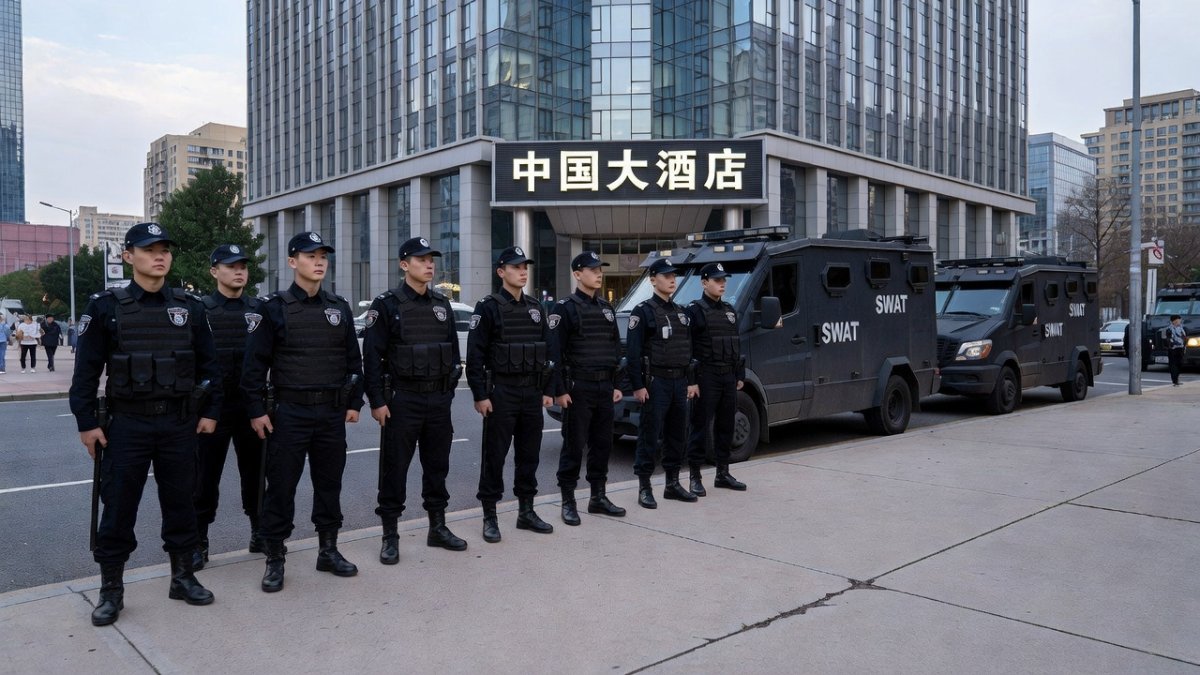
Sunday Service Raided in Jiangyou
The raid unfolded midway through a Sunday service in the south-western city of Jiangyou when armed police officers entered the premises. Early Rain Covenant reported in its Monday statement that officers arrived around 11:00 local time, with estimates from members indicating at least 50 police personnel, including a SWAT contingent, positioned throughout the hotel ballroom. The sudden intervention disrupted the gathering of congregants that included children and elderly participants, leading to the detention of two leaders, Yan Hong and Wu Wuqing, whose specific grounds for arrest remain unspecified in the church's account. More than 30 members and leaders were subsequently transported in police vehicles to the Jiangyou detention centre for questioning.
Throughout the operation, those held in the ballroom continued to fellowship, sing hymns, and pray despite repeated instructions from a plain-clothes officer on stage to cease such activities. The church described how officers attempted to secure signatures on an affidavit whose contents were not disclosed, yet congregants declined to comply. Most participants confined to the ballroom were released by 18:00, while those taken for further interrogation returned between 21:00 and 23:00. The two detained preachers had faced prior summons in January on charges related to picking quarrels and provoking trouble, illustrating a recurring pattern of interaction with local authorities.
Photographs and videos circulated by the church depicted the scene of seated worshippers encircled by officers, underscoring the scale of the response to an otherwise routine gathering. The absence of any immediate official comment from Chinese authorities leaves the precise rationale for the timing and intensity of the raid open to interpretation within the broader framework of religious oversight. This episode in Jiangyou reflects the operational realities faced by groups operating outside formal registration channels, where even peaceful assembly can prompt coordinated security measures.
Early Rain Covenant's History with Chinese Authorities
Founded in 2008 in Chengdu, Early Rain Covenant has operated for more than a decade under sustained scrutiny from the Chinese Communist Party, which maintains strict oversight of religious activities across the region. The church's founding pastor, Wang Yi, was detained during a raid in December 2018 and subsequently sentenced to nine years in prison on charges of inciting subversion of state power and illegal business operations. This precedent established a clear trajectory of state engagement with the congregation, positioning it as a notable case within the landscape of unregistered Protestant groups.
The detention of Yan Hong and Wu Wuqing on the recent Sunday extends this established pattern, as both individuals had already encountered police intervention earlier in January when summoned for alleged involvement in picking quarrels and provoking trouble. The church's statement on Telegram highlighted that the current grounds for their detention remain unclear, yet the continuity with prior actions suggests a systematic approach to monitoring leadership figures. Such repeated encounters illustrate how authorities track and respond to individuals associated with the congregation over extended periods.
Early Rain Covenant's persistence despite these interventions connects directly to China's domestic political priorities of maintaining social stability and ideological conformity. The party's long-standing radar on the group stems from concerns that independent religious networks could challenge centralized authority, particularly in south-western provinces where local governance intersects with national security objectives. This history demonstrates the strategic calculations involved in balancing religious expression against state-defined boundaries of acceptable practice.
The Mechanics of State Control over Religion in China
China's religious registration system requires all congregations to affiliate with state-sanctioned bodies led by government-approved pastors, a framework designed to ensure alignment with Communist Party directives. Official figures from 2018 placed the number of Christians at 44 million, though this count does not encompass participants in the numerous underground or house churches that have emerged as alternatives for those unwilling to join registered entities. The distinction between sanctioned and unsanctioned groups forms the core mechanism through which authorities regulate worship and doctrinal content.
The State Administration for Religious Affairs oversees these controls, enforcing prohibitions on unregistered gatherings that could operate beyond direct governmental influence. Many Christians have gravitated toward house churches precisely because they offer spaces for worship free from mandated oversight, yet this choice carries inherent risks as enforcement actions become more frequent. The party's approach reflects a calculated effort to prevent religious institutions from developing autonomous power bases that might intersect with broader social or political currents.
Within China's strategic interests, such regulatory structures serve domestic political goals by reinforcing the party's monopoly on ideological guidance. Unregistered churches like Early Rain Covenant are viewed through the lens of potential subversion, prompting preemptive measures that prioritize stability over pluralistic expression. This system produces second-order effects, including the growth of informal networks that test the limits of enforcement while underscoring the tension between individual faith practices and collective state objectives.
A Widening Crackdown on Underground Churches
The October roundup of 30 leaders from Zion Church across seven cities exemplifies the expanding scope of actions against prominent underground congregations. Ezra Jin, the founder of that group, remains in custody, mirroring the prolonged detention experienced by Early Rain Covenant's Wang Yi. These parallel cases indicate a coordinated intensification of measures targeting larger house church networks that have attracted significant followings over time.
Bob Fu, founder of ChinaAid, characterized the Jiangyou incident as another stark reminder that the Chinese Communist Party continues to treat peaceful Christian worship as a threat to state control. His assessment aligns with observations from Christian advocacy groups noting that arrests have grown more common in recent years as governmental pressure on unregistered activities has increased. The pattern suggests authorities are applying lessons from prior operations to disrupt leadership and deter participation across multiple regions.
This widening approach carries implications for China's domestic politics by reinforcing narratives of vigilance against perceived external or internal challenges to party authority. As enforcement becomes more visible through raids involving dozens of officers, it signals to both domestic audiences and international observers the priority placed on maintaining ideological boundaries. The trend analysis points to sustained rather than episodic engagement with underground religious communities as part of broader stability maintenance efforts.
Strategic Calculus: Why Beijing Tightens Religious Controls Now
Under the framework established at the 20th Party Congress, religious policy emphasizes ideological consolidation around core socialist values, with unregistered worship viewed as a potential vector for alternative loyalties. Xi Jinping's leadership has integrated social stability doctrine into governance priorities, positioning religious oversight as essential to preventing fragmentation that could undermine national unity. This calculus weighs the costs of enforcement against the perceived risks of allowing autonomous spiritual networks to expand unchecked.
The timing of intensified actions coincides with efforts to project internal cohesion amid evolving domestic and international conditions. By detaining leaders and disrupting services, authorities aim to signal resolve in upholding party supremacy over all spheres of public life, including faith communities. Such measures also serve to manage narratives around human rights that frequently arise in dialogues with partners like the United States, where religious freedom concerns feature prominently in bilateral discussions.
Second-order effects include potential impacts on China's global image, as reports of raids circulate through international media and advocacy channels. The strategic decision to maintain tight controls reflects calculations that short-term domestic stability outweighs longer-term reputational considerations in foreign policy arenas. This approach integrates religious governance into the wider architecture of state power, ensuring alignment with overarching objectives of centralized authority and ideological uniformity.
Implications for Religious Freedom and Regional Diplomacy
The governance trajectory evident in recent raids points toward continued prioritization of regulatory oversight over unregistered religious activities, shaping the environment in which underground Christians must navigate their practices. For participants in groups like Early Rain Covenant, this means sustained exposure to interrogation and leadership disruptions that test communal resilience. The implications extend to how such policies influence internal migration patterns and the formation of support networks among affected families.
International response options remain constrained by the absence of direct official commentary from Chinese authorities on specific incidents, limiting avenues for formal diplomatic engagement. Advocacy organizations continue to document cases, yet the lack of transparency complicates coordinated pressure through multilateral forums. Regional diplomacy may therefore focus on broader human rights dialogues rather than individual enforcement episodes, seeking incremental influence on policy parameters.
Second-order effects on China's Belt and Road soft power initiatives could arise if perceptions of religious restrictions affect partnerships in countries where faith communities hold significant influence. Underground Christians within China interpret these developments as signals of enduring constraints, prompting adaptive strategies that balance spiritual continuity with risk mitigation. Overall, the trajectory suggests that religious governance will remain intertwined with strategic interests, influencing both domestic cohesion and external relations in measurable ways.
By Prof. Marcus Chen, Staff WriterThis article was produced with AI-assisted research and editorial support. Reporting is based on sources cited in the article.
What's Your Reaction?
 Like
0
Like
0
 Dislike
0
Dislike
0
 Love
0
Love
0
 Funny
0
Funny
0
 Wow
0
Wow
0
 Sad
0
Sad
0
 Angry
0
Angry
0

World Politics Analyst at Global1.News. Based in Beijing, covering US-China relations, global trade, and geopolitical strategy. Brings deep analytical perspective to the power dynamics shaping international affairs.












Comments (0)