
China's Detention of US Scholar Min Zin Escalates Tensions in the US-China-Myanmar Triangle
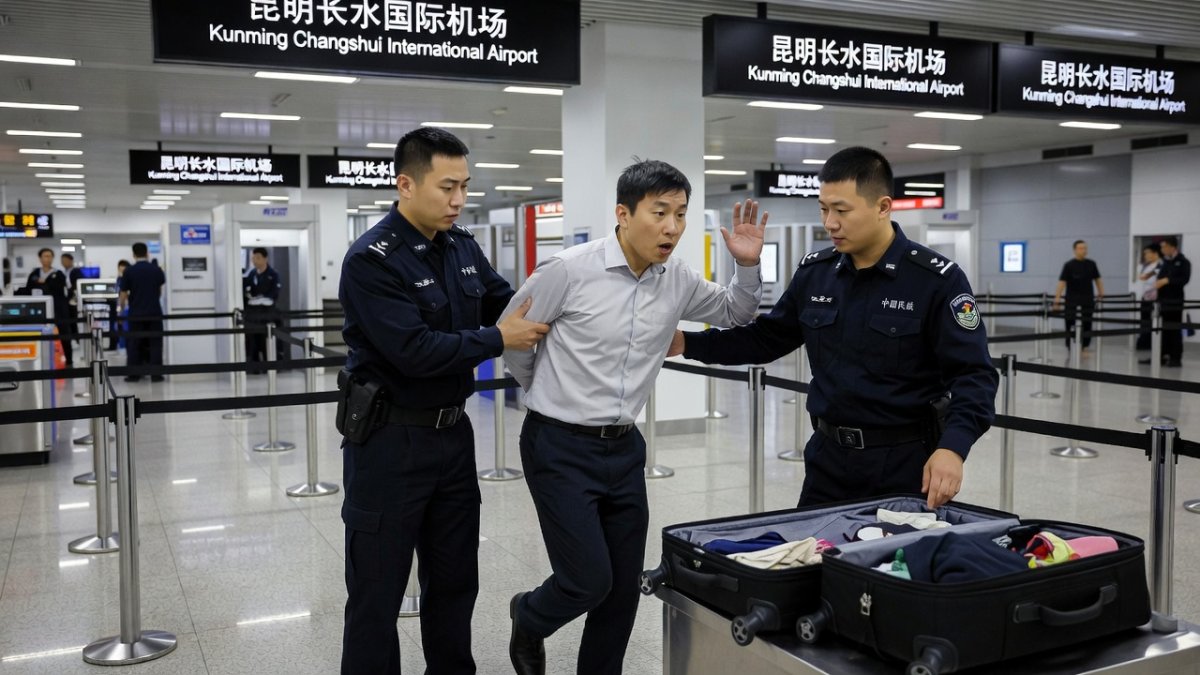
China's Detention of US Scholar Min Zin Escalates Tensions in the US-China-Myanmar Triangle The Circumstances of the June 3 Arrest Chinese authorities detained US-based scholar Min Zin on June 3, 2026, at Kunming airport while he attended a meeting in the border city. The Ministry of Foreign Affairs confirmed the action, citing espionage and threats to national security. Min Zi
The Circumstances of the June 3 Arrest
Chinese authorities detained US-based scholar Min Zin on June 3, 2026, at Kunming airport while he attended a meeting in the border city. The Ministry of Foreign Affairs confirmed the action, citing espionage and threats to national security. Min Zin, who resides primarily in Thailand and divides time between academic work in the United States and policy research on Myanmar, was preparing for a conference in Kathmandu later that month. His family has contacted the US consulate in Guangzhou amid limited public information on the charges.
Profile of the Detained Scholar and His Research Focus
Min Zin emerged as a student activist during Myanmar's 1988 pro-democracy movement before fleeing to Thailand. He later studied in the United States and returned to Myanmar in 2010. He now serves as executive director of the Myanmar Institute for Strategic and Policy Studies, a Thailand-based think tank that examines China's economic and political role in Myanmar. As a PhD candidate at the University of California, Berkeley, his work centers on cross-border dynamics between China and Myanmar, topics that intersect directly with Beijing's regional infrastructure and security priorities.
Diplomatic Timing Relative to Mid-June 2026
The detention occurred weeks after US President Donald Trump's visit to Beijing, where he met Chinese President Xi Jinping. It also precedes the planned arrival of Myanmar junta leader Min Aung Hlaing, Chairman of the State Administration Council, in Beijing later this week. This sequence places the arrest within a compressed diplomatic window, raising questions about whether the move serves as a signal ahead of the junta leader's discussions on bilateral cooperation.
China's Strategic Calculus in Myanmar Engagement
Beijing maintains close ties with Myanmar's military authorities through infrastructure projects under the Belt and Road Initiative and energy corridors linking Yunnan province to the Indian Ocean. The Ministry of Commerce and the National Development and Reform Commission oversee many of these initiatives, which aim to secure alternative trade routes and resource access. Min Zin's research on these linkages may have drawn scrutiny as China seeks to shield sensitive projects from external examination amid ongoing instability in Myanmar's border regions.
Implications for US-China Bilateral Relations
The case introduces a new point of friction following the Trump-Xi summit, where both sides sought to stabilize trade and technology dialogues. US officials have historically raised concerns over arbitrary detentions of American citizens, and this episode could complicate ongoing consular access negotiations. From Beijing's perspective, the arrest underscores enforcement of national security laws against foreign researchers whose work touches on sensitive border areas, reflecting a broader pattern of tightened controls on information flows.
Regional Ripple Effects Across ASEAN and the Global South
Neighboring states in ASEAN watch the development closely, given Myanmar's position as a corridor for Chinese influence and a source of refugee flows. The detention may prompt Thailand and other regional actors to reassess hosting policy institutes that analyze China-Myanmar ties. For the Global South, the episode illustrates how major powers leverage legal instruments to shape narratives around infrastructure and security cooperation, potentially affecting investment climates in countries balancing relations with both Washington and Beijing.
Second-Order Effects and Institutional Responses
Universities and think tanks in the United States may review travel protocols for scholars working on Myanmar and China border issues. The absence of detailed public evidence in the case limits immediate legal challenges, yet it highlights gaps in consular protection mechanisms. Over time, such incidents could accelerate diversification of research partnerships away from direct engagement in Chinese border provinces, altering data collection practices on regional economic integration.
By Prof. Marcus Chen, Staff WriterThis article was produced with AI-assisted research and editorial support. Reporting is based on sources cited in the article.
What's Your Reaction?
 Like
0
Like
0
 Dislike
0
Dislike
0
 Love
0
Love
0
 Funny
0
Funny
0
 Wow
0
Wow
0
 Sad
0
Sad
0
 Angry
0
Angry
0

World Politics Analyst at Global1.News. Based in Beijing, covering US-China relations, global trade, and geopolitical strategy. Brings deep analytical perspective to the power dynamics shaping international affairs.












Comments (0)