
China Confirms Arrest of US Scholar on Espionage Charges as Geopolitical Calculations Intensify
(BBC News) The Ministry of Foreign Affairs in Beijing has confirmed the arrest of U Min Zin, a US-based scholar specializing in Myanmar affairs, on charges of espionage and endangering Chinese national security. The detention, which occurred at Kunming airport in Yunnan province on 3 June, represents one of the rare instances in recent years where China has publicly acknowledge
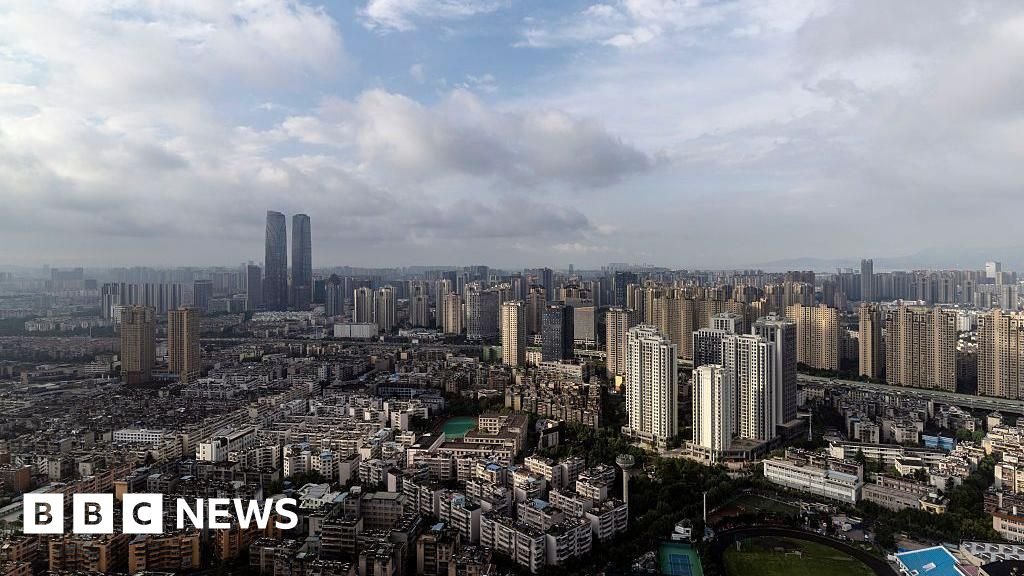
(BBC News)
The Ministry of Foreign Affairs in Beijing has confirmed the arrest of U Min Zin, a US-based scholar specializing in Myanmar affairs, on charges of espionage and endangering Chinese national security. The detention, which occurred at Kunming airport in Yunnan province on 3 June, represents one of the rare instances in recent years where China has publicly acknowledged the arrest of a US citizen on national security grounds. Family members have confirmed they are coordinating with the US consulate in Guangzhou, though Beijing has provided few additional details consistent with standard procedures in sensitive espionage cases.
The Detention and Official Confirmation
The sequence of events surrounding U Min Zin’s detention unfolded with characteristic precision on the Chinese side. According to multiple sources cited by AFP, the scholar was taken into custody at Kunming Changshui International Airport on 3 June while preparing to depart after attending a closed meeting. Yunnan provincial authorities transferred the case to central security organs within days, after which the Ministry of Foreign Affairs issued a brief confirmation that an American national had been detained for activities endangering national security. This measured public acknowledgment aligns with Beijing’s practice of releasing minimal information once an investigation has been formally opened under the National Intelligence Security Law.
Family members in Thailand and the United States immediately contacted the US consulate in Guangzhou, the designated post for consular matters in southwest China. Chinese officials have followed established protocol by allowing limited consular access while withholding the precise charges and evidence. The absence of further public statements from the MFA reflects standard handling of espionage cases, where details remain classified until a formal indictment or diplomatic resolution emerges. The timing of the confirmation, coming weeks after high-level US-China meetings, suggests Beijing sought to signal resolve without derailing ongoing bilateral channels.
Strategic analysts note that Kunming’s role as the gateway to Myanmar made it a logical location for heightened scrutiny. The city hosts numerous academic and commercial gatherings focused on the China-Myanmar Economic Corridor, creating both opportunity and risk for researchers whose work touches sensitive infrastructure and political networks. The MFA’s terse statement therefore serves dual purposes: satisfying domestic legal requirements while conveying to foreign governments that intelligence activities in border regions will face decisive response.
Who Is U Min Zin? A Scholar at the Center of Geopolitical Crosscurrents
U Min Zin’s trajectory embodies the complex interplay between Myanmar’s democratic aspirations and China’s regional influence. A participant in the 1988 pro-democracy movement, he fled to Thailand after the military crackdown and later pursued academic training in the United States. His subsequent return to Myanmar in 2010 and current position as executive director of the Institute for Strategic and Policy Studies (ISP-Myanmar) have positioned him as a leading independent voice on Chinese economic and political engagement in the country.
ISP-Myanmar’s research portfolio explicitly examines Beijing’s infrastructure investments, elite networks, and security cooperation with the Myanmar military. This focus places the think tank at the intersection of development studies and strategic analysis, attracting both international funding and official Chinese attention. U Min Zin’s concurrent doctoral studies at the University of California, Berkeley further embed him within Western academic networks that scrutinize Belt and Road projects in Southeast Asia.
From Beijing’s perspective, scholars who combine deep local knowledge with access to US institutions represent potential vectors for intelligence collection on sensitive border dynamics. The decision to arrest such a figure therefore carries a clear deterrent message to other researchers operating in Yunnan and along the Myanmar frontier. At the same time, his profile as a former student activist complicates any narrative that frames the case solely as routine counter-espionage, highlighting instead the long shadow of Myanmar’s internal political struggles over Chinese strategic calculations.
Diplomatic Timing: The Trump Visit and Upcoming Myanmar Summit
The detention occurred against a carefully sequenced diplomatic calendar. President Trump’s recent visit to Beijing featured elaborate ceremonial displays and discussions on trade and North Korea, yet produced no visible breakthrough on Myanmar-related security issues. Weeks later, Myanmar’s military leader Min Aung Hlaing is scheduled to arrive in the Chinese capital, underscoring the junta’s continued reliance on Beijing for diplomatic cover and economic support following the 2021 coup.
Chinese officials likely calculated that a visible national-security action in Yunnan would reinforce leverage ahead of the Naypyidaw-Beijing talks without directly implicating the upcoming summit. By acting in Kunming rather than Yangon or Naypyidaw, authorities kept the matter geographically contained while reminding both Washington and the Myanmar military of China’s ability to shape events along the shared border. The MFA’s confirmation thus functions as a low-cost signal of resolve at a moment when Beijing seeks to consolidate influence over Myanmar’s post-coup trajectory.
US diplomats face the familiar dilemma of balancing consular protection for citizens with broader strategic interests in Southeast Asia. Any public protest risks complicating already fragile bilateral channels, while silence could encourage further detentions. The episode therefore tests Washington’s willingness to prioritize academic and civil-society access in a region where China’s material leverage remains substantial.
China's Counter-Espionage Framework and the National Security Law
China’s legal architecture for counter-espionage has expanded steadily since the 2014 Counter-Espionage Law and the 2017 National Intelligence Security Law. These statutes define a wide range of activities as threats to national security, including the collection of information on infrastructure, military deployments, and foreign policy decision-making. The laws grant security organs broad authority to detain suspects and restrict information flows during investigations.
Application of these provisions to foreign nationals remains infrequent but has increased in recent years as Beijing prioritizes technological self-reliance and border stability. The U Min Zin case illustrates how academic research on Chinese projects in Myanmar can fall within the expansive definition of endangering national security when it intersects with strategic corridors. Prosecutors are not required to disclose specific evidence at the initial detention stage, allowing authorities to maintain operational secrecy.
Foreign governments and institutions must therefore navigate an environment in which standard scholarly inquiry on Belt and Road implementation can trigger legal exposure. Beijing’s approach reflects a deliberate tightening of information space around its southwestern periphery, consistent with the broader objective of securing supply routes and political influence in Myanmar without external interference.
Kunming and the Borderlands: China's Myanmar Strategy
Yunnan province serves as the logistical and diplomatic hub for China’s engagement with Myanmar. Kunming hosts the annual China-South Asia Exposition and multiple coordination offices for the China-Myanmar Economic Corridor, which includes oil and gas pipelines linking the Bay of Bengal to Chinese refineries. These assets reduce Beijing’s vulnerability to maritime chokepoints and support the Dual Circulation strategy’s emphasis on secure resource inflows.
Security measures in the province have intensified alongside infrastructure development. The presence of international researchers at conferences in Kunming creates opportunities for both legitimate academic exchange and potential intelligence gathering. Chinese authorities view the border region as a zone requiring heightened vigilance, particularly given Myanmar’s internal instability and the risk that external actors could exploit ethnic or political fissures.
By conducting the arrest at Kunming airport, authorities underscored that even short-term academic visits fall under the same scrutiny applied to commercial or official travel. This approach aligns with Beijing’s long-term goal of shaping Myanmar’s political and economic orientation while limiting foreign influence along a critical corridor for energy security and regional connectivity.
Broader Implications for US-China Academic Exchange
The arrest is likely to accelerate an already evident chilling effect on US scholars conducting fieldwork in China or studying Chinese activities in neighboring countries. Universities and think tanks will face increased pressure to reassess travel protocols, data-sharing practices, and partnerships involving sensitive geographic areas. Funding bodies may redirect resources away from projects that could expose researchers to detention risks.
Chinese institutions, meanwhile, will encounter greater difficulty attracting American participants to joint programs focused on Myanmar or the broader Mekong region. The episode reinforces perceptions that Beijing is willing to leverage national-security instruments against individuals whose research profiles overlap with strategic interests, regardless of citizenship or academic credentials.
Over time, this dynamic could fragment the epistemic community that has historically informed policy debates on China-Myanmar relations. Reduced cross-border scholarly interaction may ultimately limit both sides’ understanding of developments on the ground, raising the probability of miscalculation in an already volatile border environment.
What This Means for the US-China-Myanmar Triangle
The detention injects new friction into the triangular relationship linking Washington, Beijing, and Naypyidaw. Myanmar’s military leadership will interpret the move as further evidence of China’s determination to police its interests inside Myanmar’s orbit, potentially encouraging greater deference to Beijing on economic and security matters. At the same time, the case offers Washington a concrete example of the risks its citizens face when engaging with the region, possibly prompting more cautious diplomatic and academic postures.
ASEAN states will watch closely for signs that the episode signals a broader Chinese willingness to apply extraterritorial pressure on researchers and analysts. Such a precedent could affect how regional think tanks approach topics involving Chinese infrastructure or military cooperation. For the Global South more generally, the case highlights the trade-offs between economic engagement with China and the preservation of independent analytical capacity.
Ultimately, Beijing’s action serves its core objectives of technological self-sufficiency and regional influence expansion by deterring external scrutiny along strategic frontiers. Whether this approach yields sustainable stability or generates unintended diplomatic costs will depend on how Washington, Naypyidaw, and other regional actors calibrate their responses in the coming months.
By Prof. Marcus Chen, Staff WriterThis article was produced with AI-assisted research and editorial support. Reporting is based on sources cited in the article.
What's Your Reaction?
 Like
0
Like
0
 Dislike
0
Dislike
0
 Love
0
Love
0
 Funny
0
Funny
0
 Wow
0
Wow
0
 Sad
0
Sad
0
 Angry
0
Angry
0
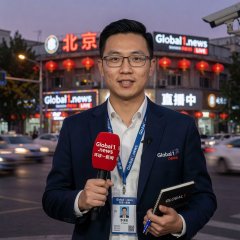
World Politics Analyst at Global1.News. Based in Beijing, covering US-China relations, global trade, and geopolitical strategy. Brings deep analytical perspective to the power dynamics shaping international affairs.















Comments (0)