
China's 15th Five-Year Plan: Strategic Priorities
China's 15th Five-Year Plan: Strategic Shifts Toward High-Quality Development and Technological Autonomy In a recent CGTN report titled "China's 15th Five-Year Plan unpacked: Growth, innovation and the global economy," analysts examine how Beijing's latest blueprint for 2026-2030 prioritizes measured advancement over breakneck expansion. The discussion highlights continuity wit
The Strategic Context of the 15th Five-Year Plan
The 15th Five-Year Plan emerges from the 2026 Two Sessions as a deliberate evolution of China's long-term governance framework. Building directly on the 14th Five-Year Plan's focus on resilience, the new document reflects input from the National Development and Reform Commission (NDRC), which coordinates macroeconomic targets across ministries. Officials have framed the plan as essential for navigating a fragmented global order, where supply-chain security and technological sovereignty rank alongside traditional growth metrics.
China's leadership views this period as pivotal for consolidating gains from the previous cycle. The 14th Five-Year Plan delivered measurable progress in infrastructure modernization and poverty alleviation, yet it also exposed vulnerabilities in external demand dependence. The 15th iteration therefore integrates lessons from that experience, emphasizing coordinated policy across the NDRC and the Ministry of Commerce (MOFCOM) to balance internal upgrading with selective international engagement.
From Quantitative Growth to Qualitative Development
Central to the 15th Five-Year Plan is a decisive pivot from headline GDP targets toward high-quality development indicators. Rather than chasing double-digit expansion, planners stress productivity gains, industrial upgrading, and equitable income distribution. This recalibration aligns with assessments that rapid quantitative growth has reached diminishing returns amid demographic headwinds and resource constraints.
Policy documents signal that 2026 economic targets will incorporate metrics such as total factor productivity and urban-rural income ratios alongside conventional output figures. The NDRC has already begun pilot programs to track these dimensions, suggesting the plan will institutionalize qualitative benchmarks. Such an approach reduces exposure to cyclical external shocks while reinforcing domestic stability, a core objective of the Chinese Communist Party's governance model.
Technological Self-Reliance Under the 15th Plan
Technological self-reliance occupies the plan's core strategic pillar. Emphasis falls on advancing semiconductors, artificial intelligence, and green technologies through targeted state support and enterprise-level innovation. The document outlines continued funding mechanisms that build on 14th Five-Year Plan initiatives, aiming to close capability gaps exposed by export controls from advanced economies.

MOFCOM's role in technology trade facilitation complements NDRC-led industrial policy, creating a dual-track system for acquiring critical know-how while nurturing indigenous champions. This focus responds directly to U.S. restrictions on advanced chip exports, illustrating Beijing's determination to achieve autonomy in foundational technologies. Second-order effects include accelerated regional technology partnerships within ASEAN and expanded collaboration with Global South economies seeking alternatives to Western-dominated supply chains.
Dual Circulation and the Domestic Demand Pivot
The Dual Circulation strategy receives renewed emphasis, positioning domestic consumption as the primary growth engine while maintaining efficient external linkages. The 15th Five-Year Plan allocates resources to expand middle-class purchasing power through social welfare enhancements and urban-rural integration measures. These steps aim to reduce reliance on export-led models vulnerable to geopolitical friction.
Implementation will involve coordinated fiscal measures from the NDRC and regulatory adjustments by MOFCOM to stimulate internal markets. Historical experience from the 14th Five-Year Plan shows that consumption-oriented policies can stabilize growth during external downturns, yet success hinges on addressing income inequality. The plan's common prosperity provisions therefore serve both economic and political functions, reinforcing social cohesion while expanding the domestic demand base.
Green Transformation and Climate Commitments
Green transformation forms another cornerstone, with explicit linkages to carbon neutrality timelines. The plan advances renewable energy deployment, circular economy practices, and low-carbon industrial processes, extending commitments made under the 14th Five-Year Plan. NDRC oversight ensures alignment between environmental targets and broader development objectives, avoiding the trade-offs that have historically complicated rapid decarbonization.
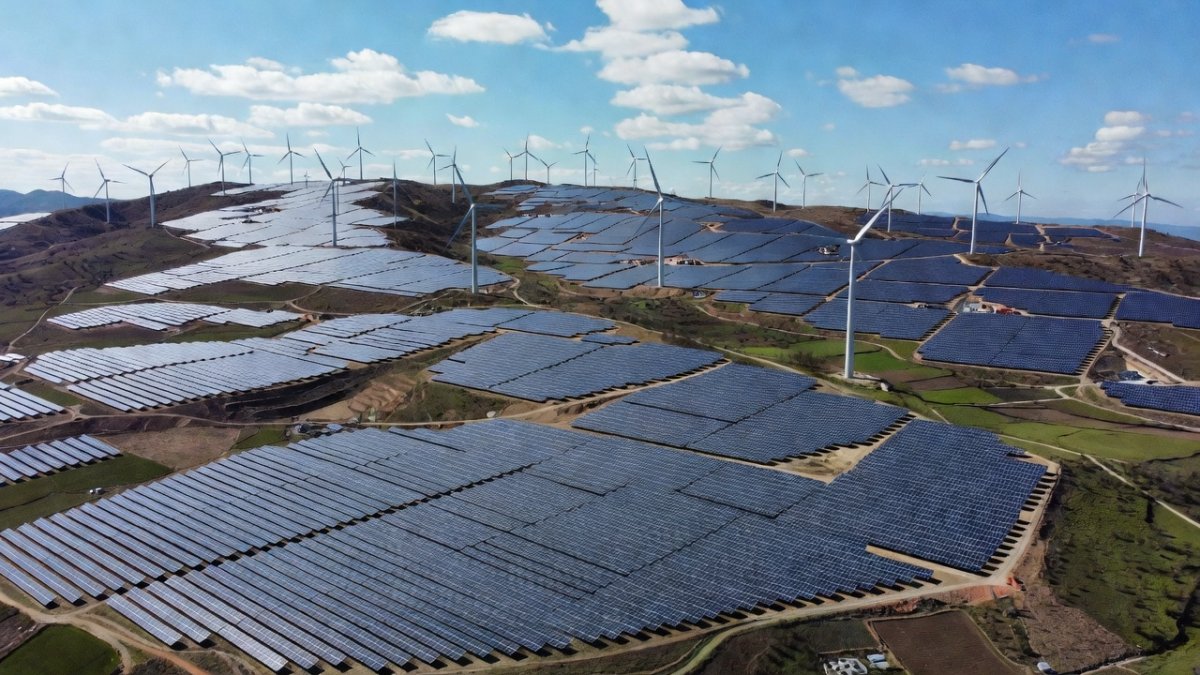
These measures carry geopolitical weight. By positioning China as a leader in green technology exports, the strategy enhances leverage in multilateral climate forums and creates new commercial opportunities across developing markets. At the same time, it mitigates risks associated with energy import dependence, contributing to long-term strategic autonomy.
Implications for US-China Relations and Global Supply Chains
The 15th Five-Year Plan's technology and trade provisions will intensify US-China strategic competition. Washington is likely to interpret expanded domestic innovation programs as efforts to circumvent existing export controls, prompting further defensive measures. Beijing, for its part, seeks to diversify partnerships and reduce single-point vulnerabilities, a calculus that favors deeper integration with European and Asian economies.
Global supply chains face continued reconfiguration. Firms will accelerate friend-shoring and multi-sourcing strategies, while ASEAN nations may benefit from redirected investment flows. The plan's emphasis on selective openness suggests China will maintain engagement where mutual gains exist, yet prioritize resilience over unfettered interdependence. Second-order effects include heightened scrutiny of technology transfer agreements and evolving standards for critical minerals and digital infrastructure.
The Bottom Line
China's 15th Five-Year Plan represents a calculated response to structural challenges at home and abroad. By elevating quality, self-reliance, and domestic circulation, Beijing aims to sustain momentum toward national rejuvenation while managing external frictions. The document's success will depend on effective coordination among the NDRC, MOFCOM, and local governments, as well as adaptive responses to unforeseen geopolitical developments. For international observers, the plan offers a clear window into China's strategic priorities through 2030, underscoring the enduring importance of technological capacity and internal market strength in great-power competition.
By Prof. Marcus Chen, Staff WriterThis article was produced with AI-assisted research and editorial support. Reporting is based on sources cited in the article.
What's Your Reaction?
 Like
0
Like
0
 Dislike
0
Dislike
0
 Love
0
Love
0
 Funny
0
Funny
0
 Wow
0
Wow
0
 Sad
0
Sad
0
 Angry
0
Angry
0

World Politics Analyst at Global1.News. Based in Beijing, covering US-China relations, global trade, and geopolitical strategy. Brings deep analytical perspective to the power dynamics shaping international affairs.













Comments (0)