
Canada Selects TKMS for Up to 12 Submarines in $24 Billion Defence Purchase
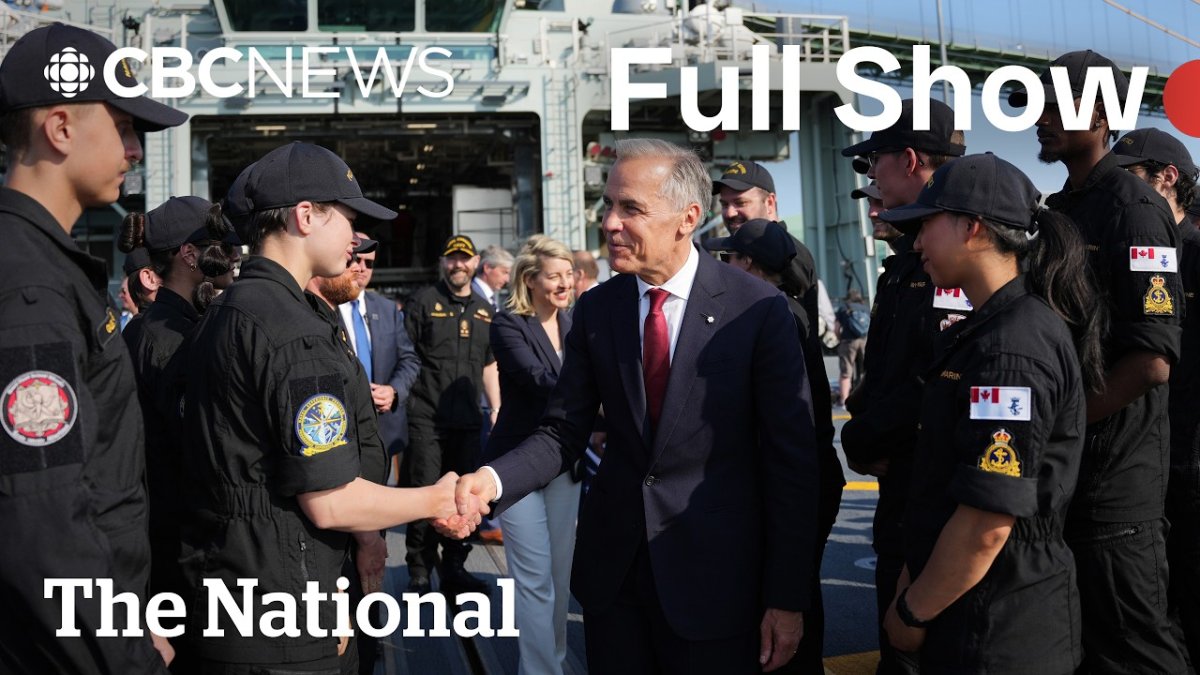
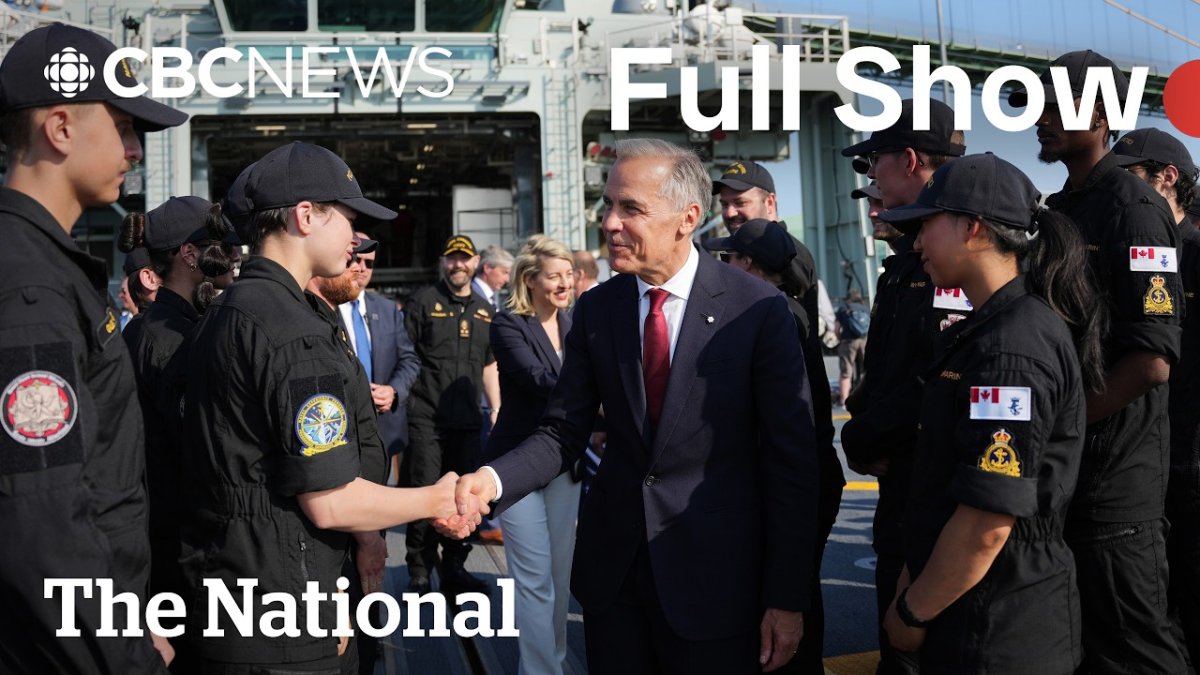
Prime Minister Mark Carney announced the selection on Monday at HMC Dockyard in Halifax, Nova Scotia. TKMS, or ThyssenKrupp Marine Systems, was named the preferred supplier for the Type 212CD submarines. Negotiations with the German shipbuilder begin immediately, with a contract expected by next year. Carney stated that this project builds Canadian industrial capacity beyond th
Prime Minister Mark Carney announced the selection on Monday at HMC Dockyard in Halifax, Nova Scotia. TKMS, or ThyssenKrupp Marine Systems, was named the preferred supplier for the Type 212CD submarines. Negotiations with the German shipbuilder begin immediately, with a contract expected by next year. Carney stated that this project builds Canadian industrial capacity beyond the acquisition of submarines themselves.
Secretary of State for Defence Procurement Stephen Fuhr briefed navy personnel on the West Coast in Esquimalt, British Columbia, on the same day. The announcement fulfilled a Liberal election promise to address chronic defence procurement problems. Both the TKMS Type 212CD and the Hanwha KSS-III remain conventionally powered diesel-electric submarines under consideration.
The decision positions Canada to modernise its undersea fleet through established European partnerships. Halifax serves as the primary East Coast base where initial integration activities will occur. Fuhr's parallel briefing ensured West Coast operations in Esquimalt received identical information without delay.
Carney emphasised that the submarine acquisition forms part of broader efforts to strengthen domestic shipbuilding capabilities. The choice of a diesel-electric design aligns with current Royal Canadian Navy requirements for operations in both Atlantic and Pacific waters. This step marks the first major progress on the submarine file since the election commitment.
Canada Selects TKMS for Up to 12 Submarines in $24 Billion Defence Purchase
Halifax, Nova Scotia — Prime Minister Mark Carney named ThyssenKrupp Marine Systems the preferred supplier for Canada's new submarine fleet in a dockside announcement at HMC Dockyard on Monday. The multibillion-dollar program is expected to be the largest defence procurement in Canadian history.
The Bidding War: TKMS vs. Hanwha Ocean
TKMS defeated South Korea's Hanwha Ocean in a tight competition that lasted one year. Hanwha Ocean will be retained as the reserve supplier if negotiations with TKMS do not succeed. TKMS chief executive Oliver Burkhard stated that the company stands ready to work alongside the government of Canada, Canadian industry, and partners in Germany and Norway to deliver a world-class submarine capability that will strengthen security, create economic opportunity and generate lasting benefits for future generations.
Carney confirmed that both the TKMS and Hanwha platforms met the capabilities required by the Royal Canadian Navy. The reserve clause explicitly states that Canada retains the right to designate Hanwha's KSS-III as the preferred supplier if talks with TKMS prove unsuccessful. This dual-track approach provides contingency planning for the multi-billion-dollar programme. Carney said in his speech that this was a difficult, close decision between two highly qualified suppliers and that both put forward strong proposals to maximise benefits for Canadian workers and businesses.
The one-year bidding process involved detailed technical evaluations at Canadian facilities and government-to-government negotiations with both Germany and South Korea. Both bidders and their respective governments were given until the spring to submit detailed proposals and promises of economic offsets that could mean billions of dollars in investment in the Canadian economy.
Economic Impact: Jobs and Investment
The programme covers up to 12 submarines with an estimated purchase cost of $24 billion. Lifetime costs including maintenance and sustainment are projected to exceed $100 billion. A 100 percent economic benefits package matching the contract value is required under the terms. TKMS has promised an $86 billion economic boost along with tens of thousands of jobs across Canada over the project lifetime. Employment opportunities will span shipyards in Halifax and Esquimalt as well as the broader Canadian supply chain.
Technology transfer provisions and Canadian content requirements form core elements of the agreement. In its original pitch, TKMS committed to delivering four submarines to Canada by 2036, but a senior federal official confirmed Monday that timeline could be advanced to 2034 if negotiations proceed smoothly. Carney reiterated that the government campaigned on fixing Canada's chronic defence procurement problems and described the announcement as an important step in that direction.
Carney signalled he is committed to buying all 12 boats and said money has been set aside in the federal government's long-term fiscal framework. The $86 billion economic boost figure includes direct and indirect spending across multiple provinces. Jobs created will involve skilled trades in welding, engineering, and systems integration at both coastal facilities. The lifetime cost projection of more than $100 billion accounts for operational support over several decades, making this the largest single defence capital project in recent Canadian history.
Strategic Implications for Canada
Carney will travel to the NATO summit in Ankara, Turkey, where the submarine deal serves as the centrepiece of Canada's defence spending presentation. With the United States under President Trump pulling away from NATO commitments, Canada is strengthening ties with European allies. Carney plans to propose a defence investment bank that will allow NATO countries easier access to capital for defence manufacturing.
Former diplomat Marius Grinius, who has done five postings in the Indo-Pacific region, stated that NATO solidarity in the face of Putin's aggression and Trump's unreliability is important. However, Grinius warned that a strategic opportunity for Canada in the Indo-Pacific has been squandered. Carney affirmed that Canada stays committed to its Indo-Pacific strategy despite the European focus of the submarine selection. He noted he had spoken directly with South Korean President Lee Jae Myung over the weekend regarding continued bilateral cooperation.
Defence analyst Dave Perry, president of the Canadian Global Affairs Institute, said the selection of TKMS is a huge step forward. Perry stated that the acquisition will give Canada a right-sized fleet of modern submarines for the first time in generations and that for a project of this size, the submarine buy has moved with astonishing speed. The NATO summit timing allows Canada to demonstrate concrete progress on procurement reform to allies.
What This Means for the Royal Canadian Navy
The four aging Victoria-class submarines are scheduled for retirement in the 2030s. HMCS Corner Brook, recently photographed passing an iceberg in Frobisher Bay, is among the boats to be replaced. The first four Type 212CD submarines are expected by 2036, with possible acceleration to 2034. The new submarines use air-independent propulsion for extended submerged endurance, critical for patrols in Atlantic, Pacific, and Arctic waters.
The acquisition will more than double the current submarine fleet size. If all 12 boats are purchased, a full one-third to half of the navy's fleet would be made up of submarines. While Canada had the world's third-largest navy after the Second World War, its subsequent submarine complement was never that large. The Type 212CD's advanced stealth capabilities offer significantly improved performance compared with the Victoria-class boats now in service.
The modernisation addresses long-standing gaps in Canada's underwater surveillance and deterrence posture. The increased number of hulls allows for more frequent deployments without exhausting crews or maintenance schedules. Public safety benefits include enhanced search-and-rescue support and fisheries protection in Canada's exclusive economic zone.
What Happens Next
Negotiations with TKMS begin immediately, with a contract expected next year. If negotiations fail, Canada retains the option to designate Hanwha Ocean as the preferred supplier and enter negotiations with them. First steel cutting is scheduled within two to three years of the signed contract. Facilities in Halifax and Esquimalt will undergo upgrades to support the larger Type 212CD boats.
Parliamentary approval will be required for funding allocations. Carney will present the submarine programme as evidence of Canada's renewed commitment to NATO during the Ankara summit. The defence investment bank proposal accompanies the submarine announcement during those discussions. Federal officials will also establish oversight mechanisms to track the promised $86 billion in economic benefits, ensuring the 100 percent matching provision is met over the project's lifetime.
The entire process reflects the Liberal government's election pledge to streamline defence acquisitions while delivering measurable returns to Canadian workers and communities. Defence officials expect the first steel to be cut within three years once the contract is signed, with the first four boats operational by the mid-2030s before the Victoria-class vessels are fully retired.
By Alex Thompson, Staff Writer
This article was produced with AI-assisted research and editorial support. Reporting is based on sources cited in the article.
What's Your Reaction?
 Like
0
Like
0
 Dislike
0
Dislike
0
 Love
0
Love
0
 Funny
0
Funny
0
 Wow
0
Wow
0
 Sad
0
Sad
0
 Angry
0
Angry
0

Canada Correspondent at Global1.News. Based in Toronto, covering Canadian politics, energy, trade, and US-Canada relations. Provides the Canadian perspective on North American and global affairs.















Comments (0)