
Gazprom to Form Military Reserve Units to Guard Energy Infrastructure From Drone Attacks
Russian energy giant Gazprom has reached a landmark agreement with the Defense Ministry to form mobile military reserve units tasked with protecting the company's gas infrastructure from escalating Ukrainian drone strikes, according to internal company documents seen by the independent outlet Ekho. The initiative marks a significant escalation in Moscow's efforts to harden crit
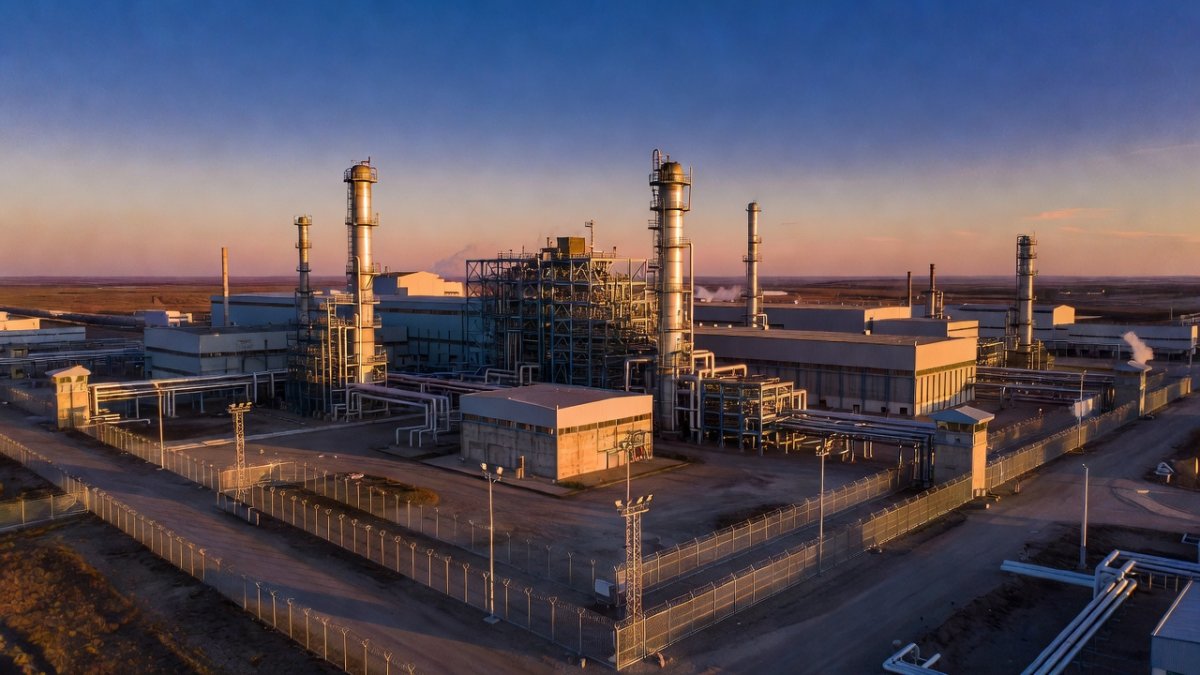
Russian energy giant Gazprom has reached a landmark agreement with the Defense Ministry to form mobile military reserve units tasked with protecting the company's gas infrastructure from escalating Ukrainian drone strikes, according to internal company documents seen by the independent outlet Ekho. The initiative marks a significant escalation in Moscow's efforts to harden critical energy assets as long-range drone attacks on Russian oil and gas facilities become increasingly frequent and sophisticated.
Gazprom to Form Military Reserve Units to Guard Energy Infrastructure From Drone Attacks
Moscow, Russia — This week — Russian gas giant Gazprom has reached an agreement with the Defense Ministry to create mobile firing groups tasked with protecting the company's infrastructure, including from Ukrainian drone attacks, independent outlet Ekho reported, citing internal company documents.
The Agreement Between Gazprom and the Defense Ministry
Russian gas giant Gazprom has reached an agreement with the Defense Ministry to create mobile firing groups tasked with protecting the company's infrastructure, including from Ukrainian drone attacks, independent outlet Ekho reported, citing internal company documents. This development underscores Moscow's growing efforts to harden critical energy infrastructure against increasingly frequent long-range drone strikes, which have disrupted oil and gas facilities across Russia since the start of the full-scale war in Ukraine. Rather than relying solely on regular military forces, authorities have increasingly turned to regional volunteer units and reserve formations to bolster air defense around strategic sites.
The documents detail how Gazprom will integrate these units into its security framework while maintaining coordination with the Defense Ministry. Volunteers would undergo medical examinations, a rigorous selection process and two months of training before signing three-year contracts to join Russia's mobilization reserve. The arrangement would allow participants to continue their civilian jobs while periodically attending military training, reflecting a hybrid approach to defense that blends corporate resources with state military structures.
(Global 1 News)
Structure and Operations of the Mobile Firing Groups
The primary mission of the mobile firing groups would be to patrol and protect Gazprom's gas infrastructure, the documents said. During training exercises, reservists could also be assigned to guard other critical infrastructure, but only within the region where their contract was signed. This geographic limitation ensures that the units remain focused on local threats while supporting broader national security objectives tied to energy exports.
Although members would serve under contracts with the mobilization reserve, they would not be considered active-duty military personnel. The initial contracts would last three years and could later be extended by another three years, five years or for shorter periods, depending on the participant's age. The upper age limit is 52 for enlisted personnel and warrant officers, 57 for junior officers and 62 for senior officers, the documents said. This structure allows Gazprom to draw on experienced civilians without fully militarizing its workforce.
Recruitment, Training, and Compensation Details
Volunteers would undergo medical examinations, a rigorous selection process and two months of training before signing three-year contracts to join Russia's mobilization reserve. Participants would retain their average salary and receive a monthly payment of 200,000 rubles (about $2,560) from Gazprom while attending training, in addition to payments from the Defense Ministry, according to the documents. The company also plans to provide three meals a day, uniforms, medical treatment, life insurance and free transportation to and from training sites.
The compensation package is designed to attract reliable personnel who can balance civilian employment with periodic military obligations. This model supports the Kremlin's strategy of expanding reserve forces without immediate full-scale mobilization, particularly in regions hosting vital energy assets. The payments from both Gazprom and the Defense Ministry highlight the collaborative financial commitment between the state-owned company and military authorities.
Recent Drone Strikes on Gazprom Infrastructure
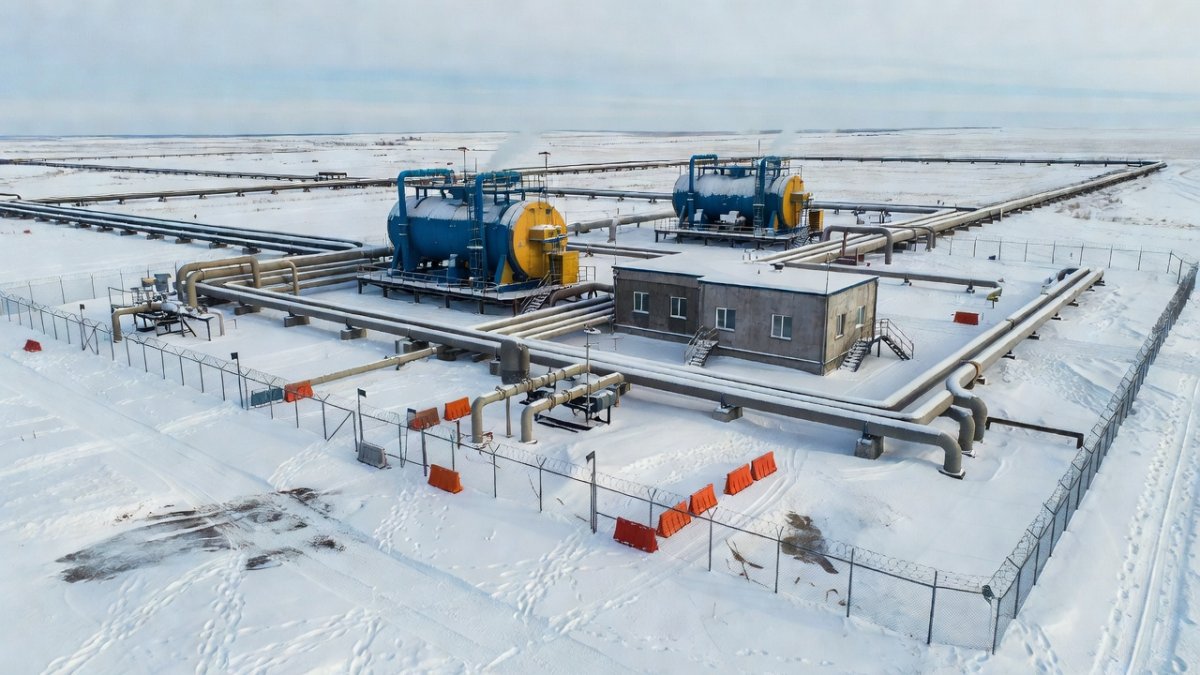
Gazprom has repeatedly reported Ukrainian drone strikes on its facilities since the start of 2026, including compressor stations that support gas exports through the TurkStream and Blue Stream pipelines. In May, drones struck the company's Astrakhan Gas Processing Plant, one of Russia's largest gas processing facilities. These incidents have prompted accelerated measures to safeguard export routes that remain critical to Russia's energy revenues amid ongoing international sanctions.
Drones also targeted Gazprom's gas processing and helium plants in the Orenburg region in late June. The attacks on these specific sites illustrate the vulnerability of processing facilities that handle both domestic supply and international deliveries. Such strikes have forced Gazprom to reassess its reliance on conventional security and explore reserve-based solutions coordinated with the Defense Ministry.
Parallel Initiatives in Other Russian Regions
The reported initiative follows similar measures adopted elsewhere in Russia. Earlier this year, authorities in the Leningrad region announced recruitment for volunteer mobile firing groups to defend against drone attacks. Volunteers signing contracts through the regional military enlistment office were promised a one-time payment of 250,000 rubles (about $3,200), a monthly salary starting at 200,000 rubles (about $2,560) and a bonus of 100,000 rubles (about $1,280) for each drone they shoot down.
These regional programs demonstrate a decentralized approach to protecting infrastructure, where local enlistment offices work alongside major corporations like Gazprom. The Leningrad region effort, with its additional drone-shootdown bonuses, provides a template that could influence how Gazprom structures incentives for its own mobile firing groups. Such initiatives reflect post-Soviet dynamics where energy security increasingly intersects with regional military enlistment systems.
Strategic Context in Russia's Energy Defense
The move highlights Moscow's growing efforts to harden critical energy infrastructure against increasingly frequent long-range drone strikes, which have disrupted oil and gas facilities across Russia since the start of the full-scale war in Ukraine. Gazprom's facilities in key production areas such as Astrakhan and Orenburg represent nodes in a network that sustains both domestic consumption and pipeline exports via TurkStream and Blue Stream. Coordination with the Defense Ministry allows the company to supplement its internal security with trained reservists drawn from the civilian population.
This approach aligns with broader Kremlin priorities of maintaining energy export capabilities while distributing defense responsibilities across corporate and regional actors. The emphasis on three-year contracts and age-specific limits ensures a sustainable pool of personnel who can serve without disrupting core industrial operations. By integrating these units, Gazprom addresses immediate threats while contributing to national resilience in energy politics shaped by the conflict in Ukraine.
(Global 1 News)
Analysis and Broader Implications
This could signal that Russian authorities are institutionalizing a layered defense model where state-owned energy giants like Gazprom assume greater responsibility for their own protection through reserve formations. Analysts suggest this reflects a pragmatic adaptation to sustained drone threats, allowing the regular military to focus on frontline operations while corporate-linked units handle rear-area security. The financial incentives, including combined payments from Gazprom and the Defense Ministry, indicate an effort to professionalize these groups without full conscription.
The implications extend to Russia's energy export infrastructure, where facilities supporting TurkStream and Blue Stream remain exposed. Similar programs in the Leningrad region show that this model may spread, potentially involving other companies such as Rosneft or Novatek in comparable arrangements. Over time, such developments could reshape how post-Soviet energy security integrates civilian reserves with military oversight, particularly as drone capabilities continue to evolve in the ongoing conflict.
By Irina Volkov, Staff Writer
This article was produced with AI-assisted research and editorial support. Reporting is based on sources cited in the article.
What's Your Reaction?
 Like
0
Like
0
 Dislike
0
Dislike
0
 Love
0
Love
0
 Funny
0
Funny
0
 Wow
0
Wow
0
 Sad
0
Sad
0
 Angry
0
Angry
0

Russia/Eastern Europe Correspondent at Global1.News. Covering Russian politics, energy, security, and the shifting dynamics of the post-Soviet space. Provides clear-eyed analysis on one of the world's most opaque regions.














Comments (0)