
Can Lebanon Control Hezbollah? The Ceasefire Dilemma
The US-mediated ceasefire between Israel and Lebanon, announced on June 4-5, 2026, has brought into sharp focus a question that has defined Lebanon's modern political existence: can the state control Hezbollah? President Joseph Aoun endorsed the agreement for implementation within 24 hours, yet Hezbollah leader Naim Qassem immediately dismissed it as a "surrender and defeat" an
The US-mediated ceasefire between Israel and Lebanon, announced on June 4-5, 2026, has brought into sharp focus a question that has defined Lebanon's modern political existence: can the state control Hezbollah? President Joseph Aoun endorsed the agreement for implementation within 24 hours, yet Hezbollah leader Naim Qassem immediately dismissed it as a "surrender and defeat" and labeled it a "farce." The rejection reveals a structural imbalance that has persisted since the group's emergence in the 1980s — a state with limited authority over a militia that answers to Tehran.
Can Lebanon Control Hezbollah? The Ceasefire Dilemma
Beirut, Lebanon – June 6, 2026 — The latest diplomatic push comes after months of devastating escalation. The previous April 16 ceasefire collapsed within weeks, resulting in more than 600 additional deaths. Since March 2, the cumulative toll across Lebanon stands at 3,526 killed and 10,733 wounded, according to the Lebanese Ministry of Public Health. Israeli forces occupy roughly one-fifth of Lebanese territory, further complicating any return to normalcy. Against this backdrop, the new ceasefire's viability hinges on whether President Aoun's government — led by Prime Minister Nawaf Salam and Parliament Speaker Nabih Berri — can translate diplomatic commitments into enforceable reality on the ground.
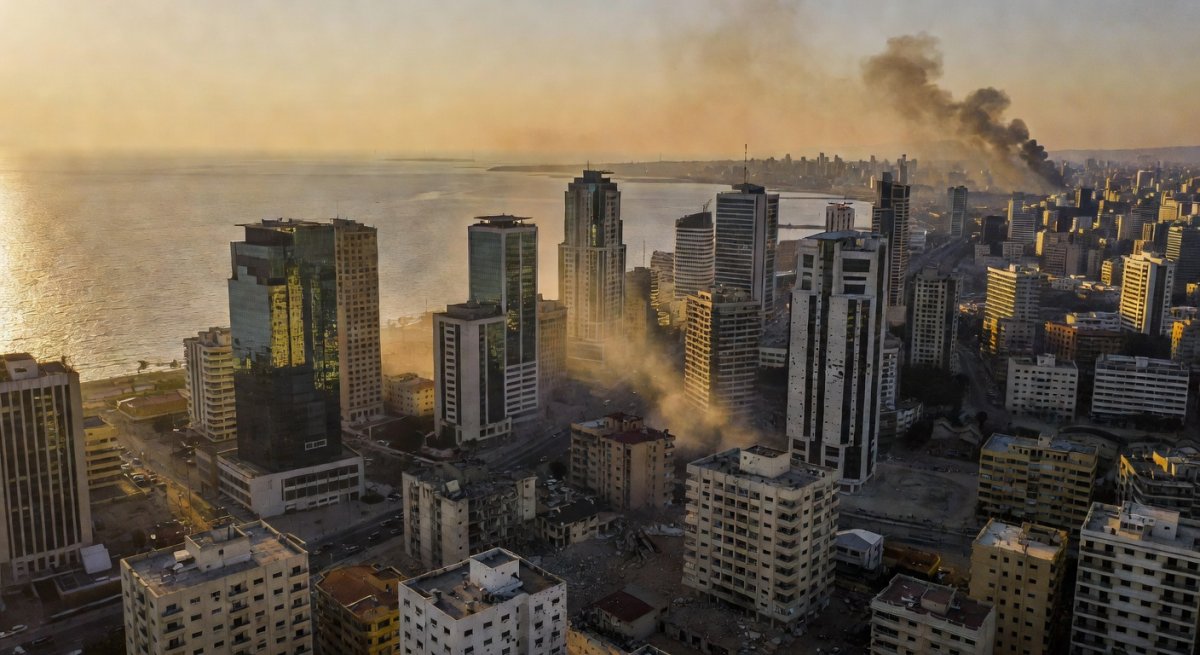
The Fragile June 2026 Ceasefire Announcement
The US-mediated agreement was the product of intensive shuttle diplomacy, with French special envoy Jean-Yves Le Drian arriving in Beirut as President Emmanuel Macron held direct discussions with US President Donald Trump. The deal aimed to halt hostilities that escalated dramatically after Hezbollah began launching rockets into northern Israel in retaliation for the killing of Iranian Supreme Leader Ali Khamenei in US-Israeli strikes on Tehran on March 1. That event triggered the ongoing Iran war, now in its 98th day, and fundamentally reshaped the regional landscape.
Mojtaba Khamenei has succeeded his father as Iran's Supreme Leader, maintaining the Islamic Republic's commitment to its network of regional proxies. Tehran has conditioned any Lebanon ceasefire on parallel progress in broader US-Iran negotiations, making Hezbollah's compliance contingent on developments far beyond Beirut's control. This external linkage remains the central obstacle to durable peace.
Historical Echoes of Civil War and Militia Power
Lebanon's modern history offers sobering lessons about the limits of state control over armed factions. The 1975-1990 civil war left the country fragmented along sectarian lines, with militias filling the vacuum left by a weakened central authority. Hezbollah emerged in the early 1980s as an Iranian-backed Shia movement, initially focused on resisting the 1982 Israeli invasion of Lebanon. Its founders were trained and funded by Iran's Islamic Revolutionary Guard Corps, a relationship that has remained intact for over four decades.
The 2006 Israel-Hezbollah war produced UN Security Council Resolution 1701, which called for Hezbollah's disarmament and the deployment of the Lebanese Armed Forces along the southern border. Two decades later, that resolution remains largely unimplemented. Hezbollah's rocket arsenal has grown substantially since 2006, and its fighters have gained battlefield experience in Syria's civil war alongside Assad regime forces. The group's military wing operates entirely outside the Lebanese state's chain of command.
Hezbollah's Political-Military Dual Structure
Naim Qassem's swift dismissal of the June 2026 ceasefire reflects Hezbollah's assessment that the agreement fails to address its core security concerns. The group views any limitation on its military posture as a strategic concession that could invite further Israeli pressure. This stance places the Lebanese government in an awkward position: it must balance domestic calls for stability with the reality that Hezbollah retains independent decision-making authority over matters of war and peace.
Prime Minister Nawaf Salam and Speaker Nabih Berri have publicly supported the ceasefire framework, yet their influence over Hezbollah's operational choices remains constrained. The 2019 economic collapse and the prolonged 2022-2025 presidential vacuum further eroded state institutions, leaving President Joseph Aoun — elected only in January 2025 — with limited leverage. Hezbollah holds seats in parliament, maintains extensive social-service networks, and operates its own media and educational institutions, giving it effective veto power over major policy shifts.
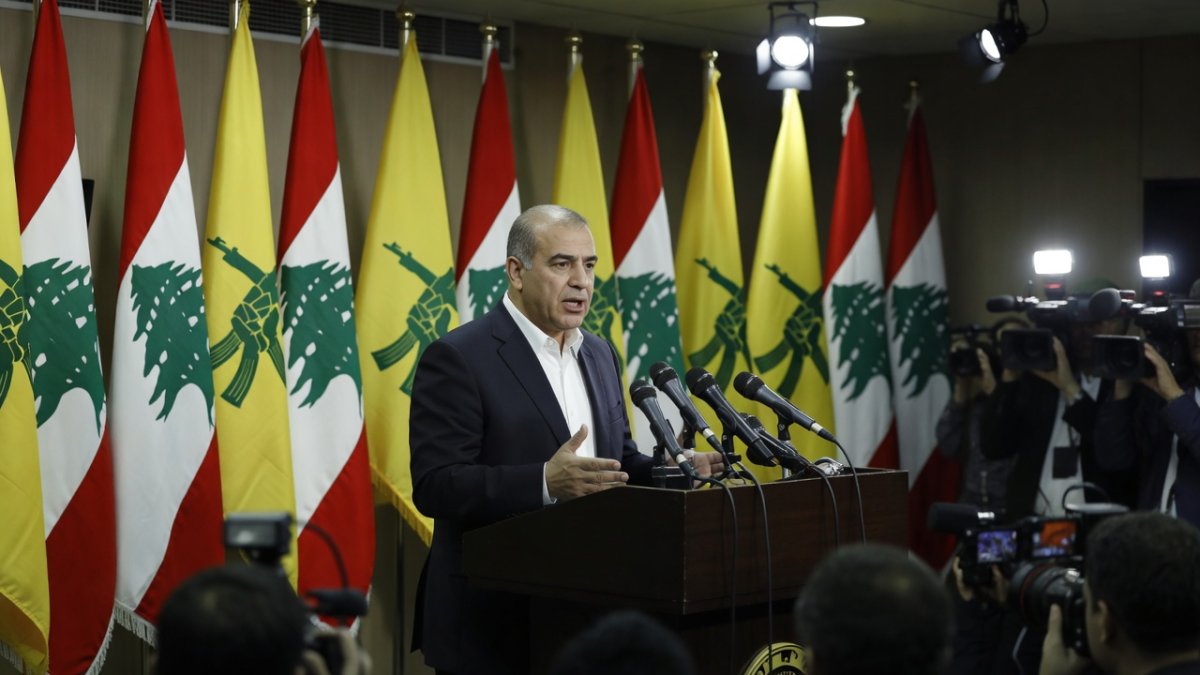
Iran's Shadow Over Lebanese Sovereignty
Tehran's role remains decisive. The succession of Mojtaba Khamenei has signaled continuity in Iran's regional strategy, which views Hezbollah as the Islamic Republic's primary deterrent asset in the Levant. Hezbollah's leadership has historically aligned its actions with Iranian strategic guidance, particularly during periods of heightened tension with Israel and the United States. Iran conditioned any Lebanon ceasefire on progress in the parallel US-Iran negotiations currently underway.
This external linkage complicates Beirut's efforts to present the ceasefire as a purely Lebanese initiative. Any perception that the agreement advances American or Israeli interests without corresponding Iranian buy-in risks internal sabotage. The 3,526 deaths since March 2 illustrate the human cost of this proxy dynamic, as Lebanese territory becomes a theater for wider regional confrontation between Washington and Tehran.
Regional Dynamics and Gulf Concerns
Gulf states, particularly Saudi Arabia and the United Arab Emirates, watch the Lebanon crisis with growing concern. Prolonged instability along the Israel-Lebanon border threatens energy markets and complicates Gulf economic diversification plans under Vision 2030 and similar programs. The expansion of the Iran war has already disrupted shipping routes in the eastern Mediterranean and raised risk premiums on regional investments.
Turkey's foreign policy also factors into the equation, as Ankara balances relations with both Hezbollah's Iranian backers and Western mediators. The interplay of these interests suggests that ceasefire enforcement will depend more on external power calculations than on Lebanese institutional capacity alone. Professor Derek Grossman has noted that the Lebanese government possesses limited influence over Hezbollah's command structure, weapons stockpiles, or decision-making, rendering formal state orders largely symbolic in areas under the group's control.
Strategic Calculus: What Each Side Wants
For Israel, the objective is a durable northern border arrangement that prevents Hezbollah rearmament and rocket attacks. Prime Minister Benjamin Netanyahu's government insists on verifiable mechanisms to monitor the group's military infrastructure, including its precision-guided missile capabilities. However, without Lebanese state control over the south, any agreement remains vulnerable to violations.
For Hezbollah, the priority is preserving its military deterrent while avoiding a full-scale war that could devastate its political base in southern Lebanon and the Bekaa Valley. Naim Qassem's rejectionist rhetoric serves a dual purpose: maintaining domestic credibility among the group's support base while signaling to Washington that any ceasefire must address Iranian conditions.
For the Lebanese government, the challenge is to reassert sovereignty over territory and institutions when one of the country's most powerful actors answers to an external capital. President Aoun, Prime Minister Salam, and Speaker Berri must navigate between international pressure to enforce the ceasefire and domestic realities that limit their options.
Structural Limits of State Authority
Lebanon's constitutional framework and sectarian power-sharing system were never designed to confront an organization with Hezbollah's resources and external backing. The Lebanese Armed Forces remain under-equipped and politically constrained, with limited capacity to project authority into Hezbollah strongholds. Attempts to integrate or disarm the group have repeatedly failed due to fears of renewed civil conflict reminiscent of the 1975-1990 period.
The 2019 economic meltdown left state institutions severely weakened. The Lebanese pound lost more than 90 percent of its value, the banking system collapsed, and public services deteriorated dramatically. Hezbollah's parallel institutions — including its healthcare, education, and social welfare networks — filled gaps left by the failing state, further entrenching the group's role in Lebanese society.
Outlook: Narrow Window, Structural Obstacles
The June 2026 ceasefire presents Lebanon with a narrow window to reassert sovereignty, yet structural realities suggest limited prospects for rapid success. Without meaningful progress on US-Iran talks and a credible plan to address Hezbollah's military infrastructure, the ceasefire risks following the same trajectory as the April 16 agreement, which collapsed amid mutual accusations of violations and resulted in hundreds of additional casualties.
Lebanon's history — from the civil war through the 2006 conflict and the 2019 economic crisis — demonstrates that external agreements imposed without internal consensus tend to unravel. The coming months will test whether President Aoun, Prime Minister Salam, and Speaker Berri can convert diplomatic recognition into actual sovereign authority, or whether Hezbollah's parallel state will again prove more durable than Lebanon's official one. For the families of the 3,526 dead and the more than one million displaced, the answer carries life-or-death consequences.
By Malik Hassan, Staff Writer
This article was produced with AI-assisted research and editorial support. Reporting is based on sources cited in the article.
What's Your Reaction?
 Like
0
Like
0
 Dislike
0
Dislike
0
 Love
0
Love
0
 Funny
0
Funny
0
 Wow
0
Wow
0
 Sad
0
Sad
0
 Angry
0
Angry
0

Middle East Correspondent at Global1.News. Based in Beirut, covering politics, conflict, energy, and society across the Middle East. Brings context and depth to a region often reduced to headlines.










Comments (0)