
Prominent Cambodian opposition politician seeks Supreme Court reversal of incitement conviction
The Appeal Hearing That Drew Hundreds to Phnom Penh On Monday morning Rong Chhun emerged from his Supreme Court appeal in Phnom Penh to a crowd of some 300 supporters chanting "Drop the charges, release Rong Chhun!" while holding signs calling for his freedom. The 56-year-old top adviser to the Nation Power Party told the gathering he was anxious for judges to overturn his inci
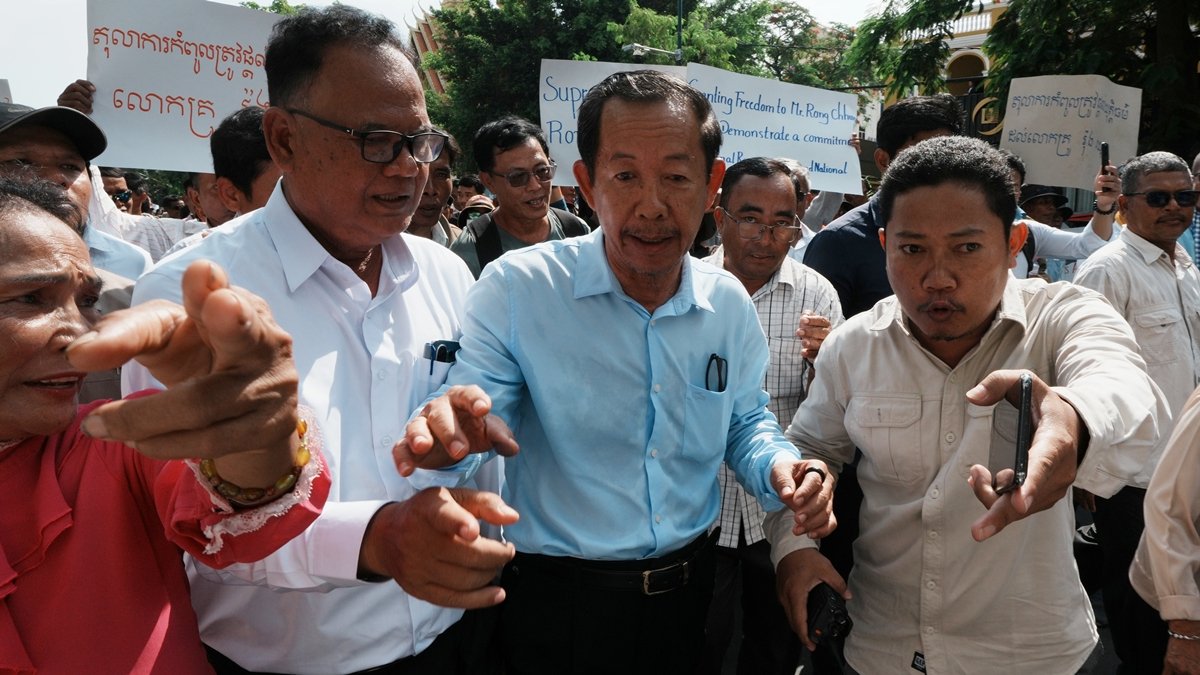
The Appeal Hearing That Drew Hundreds to Phnom Penh
On Monday morning Rong Chhun emerged from his Supreme Court appeal in Phnom Penh to a crowd of some 300 supporters chanting "Drop the charges, release Rong Chhun!" while holding signs calling for his freedom. The 56-year-old top adviser to the Nation Power Party told the gathering he was anxious for judges to overturn his incitement conviction so he could return to politics and promote national reconciliation and national unity for Cambodia's 17 million people amid tensions with neighboring Thailand and a struggling economy. Roads leading to the court were blocked by several dozen police officers at barricades, and Rong Chhun walked to the hearing accompanied by local and international human rights advocates.
Rong Chhun expressed hope that the court would grant him freedom and justice so that he can continue to practice politics in the future. He stated that with tensions between Cambodia and neighboring Thailand, a struggling economy and other issues facing the country, he wants to promote national reconciliation and national unity. Supporters gathered despite the police presence, showing their backing for the prominent Cambodian opposition politician who seeks reversal of his conviction.
The scene reflected the determination of those who traveled to the capital this week to witness the appeal. Rong Chhun told the cheering crowd he was not worried about going to prison and was willing to sacrifice everything to invest in Cambodia achieving true freedom and democracy. The morning hearing drew attention to his case as he stood before supporters after presenting his arguments to the Supreme Court.
From Facebook Posts to Prison — How a Political Figure Was Convicted
Rong Chhun was found guilty last year of inciting social unrest after he met villagers displaced by government construction projects, a conviction seen as one of many legal moves taken by the government of Prime Minister Hun Manet to stifle criticism. The 56-year-old was sentenced to four years in prison and barred from running for office and from voting. At his trial he had argued his innocence, saying all he had done was post photos of himself with the villagers and comments on Facebook.
Incitement allegations are frequently used by authorities in Cambodia against opponents, and Rong Chhun's case fits this pattern of legal actions against those challenging the ruling Cambodian People's Party. His conviction last year followed meetings with displaced villagers, after which he shared images and remarks on social media. The four-year sentence and bans on political participation and voting were handed down as part of broader efforts to limit opposition voices.
The Supreme Court appeal this week centers on these events from last year when Rong Chhun met the affected communities. He maintained that his Facebook activity alone formed the basis of the charges. Supporters view the conviction as part of ongoing restrictions on freedom of expression in Cambodia under the current administration.
Rong Chhun's Legal History and the 2021 Incitement Case
Rong Chhun was already sentenced to two years on incitement charges in 2021 based on accusations he spread false information about Cambodia's border with Vietnam after meeting with farmers in the area. He was released later the same year by an appeals court. This earlier case shows the recurring use of incitement laws against political opponents in Cambodia.
The 2021 conviction involved similar allegations of spreading information after community meetings, much like the charges from last year. Rong Chhun's release by the appeals court in 2021 allowed him to continue his work until the new conviction. The pattern of such cases highlights how incitement claims have been applied repeatedly to figures like the Nation Power Party adviser.
His current appeal seeks to address both the recent four-year sentence and the history of these legal challenges. The 2021 case was overturned on appeal, giving hope that the Supreme Court might grant similar relief this time. Rong Chhun has faced these accusations multiple times for his activities with rural communities.
Cambodia Under Hun Manet — Continuity or Change?
Cambodia's government insists it promotes the rule of law under an electoral democracy, yet political parties seen as mounting strong challenges to the ruling Cambodian People's Party have been dissolved by the courts or had their leaders jailed or harassed. Under almost four decades of autocratic former Prime Minister Hun Sen, Cambodia was widely criticized for human rights abuses that included suppression of freedom of speech and association. He was succeeded in August 2023 by his American-educated son, Hun Manet, but there have been few signs of political liberalization.
The transition to Prime Minister Hun Manet has not brought noticeable shifts in how opposition figures like Rong Chhun are treated. Legal moves against critics continue as before, with the current administration maintaining the same approach to dissent. Rong Chhun's case is viewed by many as evidence that the practices from the previous leadership persist.
Prime Minister Hun Manet took office in 2023 following his father's long rule, yet the environment for political activity remains restricted. The government states its commitment to legal processes while opposition leaders face convictions and bans. This continuity affects figures seeking to engage in politics openly.
Cambodia-Thailand Border Tensions — A Shared Concern
Rong Chhun specifically cited tensions between Cambodia and neighboring Thailand as one reason he seeks to promote national reconciliation and national unity for Cambodia's 17 million people. He mentioned these border issues alongside the struggling economy when addressing supporters after the Monday hearing. The politician hopes an overturned conviction will let him work on unity at a time when such regional strains are evident.
The appeal hearing occurred against this backdrop of Cambodia-Thailand relations that Rong Chhun highlighted in his remarks. Supporters listened as he connected his desire for freedom to the need for stability amid these tensions. His comments underscored how internal political matters intersect with cross-border concerns.
By focusing on national unity, Rong Chhun tied his personal case to broader challenges facing Cambodia, including those involving Thailand. The 300 supporters heard his call for reconciliation while police maintained barricades around the court. This emphasis reflects his view that political participation could help address such regional matters.
ASEAN Implications — Regional Democracy and Stability
Rong Chhun's appeal and the use of incitement charges in Cambodia occur within the wider ASEAN context where member nations watch developments in political freedoms. His case, involving the Nation Power Party adviser and the government of Prime Minister Hun Manet, draws attention from regional observers concerned about stability. The Supreme Court verdict due in June could influence how similar situations are viewed across Southeast Asia.
The pattern of dissolving parties and jailing leaders in Cambodia affects cooperation within ASEAN on matters of governance and rights. Rong Chhun's desire to return to politics for national unity resonates with regional calls for dialogue. Supporters including international human rights advocates at the hearing represent this wider interest.
Cambodia's 17 million people and their political environment play a role in ASEAN's collective approach to democracy and security. The legal actions against opposition figures like Rong Chhun are noted by neighboring countries as they maintain ties. The Monday appeal hearing thus carries implications beyond Cambodia's borders.
Voices on the Ground — Supporters Mobilize
Tim Ratha drove several hours from Siem Reap province in the north to the capital on Monday, saying she wanted to show her support for Rong Chhun. The 55-year-old vegetable vendor told The Associated Press that he has devoted everything to the people and had no wife or children. She joined the crowd of some 300 chanting for the charges to be dropped.
Rong Chhun told supporters he was not worried about going to prison and was willing to sacrifice everything to achieve true freedom and democracy in Cambodia. Human rights advocates, both local and international, accompanied him to the hearing despite the police barricades. Their presence highlighted the backing for his appeal against the four-year sentence from last year.
The Supreme Court's verdict is due June 19, giving time for continued mobilization by those like Tim Ratha who traveled to Phnom Penh. Rong Chhun's defiant words about investing family resources in democracy echoed through the gathering. These voices on the ground reflect the personal commitment of ordinary citizens to his case.
What This Means for Thai Readers
Thai readers may note Rong Chhun's mention of tensions between Cambodia and neighboring Thailand as a factor in his call for national unity. The Cambodian opposition politician's appeal this week connects to shared border concerns that affect communities on both sides. His case under Prime Minister Hun Manet illustrates the political dynamics in a close ASEAN neighbor.
The use of incitement charges against Rong Chhun and others in Cambodia is watched by those in Thailand interested in regional stability. Supporters such as Tim Ratha from Siem Reap represent the grassroots level of engagement that resonates with values of community support seen in Thai society. The 17 million people of Cambodia and their pursuit of reconciliation matter for cross-border relations.
Rong Chhun's hope to practice politics again after the Supreme Court decision in June ties into the broader ASEAN goal of peaceful coexistence. Thai communities near the border follow such developments because of the economic and cultural links between the two nations. His emergence to 300 cheering supporters on Monday underscores the human stories behind these regional ties.
By Ann Srisawat, Staff WriterThis article was produced with AI-assisted research and editorial support. Reporting is based on sources cited in the article.
What's Your Reaction?
 Like
0
Like
0
 Dislike
0
Dislike
0
 Love
0
Love
0
 Funny
0
Funny
0
 Wow
0
Wow
0
 Sad
0
Sad
0
 Angry
0
Angry
0

Southeast Asia Correspondent at Global1.News. Based in Bangkok, covering Thai and Southeast Asian politics, economy, technology, and culture. Deep regional perspective on one of the world's most dynamic regions.













Comments (0)