
Bill Poon, the chef who reshaped perceptions of Chinese cuisine in Britain
Bill Poon's Remarkable Culinary Lineage Bill Poon emerged from a family of chefs whose traditions stretched back seven generations, a heritage rooted in Shunde in China's Guangdong province. Born during a period of Japanese military occupation, he experienced early upheaval as his family fled to Macau. There his parents established a celebrated restaurant, where his mother's ex
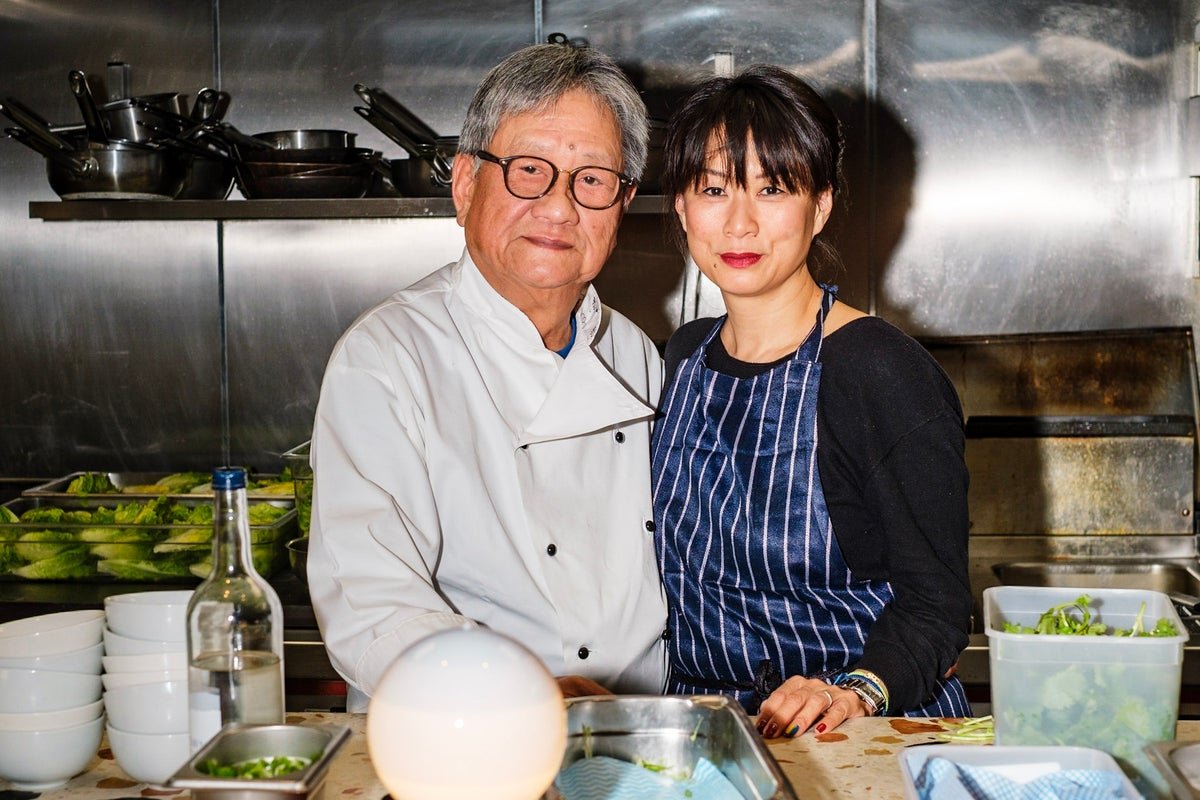
Bill Poon's Remarkable Culinary Lineage
Bill Poon emerged from a family of chefs whose traditions stretched back seven generations, a heritage rooted in Shunde in China's Guangdong province. Born during a period of Japanese military occupation, he experienced early upheaval as his family fled to Macau. There his parents established a celebrated restaurant, where his mother's exceptional skill with a knife became local legend. This deep lineage included an ancestor who cooked for a Chinese emperor and another credited with effectively inventing the stock cube, facts that underscore the profound culinary foundation from which Poon drew throughout his career.
Such ancestry shaped Poon's approach to cooking as both craft and inheritance. The family's history in Macau provided him with an intimate understanding of authentic Cantonese techniques long before he reached Britain. These roots stood in stark contrast to the Anglo-Chinese hybrid dishes that dominated British menus in the mid-twentieth century, dishes adapted for local ingredients and tastes yet barely recognisable to those familiar with food from Hong Kong or Guangdong.
Poon carried this legacy forward when he trained in Hong Kong with a Swiss patissier before crossing to England. His decision reflected personal as much as professional motives, yet it positioned him to challenge prevailing assumptions about Chinese cuisine in a new cultural setting. The precision and rigour instilled across generations informed every subsequent step he took in London.
(The Independent)
Arrival in Britain and the First Poon's Venture
In the mid-1960s Poon arrived in England pursuing Cecilia, who later became his wife. At that time Chinese food across Britain remained largely an Anglo-Chinese hybrid, with Cantonese dishes altered to suit British palates and available ingredients. For diners seeking authentic flavours from Guangdong or Hong Kong, options in London proved almost nonexistent. Poon and Cecilia therefore set out to supply what the capital lacked.
Their first restaurant, Poon's & Co, opened at 27 Lisle Street in Chinatown in 1973. This modest beginning laid the groundwork for a broader transformation. The couple recognised that British diners carried entrenched prejudices about Chinese cuisine and those who prepared it. Rather than confront such views directly, Poon chose to demonstrate quality through visible excellence and consistent technique.
Early success at Lisle Street attracted notable patrons, including Lord and Lady Tanlaw, who began as regulars and soon became business partners. This alliance proved decisive. It enabled expansion beyond Chinatown and allowed Poon to realise a more ambitious vision of how Chinese cooking could be presented and understood in Britain. The partnership illustrated how personal connections could bridge cultural gaps in the restaurant trade.
The Revolutionary Open Kitchen at Covent Garden
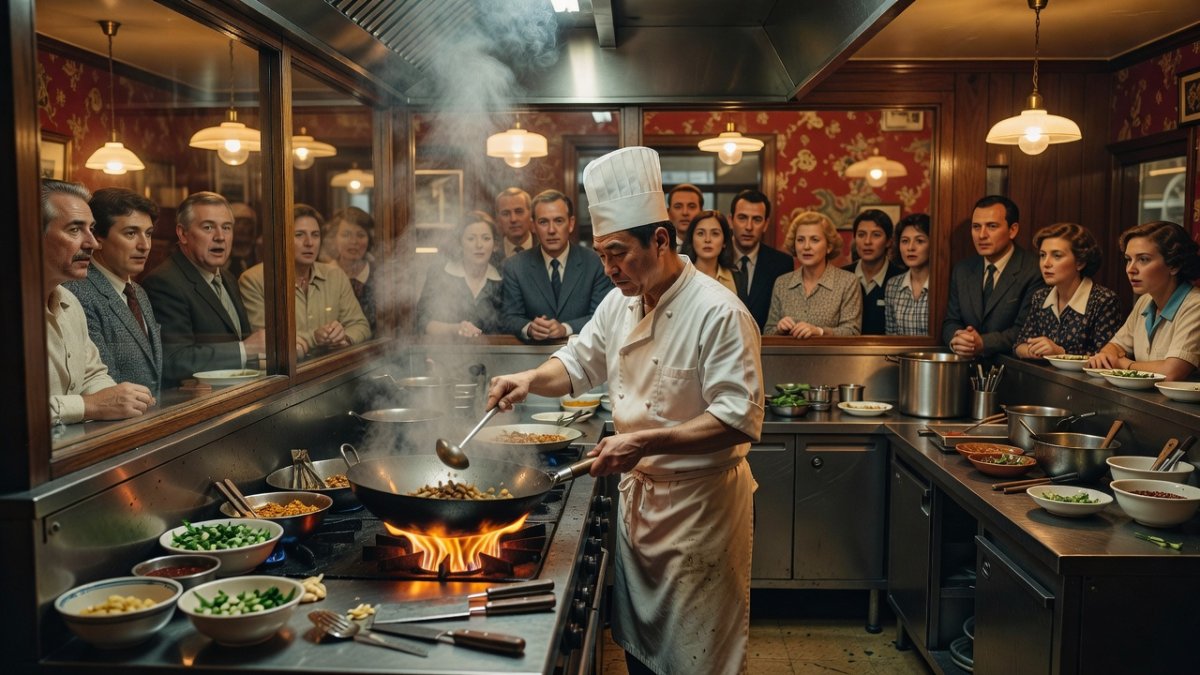
Poon's of Covent Garden launched at 41 King Street in 1976, made possible by the Tanlaw partnership. Poon placed the kitchen at the centre of the dining room, enclosed in glass so every guest could observe the food being prepared. In the 1970s, when kitchens stayed hidden and Chinese establishments often faced mistrust, this transparent design constituted a deliberate statement about quality and accountability.
The concept proved transformative. Diners witnessed cleaver work, claypot preparations and the careful handling of ingredients in real time. Poon aimed to educate as much as to feed, according to his daughter Amy. By rendering techniques legible, he dismantled suspicions that had long surrounded Chinese cooking in Britain and replaced them with direct appreciation of skill.
This approach aligned with broader shifts in British dining culture, where visibility and theatre began to matter alongside flavour. Poon's glass-enclosed kitchen anticipated trends that later became commonplace, yet it carried particular weight in an era when Chinese restaurants operated under default assumptions rather than recognised ambition. The design choice reinforced his conviction that Chinese cooking deserved the same respect accorded any serious culinary tradition.
Celebrity Patronage and Expanding Empire
Recognition followed swiftly. In 1980 Poon's of Covent Garden received one of the first Michelin stars awarded to a Chinese restaurant in Britain. High-profile visitors soon followed, among them Mick Jagger, Jerry Hall, Sean Connery and Barbra Streisand. Frank Sinatra placed orders from his room at the Savoy. These names signalled that Poon's had entered the mainstream of London dining.
(Global 1 News)
At its peak in the 1980s the brand operated seven restaurants across London and further afield, with additional outposts in Geneva and the City. Expansion reflected both commercial success and a widening acceptance of authentic Chinese flavours among British diners. Poon's establishments demonstrated that rigorous Cantonese cooking could sustain multiple sites without diluting standards.
The growth also challenged prevailing career expectations within British Chinese communities. Running a restaurant had often been viewed as work undertaken by default rather than choice, far removed from professions such as doctor, lawyer or engineer. Poon's achievements made an emphatic case for Chinese cooking as a serious endeavour requiring equivalent creativity and discipline.
Signature Dishes and Technical Mastery
Poon introduced wind-dried meats to Britain and pioneered claypot rice, dishes that brought new textures and preservation methods to local tables. His command of the cleaver reached extraordinary levels of precision, turning routine preparation into performance. Diners recalled him carving butterflies from ginger, a flourish that combined utility with artistry.
Among his most celebrated creations stood the Eight Treasure Duck, a family speciality prepared for Chinese New Year. The dish demanded laborious braising until bones softened, a process requiring an entire day and a lifetime of refinement. Amy Poon later observed that if an endangered dishes list existed, this preparation would feature on it, noting that few now replicate it exactly as her father did.
These technical achievements left lasting impressions on fellow professionals. Chef Henry Harris described a crispy garlic and chilli squid dish eaten nearly four decades earlier as a single mouthful that altered his outlook. Australian chef Iain Hewitson recalled a chilli and garlic calamari with comparable reverence. Photographer Michael Birth documented a memorable noodle dish from the 1970s in his memoir. Such testimonies confirm that Poon's food created enduring reference points for British chefs and diners alike.
Lasting Influence on British Chinese Cuisine
Restaurateur and family friend Jon Spiteri stated that when Poon's opened in the early 1970s, Bill and Cecilia forever changed perceptions of Chinese food in England. He described Poon as a giant in the British culinary world who left a significant void. This assessment captures the scale of influence Poon exerted on an entire sector.
A generation of chefs who later reshaped British understanding of Chinese cuisine traces elements of their ambition to the possibilities Poon established. By insisting on visibility, authenticity and technical excellence, he created space for subsequent practitioners to pursue Chinese cooking with comparable seriousness. His example shifted institutional attitudes within the wider British food scene, where Chinese restaurants had previously occupied a marginal position.
Poon retired from the restaurant business in 2003 yet continued producing wind-dried meats according to the family recipe. This ongoing commitment illustrated that his engagement with tradition extended beyond commercial operations into personal practice. The continuity of such methods ensured that certain flavours and techniques remained available even as the broader landscape evolved.
Reflections on a Transformative Legacy
Bill Poon's career demonstrated how one individual's determination could alter entrenched assumptions about an entire cuisine within British culture. From his family's seven-generation history through the glass kitchen at Covent Garden to the Michelin recognition and celebrity following, each stage reinforced the argument that Chinese cooking merited the same regard as any other rigorous tradition.
The concrete details of his journey, from Shunde and Macau to Lisle Street and King Street, map a clear trajectory of adaptation and assertion. Patrons such as Henry Harris and Iain Hewitson, along with tributes from Jon Spiteri, provide evidence that the impact extended beyond immediate diners to influence professional standards across decades.
Today the open kitchen concept appears commonplace, yet its introduction by Poon in the 1970s addressed specific British prejudices with directness and elegance. His legacy resides not only in signature dishes such as the Eight Treasure Duck but in the broader recognition that Chinese culinary ambition could stand at the centre of national dining culture rather than at its periphery.
By Erica Thornton, Staff WriterThis article was produced with AI-assisted research and editorial support. Reporting is based on sources cited in the article.
What's Your Reaction?
 Like
0
Like
0
 Dislike
0
Dislike
0
 Love
0
Love
0
 Funny
0
Funny
0
 Wow
0
Wow
0
 Sad
0
Sad
0
 Angry
0
Angry
0

US Politics and Policy Correspondent at Global1.News. Based in Washington DC, covering American politics, policy, elections, and the courts. Knows how the system works and tells you what it actually means.














Comments (0)