
Albertans Prepare for Historic Referendum on Confederation as Campaign Intensifies on Canada Day
Albertans Prepare for Historic Referendum on Confederation as Campaign Intensifies on Canada Day Tags: Alberta referendum, Alberta separation, Canada Day, Danielle Smith, Mark Carney, Thomas Lukaszuk, Keith Wilson, western alienation, energy policy, federal-provincial relations On October 19, 2026, Albertans will head to the polls for a referendum unlike any Canada has seen in
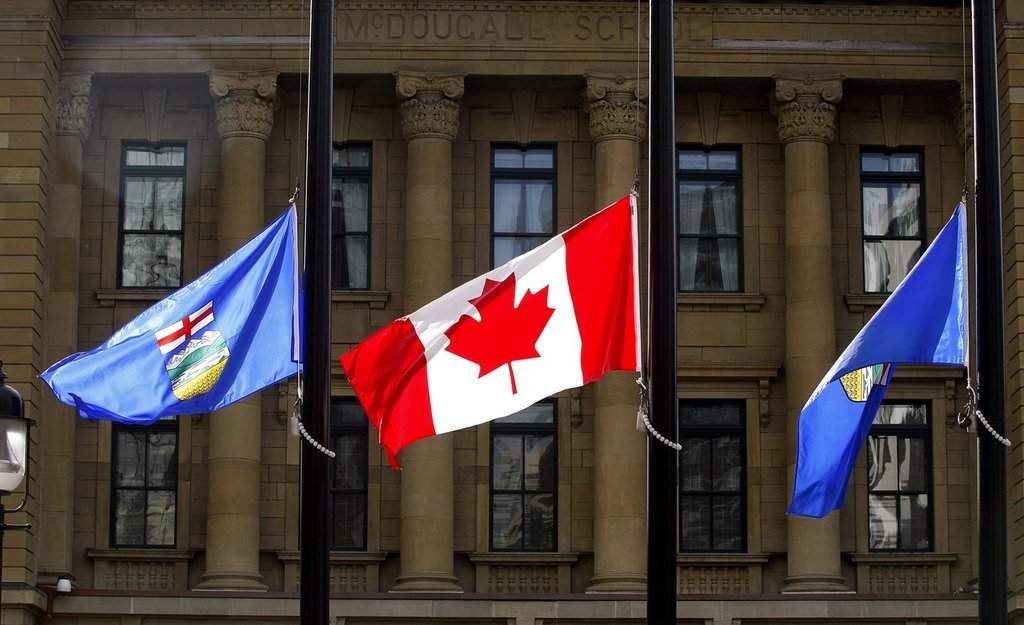
Albertans Prepare for Historic Referendum on Confederation as Campaign Intensifies on Canada Day
Tags: Alberta referendum, Alberta separation, Canada Day, Danielle Smith, Mark Carney, Thomas Lukaszuk, Keith Wilson, western alienation, energy policy, federal-provincial relations
On October 19, 2026, Albertans will head to the polls for a referendum unlike any Canada has seen in decades. The non-binding question will ask voters whether the province should remain within Confederation or initiate the process toward a second, binding vote on separation. The campaign period, which opened in late June, has already drawn clear battle lines between federalists and proponents of independence, with both sides using this Canada Day — the country's 159th birthday — to make their case directly to residents in communities across the province.
The Referendum Question: What Albertans Will Decide
The referendum question on October 19, 2026, remains strictly non-binding under Alberta's Referendum Act. A majority yes vote would simply authorise Premier Danielle Smith to negotiate terms for a second, binding plebiscite within eighteen months. Legal experts note that this two-step structure mirrors the 1995 Quebec process while respecting the Clarity Act requirements set by the Supreme Court of Canada in 1998.
Premier Smith justified the vote by citing two competing citizen petitions. Former deputy premier Thomas Lukaszuk submitted more than 400,000 signatures urging a direct question on remaining in Canada. Separatist organisers countered with roughly 300,000 names seeking an independence mandate. Smith stated that only the ballot box could fairly adjudicate these rival claims. Last month, a Court of King's Bench justice dismissed a competing separatist petition on procedural grounds, clearing the path for the single October question now before voters.
Analysts observe that the non-binding character lowers immediate legal risk yet heightens political stakes. A decisive yes would force Ottawa into formal talks, while a narrow no would leave western alienation grievances unresolved heading into the next federal election.
History of Western Alienation in Alberta
Alberta entered Confederation in 1905 alongside Saskatchewan, inheriting the same federal control over natural resources that Ottawa retained until the 1930 Natural Resources Transfer Act. That early grievance resurfaced during the 1980 National Energy Program, when Pierre Trudeau's government imposed price controls and export taxes widely viewed in Edmonton as punitive. Successive Progressive Conservative and United Conservative premiers have cited those episodes as evidence of structural imbalance.
Today's tensions centre on federal environmental regulations, including the 2030 emissions cap and tanker moratorium on the northern British Columbia coast. These measures, proponents of independence argue, constrain the province's principal revenue source. Federal transfers, while substantial, have not offset perceptions that resource wealth is redistributed without adequate provincial consent.
The October referendum therefore represents the most serious test of national unity since the 1995 Quebec vote. Unlike previous flare-ups, current polling shows sustained support above thirty percent for separation, concentrated among younger rural voters concerned with long-term affordability and energy-sector employment.
The Pro-Canada Campaign: Thomas Lukaszuk and the Unity Bus
Thomas Lukaszuk, who served as Alberta's deputy premier between 2011 and 2014, launched the "Forever Canadian" petition drive in March 2026. His team gathered more than 400,000 verified signatures, forcing the government to place a unity question on the ballot. Lukaszuk has framed the campaign as a defence of economic stability rather than abstract patriotism.
The centrepiece of his effort is the Unity Bus, a refurbished motorhome wrapped in a large Maple Leaf motif. Since early June the vehicle has travelled more than 8,000 kilometres, distributing lawn signs and hosting town-hall meetings from Medicine Hat to Grande Prairie. On Canada Day the bus will stop first in Calgary's Beltline, then proceed to a Red Deer brewery releasing a limited-edition "Forever Canadian" ale before concluding with an evening rally in Edmonton.
Lukaszuk told supporters last week that the referendum constitutes "a moment of awakening" for moderate Albertans. "We need to stand up for what we stand for," he said, "which is a province that thrives inside a united Canada, not one that gambles its children's future on uncertain sovereignty talks."
The Independence Campaign: Keith Wilson and the Albertans' Day Rally
Calgary lawyer Keith Wilson leads the "Wexit" successor organisation "Alberta First." A former energy-sector litigator, Wilson has argued before the Alberta Court of Appeal that federal carbon pricing and impact-assessment legislation exceed Ottawa's constitutional authority. His group collected approximately 300,000 signatures for a clearer separation mandate before the courts narrowed the October question.
On Canada Day, Wilson will host the "Albertans' Day Rally" in the central Alberta hamlet of Mirror. The event features speeches from rural municipal leaders, performances by local country artists, and children's activities designed to portray independence as a family-centred choice. Organisers expect more than 2,000 attendees.
Wilson maintains that Ottawa's resource-management powers and regulatory delays have raised the cost of living for ordinary Albertans. "Canada has changed," he said in a recent interview. "Alberta's potential is being capped by a system designed for another century. A yes vote begins the conversation about building a country that finally works for us."
Federal Response and Energy Politics
Prime Minister Mark Carney will mark Canada Day in Edmonton, emphasising federal investments in carbon capture and hydrogen hubs. His itinerary deliberately avoids direct engagement with the referendum, consistent with Ottawa's position that the vote is a provincial matter. Premier Smith, meanwhile, will appear at the Spruce Meadows equestrian venue in Calgary, where she is expected to highlight a new bilateral energy framework.
On Thursday, Smith announced that Alberta and Ottawa have agreed in principle on a proposed diluted-bitumen pipeline corridor to the west coast, subject to regulatory approval. She described the framework as proof that federal-provincial cooperation can deliver market access without separation. Wilson countered that the very need for such a negotiated deal demonstrates Confederation's failure to protect provincial ownership of resources.
Both leaders are therefore using Canada Day to present competing narratives of partnership versus constraint, with energy infrastructure serving as the central battleground.
Economic Implications for Albertans
Alberta's energy sector directly employs more than 140,000 workers and contributes roughly twenty-eight percent of provincial GDP. A yes vote on October 19 would introduce immediate uncertainty over investment treaties, interprovincial trade barriers, and access to federal financing facilities. Credit-rating agencies have already flagged potential downgrades should separation talks advance.
Cost-of-living pressures animate both campaigns. Lukaszuk's team cites Bank of Canada data showing Alberta households benefit from equalisation inflows and stable national supply chains. Wilson's organisers point to Statistics Canada figures indicating that energy royalties per capita have declined relative to housing and grocery inflation since 2019.
Business organisations remain largely silent, though the Calgary Chamber of Commerce has urged voters to weigh "predictability and access to capital" before supporting constitutional change. Both sides therefore link their constitutional positions directly to household affordability, ensuring pocketbook issues dominate the autumn campaign.
What Happens Next: Scenarios After October 19
Should a majority vote yes, Premier Smith would be obliged to open formal discussions with Ottawa and Indigenous governments on the terms of a binding second referendum. Constitutional scholars anticipate complex negotiations over debt apportionment, border arrangements, and Treaty obligations that could extend several years.
A no result would not automatically extinguish separatist sentiment. Polling conducted by the University of Calgary in May found that thirty-four percent of respondents would still support renewed independence efforts within five years. Grievances over federal environmental policy and perceived fiscal imbalance would likely persist into the 2027 provincial election.
Smith has consistently maintained that the ballot box offers the fairest mechanism for resolving these competing visions. "Albertans deserve the chance to settle this question themselves," she said last month. Whatever the outcome on October 19, the referendum will shape federal-provincial relations for a generation.
By Alex Thompson, Staff Writer
This article was produced with AI-assisted research and editorial support. Reporting is based on sources cited in the article.
What's Your Reaction?
 Like
0
Like
0
 Dislike
0
Dislike
0
 Love
0
Love
0
 Funny
0
Funny
0
 Wow
0
Wow
0
 Sad
0
Sad
0
 Angry
0
Angry
0
Canada Correspondent at Global1.News. Based in Toronto, covering Canadian politics, energy, trade, and US-Canada relations. Provides the Canadian perspective on North American and global affairs.













Comments (0)