
Atemoya Trade Tensions Expose Beijing's Pattern of Economic Pressure on Taiwan
Atemoya Trade Tensions Expose Beijing's Pattern of Economic Pressure on Taiwan China's Calculated Use of Agricultural Trade as Leverage The recent pledges by Chinese companies to increase purchases of Taiwanese atemoya at a forum in Xiamen illustrate Beijing's ongoing strategy of employing trade in specific goods to influence cross-strait dynamics. Taiwan's agriculture ministry
China's Calculated Use of Agricultural Trade as Leverage
The recent pledges by Chinese companies to increase purchases of Taiwanese atemoya at a forum in Xiamen illustrate Beijing's ongoing strategy of employing trade in specific goods to influence cross-strait dynamics. Taiwan's agriculture ministry has described this approach as a classic example of China's "raise, trap, kill" process, in which large initial purchases create dependence before abrupt changes in market access occur. This pattern aligns with Beijing's broader claim over Taiwan as its territory and its willingness to apply non-military measures alongside military drills that simulate blockades around the island.
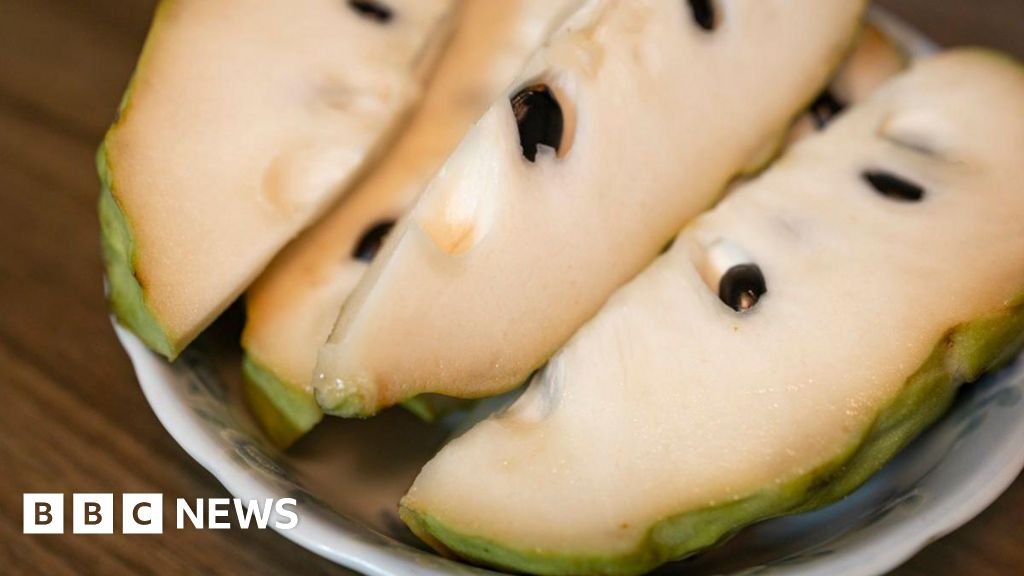
By focusing on a specialty crop from Taitung county, Beijing targets a sector where Taiwan holds a distinct production advantage. The atemoya, with its creamy white flesh and rough green exterior, represents a niche export that can be scaled through encouragement of cultivation followed by sudden restrictions. Such moves disrupt farmer incomes and force Taiwan to confront the risks of over-reliance on the Chinese market for agricultural products.
The "Raise, Trap, Kill" Mechanism in Practice
Taiwan's agriculture ministry outlined how China first signals goodwill through expanded buying commitments, prompting farmers to increase atemoya plantings. This phase is then followed by unilateral export restrictions without prior notice, as seen in the 2021 suspension of atemoya imports on pest-related grounds. Partial resumption occurred in 2023, only for taxes to be imposed in 2024, leaving the industry exposed to volatility. The ministry noted that these steps generate instability and place substantial risks on producers.
China's parallel expansion of its own atemoya cultivation adds another layer, potentially reducing future demand for Taiwanese supplies. This sequence mirrors earlier actions against Taiwanese pineapples in 2021, where import bans created immediate economic strain and prompted domestic countermeasures in Taiwan. The agriculture ministry emphasizes that such tactics undermine stable income for farmers and threaten the long-term viability of the sector.
Domestic Political Divisions Within Taiwan
The Mainland Affairs Council has issued warnings that Taiwanese officials attending the Xiamen forum could face investigation, given the central government's ban on such participation. This stance reflects Taipei's effort to maintain control over cross-strait engagements and prevent unauthorized economic overtures from shaping policy. The forum, which drew business leaders and opposition politicians, was framed by Beijing as part of wider plans to increase purchases of Taiwanese goods including fish and tea.
Opposition voices from the Kuomintang have criticized the agriculture ministry's alerts as an attempt to politicize the atemoya industry, arguing that such rhetoric could ultimately harm farmers by discouraging viable export opportunities. Taipei Mayor Chiang Wan-an has gone further, accusing the Mainland Affairs Council of using the issue to bully and oppress Taiwanese farmers. He described the atemoya as the "TSMC of the fruit world," highlighting its unique qualities and questioning why any country would forgo access to such a product.
Strategic Calculus for Beijing and Taipei
From Beijing's perspective, agricultural trade serves as a low-cost instrument to test Taiwan's resilience and signal displeasure without immediate resort to force. The ability to adjust import volumes or standards allows China to create economic uncertainty that reverberates through rural communities in Taitung and beyond. This complements military activities near the Taiwan Strait and reinforces the message that unification remains a core objective under the one-China framework.
Taipei, in response, seeks to mitigate exposure by directing the atemoya sector toward diversified processing such as frozen products, puree, and wines. Taiwan's agriculture ministry has stated that authorities will prioritize sustainable agricultural development and stable farmer incomes over dependence on any single market. These steps aim to build buffers against sudden shifts in Chinese demand while preserving the island's export competitiveness.
Implications for Cross-Strait Stability and Regional Supply Chains
The atemoya episode underscores how economic coercion can escalate frictions even in seemingly minor sectors, with ripple effects on Taiwan's overall approach to China. By demonstrating the "raise, trap, kill" sequence across multiple crops, Beijing signals that reliance on its market carries inherent vulnerabilities. This dynamic pressures Taipei to accelerate diversification efforts, potentially strengthening ties with alternative partners in ASEAN and elsewhere.
Second-order consequences include heightened domestic debate in Taiwan over the balance between economic engagement and security concerns. The involvement of opposition figures at the Xiamen forum reveals internal divisions that Beijing can exploit to portray Taipei's restrictions as overly confrontational. Over time, repeated use of fruit and other agricultural goods as pressure points may erode trust in cross-strait commerce and encourage Taiwan to treat such exports as strategic assets requiring protective policies.
Ultimately, the pattern observed with atemoya reinforces Beijing's preference for integrated economic and political tools in managing the Taiwan question. As military drills continue alongside these trade maneuvers, the risk of miscalculation grows, particularly if farmers perceive their livelihoods as pawns in a larger geopolitical contest. Taiwan's response, centered on industry resilience rather than confrontation, reflects a pragmatic effort to navigate these pressures without conceding ground on sovereignty.
By Prof. Marcus Chen, Staff WriterThis article was produced with AI-assisted research and editorial support. Reporting is based on sources cited in the article.
What's Your Reaction?
 Like
0
Like
0
 Dislike
0
Dislike
0
 Love
0
Love
0
 Funny
0
Funny
0
 Wow
0
Wow
0
 Sad
0
Sad
0
 Angry
0
Angry
0

World Politics Analyst at Global1.News. Based in Beijing, covering US-China relations, global trade, and geopolitical strategy. Brings deep analytical perspective to the power dynamics shaping international affairs.














Comments (0)