
ASEAN Observers Inspect Thai-Cambodia Border Fence in Chanthaburi
ASEAN Observers Visit Chanthaburi Border Fence Project A nine-member ASEAN observer delegation from Indonesia, Malaysia and the Philippines visited the Thai-Cambodian border in Chanthaburi province this week at the invitation of the Royal Thai Armed Forces. The delegation inspected the ongoing border fence construction between boundary markers 52 and 59 in Pong Nam Ron district
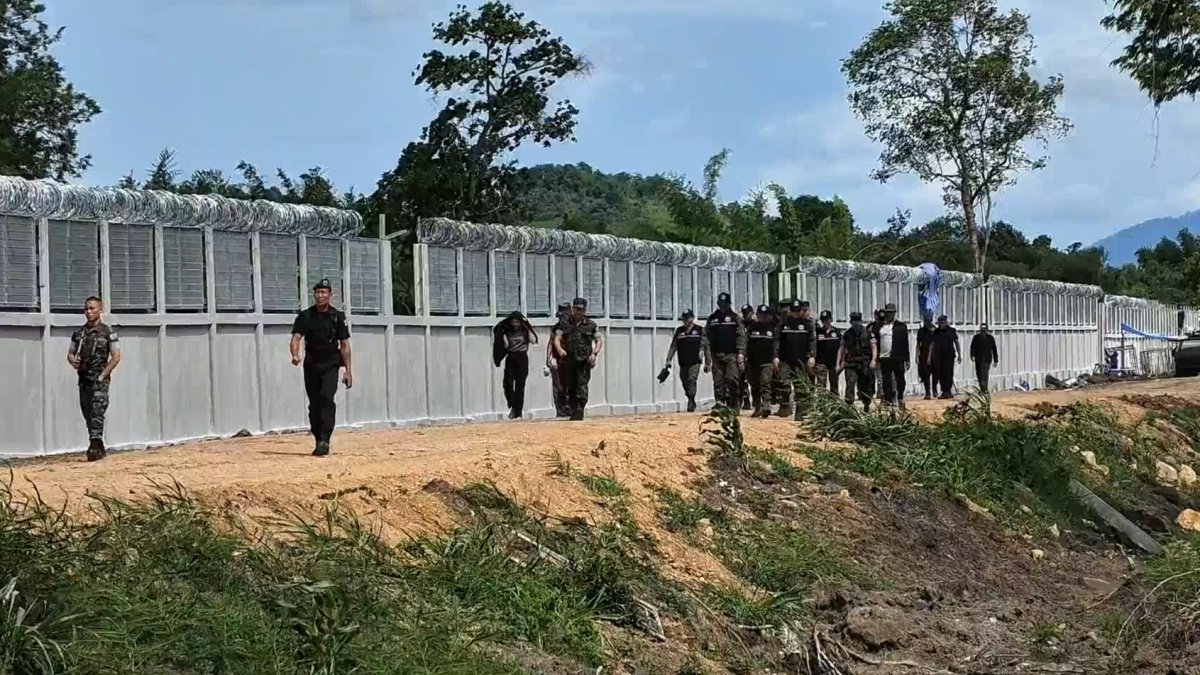
ASEAN Observers Visit Chanthaburi Border Fence Project
A nine-member ASEAN observer delegation from Indonesia, Malaysia and the Philippines visited the Thai-Cambodian border in Chanthaburi province this week at the invitation of the Royal Thai Armed Forces. The delegation inspected the ongoing border fence construction between boundary markers 52 and 59 in Pong Nam Ron district, where Thai authorities reported the project is now more than 45 percent complete.
The visit was part of Thailand's commitment to transparency in border management and regional cooperation under ASEAN frameworks. The observers received a full briefing on security measures and construction progress before conducting an on-site inspection of the fence line that stretches through several kilometres of Chanthaburi's eastern frontier.
Thai officials stated that the purpose of the project is to strengthen border security and improve overall border management along the Thai-Cambodian frontier in Chanthaburi province. The delegation's presence allowed accredited representatives from fellow ASEAN member states to assess the project's compliance with international law firsthand and to observe the engineering methods being employed.
This marks one of several occasions during the construction phase where Thailand has invited regional observers to view the project, consistent with its stated policy of transparency in border management. The Royal Thai Armed Forces has framed the initiative as both a security measure and a confidence-building exercise with neighbouring countries.
Delegation Leadership and Security Briefing
Air Vice Marshal Chitphon Korkitsammakul, director of the International Affairs Office at the Defence Intelligence Department, led the nine-member delegation. Rear Admiral Udom Kulsiripanyo, chief of staff of the Chanthaburi and Trat Border Defence Command, welcomed the observers and delivered a detailed security briefing on border conditions and the fence project's operational context.
The briefing covered security arrangements along the Chanthaburi sector of the Thai-Cambodian border, including current threat assessments, patrol protocols, and coordination mechanisms between Thai military units stationed along the frontier. Cambodian observers were present throughout the briefing, reflecting the project's bilateral monitoring framework that has been maintained since construction began.
The delegation included representatives accredited to Thailand from Indonesia, Malaysia and the Philippines — three ASEAN member states with diverse border management experience spanning maritime and land boundaries. Their presence underscored the regional interest in Thailand's approach to border security infrastructure and the potential applicability of similar models in other ASEAN border regions.
Rear Admiral Udom's briefing included an overview of the operational environment in Chanthaburi and Trat provinces, where border security forces manage the dual challenges of preventing illegal crossings while facilitating legitimate movement of people and goods across the frontier. The admiral detailed the coordination procedures between Thai military units and Cambodian border authorities that have been established along this sector.
Border Fence Engineering and Construction Progress
Thai authorities reported that the border fence project between markers 52 and 59 in Pong Nam Ron district has reached more than 45 percent completion. The construction extends through terrain that includes agricultural land, rubber plantations, and waterways characteristic of eastern Thailand's border landscape, requiring different engineering approaches for each segment.
Engineers briefed the delegation on the fence's design specifications, which include features intended to manage legitimate cross-border movement while deterring illegal crossings. The project is being executed by Thai military engineering units under the supervision of the Chanthaburi and Trat Border Defence Command, with materials and construction standards consistent with international border infrastructure norms.
Thai military officials stated that the remaining sections of the fence will proceed under the same construction schedule and observation framework. Cambodian observers have maintained a presence throughout the construction process, consistent with the bilateral understanding between Thailand and Cambodia on the project's implementation. Each completed section is inspected jointly before work proceeds to the next phase.
The 45 percent completion milestone represents significant progress on what Thai officials describe as a medium-term infrastructure project. The fence between markers 52 and 59 is part of a broader effort to improve boundary management along Thailand's eastern land border, where clear demarcation supports both security objectives and economic development goals.
Removable Panel Design and Boundary Commission Process
A gap near boundary marker 52 is part of the engineering design, the Chanthaburi Marine Task Force confirmed during the delegation's visit. The opening has been left pending decisions by the Thailand-Cambodia Joint Boundary Commission, which continues its work on boundary delimitation between the two countries through bilateral diplomatic channels.
Once the Joint Boundary Commission reaches a decision, the gap will be fitted with a removable panel that will allow both Thai and Cambodian officials to conduct joint inspections of the boundary marker. This design feature ensures that neither side faces permanent obstruction in accessing the marker for maintenance or verification purposes — addressing a practical concern that has arisen in other border infrastructure projects worldwide.
Thai officials emphasised that the removable panel arrangement was planned from the project's design phase and reflects the transparent approach the military has taken throughout construction. Cambodian observers have been present at the site throughout the building process, and their input has informed several aspects of the project's execution, including the panel design itself.
The Joint Boundary Commission's role in this process highlights how the fence project operates within the existing bilateral framework for boundary management between Thailand and Cambodia. The commission, established through bilateral agreement, continues to address boundary-related matters through diplomatic consultation rather than unilateral action.
Transnational Crime Assessment Along the Border
The ASEAN delegation also visited strategic locations along the Thai-Cambodian border where Thai authorities have implemented measures against transnational crime. The assessment covered checkpoints, surveillance installations, and patrol routes that form part of Thailand's layered approach to border security in the eastern region.
Thai officers briefed the observers on operational procedures for detecting and intercepting illicit goods and unauthorised crossings. The delegation reviewed current practices against drug trafficking, wildlife smuggling, and human trafficking — transnational crime categories that affect all ASEAN member states and are identified as priority areas under the ASEAN Plan of Action to Combat Transnational Crime.
The assessment included discussions on intelligence-sharing mechanisms between Thai military units and their counterparts in neighbouring countries. Thai officials noted that community watch programmes complement physical infrastructure, creating a comprehensive border management approach that addresses both security and local economic needs. The observers examined how these programmes function in practice along the Chanthaburi sector.
Delegation members expressed interest in Thailand's integrated approach, which combines fencing, surveillance technology, patrol protocols, and community engagement into a single operational framework. This model offers potential lessons for other ASEAN member states facing similar challenges along their own borders, where transnational crime networks exploit gaps in enforcement capacity.
Cambodian Involvement and Transparency in Construction
Cambodian observers have been present throughout the fence construction process, Thai military officials confirmed during the delegation briefing. This ongoing observation allows both sides to address concerns as they arise and ensures the project proceeds with full transparency toward Cambodia as the neighbouring state whose border is directly affected by the construction.
At marker 52, the planned removable panel arrangement for joint inspections represents one outcome of this bilateral monitoring framework. The design allows Thai and Cambodian officials to verify boundary conditions together and respond to any issues without requiring permanent structural changes to the fence, preserving flexibility for future boundary management decisions.
Thai officials described the Cambodian observation arrangement as consistent with Thailand's commitment to peaceful resolution of border matters through dialogue. The Royal Thai Armed Forces stated that the project complies with international law and respects Cambodia's sovereign rights along the shared frontier, with the ongoing presence of Cambodian observers serving as verification of this commitment.
The transparency demonstrated in the Chanthaburi project sets a precedent for future bilateral infrastructure initiatives along Thailand's land borders. Whether with Cambodia, Laos, Malaysia, or Myanmar, the model of inviting the affected neighbour to observe throughout construction could become standard practice for Thai border development projects going forward.
Regional Security Implications for ASEAN Cooperation
The observer visit reinforces Thailand's role within ASEAN security discussions, where practical border management initiatives contribute to broader regional stability frameworks. By hosting observers from three ASEAN member states, Thailand demonstrated how national infrastructure projects can support collective regional security goals while maintaining transparency with neighbours.
Analysts note that the visit provides participating ASEAN states with direct insight into Thailand's border construction methods and transparency protocols. This knowledge sharing may inform similar initiatives elsewhere in the region as ASEAN member states continue to develop their border management capabilities under the ASEAN Political-Security Community blueprint, which emphasises shared responsibility for regional stability.
The visit also carries significance for Thailand's position as a convening power on transnational security issues. Practical demonstrations of cooperation at the border strengthen Thailand's standing in ASEAN dialogues on matters ranging from maritime security to cross-border crime prevention, reinforcing the country's role as a reliable partner in regional security architecture.
For Thailand's broader foreign policy, the observer programme demonstrates how the country translates ASEAN principles into concrete action. As competition between major powers intensifies in Southeast Asia, Thailand's ability to lead regional initiatives on practical security matters reinforces its standing as a middle power capable of convening dialogue and delivering results without relying on external patrons.
Implications for Border Communities in Chanthaburi and Trat
For residents of Chanthaburi and neighbouring Trat province, the border fence project addresses longstanding concerns about unauthorised crossings and smuggling that have affected local markets and agricultural trade. Thai authorities have stated that clearer boundary demarcation reduces accidental trespass while maintaining established crossing points used by families and traders who have relied on cross-border access for generations.
Local officials in Chanthaburi have noted that reduced smuggling activity benefits legitimate businesses operating in border markets. Small-scale traders from both sides of the border continue to use designated crossing points for fruit, seafood, and agricultural trade, with the project's design accommodating these traditional economic patterns through controlled access points.
The project's approach — combining physical infrastructure with bilateral observation and community engagement — offers a model for how security measures can be implemented without disrupting the daily lives and economic activities of border communities. Buddhist temples and cultural sites along the border remain accessible to worshippers from both Thailand and Cambodia, reflecting the project's integration with existing community life and cultural traditions.
Residents of Pong Nam Ron district and surrounding areas have expressed cautious optimism about the project, according to local community representatives. The clearer boundary line reduces disputes over land use and accidental trespass while the continued access for family visits and temple ceremonies preserves the social fabric that has connected communities on both sides of the border for centuries.
By Ann Srisawat, Staff Writer
This article was produced with AI-assisted research and editorial support. Reporting is based on sources cited in the article.
What's Your Reaction?
 Like
0
Like
0
 Dislike
0
Dislike
0
 Love
0
Love
0
 Funny
0
Funny
0
 Wow
0
Wow
0
 Sad
0
Sad
0
 Angry
0
Angry
0

Southeast Asia Correspondent at Global1.News. Based in Bangkok, covering Thai and Southeast Asian politics, economy, technology, and culture. Deep regional perspective on one of the world's most dynamic regions.














Comments (0)