
ABC swipes at FCC over ‘First Amendment threat’ brought on by early broadcast license renewal
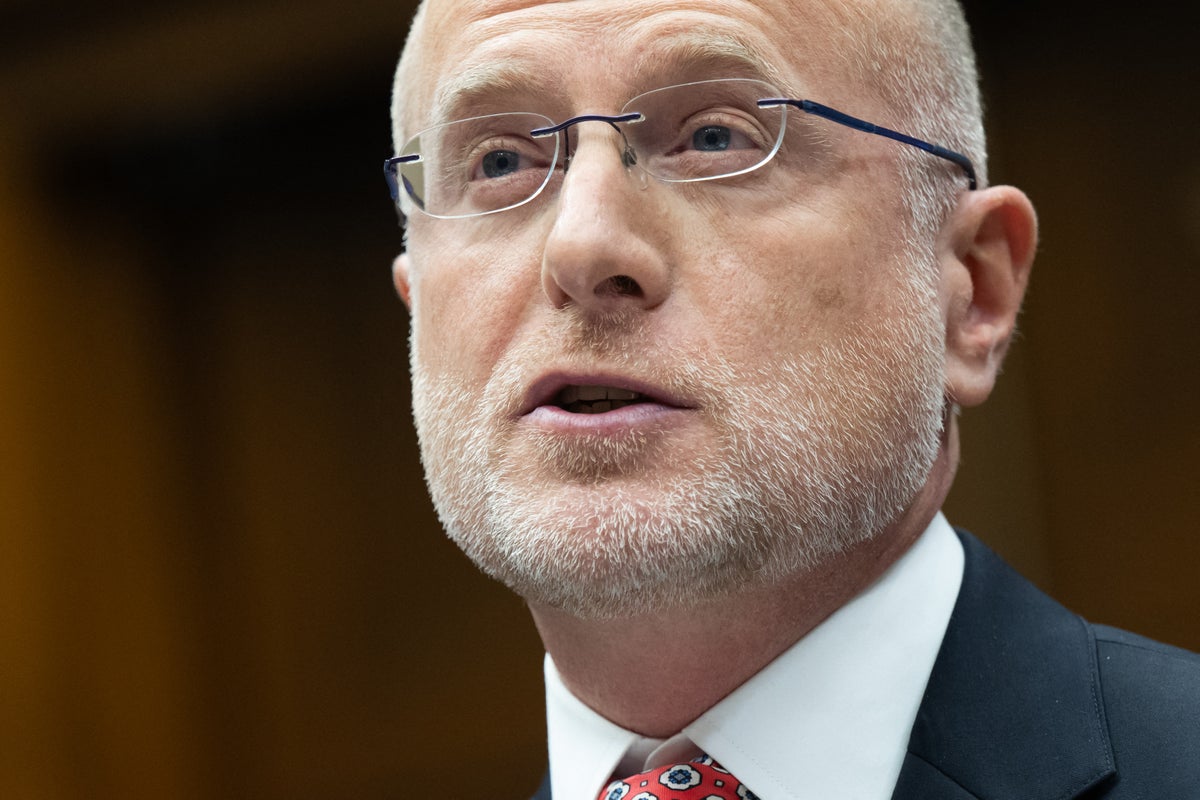
ABC Accuses FCC of First Amendment Coercion Amid Early Broadcast Licence Renewal
The American Broadcasting Company has launched a blistering rebuke of the Federal Communications Commission, branding its decision to advance the renewal of broadcast licences an “extraordinary demonstration of power and coercion” that threatens core First Amendment protections. The move, announced late on Tuesday, has ignited fresh debate over the independence of US media regulation and the leverage Washington holds over traditional broadcasters.
Background to the Dispute
Broadcast licences in the United States are typically granted for eight-year terms, subject to FCC review that includes assessments of public-interest obligations, local programming commitments and compliance with indecency rules. ABC’s parent company, Disney, operates eight full-power television stations whose licences were not due for renewal until 2028. The FCC’s decision to accelerate that process by three years has therefore caught the industry off guard.
Commission officials have cited “administrative efficiency” and a desire to align renewal cycles across major networks. Yet ABC sees something more sinister at work. In a 12-page filing submitted to the FCC yesterday, the network argued that the early review creates an implicit bargaining chip: favourable treatment could be tied to editorial choices or corporate behaviour pleasing to regulators.
ABC’s Sharp Response
“This is not routine housekeeping,” ABC’s general counsel wrote in the submission. “It is an extraordinary demonstration of power and coercion that chills protected speech.” The filing points to recent public statements by FCC commissioners questioning the balance of political coverage on network news programmes and suggesting that “corrective action” might be warranted. While no specific sanctions have been proposed, ABC contends that the mere threat of licence delay or conditions amounts to unconstitutional prior restraint.
Industry observers note that ABC’s language echoes concerns raised during previous administrations when regulators were accused of using spectrum authority to influence content. What distinguishes the current episode is the compressed timeline: stations have been given just 60 days to submit comprehensive renewal applications normally prepared over 18 months.
Expert Perspectives and Legal Context
Media-law scholars are divided. Professor Eleanor Vance of Georgetown Law told Global1 News that the FCC possesses clear statutory authority to set renewal dates, yet timing alone can carry constitutional weight. “The Supreme Court has long recognised that government licensing of broadcasters must remain content-neutral,” she said. “Accelerating review without a compelling, viewpoint-neutral justification invites strict scrutiny.”
Conversely, former FCC chief economist Dr Marcus Hale argued that networks have grown accustomed to “regulatory forbearance” and that modest administrative adjustments hardly constitute coercion. “Licence renewal has always been a moment for accountability,” he noted. “If a station has aired 14 hours of local news and met children’s programming quotas, renewal is essentially pro forma.”
Data from the FCC’s own records show that between 2015 and 2023, 97 per cent of full-power television licences were renewed without hearing. The handful of contested cases involved repeated indecency violations or failure to maintain public files. ABC’s stations have no such blemishes on record, lending credence to the network’s claim that the early review is politically motivated rather than compliance-driven.
Broader Implications for Media Freedom
The stakes extend beyond ABC. With streaming services eroding traditional television’s audience share—linear prime-time viewership has fallen 42 per cent since 2015—broadcasters argue they already operate at a competitive disadvantage. Any perception that spectrum rights are contingent on political alignment could accelerate the shift of investigative journalism and national news to unregulated digital platforms.
European regulators have watched the episode with interest. Ofcom in London and the European Commission’s competition directorate have both emphasised “must-carry” obligations and public-service remits without resorting to accelerated licence threats. A senior Brussels official, speaking on condition of anonymity, remarked that “the American approach risks turning spectrum allocation into a political football.”
Financial markets have reacted swiftly. Disney shares slipped 1.8 per cent in after-hours trading following ABC’s filing, while shares in rival Paramount Global edged higher on speculation that its own renewal might receive gentler treatment. Advertising executives privately express concern that any protracted regulatory uncertainty could disrupt the $8.3 billion upfront market for the 2025-26 season.
Political Undercurrents
Although the FCC maintains that the renewal schedule revision was initiated by career staff, congressional Democrats have demanded documents showing any White House involvement. A letter signed by 17 members of the House Energy and Commerce Committee cites “troubling parallels” with past attempts to pressure broadcasters over coverage of elections and public-health policy.
Republicans counter that networks have themselves invited scrutiny by uneven application of fact-checking standards. One senior Senate aide noted that “if ABC wants to lecture us on the First Amendment, it might start by ensuring equal airtime for all candidates rather than selective framing.”
The episode also highlights the structural tension between broadcast’s privileged access to public spectrum and its claim to full editorial autonomy. As 5G and next-generation multicast technologies blur the line between over-the-air and internet delivery, the FCC’s licensing regime itself faces obsolescence. Yet until Congress modernises the Communications Act, the commission retains powerful leverage.
Legal analysts expect ABC’s filing to trigger a lengthy administrative record, possible court challenges and renewed calls for spectrum auction reform. In the meantime, newsrooms across the country are watching closely: if the regulator can move the goalposts for one network, others may face similar pressure.
This is Erica Thornton for Global1 News, reporting from London. 🇬🇧
This is Erica Thornton for Global1 News, reporting from London. 🇬🇧
This article was produced with AI-assisted research and editorial support. Reporting is based on sources cited in the article.
What's Your Reaction?
 Like
0
Like
0
 Dislike
0
Dislike
0
 Love
0
Love
0
 Funny
0
Funny
0
 Wow
0
Wow
0
 Sad
0
Sad
0
 Angry
0
Angry
0

US Politics and Policy Correspondent at Global1.News. Based in Washington DC, covering American politics, policy, elections, and the courts. Knows how the system works and tells you what it actually means.















Comments (0)