
Abula - Nigeria's indigenous game with lofty ambitions
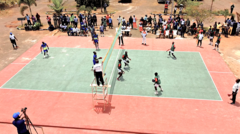
Abula, Nigeria’s homegrown sport inspired by the Yoruba idea of a balanced meal, is quietly positioning itself as a fresh vehicle for cultural expression and athletic ambition at a moment when African nations are increasingly looking inward for sporting identity. What began as a neighbourhood pastime blending elements of volleyball, tennis and communal strategy now carries the explicit goal of earning formal international recognition, offering both a playful reminder of traditional values and a practical platform for youth engagement across West Africa.
The game’s name itself reflects its philosophical core. In Yoruba culture, “abula” evokes the careful assembly of a complete meal—protein, carbohydrate and vegetable in harmonious proportion. Players and organisers describe the sport in similar terms: it requires coordination between individual skill and collective rhythm, between attack and defence, between physical effort and social enjoyment. This built-in emphasis on balance distinguishes Abula from many imported games that privilege raw speed or power alone.
The Yoruba foundation and everyday origins
Abula emerged in south-western Nigeria among communities that already valued games as extensions of social life rather than isolated competitions. Early versions were played with simple, locally available materials—wooden paddles, a soft ball and improvised nets or markers—on open ground that doubled as markets or meeting places after dusk. Because the rules reward measured teamwork over individual dominance, the sport quickly became popular at family gatherings, schoolyards and town festivals. Elders note that matches often pause for conversation or shared food, reinforcing the same principle of equilibrium that gives the game its name.
This organic development mirrors a wider pattern across the continent, where indigenous sports have long served as living archives of values such as reciprocity, patience and communal responsibility. In an era when many young Nigerians consume global football leagues and basketball highlights, Abula’s advocates argue that reclaiming and modernising local games can strengthen cultural continuity without rejecting modernity.
From street pastime to structured competition
Organisers have spent recent years codifying rules, designing portable equipment and staging regular tournaments that attract players from multiple states. Standardised scoring now rewards both successful shots and the quality of team coordination, preserving the “balanced meal” metaphor in every point. Referees are trained to intervene not only for fouls but also to remind participants of the sport’s emphasis on respect and measured play. The result is a game that feels simultaneously familiar to those who grew up with it and accessible to newcomers who encounter it for the first time at festivals or university campuses.
These incremental steps have produced modest but measurable growth. Schools in Lagos, Oyo and Osun states have introduced Abula into physical-education curricula, citing its low cost and inclusive nature. Unlike sports that require expensive imported gear, Abula can be played with equipment manufactured by local artisans, keeping participation within reach of rural communities. The same accessibility makes it attractive to organisers seeking to expand opportunities for girls and young women, groups historically underrepresented in many competitive settings.
Cultural preservation meets sporting ambition
Abula’s push for wider visibility sits at the intersection of heritage preservation and soft-power strategy. Proponents see international recognition—through regional federations or eventual affiliation with global bodies—as a way to showcase Nigerian creativity on the same stages that host football, athletics and basketball. At the same time, they insist that the game’s cultural DNA must remain intact. The emphasis on balance, they argue, offers an alternative to the hyper-competitive ethos that sometimes dominates elite sport, potentially appealing to audiences weary of commercial excess.
This dual identity carries implications beyond the playing field. Successful indigenously rooted sports can generate small-scale economic activity through equipment production, coaching and event hosting. They also provide narrative material for filmmakers, musicians and writers looking for distinctly African stories in a global entertainment market hungry for fresh content. In that sense, Abula functions as both athletic pursuit and cultural export, aligning with broader conversations about how African societies can tell their own stories rather than relying solely on external frameworks.
Obstacles on the road to wider acceptance
Growth nevertheless faces familiar hurdles. Securing consistent funding for training, travel and equipment remains difficult when national sports budgets prioritise established disciplines. Media coverage tends to favour high-profile leagues, leaving limited space for emerging games to build public awareness. In addition, standardising rules across regions without erasing local variations requires patient negotiation among players, elders and administrators who may hold differing views on what “authentic” Abula should look like.
Yet these challenges are not unique to Abula. Other African sports that later gained continental or international footing navigated similar periods of uneven support and gradual institutionalisation. The key variable appears to be sustained community ownership: when players, coaches and cultural custodians remain central to decision-making, the game retains its distinctive character even as it scales.
Looking ahead
The next phase for Abula will likely hinge on strategic partnerships rather than sudden breakthroughs. Organisers are exploring exhibition matches at regional cultural festivals, collaborations with universities for research on the sport’s physical and social benefits, and digital documentation that can reach diaspora communities. If these efforts maintain the balance between tradition and adaptation that defines the game itself, Abula could move from local curiosity to recognised regional discipline within the next decade.
Whether it ultimately achieves formal international status is less important than the process of deliberate, community-led development now underway. In preserving the Yoruba principle of equilibrium while inviting broader participation, Abula offers a modest but instructive model for how African societies can nurture homegrown pastimes into meaningful contemporary expressions.
By Amara Diop, Staff Writer
This article was produced with AI-assisted research and editorial support. Reporting is based on sources cited in the article.
What's Your Reaction?
 Like
0
Like
0
 Dislike
0
Dislike
0
 Love
0
Love
0
 Funny
0
Funny
0
 Wow
0
Wow
0
 Sad
0
Sad
0
 Angry
0
Angry
0

Amara Diop
West Africa/Sahel Correspondent at Global1.News. Dakar-based journalist covering politics, security, climate, and development across Francophone and Anglophone West Africa. Tells the stories of a region undergoing profound transformation.













Comments (0)