
What climate records did we break in 2024? Latin America's year of extremes
In the sweltering streets of Bogotá, Maria Lopez watched as her elderly mother struggled to breathe during the unprecedented heatwave that gripped Colombia in September 2024. Across Latin America, from the Amazon basin to the Andean peaks, communities are facing the brunt of a changing climate that broke records in ways never seen before. This year marked a turning point, with
In the sweltering streets of Bogotá, Maria Lopez watched as her elderly mother struggled to breathe during the unprecedented heatwave that gripped Colombia in September 2024. Across Latin America, from the Amazon basin to the Andean peaks, communities are facing the brunt of a changing climate that broke records in ways never seen before. This year marked a turning point, with temperatures soaring, forests burning, and glaciers vanishing at alarming rates.
Full Article Headline
Latin America's 2024 Climate Crisis: Records in Heat, Fires, Glaciers
São Paulo, Brazil – July 2026 — Communities across Latin America endured a year of unprecedented climate extremes in 2024 that shattered long-standing records and exposed deep vulnerabilities in the region’s ecosystems and populations. From record-shattering temperatures in Colombia and Peru to massive fires consuming millions of acres in the Brazilian Amazon, the data reveal a continent under siege. These events are not isolated; they interconnect through ocean warming, glacier loss, and policy shifts that threaten future stability. The human cost includes millions displaced by floods, droughts, and hurricanes, particularly in Central America’s dry corridor where subsistence farmers face repeated crop failures. As scientists warn of tipping points, Latin America’s experience serves as a stark global warning.
2024 — The Year Latin America's Climate Warning Lights Flashed Red
2024 delivered a cascade of climate extremes that placed Latin America at the epicenter of global environmental upheaval. Climate disasters forced millions from their homes worldwide, with Latin America experiencing acute internal displacement driven by floods, droughts, and hurricanes. In Central America’s dry corridor, subsistence farmers endured repeated crop failures that pushed families toward migration. Europe, the fastest-warming continent, recorded its hottest temperatures on record during 2024-2025 heatwaves, while wildfires ravaged Spain, France, and Portugal. These events underscored interconnected atmospheric patterns affecting the tropics. In Latin America, the combination of extreme heat, Amazon fires emitting 183 MtC of carbon, and rapid glacier loss created compounding risks for water security and agriculture. Scientists highlighted the Amazon tipping point at 20-25% total forest loss, with roughly 17% already gone, raising fears of savannization. Regional leadership emerged as Brazil prepared to host COP30 and supported the ICJ climate ruling, contrasting sharply with reversals elsewhere. The year’s data painted a clear picture: Latin America’s warning lights flashed red, demanding immediate coordinated action to avert irreversible thresholds.
Mercury Rising: Latin America's Record-Breaking Heat
Heat records fell across Latin America in 2024 with alarming frequency and intensity. Colombia set an all-time national record of 43.4°C in Jerusalen, alongside 41.3°C at El Juncal, 40.9°C in Girardot, 40.5°C in Neiva, and 39.5°C in Cucuta during September. Peru shattered Amazon and lowland all-time marks with 41.1°C in Inapari, 41.0°C in Juan Guerra, and 40.4°C in Tarapoto. Bolivia recorded 40.5°C in Cobija, establishing a new all-time Amazon basin record amid the regional heatwave. Mexico City, at 2,300 meters elevation, broke its all-time heat record at 34.7°C, the highest since records began in 1877. The pattern continued into 2024-2026, with Guatemala reaching 36.0°C in Retalhuleu and sustained extremes stretching through Colombia and the Caribbean. These temperatures, fueled by 2023-24 El Niño conditions and broader warming trends, strained public health systems, agriculture, and urban infrastructure. Cities like La Paz and Huaraz faced added pressure from melting glaciers that traditionally supplied water. The data confirm that 2024 was not an anomaly but part of an accelerating trajectory that threatens millions across the region.
Amazon on Fire: Deforestation, Flames, and a Fragile Recovery
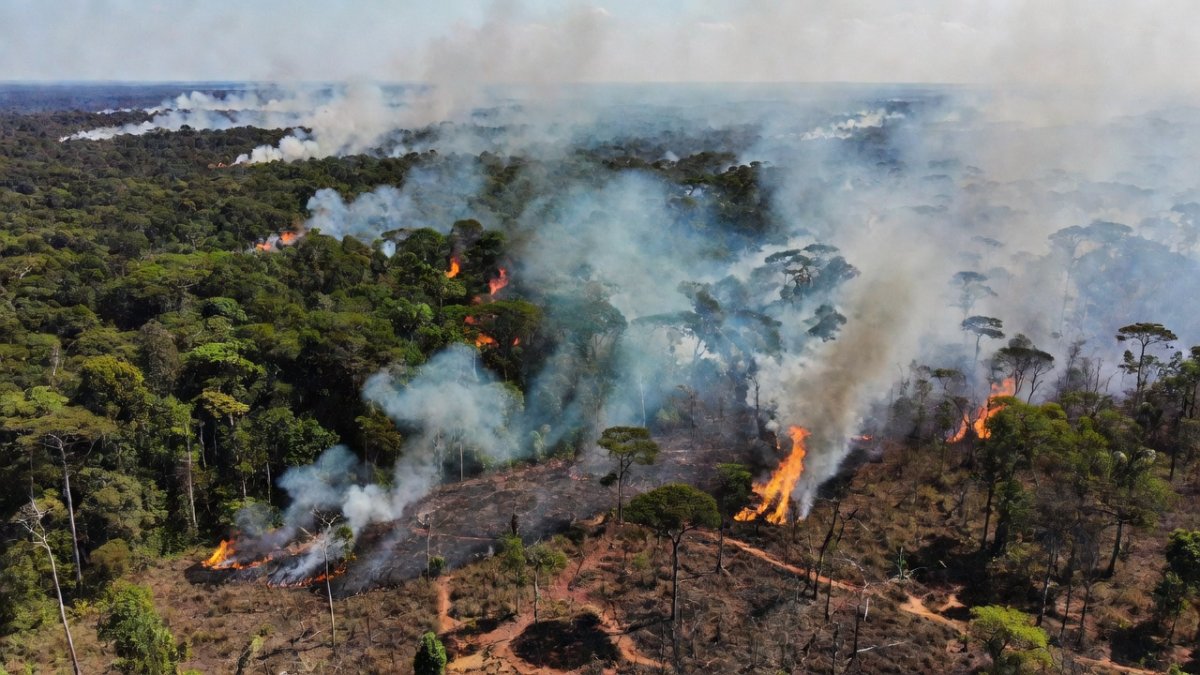
The Brazilian Amazon endured catastrophic fire activity in 2024. Some 7.4 million acres burned in the first half of the year alone, representing a 122% increase from the prior year. Between August and October, fires consumed between 13.4 and 37.4 million acres, reaching a 17-year high and releasing 183 MtC of cumulative carbon emissions. Approximately 11,000 square miles, or roughly 28,000 km², of forest were lost to fire. While deforestation through clear-cutting declined, with PRODES/INPE data showing an 11.08% drop for the 2024-2025 cycle—the lowest in 11 years—fire-driven loss remained severe. Early 2026 brought further progress, with a 38% reduction in alerts compared to 2025 and the lowest indices in a decade. Colombia’s Amazon region, however, saw deforestation rise sharply to 77,124 hectares in 2024, up 74% from 44,274 hectares in 2023, with around 72,400 hectares affected in 2025. Scientists continue to warn that the Amazon approaches a tipping point at 20-25% total loss, with roughly 17% already gone, risking widespread savannization. These figures illustrate both fragile gains and persistent threats to the world’s largest rainforest.
Andes Without Ice: Venezuela's Vanished Glaciers and Peru's Collapsing Peaks
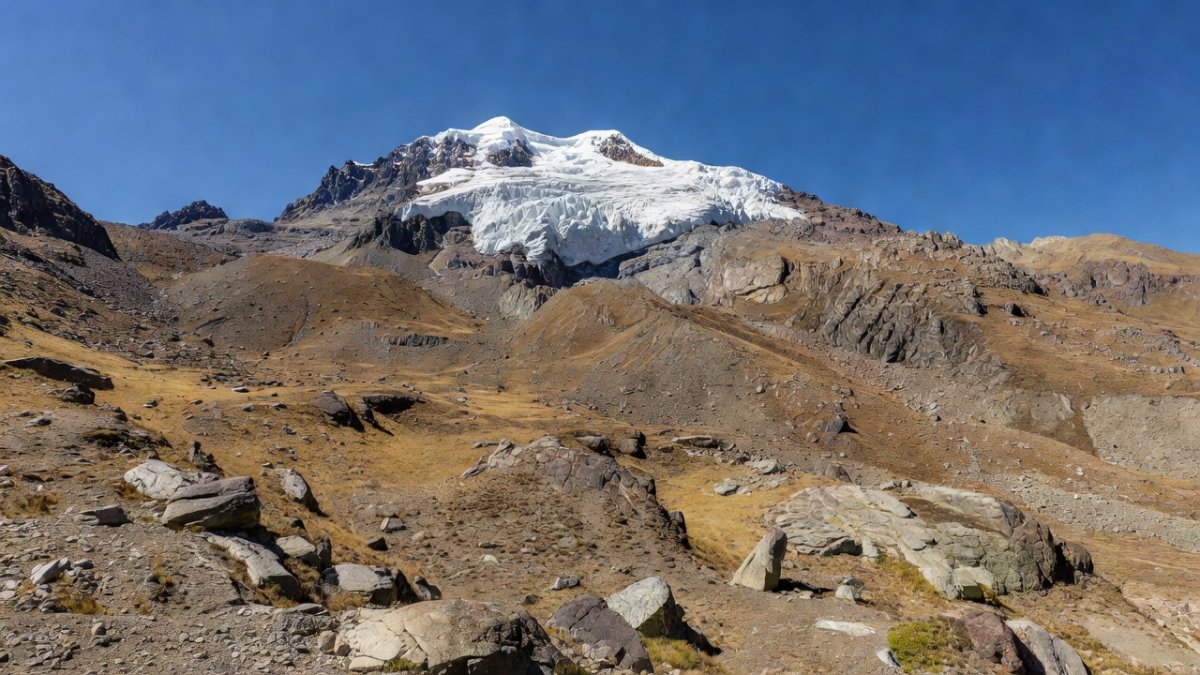
Venezuela became the first country in modern history to lose all its glaciers by 2024, with the Humboldt Glacier downgraded to a static ice field. Peru witnessed dramatic high-mountain thaw, exemplified by the April 2025 collapse of Vallunaraju at 5,686 meters. Tropical Andes glaciers proved especially vulnerable to rapid warming, threatening water resources for major cities including La Paz and El Alto in Bolivia and Huaraz in Peru. These losses compound existing pressures on agriculture, hydropower, and urban supply systems that depend on seasonal meltwater. The disappearance of Venezuela’s ice cover marks a symbolic and practical milestone, eliminating a once-reliable source for downstream communities. In Peru, repeated glacier collapses have triggered landslides and altered river flows, increasing risks for populations living downstream. Regional impacts extend beyond immediate water shortages to biodiversity loss and cultural heritage tied to these iconic peaks. Data from 2024 and 2025 confirm that the rate of retreat has accelerated beyond earlier projections, leaving little time for adaptation measures. The Andes’ transformation serves as a visible indicator of how quickly high-altitude environments are responding to global temperature rise.
Oceans in Fever: Record Sea Surface Temperatures and the El Niño Legacy
Global sea surface temperatures reached record highs in 2024, with large percentages of the ocean area between 20°S and 20°N setting monthly records. The Caribbean and tropical Atlantic were particularly affected, driven by the lingering influence of the 2023-24 El Niño combined with ongoing anthropogenic warming. These elevated temperatures triggered widespread coral bleaching events that devastated marine ecosystems and threatened fisheries critical to coastal livelihoods across Latin America and the Caribbean. Warmer waters also intensified hurricane activity and altered fish migration patterns, disrupting food security for millions. The ocean heat anomaly persisted beyond the El Niño peak, indicating that baseline warming has shifted the range of normal conditions. Impacts cascaded through supply chains, affecting export revenues from seafood and tourism in countries like Mexico, Colombia, and Peru. Scientists link these ocean changes directly to atmospheric heatwaves observed on land, creating feedback loops that amplify extremes. The 2024 data underscore that marine heat is no longer episodic but a sustained driver of regional climate instability with profound consequences for both natural systems and human communities dependent on them.
Global Reckoning: US Climate Reversal vs Latin American Leadership
The United States EPA revoked the Endangerment Finding in 2026 under the Trump administration, formally rejecting the agency’s 2009 scientific determination that CO2 endangers public health. This policy reversal carries significant implications for global climate action and commitments under the Paris Agreement. In stark contrast, Latin American nations demonstrated renewed leadership. Brazil prepared to host COP30 while supporting the ICJ climate ruling, signaling a commitment to multilateral solutions. Mexico, Colombia, and Caribbean states continued advancing national adaptation plans despite limited resources. The divergence highlights a shifting geopolitical landscape where developing regions bear disproportionate climate burdens yet pursue progressive policies. Latin America’s experience with record heat, Amazon fires, and glacier loss provides empirical evidence that strengthens calls for stronger international frameworks. The US decision risks undermining collective progress at a moment when data from 2024 show accelerating impacts. Regional cooperation on deforestation reduction and renewable energy offers a counter-model, though sustained funding and technology transfer remain essential. The policy contrast of 2026 will shape whether global emissions trajectories bend in time to protect vulnerable populations.
The Bottom Line — What Comes Next
The cumulative data from 2024 through 2026 reveal a region racing toward irreversible thresholds. Continued heat records, Amazon carbon releases of 183 MtC, and the complete loss of Venezuela’s glaciers demand accelerated adaptation alongside mitigation. Latin American countries must scale early-warning systems, protect remaining forests, and diversify water sources for cities like La Paz and Huaraz. International support will prove decisive, particularly as US policy shifts create uncertainty. The Amazon’s 17% loss already places it near the 20-25% savannization tipping point, while ocean heat continues stressing fisheries and coral reefs. Displacement pressures in the dry corridor will intensify without targeted investment in resilient agriculture. Yet the region’s leadership at COP30 and support for international climate rulings offer pathways forward. The coming years will test whether data-driven policies can outpace the physical changes already underway. For communities like those in Bogotá and the Amazon basin, the window for meaningful action is narrowing rapidly.
By Elena Vasquez, Staff Writer
This article was produced with AI-assisted research and editorial support. Reporting is based on sources cited in the article.
What's Your Reaction?
 Like
0
Like
0
 Dislike
0
Dislike
0
 Love
0
Love
0
 Funny
0
Funny
0
 Wow
0
Wow
0
 Sad
0
Sad
0
 Angry
0
Angry
0

Latin America Correspondent at Global1.News. Based in Mexico City, covering politics, economics, energy, and culture across the region. Brings an on-the-ground perspective to stories spanning from the Rio Grande to Patagonia.














Comments (0)