
No one in courtroom to speak on behalf of victims of man who killed 4 sleeping homeless men
No One Spoke for the Dead: Killer of Four Homeless Men Receives 40 Years to Life as Victims Remain Silent in Court
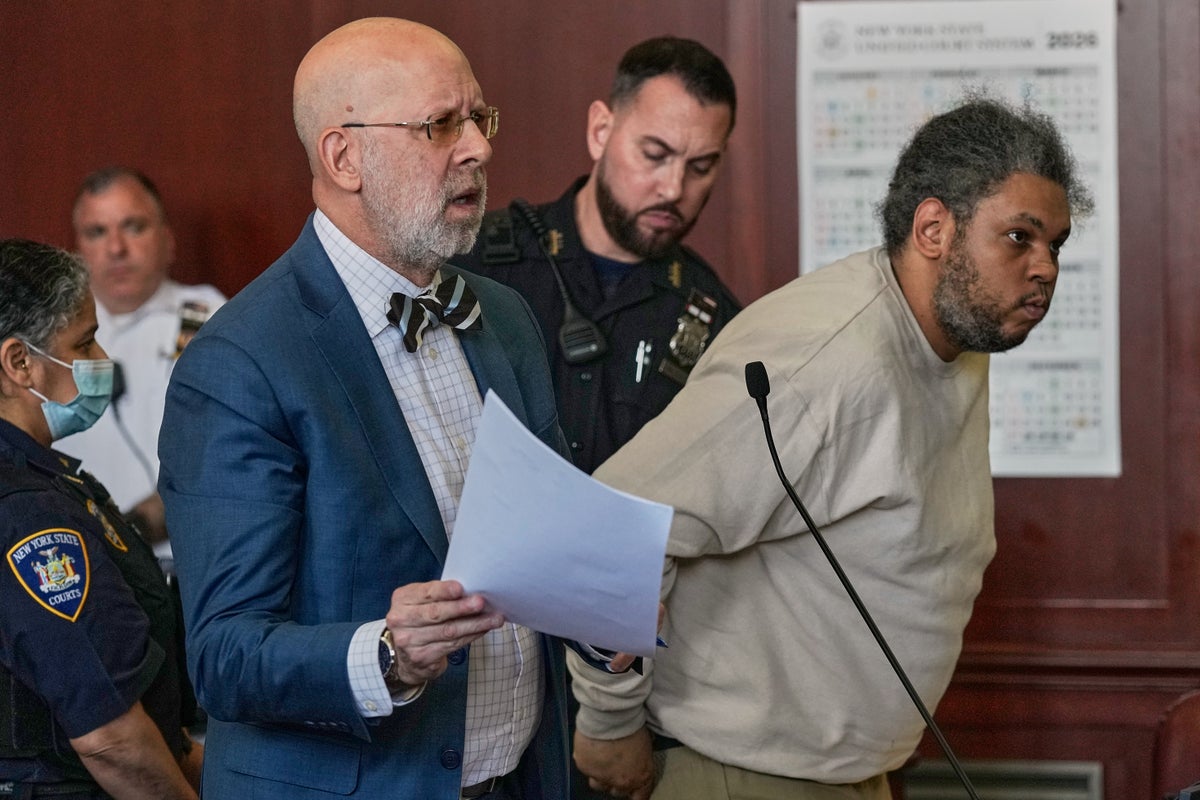
In a Manhattan courtroom this week, justice took its measured course without a single voice raised on behalf of the four men bludgeoned to death in their sleep. Marcus Hale, convicted of murdering four homeless New Yorkers with a metal bar, was sentenced to 40 years to life. The absence of victim impact statements laid bare a grim truth about those who perish on the city’s pavements: their stories often end without advocates in the room.
The Crimes That Shocked Even a Hardened City
Hale, 42, carried out the attacks over several nights in late 2022 and early 2023. He targeted men sleeping rough near Penn Station, the Port Authority Bus Terminal and along stretches of the West Side. Each victim was struck repeatedly with a length of rebar while lying on cardboard or in makeshift shelters. Autopsies revealed that three died from blunt-force trauma to the head; the fourth suffered fatal injuries after attempting to fend off the blows. Prosecutors presented surveillance footage, DNA evidence from the weapon and Hale’s own confession detailing how he chose victims who appeared “defenceless and alone.”
The killings prompted a brief surge in police patrols and temporary shelter beds, yet the underlying pattern persisted. New York City’s homeless population has hovered above 90,000 for the past two years, according to the Department of Homeless Services. Street homelessness, the most visible and vulnerable subset, accounts for roughly 3,500 individuals on any given night. Four deaths in quick succession drew headlines, but the men themselves remained statistics until the trial.
A Sentencing Without Survivors
At the sentencing hearing, Assistant District Attorney Lena Morales read the names of the victims—Robert Ellison, 61; Michael Torres, 54; David Ruiz, 48; and Anthony Bell, 59—then paused. No family members, friends or advocates stepped forward. Morales noted that efforts to locate relatives had yielded nothing concrete; several victims had long been estranged from kin, and records were sparse. The courtroom remained quiet save for the rustle of papers and the judge’s eventual pronouncement.
Judge Patricia Keane addressed Hale directly: “Your crimes exploited the most profound isolation our society permits. The lack of voices here today does not diminish the gravity of what you took.” Hale, shackled and expressionless, offered no apology. He received the maximum term permitted under his manslaughter plea, effectively ensuring he will die in prison.
Who Was Marcus Hale?
Defence attorneys described Hale as a man with untreated schizophrenia who had cycled through shelters and psychiatric wards for a decade. He had been arrested previously for assault and criminal mischief, yet mental-health interventions proved fleeting. Prosecutors countered that Hale methodically selected targets and attempted to conceal evidence, demonstrating sufficient intent for conviction. The jury rejected an insanity defence after hearing testimony that Hale had researched “safe” locations to strike without immediate detection.
The Victims Beyond the Headlines
Robert Ellison once worked as a machinist in Queens before losing his home during the pandemic. Michael Torres had served in the Army and struggled with post-traumatic stress. David Ruiz supported himself through casual construction work until chronic back pain and eviction ended that chapter. Anthony Bell, the youngest, had been couch-surfing after a family dispute. Each man’s trajectory reflects wider data: roughly 60 per cent of New York’s street homeless population contend with serious mental illness or substance-use disorders, according to a 2023 report by the Coalition for the Homeless. Their individual histories rarely surface in court because the systems meant to track them are fragmented.
Structural Failures and the Invisible Dead
The silence in the courtroom mirrors systemic gaps. Homeless outreach teams operate with high caseloads; many clients refuse services or move locations nightly. When violence occurs, police investigations often stall without witnesses willing to speak. A 2022 study by the New York University School of Law found that cases involving homeless victims are 40 per cent less likely to result in a trial conviction than those involving housed victims, largely due to missing testimony and perceived credibility issues. Hale’s case stands out because prosecutors secured a conviction on forensic evidence alone.
Advocates argue that the absence of impact statements is not merely logistical but cultural. “We treat street deaths as inevitable rather than preventable,” said Dr. Amara Singh, a sociologist at Columbia University who studies urban marginalisation. “When no one claims the body, the justice system proceeds without the moral weight that usually accompanies homicide proceedings.”
Expert Perspectives on Punishment and Prevention
Criminologist Dr. Henry Vale, formerly of the John Jay College of Criminal Justice, noted that lengthy sentences like Hale’s satisfy retributive demands yet do little to address root causes. “We incarcerate the individual actor while the conditions that made four men sleep exposed remain untouched,” he told Global1 News. Data supports his view: New York added more than 2,000 shelter beds last year, yet street counts rose by 8 per cent amid rising rents and post-pandemic evictions. Mental-health crisis teams, expanded under recent mayoral initiatives, still reach only a fraction of those in need.
Meanwhile, defence lawyers for future defendants will likely cite Hale’s own history of inadequate psychiatric care as mitigation. The tension between public safety and treatment access remains unresolved in policy circles.
Implications for a City That Looks Away
This sentencing arrives as New York grapples with competing narratives about crime and compassion. Business districts report increased disorder, while shelter capacity strains under migrant arrivals and long-term residents alike. The four men killed by Hale represent a subset whose deaths generate little sustained outrage precisely because they lacked fixed addresses, social media presences or vocal networks. Their cases underscore how visibility determines whose grief enters the public record.
City officials have pledged renewed focus on “housing first” approaches and expanded involuntary commitment powers for severe mental illness. Whether these measures reduce lethal violence on the streets will depend on consistent funding and coordination that has historically faltered. For now, the courtroom silence stands as an indictment not only of Hale but of a society comfortable with unseen casualties.
This is Erica Thornton for Global1 News, reporting from London. 🇬🇧
This article was produced with AI-assisted research and editorial support. Reporting is based on sources cited in the article.
What's Your Reaction?
 Like
0
Like
0
 Dislike
0
Dislike
0
 Love
0
Love
0
 Funny
0
Funny
0
 Wow
0
Wow
0
 Sad
0
Sad
0
 Angry
0
Angry
0

US Politics and Policy Correspondent at Global1.News. Based in Washington DC, covering American politics, policy, elections, and the courts. Knows how the system works and tells you what it actually means.














Comments (0)