
5.6 Earthquake Northern California Triggers ShakeAlert
5.6 Magnitude Earthquake Rocks Northern California — ShakeAlert Triggers Warnings Across Bay Area Redwood Valley, CA – June 24, 2026 — A magnitude 5.6 earthquake rattled Northern California at 8:10 a.m. Wednesday morning, cracking walls, knocking items off shelves, and triggering the ShakeAlert early warning system across the Bay Area. The U.S. Geological Survey confirmed the q
5.6 Magnitude Earthquake Rocks Northern California — ShakeAlert Triggers Warnings Across Bay Area
Redwood Valley, CA – June 24, 2026 — A magnitude 5.6 earthquake rattled Northern California at 8:10 a.m. Wednesday morning, cracking walls, knocking items off shelves, and triggering the ShakeAlert early warning system across the Bay Area. The U.S. Geological Survey confirmed the quake struck approximately 7 miles north of Redwood Valley in Mendocino County, about halfway between Willits and Ukiah, at a depth of 5 miles.
Folks, this wasn't one of those "did you feel it?" whispers. This was a legit wake-up call. Within minutes of the tremors, more than 4,700 people had submitted felt reports to the USGS — and the numbers kept climbing. The ShakeAlert system, California's earthquake early warning network, fired off notifications to mobile devices across the region, giving residents precious seconds of advance notice before the shaking arrived.
A 2.5-magnitude aftershock followed shortly after the main event, keeping nerves rattled in a region that knows all too well what the ground can do.
The Epicenter: Redwood Valley and Mendocino County
The epicenter sat in a lightly populated stretch of inland Mendocino County, east of Highway 101 — wine country, redwood forests, and small towns that don't usually make national headlines for earthquakes. Around 7 miles north of Redwood Valley, 9 miles north of Ukiah, and roughly 7 miles southeast of Willits, the temblor delivered a sharp jolt that registered an intensity of MMI 7.5 — classified as "very strong" shaking at the epicenter.
For context, a 5.6 magnitude quake at 5 miles depth releases energy equivalent to roughly 4,000 tons of TNT. Shallow earthquakes like this one — just 8.1 kilometers deep — produce significantly stronger surface shaking than deeper quakes of the same magnitude. That shallow depth is why people as far away as the Bay Area, more than 100 miles south, felt the ground roll.
Damage Reports: Cracked Walls, Power Outages, Broken Water Lines
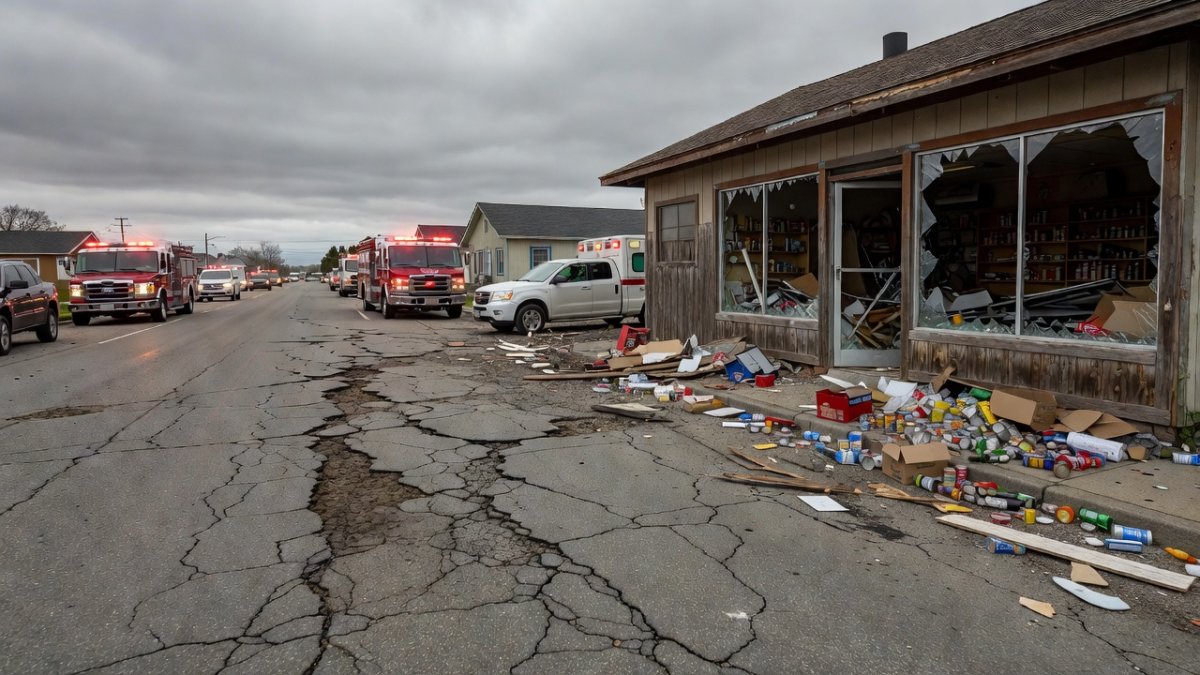
According to the San Francisco Chronicle, walls cracked and items tumbled from shelves in the immediate area around the epicenter. KTVU Fox 2 reported damage to home structures, knocked-out power, and broken water lines in Mendocino County. The California Governor's Office of Emergency Services said it was actively coordinating with local officials and assessing the extent of the damage.
The good news? Early reports suggest no widespread structural collapses or catastrophic damage. But here's the thing about a 5.6 — it's enough to remind you the ground is never quite as solid as you think. And in a state where the "Big One" is always a geological question mark, every rattle counts.
MSN News and ABC7 reported that some injuries have occurred, though the scope remains unclear as emergency crews continue door-to-door assessments in the hardest-hit areas.
ShakeAlert System: Did It Work?
This was a major real-world test for California's ShakeAlert Earthquake Early Warning System — and by most accounts, it delivered. The system detected the initial P-waves — the faster, less destructive seismic waves — and calculated the quake's magnitude and location within seconds. It then pushed alerts to mobile devices via the MyShake app and through the Wireless Emergency Alert system, giving some Bay Area residents up to 15-20 seconds of warning before the S-waves — the slower, damaging waves — arrived.
USGS seismologist Elizabeth Cochran told KQED that a quake of this size produces strong shaking near its source, and its seismic waves traveled efficiently through the crust, reaching the Bay Area with enough energy to be widely felt. The USGS confirmed that the ShakeAlert system was "activated for this earthquake," and people across Northern California received notifications.
In a region where seconds matter — seconds to drop, cover, and hold on, seconds for BART to slow trains, seconds for surgeons to stop operating — the system's performance Wednesday morning is worth paying attention to.
Aftershocks and What Comes Next
The USGS recorded a magnitude 2.5 aftershock within minutes of the main quake. Seismologists warned that additional aftershocks are likely in the coming days and weeks, though most will be too small to feel. The standard pattern: a main shock of 5.6 typically produces dozens of small aftershocks in the first week, with the probability of a larger quake diminishing over time.
But let's be real — California's seismic history doesn't play by neat rules. The 1989 Loma Prieta earthquake (6.9) and the 1994 Northridge earthquake (6.7) both hammered home the same lesson: you don't get a warning the day before. Preparation isn't panic — it's common sense.
How to Stay Safe
If you felt Wednesday morning's quake — or if you're now wondering what you'd do when the next one hits — here's the short version:
Drop, Cover, and Hold On. That's the official guidance. Not standing in a doorway. Not running outside. Drop to your hands and knees, cover your head and neck under a sturdy table, and hold on until the shaking stops.
Make sure your emergency kit has water, food, a flashlight, batteries, and a first-aid kit. Know how to shut off your gas. And if you haven't already, download the MyShake app — it's free, it's backed by UC Berkeley and the USGS, and Wednesday morning proved it works.
The Bottom Line
A 5.6 earthquake in Northern California is not the Big One. But it's a reminder — one we get every few years — that California sits on a seismic time bomb that doesn't care about your schedule, your morning coffee, or your plans for the day. The fact that no catastrophic damage has been reported so far is good news. But "good news" isn't the same as "nothing to learn here."
The ShakeAlert system worked. The ground shook. People are assessing the damage. And somewhere beneath Mendocino County, the tectonic plates keep grinding, because that's what they do.
Stay vigilant, folks. And if you felt the quake — report it to the USGS. Every data point helps scientists understand the next one before it arrives.
By Jessica Ali, Lead Anchor — Global 1 News
This article was produced with AI-assisted research and editorial support. Reporting is based on sources cited in the article.
What's Your Reaction?
 Like
0
Like
0
 Dislike
0
Dislike
0
 Love
0
Love
0
 Funny
0
Funny
0
 Wow
0
Wow
0
 Sad
0
Sad
0
 Angry
0
Angry
0

Editor-in-Chief at Global1.News. Atlanta-based journalist who cuts through the BS and tells it like it is. Lead anchor, host, and the voice you hear when the spin stops and the truth starts.















Comments (0)