
315 Crypto Mining Machines Seized in Isaan as Thailand Cracks Down on Electricity Theft
Thai authorities carried out coordinated inspections on Saturday, June 20, 2026, seizing 315 digital currency mining machines from 14 locations spread across the five northeastern provinces of Ubon Ratchathani, Yasothon, Amnat Charoen, Roi Et, and Maha Sarakham. The operation involved teams from the Ministry of Interior, the Provincial Electricity Authority, and local police wh
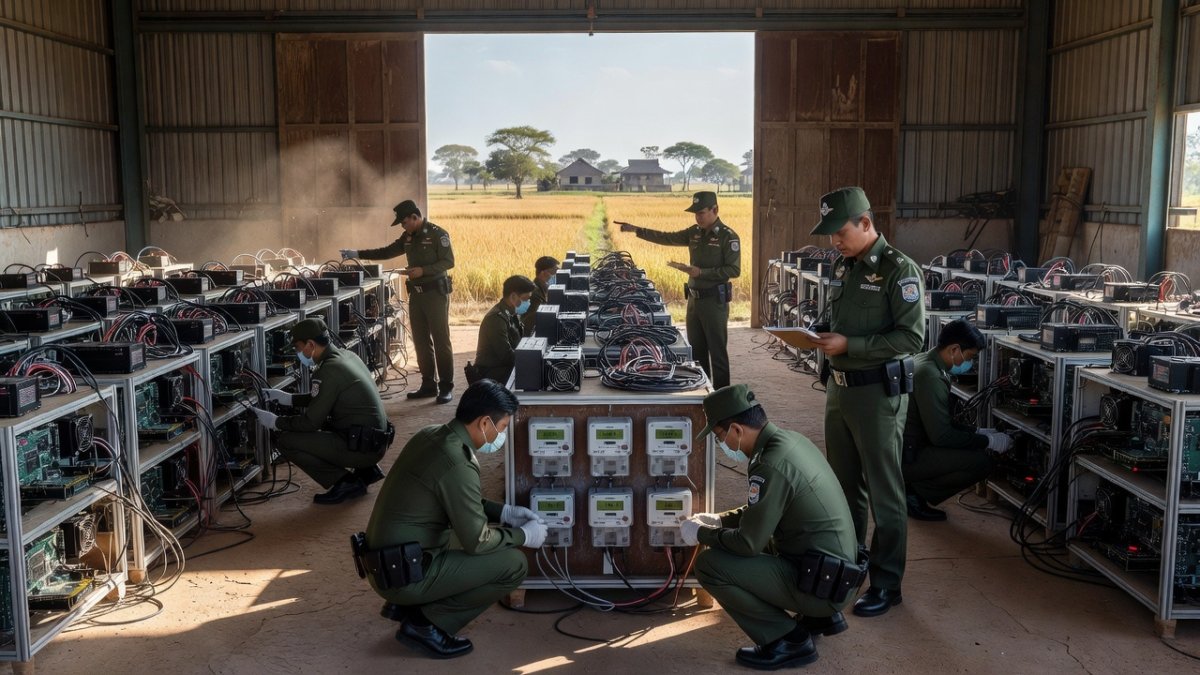
Thai authorities carried out coordinated inspections on Saturday, June 20, 2026, seizing 315 digital currency mining machines from 14 locations spread across the five northeastern provinces of Ubon Ratchathani, Yasothon, Amnat Charoen, Roi Et, and Maha Sarakham. The operation involved teams from the Ministry of Interior, the Provincial Electricity Authority, and local police who documented evidence of metre tampering and illegal power connections. Total estimated damage reached 40.38 million baht, including 5.38 million baht in penalties and approximately 35 million baht in unpaid electricity bills.
The Raids Across Isaan
Officials began the day at dawn in Ubon Ratchathani, where eight of the 14 sites were located, and moved steadily through Yasothon and Amnat Charoen before finishing in Roi Et and Maha Sarakham by late afternoon. In each province, Provincial Electricity Authority technicians first verified metre readings while police secured the premises and Ministry of Interior representatives recorded serial numbers of the 315 seized machines. The teams collected photographs, wiring diagrams, and witness statements at every location before filing formal complaints with provincial courts.
Across the five provinces the machines were found running in converted rice-storage sheds and small warehouse buildings typical of Isaan rural communities. Electricity Authority crews disconnected 22 illegal supply lines that had been spliced directly into overhead distribution cables. All 315 units were loaded onto government trucks and transported to secure storage facilities in Ubon Ratchathani for further forensic examination.
Local residents watched quietly as the operations unfolded, many offering bottled water to the officers in keeping with Isaan hospitality customs. Provincial governors later issued statements thanking the inter-agency teams for protecting community resources during the height of the hot season when electricity demand for irrigation pumps is already high.
How the Scheme Worked
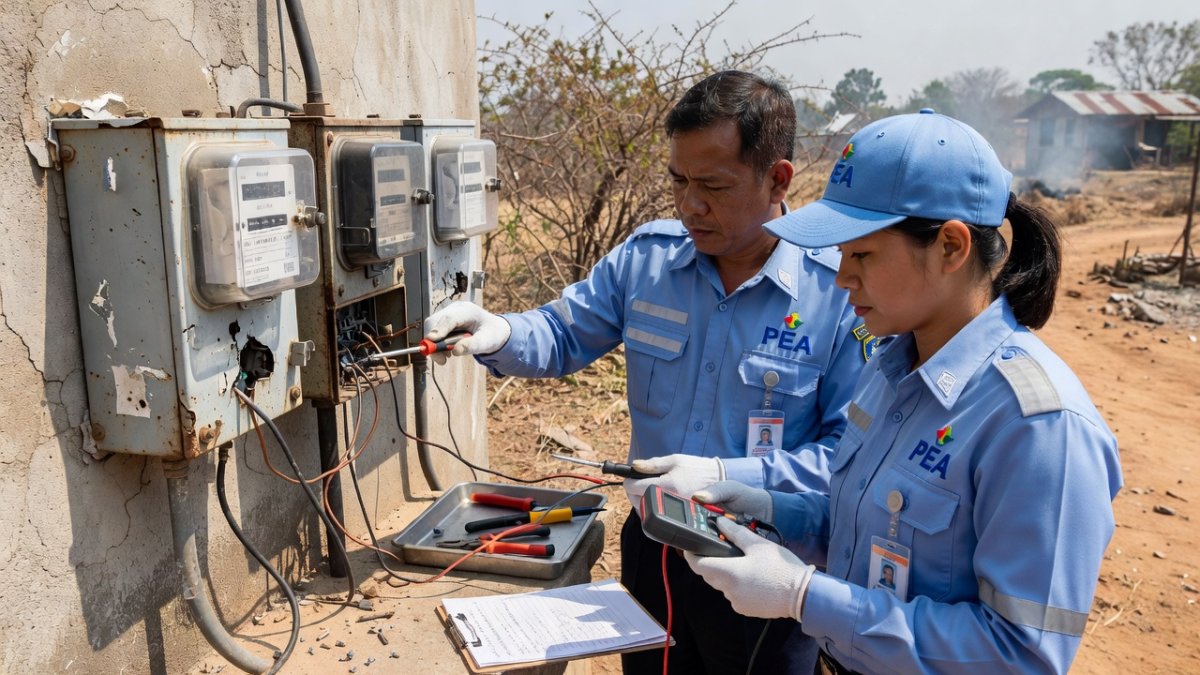
Investigators determined that operators had altered electricity metres to under-report consumption by an average of 68 percent at each site. In several buildings, additional cables were run from neighbouring poles to bypass metres entirely, creating direct connections that drew power without any billing record. Provincial Electricity Authority engineers calculated that these methods had allowed continuous operation of the 315 machines for periods ranging from four to eleven months.
The unpaid electricity portion of the 40.38 million baht total was traced through consumption logs that showed sudden spikes in transformer loads without corresponding revenue. Penalties of 5.38 million baht were assessed under existing regulations for metre tampering and unauthorised connections. All evidence, including the altered metres and spliced cables, was sealed and submitted as part of the formal complaints filed in each province.
Ministry of Interior officials noted that the same pattern of concealed wiring had appeared in earlier cases in other regions, suggesting a shared technical approach among operators. The five-province sweep was designed to disrupt this network before the upcoming rainy-season harvest when many farming households increase their own electricity use.
Thailand's Broader Crackdown on Crypto Mining
The Isaan operation forms part of a nationwide effort that began earlier this year and has already resulted in seizures in Chonburi, Nakhon Ratchasima, and Chiang Mai. The Ministry of Interior has directed all provincial governors to conduct similar joint inspections with electricity authorities and police through the end of 2026. Data from the Provincial Electricity Authority shows that illegal mining activity has been concentrated in areas with lower population density where large buildings can operate without immediate notice.
Regional authorities in Southeast Asia have exchanged information on similar cases, with counterparts in Laos and Cambodia reporting parallel enforcement actions along border provinces. Thai officials have emphasised that the crackdown targets only unauthorised electricity use rather than digital currency itself, which remains legal when operated within regulated frameworks. The 315 machines seized on June 20 represent the single largest haul recorded in the northeastern region to date.
Further inspections are scheduled for the central and southern provinces next month, using the same inter-agency model that proved effective across the five Isaan locations. Ministry spokespersons stated that the collected evidence will help refine detection methods for future operations.
Impact on Isaan Communities
Residents in the affected districts expressed relief that the illegal operations had been halted, noting that sudden voltage drops had occasionally disrupted water pumps used for rice-field irrigation. Community leaders in Roi Et and Maha Sarakham pointed out that the recovered electricity capacity could now support local schools and health centres during the coming monsoon season. The 40.38 million baht in assessed damages will be pursued through provincial courts, with any recovered funds directed toward rural infrastructure projects.
Provincial Electricity Authority crews have begun restoring proper metering at the 14 sites so that legitimate agricultural and household users can resume normal service. Village headmen in Yasothon and Amnat Charoen have organised meetings to discuss legal ways residents might participate in regulated digital-asset activities if they choose. The gentle pace of Isaan life, centred on seasonal farming cycles, remains largely unchanged despite the weekend activity.
Local markets reported steady trade the following Monday, with farmers focusing on preparations for transplanting young rice seedlings. Officials assured communities that the seizures would not affect ordinary household electricity rates.
Legal and Regulatory Implications
Complaints filed in all five provinces cite violations of electricity regulations and theft statutes, carrying potential fines and imprisonment terms depending on the volume of power diverted. The Ministry of Interior has requested that courts expedite hearings so that penalties can be collected before the end of the fiscal year. Provincial Electricity Authority legal teams are preparing additional claims for infrastructure damage caused by the illegal connections.
Regulators are reviewing licensing procedures for future digital-currency facilities to ensure they meet safety and payment standards before operations begin. The nationwide crackdown is expected to produce updated guidelines that clarify reporting requirements for high-consumption equipment. Southeast Asian neighbours have expressed interest in harmonising these standards to reduce cross-border discrepancies.
Evidence gathered during the June 20 inspections will be shared with the Office of the Attorney General to determine whether organised elements were involved. Any additional charges will be announced once forensic analysis of the 315 machines is complete.
What to Watch For
Provincial Electricity Authority teams will continue random metre audits in rural districts throughout July and August to verify that no new illegal connections have appeared. Ministry of Interior officials plan to release a summary report on the five-province operation by mid-July, including breakdowns of electricity recovered and penalties collected. Residents in Ubon Ratchathani, Yasothon, Amnat Charoen, Roi Et, and Maha Sarakham are encouraged to report any suspicious wiring or unusual equipment noise to local authorities.
Further joint inspections are already scheduled for additional northeastern districts later this summer. The government has indicated that successful prosecutions in the current cases will set precedents for handling similar violations elsewhere in Thailand. Communities across Isaan will continue to balance traditional agricultural life with the evolving regulatory landscape surrounding digital technologies.
Observers in Bangkok and the wider region will monitor whether the 40.38 million baht in assessed damages is fully recovered and how those funds are allocated to local development projects. The coordinated approach demonstrated on June 20 provides a model that other provinces may adopt in the months ahead.
By Ann Srisawat, Staff WriterThis article was produced with AI-assisted research and editorial support. Reporting is based on sources cited in the article.
What's Your Reaction?
 Like
0
Like
0
 Dislike
0
Dislike
0
 Love
0
Love
0
 Funny
0
Funny
0
 Wow
0
Wow
0
 Sad
0
Sad
0
 Angry
0
Angry
0

Southeast Asia Correspondent at Global1.News. Based in Bangkok, covering Thai and Southeast Asian politics, economy, technology, and culture. Deep regional perspective on one of the world's most dynamic regions.















Comments (0)