
State As AI Shareholder: The Washington Model India Can't Ignore
The Washington Model: US Turns State into AI Shareholder The United States is advancing a new approach where the federal government acquires minority equity stakes in leading artificial intelligence firms. This “Washington Model” converts public grants and policy incentives into ownership positions, allowing taxpayers to share directly in AI-driven profits. Early June 2026 stat
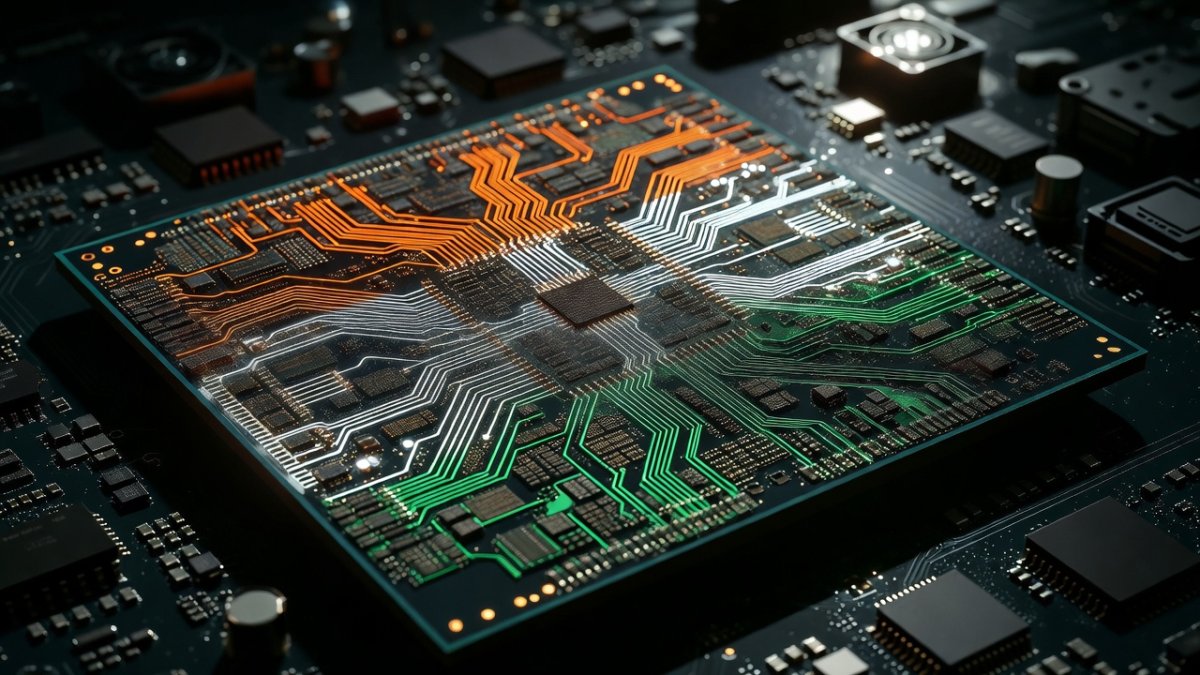
The Washington Model: US Turns State into AI Shareholder
The United States is advancing a new approach where the federal government acquires minority equity stakes in leading artificial intelligence firms. This “Washington Model” converts public grants and policy incentives into ownership positions, allowing taxpayers to share directly in AI-driven profits. Early June 2026 statements by President Trump confirmed planned meetings with AI executives to formalise such arrangements. Indian policymakers in New Delhi must examine this shift before geopolitical opportunities narrow.
Intel Precedent and OpenAI’s April 2026 Proposal
The model rests on concrete transactions. In August 2025 the US government converted CHIPS Act grants into a 9.9 percent non-voting equity stake in Intel, acquiring 433 million shares at $20.47 each for a total of $8.87 billion. OpenAI followed with a 13-page policy paper on 6 April 2026 proposing a Public Wealth Fund seeded by 1 to 5 percent equity donations from frontier AI companies. At OpenAI’s $852 billion valuation, even a 1 percent contribution exceeds $8.5 billion. These figures demonstrate how equity stakes can generate sovereign-scale returns without full nationalisation.
Political Proposals and Market Reactions
Senator Bernie Sanders introduced the AI Sovereign Wealth Fund Act calling for a one-time 50 percent equity tax on companies including OpenAI, Anthropic and xAI. Following disclosure of these equity discussions, major technology stocks experienced a broad sell-off in June 2026. Meanwhile, 55 percent of Americans surveyed believe AI will cause more harm than good, creating political pressure for visible public benefit-sharing mechanisms. Indian analysts note that similar populist demands could surface in domestic debates over AI profits.
IndiaAI Mission: Building Sovereign Compute Capacity
India’s response centres on the Ministry of Electronics and IT’s IndiaAI Mission, backed by a ₹10,372 crore outlay. The programme has already onboarded more than 38,000 GPUs for a shared national compute grid and supports development of 12 indigenous foundation models. With 65 percent of India’s population under 35, the mission prioritises reskilling and curriculum redesign across IITs and state universities. Unlike the US equity approach, India is investing directly in infrastructure rather than acquiring ownership in private firms.

DPDP Act Enforcement and State-Level Lessons
India’s Digital Personal Data Protection Act will reach full enforcement by May 2027, with penalties reaching ₹250 crore per violation. Thirty-six US state attorneys general have resisted federal pre-emption of their AI rules on deepfakes, bias and public safety, arguing that local laws better address regional risks. New Delhi can draw a parallel: the DPDP framework allows context-specific regulations aligned with Indian realities in healthcare, agriculture and financial inclusion. Policymakers should resist any international pressure to dilute these protections in exchange for foreign AI investment.
Implications for Indian Startups, Students and Taxpayers
An equity-stake model in the US could tilt global capital flows toward companies that accept government ownership, potentially crowding out pure private Indian startups. Students at IIT Madras and IIIT Hyderabad may face altered internship pipelines if US firms prioritise domestic equity partners. Taxpayers funding the IndiaAI Mission at 0.64 percent of GDP expect measurable returns; equity participation could offer one route, yet it risks regulatory conflicts when the state becomes both investor and overseer. R&D spending remains low, so any new ownership mechanism must demonstrably accelerate indigenous model development rather than subsidise foreign valuations.
Strategic Recommendations for Indian Policymakers
India should study the Washington Model through the IndiaAI Mission’s governance council and the Ministry of Electronics and IT. Options include requiring graduated equity contributions from firms accessing the national GPU pool or creating a dedicated AI sovereign fund seeded by successful exits from government-supported startups. Discussions with 30-plus nations at the AI Summit 2026 provide a platform to advocate for transparent, non-voting minority stakes that preserve regulatory independence. By acting before the geopolitical window closes, India can ensure its young population and growing tech sector capture a fair share of AI value while upholding the DPDP Act’s safeguards.
— By Dr. Raj Patel, Staff WriterThis article was produced with AI-assisted research and editorial support. Reporting is based on sources cited in the article.
What's Your Reaction?
 Like
0
Like
0
 Dislike
0
Dislike
0
 Love
0
Love
0
 Funny
0
Funny
0
 Wow
0
Wow
0
 Sad
0
Sad
0
 Angry
0
Angry
0

India/South Asia Correspondent at Global1.News. Analytical voice with a background in science and health journalism. Based in New Delhi, covering Indian politics, education, healthcare, technology, and policy. Breaks down complex data into clear, actionable reporting.















Comments (0)