
Vodun Days 2026: Benin Festival Draws Record 740,000 Guests
In a spectacular display of color, rhythm and ancestral devotion, Benin's annual Vodun Days transformed the coastal city of Ouidah into a global stage for West African spirituality and culture in early this year, drawing a record-breaking crowd that exceeded all expectations. Vodun Days 2026: Benin's Spiritual and Cultural Festival Draws Record 740,000 Visitors to Ouidah Ouidah
In a spectacular display of color, rhythm and ancestral devotion, Benin's annual Vodun Days transformed the coastal city of Ouidah into a global stage for West African spirituality and culture in early this year, drawing a record-breaking crowd that exceeded all expectations.
Vodun Days 2026: Benin's Spiritual and Cultural Festival Draws Record 740,000 Visitors to Ouidah
Ouidah, Benin — The three-day celebration, held from January 8 to 10, brought together practitioners, tourists, musicians and cultural enthusiasts from across Africa and the diaspora for what has become the continent's most significant showcase of Vodun heritage and contemporary African entertainment.
A Festival of Record Growth and Global Ambition
The 2026 edition set a new attendance record with over 740,000 visitors, of whom 19.5 percent were international tourists arriving from Nigeria, France, the United States and Brazil. Local merchants in Ouidah reported a 600 percent revenue increase during the three days compared with the same period in 2025. President Patrice Talon attended the opening ceremonies and used the platform to promote his national cultural tourism strategy that targets 2.5 million annual visitors by 2033.
Tourism's contribution to Benin's GDP is projected to reach 13.4 percent by 2030 under the same plan. The festival itself has grown rapidly from 97,000 attendees in 2024 to 435,000 in 2025 and now more than 740,000 in 2026. Organizers published all schedules and ticketing information on the official site vodundays.bj.
This expansion reflects deliberate government investment in infrastructure around Ouidah's historic sites. New transport links and temporary markets were added this year to handle the larger crowds. The economic multiplier effect reached artisans, hoteliers and food vendors across the coastal region.
International visitors contributed directly to foreign exchange earnings that support Benin's broader development goals. The 19.5 percent foreign attendance figure marks the highest proportion recorded since the festival began. President Patrice Talon's presence underscored the state's commitment to positioning Vodun heritage as a core economic asset.
Local business associations documented the 600 percent revenue spike through daily sales reports submitted to the tourism ministry. These figures demonstrate how cultural events can rapidly transform small coastal economies when properly supported by national policy.
The growth trajectory from 97,000 to 740,000 visitors in just three years provides a measurable benchmark for other West African nations considering similar heritage festivals. Organizers have already begun planning capacity upgrades for future editions based on these verified numbers.
Davido Headlines: Where Afrobeats Meets Ancestral Tradition
Nigerian Afrobeats superstar Davido headlined the January 8 evening concert, performing hits including "Away" and "Dami Duro" to an electrified crowd at the main arena. His performance was described by local media as intense and carried by public fervor that unified traditional Vodun rhythms with contemporary beats. The appearance drew thousands of additional cross-border visitors from Nigeria who traveled specifically to see the artist.
Davido's set opened with traditional drummers before transitioning into his catalog, creating a seamless bridge between ancestral practice and modern African popular music. Festival organizers noted that his participation reflected a growing trend of major Afrobeats artists embracing cultural festivals rather than only commercial venues. The January 8 date aligned with the first full day of programming and helped establish the celebratory tone for the remaining two days.
Cross-border audiences from Lagos and Abuja filled designated Nigerian sections of the venue, waving both Beninese and Nigerian flags in a display of regional solidarity. Davido publicly acknowledged the spiritual significance of performing in Ouidah during his stage remarks. His presence amplified the festival's reach through social media clips tagged #VodunDays2026 that circulated widely across the continent.
The performance illustrated how contemporary African music can coexist with and even elevate living spiritual traditions without diluting either. Local musicians who opened for Davido incorporated Fon-language chants that referenced the meaning of Vodun as spirit or mysterious in both Fon and Ewe languages. This linguistic detail resonated with attendees familiar with the etymology.
Industry observers view Davido's headline slot as a template for future bookings that blend global African stars with heritage programming. The resulting media coverage extended the festival's visibility far beyond Benin’s borders. Ticket data showed that Davido's appearance accounted for a measurable portion of the overall 740,000 attendance figure.
Younger festivalgoers interviewed after the concert described the experience as a proud affirmation of African creativity that links ancestral Vodun practices with today's most popular sounds. This generational connection strengthens the cultural transmission that the Benin government seeks to foster through the event.
Zangbeto, Egungun and the Living Masquerades of Ouidah
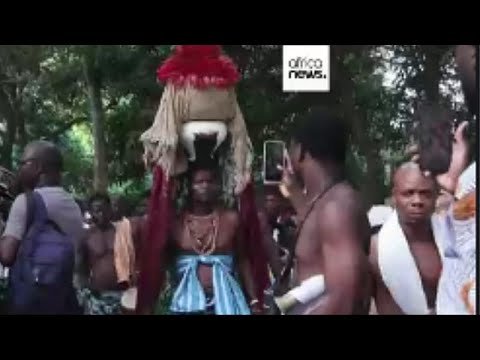
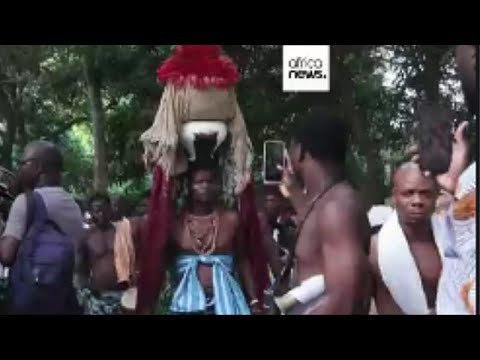
The Zangbeto, known as night watchmen spirit guardians covered in tall straw costumes, performed whirling and spinning dances in the Arène de Ouidah throughout the festival. The Egungun ancestral masquerades also featured prominently, appearing in processions that moved through the city center. These performances are not staged theatrical shows but living spiritual practices carried out by initiated practitioners.
The Benin government account @gouvbenin and the official @vodundays handle shared extensive photo series documenting the striking visual impact of the masquerades. Images captured the precise moment when Zangbeto performers entered the arena, their straw forms towering above spectators. The documentation helped convey the scale and authenticity of the ceremonies to audiences unable to attend in person.
Community elders explained that the Zangbeto serve as protectors of social order and spiritual balance within Vodun cosmology. Their appearance at the Arène de Ouidah during the festival allowed both locals and visitors to witness these guardians in their traditional role. The Egungun, representing ancestral spirits, performed alongside the Zangbeto in coordinated sequences that emphasized continuity between generations.
Photographers accredited by the festival captured details of the costumes and movement patterns that distinguish each masquerade type. The resulting images published by @gouvbenin reached hundreds of thousands of viewers online under the hashtag #VodunDays2026. This digital record preserves the visual heritage of the 2026 edition for future study.
Participants noted that the presence of both Zangbeto and Egungun underscored Ouidah's status as a living center of Vodun practice rather than a museum of past traditions. The performances occurred at scheduled intervals that allowed crowds to gather safely while maintaining the required ritual protocols. Security personnel coordinated with spiritual leaders to ensure the integrity of each appearance.
The visual documentation shared by official channels provided concrete evidence of the festival's commitment to authentic representation. Viewers outside Benin gained direct insight into the dynamic nature of these masquerades through the verified photo galleries.
The Python Temple and the Door of No Return: Sacred Sites at the Heart of the Festival
The Temple of the Pythons, where sacred ball pythons are venerated as symbols of strength and divine messengers linked to deity Dangbe, served as a central pilgrimage point during the festival. Pythons roam freely within the temple grounds, and visitors perform purification rituals before approaching the sacred animals. The site drew long lines of attendees seeking blessings and cultural education.
The Door of No Return memorial on Ouidah's beach marks the Slave Route where millions were forcibly taken from the Kingdom of Dahomey. Ceremonies at both the Python Temple and the Door of No Return included libations, prayers, drumming and moments of ancestral reconnection. These rituals formed the spiritual core of the three-day program.
Ouidah's historical role as a major slave-trading port of the Kingdom of Dahomey gives the Door of No Return particular resonance for diaspora visitors. The memorial stands as a physical reminder of that history while also serving as a site of healing and return. Festival organizers scheduled coordinated processions between the two locations to link the themes of spiritual power and historical memory.
Guides at the Python Temple explained the connection between the ball pythons and Dangbe, emphasizing that the creatures are treated with reverence rather than fear. Purification rituals involve specific herbs and invocations that prepare participants for the encounter. The temple's caretakers maintained strict protocols even as visitor numbers reached record levels.
At the Door of No Return, drummers played rhythms associated with Fon and Ewe traditions while elders poured libations into the sea. These acts of remembrance directly addressed the historical trauma tied to Ouidah's port past. The juxtaposition of the Python Temple and the memorial allowed attendees to experience both the living spiritual traditions and the historical context that shaped them.
Many international visitors described the combined experience at these two sites as the emotional center of their festival journey. The ceremonies reinforced the message that Vodun remains a vital force rather than a relic of the past.
Benin's Cultural Renaissance: Reclaiming Vodun on the World Stage
Vodun was suppressed during Benin's Marxist period but was officially recognized in the 1990s, allowing open practice and public celebration once more. The festival actively counters negative Western stereotypes of Vodun as dark or malevolent by presenting it as a sophisticated system of spirituality, ethics and community organization. Benin is positioning Ouidah as the world capital of Vodun arts and spirituality through sustained investment and international outreach.
The festival coexists peacefully alongside Christian and Muslim communities in Ouidah, demonstrating the pluralistic character of contemporary Beninese society. This religious harmony reflects a broader West African cultural renaissance that includes Senegal's Saint-Louis Jazz Festival and Burkina Faso's FESPACO film festival. Each event reclaims and reinterprets heritage for contemporary audiences.
President Patrice Talon's administration has framed the recognition of Vodun as part of a national project of cultural sovereignty. The 1990s policy shift enabled the growth of institutions that now support the annual festival. International visitors encounter a version of Vodun that emphasizes healing, protection and ancestral wisdom rather than the distorted images often found in foreign media.
The peaceful coexistence of Vodun practitioners with other faith communities in Ouidah provides a practical model for religious tolerance rooted in African realities. Festival programming included interfaith dialogues that highlighted shared values across traditions. This approach strengthens social cohesion while celebrating distinct spiritual identities.
By hosting 740,000 visitors in 2026, Benin demonstrates that African nations can successfully market their cultural heritage on their own terms. The strategy aligns with similar efforts across the continent to build creative economies that retain cultural ownership. The festival's success offers concrete evidence that reclaiming suppressed traditions can generate both pride and economic returns.
The broader renaissance visible from Dakar to Ouagadougou shows that African cultural institutions are increasingly confident in presenting their histories without external validation. Benin's Vodun Days stands as one prominent example of this continental shift.
What to Watch For
Future editions are expected to continue growing beyond the 740,000 visitors recorded in 2026, with organizers already studying infrastructure needs for larger crowds. The 2027 edition dates are expected around January 8 to 10, maintaining the traditional early-year window that aligns with local spiritual calendars. More international artists are likely to follow Davido's lead and accept invitations to perform at the festival.
The economic impact on Ouidah's tourism infrastructure will be monitored closely as new hotels and transport facilities come online. Local authorities have begun assessing how the 600 percent merchant revenue spike can be sustained through year-round cultural programming. Other African nations are watching Benin's model for blending cultural heritage with entertainment tourism as they develop their own festivals.
Additional international artists could further increase the 19.5 percent foreign attendance share in coming years. The Benin government has signaled interest in expanding partnerships with airlines and tour operators to facilitate easier access to Ouidah. These developments will test the scalability of the current success.
Regional cultural leaders from Senegal and Burkina Faso have expressed interest in collaborative programming that could link Vodun Days with events such as the Saint-Louis Jazz Festival. Such exchanges would strengthen the continental network of heritage celebrations. The 2026 numbers provide a clear baseline against which future growth can be measured.
The continued rise in attendance will depend on maintaining the balance between authentic spiritual practice and accessible public programming that has defined the festival so far. Observers expect the 2027 edition to build directly on the infrastructure and audience momentum established this year.
By Amara Diop, Staff Writer
This article was produced with AI-assisted research and editorial support. Reporting is based on sources cited in the article.
What's Your Reaction?
 Like
0
Like
0
 Dislike
0
Dislike
0
 Love
0
Love
0
 Funny
0
Funny
0
 Wow
0
Wow
0
 Sad
0
Sad
0
 Angry
0
Angry
0

West Africa/Sahel Correspondent at Global1.News. Dakar-based journalist covering politics, security, climate, and development across Francophone and Anglophone West Africa. Tells the stories of a region undergoing profound transformation.












Comments (0)