
Vietnam’s first lady dons traditional Thai dress on Bangkok cultural tour
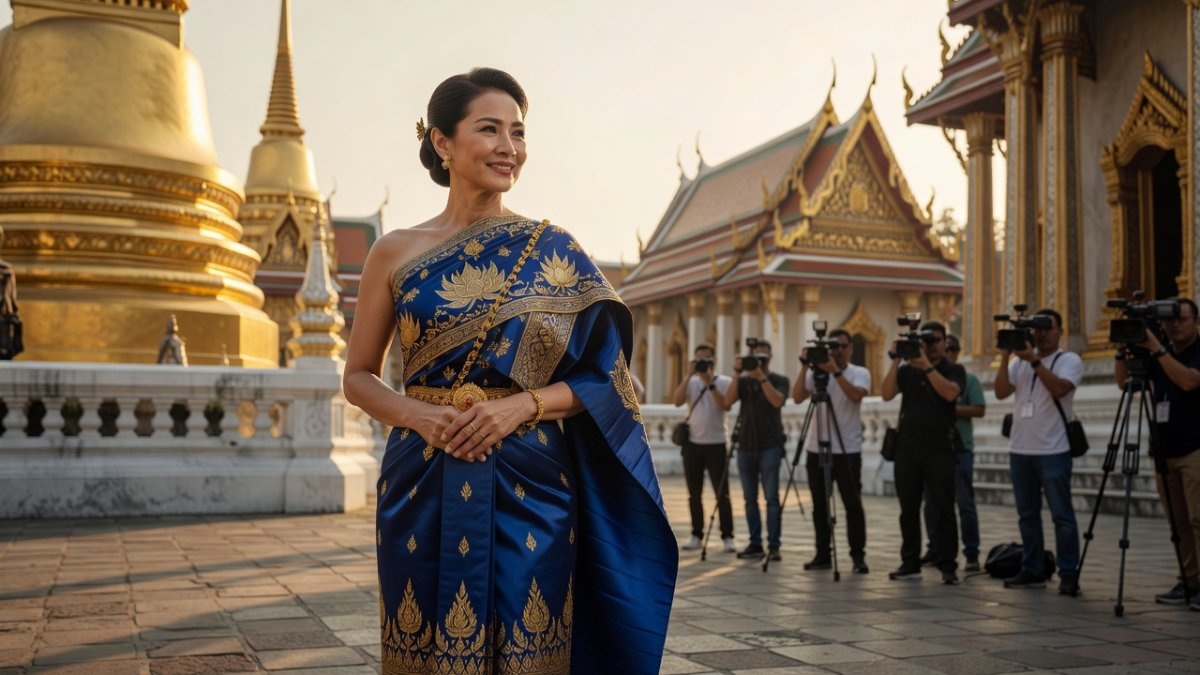
Vietnam’s First Lady Embraces Thai Heritage with Grace in Traditional Dress During Bangkok Cultural Tour
A Warm Welcome in Silk and Symbolism
BANGKOK — 28 May 2026. In a gesture that quietly strengthened the threads of friendship between Thailand and Vietnam, Ngo Phuong Ly, wife of Vietnamese President To Lam, stepped into the spotlight wearing a handwoven Thai silk chut Thai ensemble during her cultural tour of Bangkok. Hosted by Tida Charnvirakul, spouse of Prime Minister Anutin Charnvirakul, the visit transformed an official state itinerary into a heartfelt exchange of cultures that resonated far beyond the marble halls of Government House.
The first lady chose a soft lavender sabai draped over a fitted brocade blouse, its intricate gold threadwork echoing motifs from the Grand Palace. Accompanied by Thai cultural guides, she toured the Jim Thompson House, where artisans demonstrated traditional silk-weaving techniques that have sustained communities in Isan and the north for generations. Observers noted how the choice of attire reflected more than fashion; it signaled respect for Thai craftsmanship at a time when bilateral trade in textiles exceeds $420 million annually.
Behind the Scenes of the Presidential Visit
President To Lam’s official visit, the first high-level Vietnamese trip to Thailand since 2023, focuses on supply-chain cooperation and sustainable tourism. Yet it was his wife’s cultural program that captured public imagination. Tida Charnvirakul personally selected the dress from a small atelier in Ayutthaya, ensuring the fabric came from a women-led cooperative that employs 180 weavers. “We wanted her to feel the warmth of Thai hands in every thread,” Tida shared during a brief tea reception.
Ngo Phuong Ly, known in Hanoi for her quiet advocacy of heritage preservation, spent nearly an hour learning the proper way to fold and secure the sabai. Vietnamese embassy staff later confirmed she had requested lessons in basic Thai phrases to thank her hosts. The moment underscored how personal diplomacy often outlasts formal communiqués.
Cultural Context and Historical Resonance
Thailand and Vietnam share centuries of intertwined history along the Mekong, from ancient trade routes to shared Buddhist traditions. During the Ayutthaya period, Vietnamese envoys frequently arrived bearing lacquerware; today, Thai tourists flock to Hoi An while Vietnamese visitors rank among the top five source markets for Thailand’s tourism sector, contributing 1.8 million arrivals in 2025. Ngo Phuong Ly’s choice of dress tapped directly into this living heritage, reminding both nations that soft power begins with everyday gestures of respect.
Local historians point out that such sartorial diplomacy is not new. Queen Sirikit’s 1960s state visits popularized the chut Thai across Southeast Asia, and similar moments have occurred during Malaysian and Indonesian first-lady tours. What distinguished this occasion was the deliberate pairing with a working women’s cooperative, highlighting economic empowerment alongside aesthetics.
Expert Perspectives on the Gesture’s Significance
Dr. Somchai Phongsakorn, cultural anthropologist at Chulalongkorn University, noted the visit arrives at a pivotal moment. “With ASEAN facing supply-chain realignments, cultural affinity becomes strategic glue,” he explained. “When the Vietnamese first lady wears Thai silk, it humanizes trade negotiations happening behind closed doors.”
Meanwhile, Vietnamese fashion historian Tran Minh Ha emphasized the reciprocal nature of the moment. “Vietnamese women have long admired Thai silk for its durability and sheen,” she said. “This visit may encourage joint design initiatives that blend Thai weaving with Vietnamese embroidery, creating new export lines.” Both experts stressed that such exchanges reduce stereotypes and build people-to-people trust more effectively than policy papers alone.
Community Voices and Grassroots Impact
At the Jim Thompson House, local weavers gathered to present Ngo Phuong Ly with a miniature loom. One artisan, 54-year-old Maliwan Srisawat from Surin province, described the encounter as “a proud day for rural women.” Her cooperative, supported by the Thai Ministry of Culture’s One Tambon One Product program, has seen orders from Hanoi rise 30 percent since the visit was announced last month.
Street vendors near the Grand Palace reported increased interest from Vietnamese tour groups asking about traditional dress rentals. Tourism Authority of Thailand data shows cultural-immersion packages booked by Vietnamese travelers jumped 22 percent in the first quarter of 2026, suggesting the first lady’s gesture may already be shaping travel trends.
Looking Ahead: Implications for Bilateral Ties
Analysts expect the cultural warmth displayed today to smooth discussions on the upcoming Thailand-Vietnam Joint Trade and Investment Commission meeting scheduled for July. Both countries aim to expand two-way trade beyond the current $18 billion mark by focusing on green agriculture and digital services. Cultural programs like today’s tour are quietly embedded in those goals, fostering the trust needed for long-term partnerships.
For Bangkok residents, the image of Ngo Phuong Ly moving gracefully through historic sites in local attire reinforced a familiar sense of pride. In a city that thrives on hospitality, such moments affirm that Thailand’s greatest export remains its living traditions, shared generously with neighbors who understand their value.
This is Ann Srisawat for Global1 News, reporting from Bangkok. 🇹🇭
This article was produced with AI-assisted research and editorial support. Reporting is based on sources cited in the article.
What's Your Reaction?
 Like
0
Like
0
 Dislike
0
Dislike
0
 Love
0
Love
0
 Funny
0
Funny
0
 Wow
0
Wow
0
 Sad
0
Sad
0
 Angry
0
Angry
0

Southeast Asia Correspondent at Global1.News. Based in Bangkok, covering Thai and Southeast Asian politics, economy, technology, and culture. Deep regional perspective on one of the world's most dynamic regions.













Comments (0)