
Lacson on Marcoleta: 'It's a Miracle!' — Senator Walks Out of Sandiganbayan After Wheelchair Entrance
Sen. Panfilo Lacson called it a "miracle" as Sen. Rodante Marcoleta walked out of Sandiganbayan after arriving in a wheelchair. Detained for P75M plunder and transferred to New Quezon City Jail, Marcoleta's case spotlights the UP-PGH medical ruling and questions of equal justice for powerful versus ordinary Filipinos.
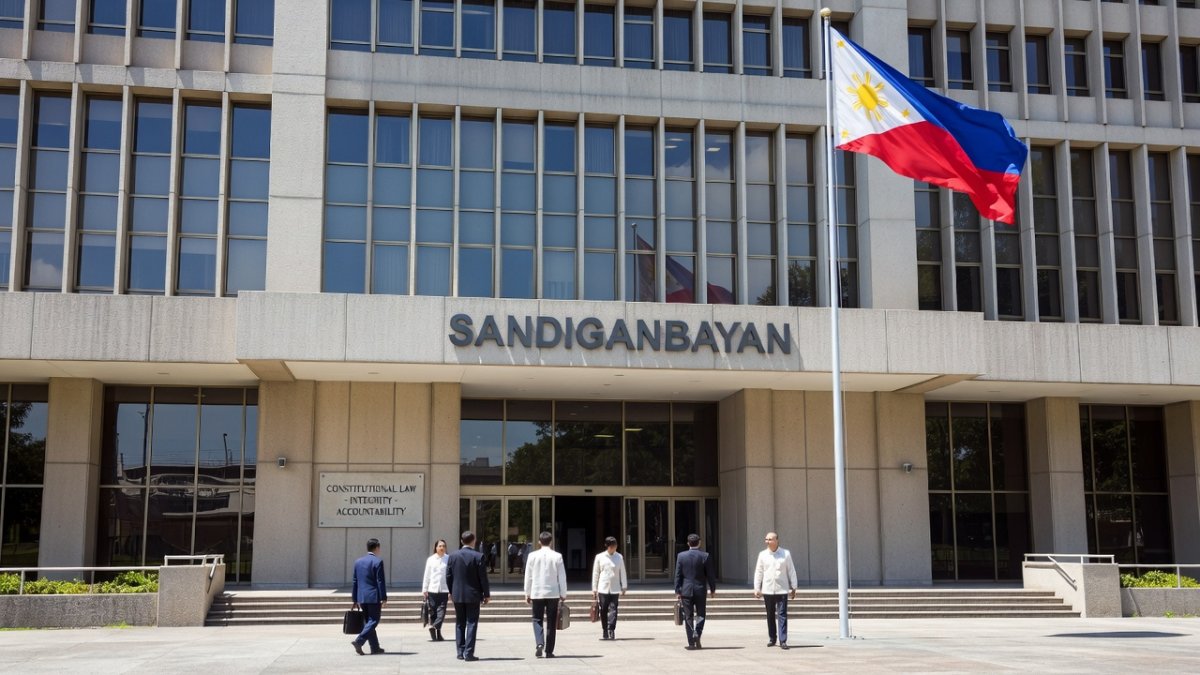
The 'Miracle' at Sandiganbayan
MANILA, Philippines — It was a scene that left even seasoned senators in disbelief. Senator Panfilo Lacson watched intently as Senator Rodante Marcoleta walked out of the Sandiganbayan on Wednesday afternoon — not with the slow, labored steps of a man who had arrived in a wheelchair just hours earlier, but with what Lacson described as a "brisk walk," waving casually to the media waiting outside.
"It's a MIRACLE! Naka wheelchair pumasok, brisk walk lumabas," Lacson posted on X, capturing the astonishment shared by many who witnessed the dramatic turn of events. The contrast could not have been starker: Marcoleta arrived at the anti-graft court in a wheelchair, wearing a face mask and bulletproof vest, escorted by Philippine National Police (PNP) personnel. He left on his own two feet, seemingly in good spirits, heading to a coaster that would take him to the New Quezon City Jail in Payatas.
The Plunder Case That Brought a Senator to Court
At the heart of this unfolding drama is a plunder case that has sent shockwaves through the Philippine Senate. Marcoleta, along with former congressman Michael Defensor and businessmen Joseph Espiritu and Aristotle Viray, faces charges over allegedly undeclared P75 million in campaign donations — funds that prosecutors say should have been properly accounted for under election laws.
The Sandiganbayan's Third Division, composed of Associate Justices Karl Miranda, Ronald Moreno, and Fritz Bryn Anthony Delos Santos, issued the arrest order that brought Marcoleta before the court. The case stems from donations made during Marcoleta's 2022 senatorial campaign, which the Office of the Ombudsman alleges were funneled through questionable channels and never properly declared to the Commission on Elections.
For ordinary Filipinos watching from their living rooms and sari-sari stores, the message was clear: no one, not even a sitting senator, is above the law when it comes to plunder — the country's most serious non-drug offense, carrying a penalty of reclusion perpetua or life imprisonment.
The Medical Assessment That Changed Everything
What made Wednesday's events particularly remarkable was the role of medical expertise in the court's decision. Marcoleta had been confined for over a week at the PNP General Hospital, where he was granted hospital detention pending the resolution of his case. His legal team had argued that his health condition required continued hospitalization, presenting him to the court in a wheelchair as evidence of his frailty.
But the University of the Philippines — Philippine General Hospital (UP-PGH) provided the Sandiganbayan with what Lacson called an "objective medical assessment" that ultimately determined Marcoleta "no longer requires hospital confinement" and that "there is no risk posed to his health." The decision was described as "unanimous" among UP-PGH's team of doctors.
Lacson publicly commended the state university's medical institution for its integrity. "Kudos to UP-PGH for putting professionalism and integrity above all other considerations in submitting their medical report to the Sandiganbayan," he said. For many Filipinos, this was a moment of pride — a reminder that even in a system often criticized for political accommodation, there are institutions that still prioritize truth and professional standards over political convenience.
A Troubling Pattern of Hospital Detention
Lacson's comments carried weight beyond the Marcoleta case. He pointed to what he sees as a concerning pattern: plunder suspects being granted the privilege of hospital detention at state-funded facilities, potentially at the expense of ordinary PNP personnel who might need those beds more urgently.
"Plunder suspects being detained at the police hospital may have deprived more deserving PNP personnel of a stay there," Lacson remarked, highlighting the disparity between how the powerful and the ordinary are treated in the Philippine justice system.
The senator noted that Marcoleta was confined alongside another high-profile detainee — former Public Works and Highways Secretary Manuel Bonoan, 80, who is facing charges in the flood control scandal and has been allowed hospital detention pending his bid to turn state witness. The image of two high-ranking officials receiving special medical accommodation while ordinary Filipinos line up for hours at public hospitals was not lost on many observers.
For the average Juan and Maria in barangays across the country, this raises uncomfortable questions about equality before the law. When a senator can spend a week in a police hospital while a tricycle driver with a fractured leg waits 12 hours at a public health center, the gap between the powerful and the powerless becomes impossible to ignore.
What Awaits Inside New Quezon City Jail
Marcoleta's new home — at least for the foreseeable future — is the New Quezon City Jail in Payatas, one of the most congested detention facilities in the country. But unlike the typical detainee who enters this overcrowded facility, Marcoleta will find some familiar accommodations.
According to Bureau of Jail Management and Penology (BJMP) spokesman Superintendent Jayrex Joseph Bustinera, Marcoleta will stay initially in the facility's ward, which features a split-type air-conditioner, a table with monobloc chairs, a bed with a divider, a comfort room, and windows fitted with steel rails and covered with blinds. After a one-week isolation period — standard protocol for new detainees — Marcoleta will be transferred to the general population area.
However, those hoping for a reunion of detained politicians will be disappointed. Despite rumors that Marcoleta might share a cell with fellow senators — Senator Jinggoy Estrada, who faces plunder charges in the flood control scandal, and former senator Ramon Revilla Jr., who is battling malversation and graft charges over an alleged ghost flood control project in Bulacan — BJMP has made it clear that cell assignments follow a strict first-come, first-served policy.
Bustinera emphasized that Marcoleta "cannot choose his cellmates," reinforcing that detention policies apply equally, regardless of a detainee's political stature. Both Estrada and Revilla are facing non-bailable offenses, making their continued detention a stark reminder of the consequences of corruption at the highest levels of government.
What This Means for Philippine Justice and Accountability
The Marcoleta case represents more than just another political scandal. It is a crucial test of whether the Philippine justice system can hold powerful figures accountable — a question that resonates deeply with a public weary of corruption narratives that end in acquittals or backroom deals.
Several key takeaways emerge from this development:
First, the Sandiganbayan is asserting its independence. By ordering the detention of a sitting senator based on medical evidence rather than political convenience, the anti-graft court has sent a signal that its proceedings will be guided by facts, not favors. This is no small thing in a political environment where the lines between branches of government can blur.
Second, the UP-PGH model of independent medical assessment matters. Lacson's praise for the institution was not just courtesy — it was an acknowledgment that objective expertise can cut through the fog of legal maneuvering. When medical opinions are commissioned rather than court-ordered, the potential for manipulation decreases significantly.
Third, the pattern of hospital detention for elite suspects remains a concern. While the Marcoleta case ultimately ended with a transfer to regular detention, the fact that he spent over a week in a police hospital — alongside other high-profile detainees — suggests a system that still offers special treatment to those with connections and resources.
For the Filipino public, this case is a reminder that accountability is possible — but it requires constant vigilance. The same institutions that investigate, prosecute, and adjudicate must be supported and scrutinized by a citizenry that refuses to accept a two-tiered justice system.
The Broader Political Picture
Marcoleta's detention comes at a time of intense political activity in the Philippines. The impeachment trial of Vice President Sara Duterte is underway in the Senate, with senators navigating the delicate balance between their roles as judges in the impeachment court and their legislative responsibilities. The trial has already seen its share of drama, with Senator Lacson himself criticizing "obviously irrelevant" manifestations that test the patience of both senators and observers.
Meanwhile, President Ferdinand Marcos Jr. has just returned from what Malacañang described as a "productive" three-day working visit to Singapore, where he sought to boost bilateral ties and attract foreign investors. The Commission on Elections has also begun implementing a gun ban in the Bangsamoro Autonomous Region in Muslim Mindanao as the region prepares for its parliamentary elections.
In this turbulent political landscape, the Marcoleta case serves as a reminder that no single controversy exists in isolation. Each development — from the impeachment trial to the BARMM elections to the plunder case against a sitting senator — shapes the broader narrative of Philippine democracy and its ability to deliver justice, accountability, and good governance to its 115 million citizens.
As Lacson himself might say, the system is far from perfect — but moments like the "miracle" at Sandiganbayan suggest that accountability, however imperfect, is still possible.
By Bella Reyes, Staff Writer
This article was produced with AI-assisted research and editorial support. Reporting is based on sources cited in the article.
What's Your Reaction?
 Like
0
Like
0
 Dislike
0
Dislike
0
 Love
0
Love
0
 Funny
0
Funny
0
 Wow
0
Wow
0
 Sad
0
Sad
0
 Angry
0
Angry
0

Philippines/Southeast Asia Correspondent at Global1.News. Manila-based journalist covering Philippine politics, environment, maritime security, and social issues. Passionate about marine conservation and the communities protecting the Philippines' natural heritage.












Comments (0)