
Iran Voids Peace Deal, Declares Existential War After Deadly US Attacks
Iran voids June 17 peace deal after US strikes kill 7 troops in Bampour; Ghalibaf grants forces full freedom of action in "existential war." Strikes hit Hormuz/Tunb; IRGC targets Bahrain/Kuwait (4 missiles, 21 drones downed). Oil jumps 9% to $83/bbl as Hormuz crisis deepens since Feb 28, 2026.
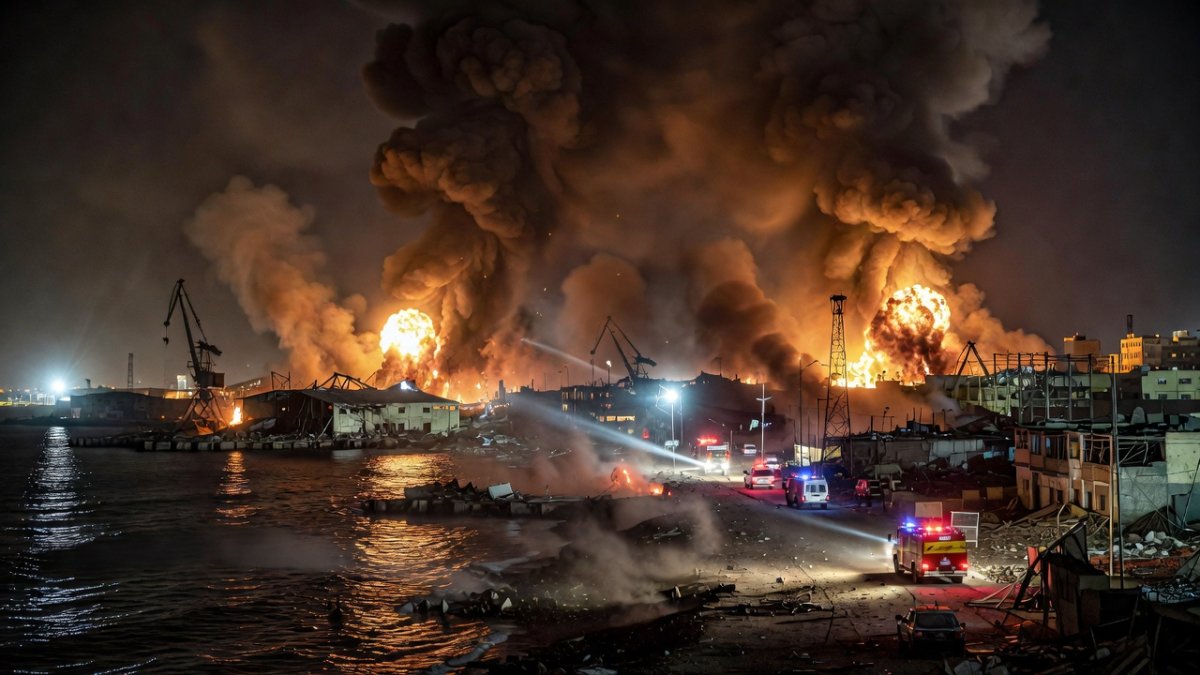
Midnight Explosions Signal Total Breakdown
Folks, if you thought the Middle East had hit rock bottom, think again. At 10:30pm Iranian time on Wednesday—that's 19:00 GMT—the sky over Bandar Abbas, Chabahar, and Ahvaz lit up like the Fourth of July. Explosions ripped through military sites as the latest wave of US air strikes hammered targets near the Strait of Hormuz and on Greater Tunb island. This wasn't some surgical warning shot. This was America putting the full weight of its airpower on the table, and Iran is screaming that the gloves are off.
Seven Iranian troops from the 388th Brigade are dead after US strikes hit a barracks in Bampour, southeastern Iran. That's not collateral damage in some fog of war—that's a deliberate body count that Tehran is now using as the final nail in the coffin of any remaining diplomacy. Corporate press outlets will hem and haw about "escalation cycles," but let's cut through the noise: when you kill soldiers in their own barracks, you own the response that follows.
I've covered enough flashpoints from Atlanta to know when a conflict flips from contained to existential. The interim peace deal that Washington and Tehran inked on June 17 is now ash. Iran's top negotiator Mohammed Bagher Ghalibaf just handed his armed forces "complete freedom of action." That's not diplomatic language. That's a green light for open season.
Shipping traffic through the Strait of Hormuz has been largely blocked since February 28, 2026, and now the US is redirecting commercial vessels as part of a renewed blockade on Iranian ports. Two commercial ships already got the memo. The choke point that carries a fifth of the world's oil just became a free-fire zone. Markets are already pricing in the blood.
The Short-Lived June 17 Accord Crumbles
Remember that "historic" interim peace deal from June 17? The one the talking heads in Washington and Doha sold as a breakthrough? Dead. Buried. Iran's Foreign Ministry spokesman Esmaeil Baghaei didn't mince words: Tehran abandoned its commitments because the US reneged. Period. No more carefully worded statements about "mutual steps" or "confidence-building measures." The deal is void, and both sides know it.
Ghalibaf went further, declaring that Iran is now "in an essential and existential war with America." Existential. That's the word that should make every capital from Riyadh to Tokyo sit up. When a nuclear-threshold state starts using language like that after losing seven soldiers, you're not looking at a limited exchange—you're staring at a strategic rupture.
Al Jazeera's Resul Serdar, reporting from Tehran, said a return to negotiations is "extremely difficult." Extremely difficult is the polite version. The real version is that the trust deficit is now a canyon. The June 17 framework was always fragile—built more on temporary exhaustion than genuine reconciliation—and the Bampour barracks strike finished it off.
What the corporate media won't hammer home is how quickly these paper agreements collapse when one side decides the other is cheating. The US says it hit military targets. Iran says the deal is toast. Both can be true at the same time, and that dual reality is exactly why this powder keg is now lit.
US Air Strikes Target Hormuz and Tunb
The Pentagon isn't playing around. Multiple rounds of air strikes have smashed Iranian military positions near the Strait of Hormuz and on Greater Tunb island. These aren't random hits. Hormuz is the economic jugular. Greater Tunb has long been a flashpoint for sovereignty claims. Hitting both in the same campaign is a message: America can reach out and touch whatever it wants, whenever it wants.
The latest wave started right as Iranians were winding down their day. Explosions in Bandar Abbas—home to a major naval base—Chabahar on the southeastern coast, and Ahvaz in the oil-rich southwest. The timing and geography scream deliberate pressure on Iran's ability to project force into the Gulf and beyond. This is classic power projection, and it's working if the goal is to make Tehran feel the heat.
Two commercial vessels have already been redirected under the renewed US blockade of Iranian ports. That's not a rumor. That's operational fact. When the world's most powerful navy starts herding civilian shipping away from your coastline, the economic noose is tightening. Iran has spent years building asymmetric tools to counter exactly this kind of pressure. Now those tools are being unleashed.
President Trump has made clear the attacks will intensify if Iran doesn't "behave." No firm deadline, just the blunt warning. In Atlanta we call that the "or else" clause, and when the man in the Oval Office uses it, history shows he often follows through.
Iran Grants Forces Full Freedom of Action
Mohammed Bagher Ghalibaf didn't hold a press conference to complain. He issued a declaration: Iran's armed forces now have "complete freedom of action." That's the kind of language that ends careers or starts wars. Combined with the claim of an "essential and existential war with America," it signals that Tehran has decided survival requires maximum response.
The IRGC didn't wait for further instructions. They claim to have targeted the US Fifth Fleet headquarters in Bahrain and a US military logistics hub in Mina Abdullah, Kuwait. Whether every missile found its mark is secondary to the intent. Iran is no longer shadowboxing. It's throwing haymakers at American assets on the soil of US partners.
Seven dead from the 388th Brigade in Bampour became the justification. That's a specific unit, a specific place, a specific body count. Tehran is putting names and numbers on the board so no one can claim this is abstract. The 388th Brigade losses are now the blood debt Iran intends to collect with interest.
This "freedom of action" order removes the last political restraints on Iran's commanders. Proxy groups, ballistic missiles, drones, naval harassment—everything is on the table. The June 17 deal was supposed to freeze this kind of escalation. Instead, it became the pause that made the next explosion louder.
Retaliatory Strikes Hit US Assets in Gulf
Iran's response wasn't limited to words. The IRGC launched a package of cruise missiles and drones at American facilities. Kuwait's Ministry of Defence reported downing four cruise missiles and 21 drones. Jordan intercepted three missiles. Those are hard numbers, not estimates. Air defense systems across the Gulf are working overtime, and the intercept rates show how seriously the region is taking the threat.
Hitting the Fifth Fleet in Bahrain and the logistics hub in Mina Abdullah is classic IRGC doctrine: go after the support nodes that keep US power projection humming. Even if most projectiles get knocked down, the mere fact of the attack forces every American facility in the region into higher alert and higher cost. That's the point.
GCC Secretary-General Jasem AlBudaiwi called the Iranian attacks "treacherous." That word choice matters. The Gulf states have spent years trying to manage Iran through a mix of deterrence and dialogue. Treacherous means the patience ledger is empty. Zeidon Alkinani of the Arab Perspectives Institute put it bluntly: Gulf patience with Iran may "fall apart very soon."
When your neighbors start using language like that while simultaneously shooting down your missiles, the regional isolation is real. Iran just reminded every capital from Manama to Riyadh that the costs of proximity to this conflict are rising fast.
Gulf States and Allies Respond with Force
Kuwait and Jordan didn't issue strongly worded letters. They activated air defenses and knocked down Iranian projectiles—four cruise missiles and 21 drones over Kuwait, three missiles over Jordan. That's 28 Iranian weapons that never reached their targets. The intercept numbers tell you two things: Iran is launching in volume, and the Gulf's layered defenses are currently holding.
The GCC's condemnation was unusually sharp. "Treacherous" isn't the language of diplomatic hedging. It's the language of partners who feel blindsided and are preparing for worse. For years the Gulf capitals have walked a tightrope—hosting US forces while trying not to become permanent targets. That tightrope is fraying.
Alkinani's warning that patience "may fall apart very soon" should be read as an early indicator of possible policy shifts. If the UAE, Saudi Arabia, or Bahrain decide that quiet diplomacy has failed, the region could see a more coordinated pushback against Iranian assets. That changes the entire map.
The United States is already treating the Strait of Hormuz as contested water. Redirecting commercial vessels and maintaining a blockade posture means the economic war is running in parallel with the kinetic one. Gulf states that depend on open shipping lanes are watching their insurance rates and tanker availability with growing alarm.
Trump Escalates Rhetoric Amid Rising Tensions
President Trump is not offering olive branches. He warned that attacks would intensify and threatened to "knock out" Iran's power plants and bridges. No firm deadline, just the cold instruction: "They better behave." That kind of open-ended pressure is designed to keep Tehran guessing about the next target set.
Power plants and bridges are civilian infrastructure with massive military utility. Hitting them would mark a significant escalation beyond the current military-target focus. Trump is putting that option on the table in public, which means the planners are already running the numbers. Iran knows it. The region knows it.
The absence of a deadline is itself a form of pressure. Uncertainty forces decision-makers in Tehran to plan for the worst while still absorbing the current strikes. It's classic coercive diplomacy—except the diplomacy part is mostly gone. This is coercion with live munitions attached.
From Atlanta, I can tell you the American public is being prepared for a longer, uglier fight. When the president talks about knocking out power and bridges, he's not speaking to diplomats. He's speaking to voters who want results and to adversaries who need to calculate the cost of continued resistance.
Oil Prices Spike as Strait Crisis Deepens
Markets don't lie. Oil prices jumped over 9 percent, with Brent crude hitting $83 a barrel as the Strait of Hormuz crisis deepens. That's not a blip. That's the global economy pricing in the risk that a major energy artery stays closed or contested for the foreseeable future.
Shipping traffic through the strait has been largely blocked since February 28, 2026. Now add active combat, redirected vessels, and a renewed US blockade of Iranian ports, and you have a perfect storm for energy markets. Every tanker that turns around and every insurance premium that spikes feeds directly into higher prices at the pump worldwide.
The 9 percent jump and the $83 level are not abstract. They translate into real pain for consumers and real leverage for whoever controls the flow. Iran understands this. So does Washington. The economic weapon is now as important as the kinetic one.
If the strait remains contested, the next leg higher in oil prices will be steeper. Refineries, airlines, and trucking fleets are already adjusting. The corporate press will talk about "supply concerns." The reality is simpler: when the world's most critical oil chokepoint becomes a war zone, the price of everything moves.
What This Means for the Region
This is no longer a contained US-Iran spat. The entire region is being forced to choose sides or at least raise defenses. Gulf states that once hoped to manage Iran through quiet channels now face drone and missile attacks on their soil or near their borders. The intercept numbers—4 cruise missiles and 21 drones over Kuwait, 3 missiles over Jordan—prove the threat is real and growing.
The death of the June 17 deal removes the last diplomatic off-ramp that both sides could claim. With Ghalibaf granting "complete freedom of action" and Trump threatening power plants and bridges, the escalatory ladder is fully extended. Regional players must now plan for a prolonged conflict that could draw in proxies from Yemen to Lebanon and beyond.
Energy security is the immediate casualty. The Strait of Hormuz crisis, already chronic since February 28, 2026, is now acute. A 9 percent oil spike to $83 Brent is just the opening move. If shipping remains blocked and military operations expand, every economy from India to Europe will feel the secondary effects. Gulf producers may gain short-term revenue but lose long-term stability.
The bigger danger is miscalculation. Seven dead soldiers from the 388th Brigade became the spark. The next spark could be a downed US aircraft, a hit on a tanker, or a power plant going dark. When both sides frame the fight as existential, the space for de-escalation shrinks to nothing. The region is staring at a multi-front, multi-domain conflict that could redefine the balance of power for a generation. Buckle up. This one is just getting started.
By Jessica Ali, Staff WriterThis article was produced with AI-assisted research and editorial support. Reporting is based on sources cited in the article.
What's Your Reaction?
 Like
0
Like
0
 Dislike
0
Dislike
0
 Love
0
Love
0
 Funny
0
Funny
0
 Wow
0
Wow
0
 Sad
0
Sad
0
 Angry
0
Angry
0

Editor-in-Chief at Global1.News. Atlanta-based journalist who cuts through the BS and tells it like it is. Lead anchor, host, and the voice you hear when the spin stops and the truth starts.














Comments (0)