
US and Iran Sign Framework Peace Deal, Strait of Hormuz to Reopen
In a recent BBC News report, President Donald Trump confirmed that the United States and Iran have electronically signed a framework agreement to end their months-long conflict, with a formal ceremony scheduled in Switzerland this Friday. US-Iran Framework Deal Signed Electronically as Trump and Vance Prepare for Switzerland Ceremony Moscow — 16 June 2026 — The electronic signi
In a recent BBC News report, President Donald Trump confirmed that the United States and Iran have electronically signed a framework agreement to end their months-long conflict, with a formal ceremony scheduled in Switzerland this Friday.
US-Iran Framework Deal Signed Electronically as Trump and Vance Prepare for Switzerland Ceremony
Moscow — 16 June 2026 — The electronic signing of the Memorandum of Understanding marks the culmination of intensive mediation efforts led by Pakistan, which shuttled proposals between Washington and Tehran through successive rounds of indirect contacts...
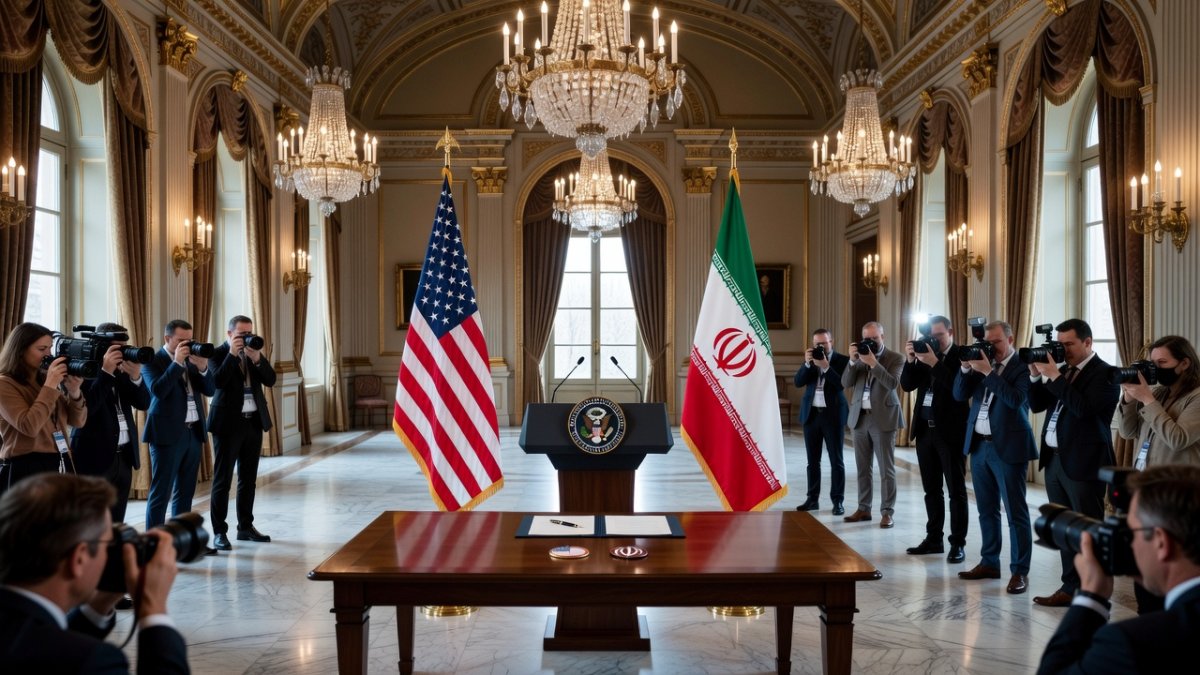
Breaking Through Months of Conflict
The conflict erupted in late February this year when the United States and Israel launched coordinated strikes on Iranian targets. A fragile ceasefire took hold in early April and held despite repeated violations along multiple fronts. Pakistan's leadership played the decisive mediating role in recent weeks, shuttling proposals between Washington and Tehran. The breakthrough occurred over the weekend when negotiators finalized the text of a Memorandum of Understanding. Both sides confirmed the electronic signing on Sunday. Details of the full document are expected within 24 to 48 hours. The agreement marks the first formal framework between the two countries since the collapse of earlier nuclear talks.
Pakistan's mediation unfolded through successive rounds of indirect contacts that began shortly after the April ceasefire stabilized the most intense exchanges. Islamabad leveraged its longstanding diplomatic channels with Tehran and its recent outreach to Washington to transmit revised drafts, allowing both capitals to avoid direct exposure during sensitive phases. The timeline compressed dramatically in the final ten days, with the electronic exchange of the Memorandum of Understanding occurring once textual convergence on core security and energy provisions had been verified through encrypted channels. This method of signature permitted immediate authentication by legal teams in both capitals without requiring physical presence, a procedural innovation that accelerated implementation sequencing while preserving the option for a ceremonial signing in Switzerland.
President Donald Trump announced the electronic signing during a White House briefing. He stated that the Memorandum of Understanding had been exchanged and verified by both capitals. A formal ceremony is now scheduled for Friday in Switzerland. Vice President JD Vance will accompany the president to the event. US officials emphasized that the framework addresses immediate security and economic concerns while deferring longer-term issues to follow-on negotiations. The structure of the agreement itself reflects a deliberate sequencing: short-term de-escalation measures are front-loaded, while structural questions about regional security architecture are reserved for subsequent phases.
The Key Terms of the Framework
President Trump confirmed that the Strait of Hormuz will be completely open by the end of this week. The United States will lift its naval blockade on Iranian ports as part of the same sequence. Trump directly stated that Iran has agreed never to possess a nuclear weapon. These commitments form the core of the initial implementation phase. Iranian officials have not yet issued a parallel public confirmation of the nuclear pledge. The reopening of the strait is expected to ease immediate pressure on global energy routes that pass through the narrow waterway.
In practice, the pledge that Iran will never possess a nuclear weapon implies verifiable caps on enrichment levels, restrictions on centrifuge deployment, and prohibitions on weaponization research under continuous monitoring. The return of IAEA inspectors under enhanced protocols agreed during the Pakistan-mediated process is intended to provide the technical foundation for such verification. Nuclear negotiations are scheduled to begin within days and must conclude within a 60-day period. Vance described the inspection regime as essential to verifying Iran's long-term commitments. US officials said the inspectors will operate under enhanced protocols agreed during the mediation process. The 60-day window will also address limits on enrichment levels and centrifuge numbers.
Compared with the 2015 JCPOA, the current framework adopts a narrower initial scope focused on immediate de-escalation and energy-route security, while postponing comprehensive enrichment limits to the follow-on talks. This staged approach may reduce early political friction but places heavier weight on the 60-day negotiation outcome for durable constraints. The structural implication is that compliance during the first phase serves as a test of whether broader nuclear understandings remain attainable.
Market Earthquake — Oil and Global Finance React
Brent crude prices fell more than 5 percent immediately after the announcement, settling at 82.84 dollars per barrel. Global stock markets recorded broad gains on the news of reduced supply risk. The Strait of Hormuz carries roughly one-fifth of the world's traded oil, making its reopening a direct factor in price calculations. Russia's energy sector stands to face renewed competition once Iranian volumes return to the market. Analysts noted that Moscow has benefited from elevated prices during the conflict but may now adjust export strategies.
Further downward pressure on Brent appears likely if Hormuz flows normalize without disruption, potentially testing the 80-dollar threshold within weeks. For Russia's federal budget, which relies heavily on energy export receipts, sustained lower prices would necessitate either spending restraint or increased borrowing. Within OPEC+, the re-entry of Iranian barrels could intensify quota negotiations, particularly if Gulf producers resist production cuts to accommodate the additional supply. Shipping insurance rates for vessels transiting the strait have already begun to ease, reflecting reduced war-risk premiums and improving the economics of long-haul crude movements to Asian refiners.
Reopening Hormuz also stabilizes downstream supply chains by lowering the probability of sudden rerouting around the Cape of Good Hope, which had inflated freight costs and delayed deliveries. European and Asian consumers may see modest relief at the pump within weeks. Gulf states are monitoring the price trajectory closely because their budgets remain sensitive to sustained drops below 85 dollars. The market reaction reflects relief that the most acute phase of the conflict has passed.

Israel's Defiance and the Lebanon Question
Israeli Prime Minister Benjamin Netanyahu stated that the fight is not over and that Israel will maintain a buffer zone in southern Lebanon. A senior US official confirmed that Israel's withdrawal from Lebanon is not part of the current framework. Netanyahu's position underscores Tel Aviv's determination to retain security arrangements along its northern border. US officials have not challenged this stance publicly while focusing on the bilateral US-Iran commitments.
Netanyahu's decision to announce his candidacy in Israel's upcoming elections appears calibrated to position himself as the defender of security interests that the framework does not directly address. By framing the agreement as unfinished business, he seeks to consolidate support among voters concerned about northern threats. Finance Minister Bezalel Smotrich's characterization of the deal as detrimental to Israel and the broader international community reflects the far-right coalition's broader skepticism toward any arrangement that leaves Iranian regional influence intact. The maintenance of the Lebanon buffer zone, estimated to extend several kilometers beyond the border, is presented by Israeli officials as a non-negotiable security measure independent of the US-Iran understanding.
Iran's Foreign Ministry spokesperson countered that ending the Lebanon conflict remains pivotal to the framework's success. The estimated death toll in Lebanon stands at 3,798. Should Israeli objectives diverge further from the framework's parameters, the risk of unilateral Israeli action in Lebanon or against Iranian-linked targets would increase, potentially testing the durability of the US-Iran commitments. The gap between the bilateral understanding and Israeli security priorities therefore remains a structural vulnerability in the overall arrangement.
The Geopolitical Chessboard — Russia, China, and Regional Powers
Russia maintains longstanding ties with Tehran and has supplied diplomatic cover during the conflict. The framework could reduce Washington's immediate focus on the Middle East, potentially allowing Moscow greater room in other theaters. Energy market analysts expect Iranian oil to exert downward pressure on prices that have supported Russian export revenues. At the same time, Moscow may position itself as a partner in any reconstruction projects that follow successful implementation.
China's interest centers on securing predictable crude imports through the strait, which supplies a substantial share of its energy needs; any sustained stabilization would support Beijing's strategy of diversifying supply routes while reducing exposure to price volatility. Russia's history of military-technical cooperation with Iran provides a foundation for continued engagement, though the framework's energy-market effects may constrain Moscow's fiscal flexibility. European governments have welcomed the de-escalation while urging strict verification of nuclear commitments. Gulf states are assessing whether the deal alters the regional balance or simply freezes existing tensions. The agreement could reshape alliances if enforcement mechanisms prove durable and attract broader participation.
The $300 Billion Question — Reconstruction and Enforcement
The United States is considering a 300 billion dollar reconstruction fund for Iran contingent on sustained compliance. Officials have not detailed disbursement conditions or oversight structures. Skepticism remains high among regional actors about whether the funding will materialize or survive congressional scrutiny. Enforcement will rely on IAEA reporting and periodic reviews by the parties. Any violation could trigger rapid reimposition of sanctions and naval measures.
Congressional dynamics in Washington suggest that any large-scale reconstruction package would face significant legislative hurdles, including demands for ironclad verification milestones and phased releases tied to specific benchmarks. Enforcement challenges are compounded by the absence of detailed oversight mechanisms at this stage, raising questions about how disputes over compliance interpretations would be adjudicated. Previous reconstruction funds in post-conflict settings have often encountered delays and political contestation, offering a cautionary precedent for the scale envisioned here.
Failure scenarios include a breakdown in the 60-day nuclear talks that leads to renewed sanctions and naval deployments, or Israeli actions in Lebanon that prompt Iranian responses and unravel the Hormuz opening. The next 60 days of nuclear talks will test the framework's resilience. Verification challenges and differing interpretations of enrichment limits could surface quickly. Failure to reach a follow-on accord would likely return the region to heightened tensions. Success, however, could open pathways for broader economic cooperation and reduced proxy confrontations.
The framework represents the most significant diplomatic breakthrough in the Middle East since the Abraham Accords. Its durability will depend on consistent enforcement, Israel's willingness to align with the Lebanon provisions, and the outcome of the 60-day nuclear negotiations. All parties recognize that implementation remains the decisive test ahead.
By Irina Volkov, Staff Writer
This article was produced with AI-assisted research and editorial support. Reporting is based on sources cited in the article.
What's Your Reaction?
 Like
0
Like
0
 Dislike
0
Dislike
0
 Love
0
Love
0
 Funny
0
Funny
0
 Wow
0
Wow
0
 Sad
0
Sad
0
 Angry
0
Angry
0
Russia/Eastern Europe Correspondent at Global1.News. Covering Russian politics, energy, security, and the shifting dynamics of the post-Soviet space. Provides clear-eyed analysis on one of the world's most opaque regions.










Comments (0)