
Trump Endorses Turkey-Syria Alliance at G7 Summit
Keywords: Trump G7 Syria, Ahmed al-Sharaa, Recep Tayyip Erdoğan, US-Iran deal 2026, Hezbollah operations, NATO summit Ankara, Turkey Syria axis, Gulf energy markets G7 Summit Remarks President Donald Trump delivered pointed remarks at the G7 summit in France that highlighted a clear policy shift toward Syria. He credited President Recep Tayyip Erdoğan and Syrian President Ahmed
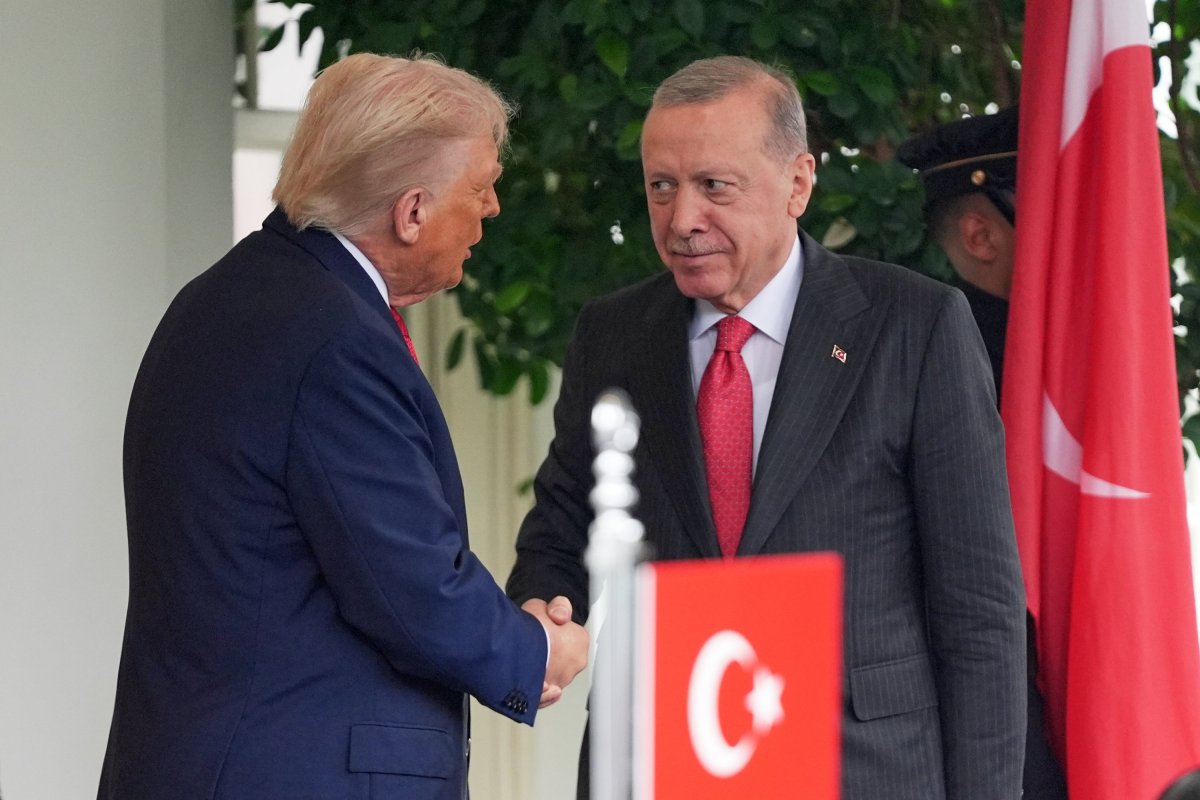
G7 Summit Remarks
President Donald Trump delivered pointed remarks at the G7 summit in France that highlighted a clear policy shift toward Syria. He credited President Recep Tayyip Erdoğan and Syrian President Ahmed al-Sharaa with reuniting the country after years of fragmentation. These comments came during sessions focused on Middle East stability and reflected Washington's willingness to back Ankara's longstanding support for the al-Sharaa administration. The statement also tied directly into broader discussions on reducing Israeli operations in Lebanon by allowing Syrian forces greater responsibility over Hezbollah containment.
Trump's endorsement carried immediate diplomatic weight because it followed the June 2025 lifting of sanctions on Syria after his May meeting with al-Sharaa in Riyadh. Observers noted that the G7 platform allowed Trump to signal to European allies that the United States now views the Syrian government as a functional partner rather than an isolated actor. This marked a departure from previous administrations that maintained distance from Damascus. The remarks also previewed potential face-to-face engagement on the sidelines of the upcoming NATO summit in Ankara.
Regional analysts interpreted the comments as part of a calculated effort to leverage Syrian influence against Iranian proxy networks. By publicly praising both Erdoğan and al-Sharaa, Trump underscored the importance of Turkish logistical and political backing for the new Syrian order. The statement simultaneously criticized Israeli tactics that produced civilian casualties in Lebanon, suggesting instead that Damascus could manage Hezbollah threats more effectively. Such positioning aligned with the recent US-Iran peace deal that has already curtailed proxy activity across the Levant.
The G7 intervention further illustrated how energy market considerations and great-power competition influence American calculations. With Russia and China seeking footholds in post-sanctions Syria, Trump appeared determined to consolidate gains achieved through the Riyadh meeting and the subsequent White House visit by al-Sharaa in November 2025. European partners at the summit listened closely as the United States outlined a pathway that privileges Turkish mediation over direct confrontation.
US-Iran Deal Fallout
The US-Iran peace deal concluded on June 15-16 2026 produced immediate effects across proxy networks. Hezbollah has refrained from operations since the agreement took effect, demonstrating Tehran's willingness to restrain its most capable forward force. This pause removed a major source of escalation that previously threatened both Israeli and Lebanese stability. Trump referenced the deal explicitly when suggesting that Syrian authorities rather than Israeli forces should address remaining Hezbollah infrastructure.
Iran's decision to accept the agreement reflected calculations about economic relief and the need to avoid direct confrontation with the United States. The resulting reduction in proxy activity has altered the strategic environment for all regional actors. Sunni-Shia competition has entered a temporary lull as Tehran tests whether compliance yields sustained sanctions relief. Gulf states watched closely to determine whether the deal would constrain Iranian influence or merely pause it.
Trump's public criticism of Israeli tactics against Hezbollah cited excessive civilian casualties and proposed Syria as an alternative manager of the threat. This stance surprised some observers who expected continued alignment with Jerusalem. Instead the president emphasized pragmatic outcomes that could be achieved through the al-Sharaa government with Turkish support. The approach also aimed to prevent Russia and China from filling any vacuum left by reduced American engagement.
The deal's ripple effects extended to energy markets where OPEC+ producers assessed whether reduced regional tension would stabilize oil prices. Saudi Arabia and the UAE factored the new dynamic into their diversification plans, recognizing that a calmer Levant could accelerate foreign investment. At the same time, the pause in Hezbollah operations created space for diplomatic initiatives centered on the NATO summit in Ankara.
Turkey-Syria Axis
Turkey has emerged as the primary external backer of the al-Sharaa administration, providing both political cover and practical assistance along the border. Ankara's influence stems from years of engagement that positioned it to facilitate Syria's reintegration into regional forums. The invitation extended to al-Sharaa for both the G7 and the NATO summit in Ankara underscores this central role. Turkish officials have coordinated closely with Washington to ensure the Syrian government can assume greater responsibility for border security.
Border management remains a core Turkish priority given the need to prevent militant spillover and to regulate refugee returns. Erdoğan has linked these objectives to broader Gulf diversification strategies that favor stable energy corridors. By supporting al-Sharaa, Ankara also seeks to limit Iranian proxy networks that once operated freely in northern Syria. This calculus aligns with Trump's recent statements favoring Syrian-led solutions over external military campaigns.
The upcoming NATO summit in Ankara offers a high-profile venue for trilateral discussions involving Trump, Erdoğan, and al-Sharaa. Turkish diplomats have prepared the ground for possible side meetings that could formalize security arrangements. Such arrangements would build on the momentum created by al-Sharaa's September 2025 address to the UN General Assembly and his historic White House visit later that year.
Turkish influence also intersects with Abraham Accords dynamics as several Arab states explore normalized ties with Damascus. Ankara's mediation helps bridge gaps between these states and the new Syrian leadership. This positioning strengthens Turkey's hand in great-power competition where the United States seeks reliable partners to counter Russian and Chinese overtures in the eastern Mediterranean.
Hezbollah's Dilemma
Hezbollah has maintained an operational pause since the June 2026 US-Iran deal, marking a significant departure from its previous pattern of cross-border activity. The restraint reflects Tehran's assessment that continued attacks would jeopardize the economic benefits of the agreement. Lebanese officials have noted reduced tensions along the southern border, although the group's political infrastructure remains intact. This situation creates uncertainty about Hezbollah's long-term leverage within Lebanon and the wider region.
Trump's suggestion that Syria could handle Hezbollah instead of Israel highlighted a preference for localized solutions. Damascus possesses both geographic proximity and historical claims that could allow it to exert pressure on remaining militant networks. Turkish support for such an approach would provide the necessary political backing and logistical coordination. The proposal also aims to reduce civilian casualties that accompanied previous Israeli operations.
The pause has forced Hezbollah leadership to recalibrate its deterrence posture. Without active operations, the group risks losing relevance among constituents who expect resistance against Israel. At the same time, any resumption of activity could trigger renewed sanctions or direct American involvement. This dilemma illustrates the broader contraction of Iranian proxy networks following the peace deal.
Regional actors including Saudi Arabia and the UAE monitor the situation for signs that Hezbollah's reduced profile could open space for Lebanese economic recovery. Energy markets stand to benefit from sustained stability along the Lebanon-Israel frontier. The NATO summit in Ankara may provide an opportunity to discuss confidence-building measures that lock in the current pause.
Israeli Strategic Calculus
Israeli officials have registered Trump's criticism of tactics that produced civilian casualties during operations against Hezbollah. The president's preference for Syrian management of the threat represents a notable adjustment in American expectations. Jerusalem must now weigh whether to accept greater Syrian involvement or to continue independent action that risks further friction with Washington. This calculus occurs against the backdrop of the US-Iran deal that has already limited Hezbollah's freedom of movement.
Israeli strategists recognize that the Abraham Accords framework depends on regional stability that could be undermined by prolonged conflict in Lebanon. At the same time, any transfer of responsibility to Damascus requires verifiable guarantees that Hezbollah infrastructure will be dismantled. Turkish mediation may offer a channel for such assurances, although trust remains limited. The upcoming NATO summit could serve as a testing ground for these discussions.
The shift in American rhetoric also reflects broader US-China-Russia competition in the Middle East. Washington seeks to prevent Moscow or Beijing from positioning themselves as alternative security guarantors. By encouraging Syrian responsibility, the United States aims to consolidate gains from the sanctions relief and the al-Sharaa engagement. Israel must adapt its planning to this evolving American posture.
Energy considerations further influence Israeli thinking because stable borders facilitate offshore gas development. Reduced Hezbollah activity lowers the risk of disruptions that could affect export contracts with European partners. The G7 discussions in France already touched on these linkages, signaling that economic factors now shape security decisions across the Levant.
NATO Summit as Diplomatic Hub
The NATO summit scheduled for Ankara has taken on added significance as a venue for high-level engagement on Syria and Lebanon. Al-Sharaa received an invitation that would mark another milestone in Syria's return to international forums. Turkish hosts have prepared facilities for possible side meetings involving Trump and Erdoğan, building on the positive tone set at the G7. Such encounters could formalize security understandings reached after the US-Iran deal.
Ankara's role as summit host allows Turkey to showcase its influence over Syrian affairs and to advance border security priorities. The presence of multiple heads of state creates opportunities for parallel discussions on energy cooperation and refugee policy. European allies will observe how the United States translates its G7 comments into concrete commitments. The summit therefore functions as both a security gathering and a diplomatic marketplace.
Preparations for the event have included coordination between Turkish and American officials on the parameters of any Trump-al-Sharaa interaction. The November 2025 White House visit established personal rapport that could be renewed in Ankara. This continuity matters because it reinforces the policy shift away from isolation toward engagement. Gulf states have expressed interest in the outcomes given their own calculations about Iranian influence.
The summit also provides a platform to address great-power competition. With Russia maintaining a military presence in Syria and China exploring economic projects, NATO members seek to reaffirm collective influence. Turkish leadership of the agenda helps ensure that regional dynamics including Sunni-Shia competition receive appropriate attention. The resulting communique may reference the need for Syrian-led solutions to Hezbollah-related challenges.
Great Power Competition
US-Russia-China competition in the Middle East has intensified following the sanctions relief for Syria. Moscow continues to maintain air and naval facilities that give it leverage over Damascus, while Beijing eyes reconstruction contracts that could expand its Belt and Road footprint. Trump’s G7 remarks signaled American determination to prevent these actors from dominating the post-deal environment. Turkish support for al-Sharaa serves as a counterweight that aligns with Washington’s objectives.
The US-Iran deal has altered the playing field by reducing the immediate threat of proxy escalation. This creates space for economic initiatives but also requires active diplomacy to keep Russia and China from filling gaps. Energy markets remain a key arena where these powers compete for influence over pricing and infrastructure. Gulf producers factor great-power alignments into their diversification strategies.
Ankara’s hosting of the NATO summit offers a visible demonstration of Western engagement that contrasts with Russian and Chinese approaches. By facilitating al-Sharaa’s participation, Turkey helps anchor Syria within a framework that prioritizes stability over adventurism. This positioning also advances Turkish interests in border security and refugee management. The outcome will influence how other regional actors calibrate their own great-power relationships.
Israeli and Gulf assessments of the competition focus on whether American engagement can deliver durable constraints on Iranian networks. The current operational pause by Hezbollah provides a window for such efforts. Success would strengthen the case for continued sanctions relief and further integration of Syria into regional economic structures.
Gulf Dynamics
Saudi Arabia and the UAE have adjusted their regional strategies in response to the US-Iran deal and the rehabilitation of Syria. Both countries see opportunities for energy cooperation and investment once sanctions are fully lifted. OPEC+ calculations now incorporate the prospect of Syrian oil returning to markets under controlled conditions. Turkish mediation provides a channel that Gulf states view as more reliable than direct Iranian involvement.
The Abraham Accords framework benefits from reduced Hezbollah activity because it lowers the risk of spillover conflicts that could derail normalization. Saudi and Emirati officials have monitored al-Sharaa’s diplomatic outreach, including his UN address and White House visit. Positive signals from Trump at the G7 have encouraged further exploration of economic ties. These developments intersect with domestic diversification agendas that require stable external environments.
Energy market stability remains a shared priority. Lower regional tensions support investment in new production capacity and export infrastructure. Gulf producers also assess how Russian and Chinese influence in Syria might affect global oil dynamics. Coordinated positions at upcoming OPEC+ meetings will reflect these assessments.
The NATO summit in Ankara offers a venue for Gulf representatives to engage with Turkish and American counterparts on these issues. Parallel discussions could address refugee returns and reconstruction financing. Such coordination would reinforce the broader shift toward pragmatic engagement that Trump has championed since the Riyadh meeting.
Historical Context
Syria’s journey from isolation to engagement began with al-Sharaa’s May 2025 meeting with Trump in Riyadh. That encounter paved the way for sanctions relief and the historic White House visit in November 2025, the first by a Syrian head of state since 1946. The September 2025 UN General Assembly address further signaled Damascus’s readiness to rejoin international diplomacy. These milestones reversed decades of estrangement rooted in civil war and proxy conflicts.
Turkish support proved instrumental throughout the process. Ankara provided consistent political backing and facilitated contacts that led to the current thaw. The invitation to the G7 and NATO summit reflects the cumulative effect of this partnership. Historical grievances between Turkey and Syria have given way to pragmatic cooperation on border security and economic recovery.
The US-Iran deal of June 2026 built on this foundation by creating conditions for Hezbollah restraint. Previous cycles of escalation had blocked such diplomatic openings. Trump’s willingness to criticize Israeli tactics and propose Syrian responsibility for Hezbollah represents a departure from earlier patterns. The shift acknowledges that sustained engagement requires flexibility on tactics.
Regional memory of past failures informs current caution. Actors recall how previous peace initiatives collapsed under proxy pressure. The present window therefore depends on verifiable implementation of the US-Iran agreement and continued Turkish-Syrian coordination. Success could establish a durable template for managing Sunni-Shia competition and great-power rivalry.
Regional Implications
The coming months will test whether the policy shift articulated at the G7 can produce lasting changes in Lebanon and Syria. A key variable remains Hezbollah’s continued operational pause and whether Damascus can translate proximity into effective pressure. Turkish facilitation will determine the pace of any security arrangements discussed at the Ankara summit. Positive outcomes could accelerate refugee returns and reconstruction financing from Gulf sources.
Israeli adjustments to American expectations will shape the durability of the current calm. Jerusalem must balance security requirements against the risk of friction with Washington over tactics. Energy development plans along the maritime boundary depend on sustained stability. The NATO summit may clarify the division of labor between Syrian and international actors.
Great-power competition will continue to influence events as Russia and China seek to exploit any gaps in Western engagement. Coordinated US-Turkish diplomacy offers the best prospect for maintaining momentum. Gulf states will watch for signs that the US-Iran deal delivers structural limits on proxy activity rather than a temporary pause.
Ultimately the regional implications hinge on whether the al-Sharaa government can consolidate authority while addressing Turkish security concerns. Successful navigation of these challenges would mark a genuine turning point after years of conflict. The Ankara summit provides the next critical checkpoint for measuring progress.
By Malik Hassan, Staff WriterThis article was produced with AI-assisted research and editorial support. Reporting is based on sources cited in the article.
What's Your Reaction?
 Like
0
Like
0
 Dislike
0
Dislike
0
 Love
0
Love
0
 Funny
0
Funny
0
 Wow
0
Wow
0
 Sad
0
Sad
0
 Angry
0
Angry
0

Middle East Correspondent at Global1.News. Based in Beirut, covering politics, conflict, energy, and society across the Middle East. Brings context and depth to a region often reduced to headlines.











Comments (0)