
Ukrainian Drone Strikes on St. Petersburg Expose Russian Vulnerabilities as Zelensky Challenges Putin to Direct Talks
A BBC News video titled 'Ukrainian drones hit Russia's St Petersburg area' captures the moment long-range Ukrainian drones reached the outskirts of Russia's second city, igniting fires at a major oil facility during one of the Kremlin's flagship economic gatherings. The strikes exposed vulnerabilities in Russian air defenses even as the St. Petersburg International Economic For
A BBC News video titled 'Ukrainian drones hit Russia's St Petersburg area' captures the moment long-range Ukrainian drones reached the outskirts of Russia's second city, igniting fires at a major oil facility during one of the Kremlin's flagship economic gatherings. The strikes exposed vulnerabilities in Russian air defenses even as the St. Petersburg International Economic Forum opened its doors. This incident marks another escalation in a conflict that has drawn in NATO support, EU sanctions, and shifting positions across the Global South.
Drone Strikes Expose Russian Vulnerabilities as Zelensky Issues Direct Challenge to Putin on Neutral Ground
St Petersburg, Russia – This week — Ukrainian long-range drones penetrated deep into Russian territory, striking the Petersburg Oil Terminal on the Baltic Sea and a naval installation in Kronstadt while the annual St. Petersburg International Economic Forum convened under tight security. Russian Defense Ministry statements confirmed the interception of dozens of drones over the Leningrad region, yet visible fires and restricted operations at Pulkovo Airport underscored the reach of the attack. The timing coincided with high-profile international attendance, raising questions about the effectiveness of layered air defense systems protecting strategic energy infrastructure and fleet assets.
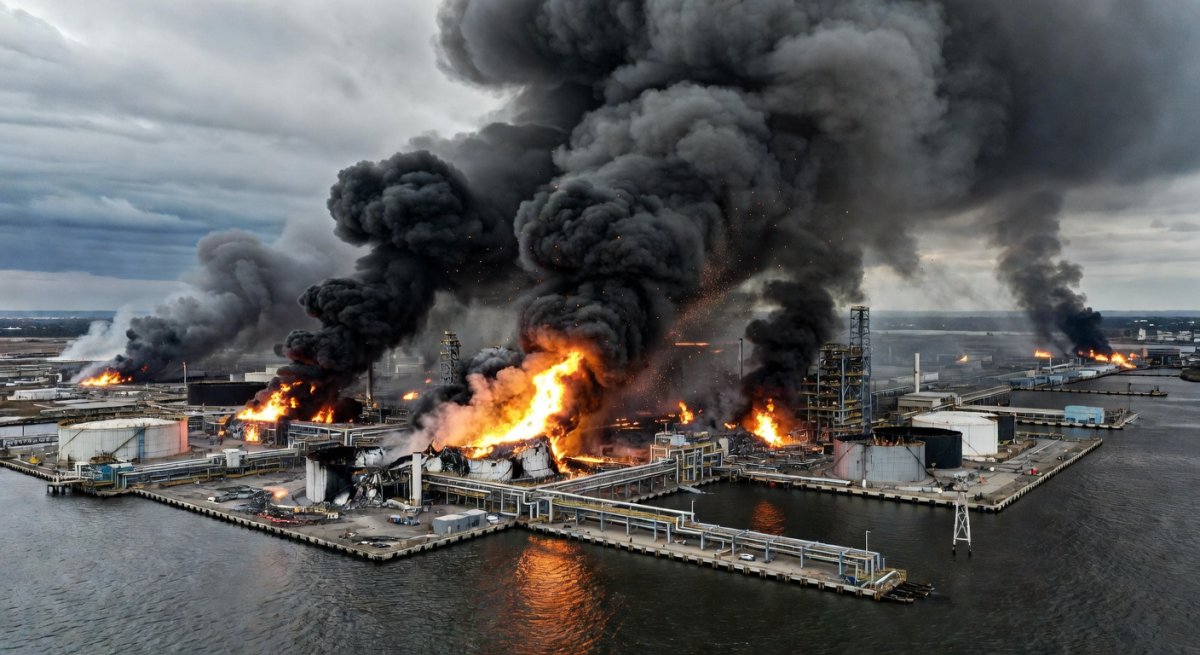
Details of the Strikes
The Ukrainian operation targeted the Petersburg Oil Terminal, a critical Baltic Sea transshipment hub handling Russian crude and refined products, along with elements of the Baltic Fleet based in Kronstadt. Russian officials reported that 59 drones were engaged over the Leningrad region, with several penetrating to cause fires and visible black smoke at the port facility. Pulkovo Airport implemented temporary flight restrictions, disrupting civilian aviation while emergency services responded to limited civilian injuries near the terminal. These strikes demonstrated Ukraine's capacity to project power over extended distances, employing modified long-range drones that bypassed initial radar detection through low-altitude flight paths and electronic warfare countermeasures.
From the Ukrainian perspective, the operation formed part of a broader strategy to degrade Russian logistical capabilities supporting the special military operation. NATO sources have noted that such precision strikes reflect improved Ukrainian targeting intelligence, possibly aided by Western satellite and reconnaissance assets without direct operational involvement. EU analysts highlight the economic ripple effects on energy exports, while Russian military bloggers associated with Z-channels described the event as evidence of overextended air defense resources stretched across multiple fronts. The incident at Kronstadt, home to key Baltic Fleet surface and submarine units, further illustrates the naval dimension of the conflict, echoing historical patterns of asymmetric attacks on fleet concentrations seen in earlier post-Soviet regional disputes.
Zelensky's Diplomatic Gambit
President Zelensky followed the strikes with an open letter addressed directly to President Putin, proposing a face-to-face meeting in a neutral venue such as Switzerland, Turkiye, or an Arab state. The letter outlined conditions including a full ceasefire during negotiations, an all-for-all prisoner-of-war exchange, the return of deported civilians and children, and internationally backed security guarantees for Ukraine. It referenced reported Russian casualties exceeding 30,000 killed or seriously wounded in a single month, alongside mounting economic pressures and signs of domestic fatigue within Russia. The communication also warned of preparations for prolonged hostilities extending into subsequent years.
Ukrainian officials framed the letter as a pragmatic overture that leverages battlefield momentum to force diplomatic engagement. European Union diplomats viewed the proposal as consistent with earlier calls for negotiated settlements under strong verification mechanisms, while NATO members expressed cautious support for talks provided Ukrainian sovereignty remains intact. Russian state media portrayed the initiative as an attempt to dictate terms from a position of perceived weakness. The emphasis on neutral third countries reflects longstanding diplomatic practice in post-Soviet conflicts, where venues like Turkiye have previously hosted indirect talks. Analysts note that the letter's reference to high casualty figures aligns with independent assessments circulating in Western defense circles, though Moscow has consistently disputed such tallies through the Ministry of Defense.
Kremlin's Calculus
Presidential Press Secretary Dmitry Peskov stated that the special military operation continues precisely to neutralize threats such as the recent drone incursions. President Putin addressed the St. Petersburg International Economic Forum the following day, emphasizing economic resilience and pledging additional resources to bolster air defense networks around strategic sites. Kremlin statements avoided direct engagement with the substance of Zelensky's letter, instead focusing on the necessity of maintaining operational tempo to protect Russian territory and interests.
Within Russian power structures, the response reflects a preference for managing the conflict through military and economic instruments rather than immediate diplomatic concessions. The Ministry of Defense continues to coordinate with aerospace forces to integrate new interception technologies. EU observers interpret the emphasis on air defense upgrades as acknowledgment of persistent vulnerabilities, while NATO assessments suggest that prolonged strikes could influence internal debates among security council members. Perspectives from CSTO partners indicate varying degrees of support, with some Central Asian states expressing concern over spillover economic effects. The Kremlin's approach draws on established patterns of centralized decision-making in foreign and security policy that have characterized Russian governance since the post-Soviet period.
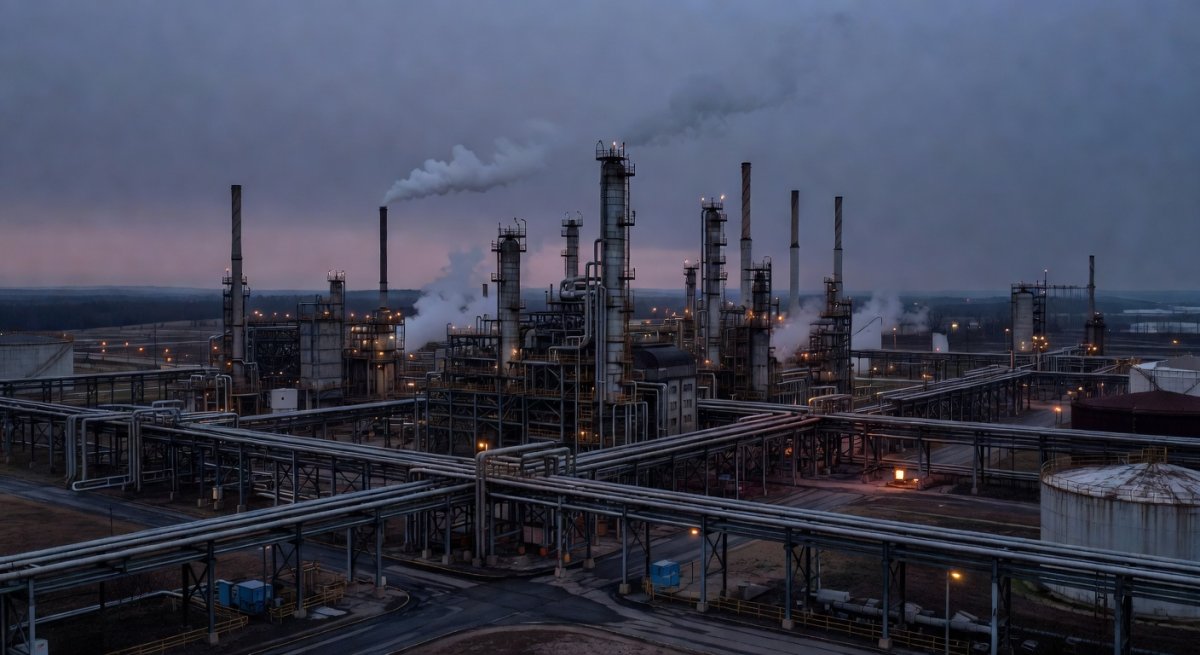
Energy War: Strikes on Russian Refineries
Throughout the preceding month, Ukrainian forces conducted strikes on 16 Russian oil refineries, establishing a wartime record by affecting eight of the country's ten largest processing facilities. These attacks produced localized fuel shortages and instances of rationing in several regions, complicating domestic distribution networks managed by major energy companies. The campaign targets upstream and downstream infrastructure critical to both domestic supply and export revenues that fund state operations.
From Ukraine's standpoint, refinery strikes serve to constrain Russian military logistics by limiting fuel availability for armored and aviation units. NATO-aligned analysts have documented measurable reductions in refined product output, contributing to upward pressure on global energy prices monitored by EU energy agencies. Russian regional authorities have implemented temporary distribution controls to mitigate shortages, while Global South importers reliant on Russian crude have sought alternative suppliers. The pattern recalls earlier energy leverage dynamics in post-Soviet relations, where control over pipelines and processing capacity shaped diplomatic interactions. European Union sanctions on Russian energy exports compound these pressures, creating a feedback loop that affects both battlefield sustainability and civilian economies on multiple continents.
Domestic Impact on Russian Society
Fuel rationing measures in affected Russian regions have begun to influence daily mobility and agricultural logistics, particularly in areas distant from major refineries. Public commentary on social media platforms and independent channels reflects growing awareness of economic strain, with some observers noting parallels to previous periods of wartime austerity. The combination of direct strikes near major population centers and visible disruptions at high-profile events has prompted discussions about the long-term costs of the special military operation.
Russian state media continues to emphasize external threats and the necessity of defensive measures, while independent polling organizations report incremental increases in war fatigue among urban populations. EU humanitarian assessments point to secondary effects on cross-border trade and family connections severed by the conflict. NATO strategic reviews consider how domestic Russian pressures might influence escalation thresholds. Perspectives from the Global South emphasize the need for negotiated outcomes that restore stable energy flows, underscoring the interconnected nature of the conflict's economic consequences. These domestic dynamics interact with centralized Kremlin decision-making structures, where regional governors implement federal directives amid competing local priorities.
International Reactions and Geopolitical Implications
NATO members have reiterated commitments to Ukrainian self-defense capabilities while encouraging any diplomatic pathway that preserves territorial integrity. The European Union maintains sanctions regimes targeting Russian energy and financial sectors, viewing the refinery campaign as consistent with efforts to reduce Moscow's war-making capacity. CSTO allies have expressed solidarity with Russian security concerns but have signaled limits on direct involvement, reflecting the alliance's post-Soviet coordination challenges.
Countries in the Global South have largely advocated for de-escalation through multilateral forums, citing the humanitarian and economic toll on developing economies dependent on stable commodity markets. Turkish and Arab state intermediaries remain positioned as potential hosts for talks, building on prior mediation experience. These varied reactions illustrate the conflict's transformation into a global issue involving energy security, alliance cohesion, and great-power competition. Historical context from earlier post-Soviet crises demonstrates how external actors can shape negotiation frameworks, though core disputes over security guarantees persist across all parties.
Prospects for Negotiations
The open letter's conditions, including comprehensive prisoner exchanges and security arrangements, present both opportunities and obstacles for future dialogue. Russian insistence on addressing root security concerns contrasts with Ukrainian demands for verified ceasefires and territorial restoration. Intermediary states could facilitate initial contacts, yet verification mechanisms remain contentious given accumulated mistrust.
Analysts across Western and non-aligned institutions note that sustained pressure from drone operations and refinery strikes may alter cost-benefit calculations within the Kremlin. At the same time, NATO and EU support structures provide Ukraine with leverage to insist on robust guarantees. The interplay of energy infrastructure targeting, domestic economic effects, and international diplomatic initiatives suggests that any path forward will require careful sequencing of military de-escalation and political commitments. Outcomes will depend on whether leaderships in Moscow and Kyiv can reconcile maximalist positions with pragmatic realities shaped by battlefield developments and global economic constraints.
By Irina Volkov, Staff Writer
This article was produced with AI-assisted research and editorial support. Reporting is based on sources cited in the article.
What's Your Reaction?
 Like
0
Like
0
 Dislike
0
Dislike
0
 Love
0
Love
0
 Funny
0
Funny
0
 Wow
0
Wow
0
 Sad
0
Sad
0
 Angry
0
Angry
0

Russia/Eastern Europe Correspondent at Global1.News. Covering Russian politics, energy, security, and the shifting dynamics of the post-Soviet space. Provides clear-eyed analysis on one of the world's most opaque regions.










Comments (0)