
Ukraine Drone Strikes Kill 4 in Crimea, Halt Fuel Sales
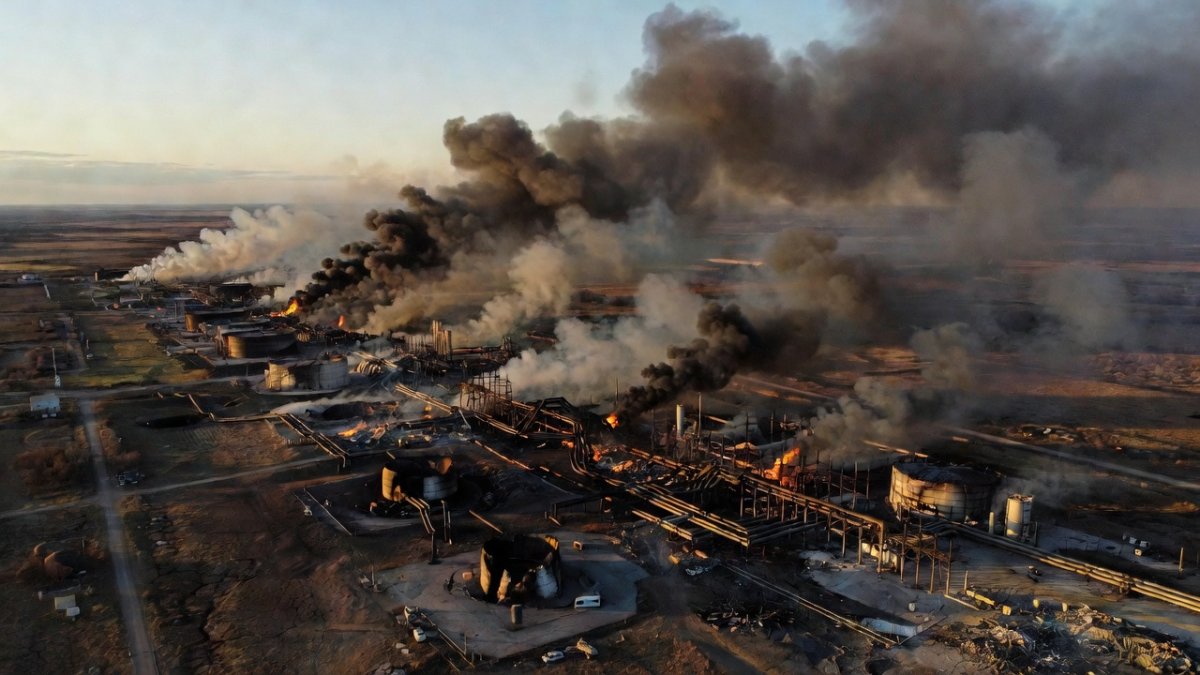
Immediate Casualties from the Strikes Russia-backed Crimea Governor Sergey Aksyonov stated on Sunday that four people were killed and 28 wounded as a result of the drone attack on the Kerch Peninsula. He described the victims as civilians caught in the barrage. The same attack also claimed one life on a ferry operating in the region, according to authorities in Russia's souther
Immediate Casualties from the Strikes
Russia-backed Crimea Governor Sergey Aksyonov stated on Sunday that four people were killed and 28 wounded as a result of the drone attack on the Kerch Peninsula. He described the victims as civilians caught in the barrage. The same attack also claimed one life on a ferry operating in the region, according to authorities in Russia's southern Krasnodar region. The Kerch Peninsula, a narrow strip of land jutting into the strait that separates Crimea from mainland Russia, has long served as a critical gateway, its geography making it both a natural chokepoint and a frequent target in the ongoing conflict.
These figures represent the human cost reported by Moscow-backed officials in the immediate aftermath. Aksyonov referred specifically to the Kerch Peninsula, the area of Crimea that borders Russia, as the primary site of the casualties. Local reports indicated that the strikes formed part of a larger Ukrainian operation targeting multiple sites across the peninsula. Humanitarian organizations monitoring the region noted that civilian infrastructure near the ferry terminals and fuel depots suffered collateral damage, leaving families without immediate access to medical care or evacuation routes amid the power disruptions.
Suspension of Fuel Sales Across Crimea
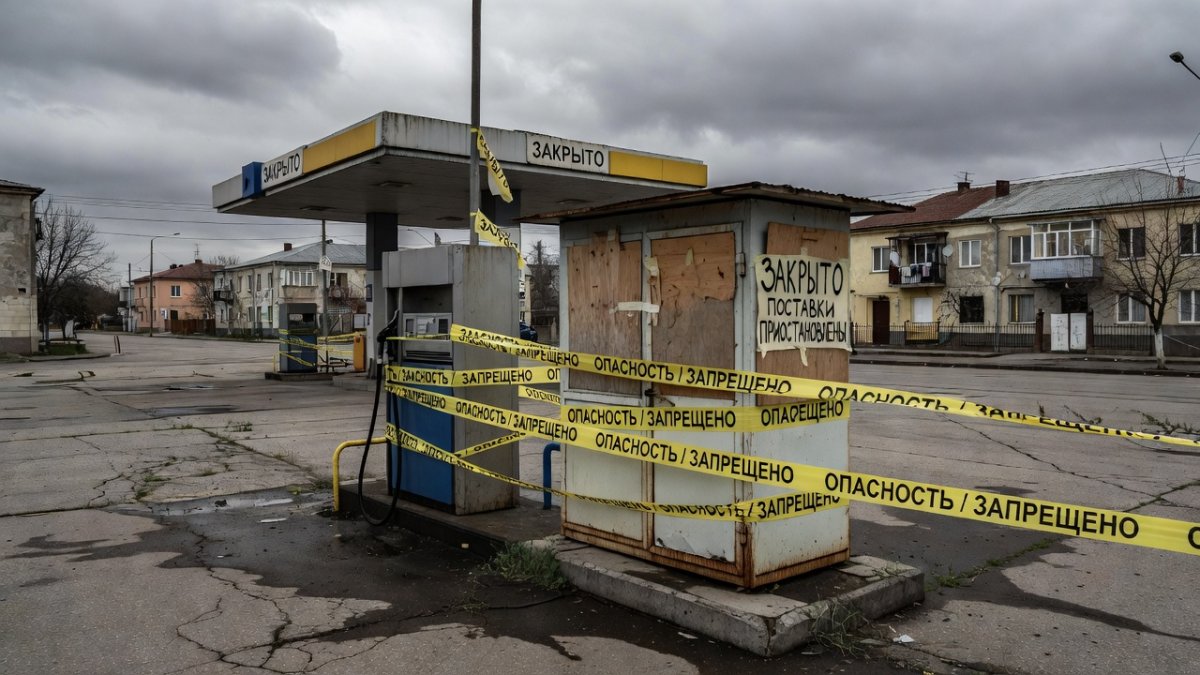
Aksyonov announced in a separate statement that fuel sales at Crimean petrol stations were suspended starting from 09:00 am on Sunday. Sales were restricted exclusively to state enterprises, with no fuel available to the general public until further notice. This measure followed the Ukrainian barrage that struck energy-related targets on the peninsula. The move echoes broader Russian policies that have banned fuel exports since April, a step taken to preserve domestic supplies amid mounting refinery outages and international sanctions.
The decision directly affects daily life for residents who rely on private vehicles for transportation and work. Crimea authorities framed the suspension as a necessary response to the damage inflicted on fuel infrastructure. No timeline was provided for the resumption of normal sales to ordinary citizens. In rural districts of the Kerch Peninsula, where public transport options remain limited, the restrictions have forced many households to ration remaining fuel stocks or seek alternative means of mobility, exacerbating existing economic pressures from four years of conflict-related isolation.
Disruptions to Energy Infrastructure and Power Supply
Local utilities company Krymenergo reported that part of Crimea was left without power after the attacks. The outages compounded the effects of the fuel sales suspension, leaving residents and businesses with limited access to both electricity and transportation fuel. Aksyonov confirmed the scale of the infrastructure damage in his public statements. Energy Intelligence, a U.S.-based research firm, reported earlier this month that about a third of Russian oil refining capacity had gone offline due to such strikes, a figure that underscores the systemic strain now reaching Crimea’s isolated grid.
The strikes also hit an oil terminal in Russia's southern Krasnodar region, which borders Crimea. This incident added to the regional energy strain, as Krasnodar serves as a key logistical link for supplies moving into the peninsula. Authorities in both areas coordinated their responses to the simultaneous incidents. Power restoration teams worked through the night, yet intermittent blackouts persisted in coastal communities, disrupting water pumping stations and hospital generators already stretched thin by wartime demand.
Ukrainian Statements on Targeting and Objectives
Ukrainian President Volodymyr Zelensky said on social media that the overnight strikes targeted the occupiers' military logistics, oil industry, and air defense systems. He described the actions as long-range sanctions and stated that Ukrainian forces also struck the Crimean Bridge connecting the peninsula to Russia, along with radar and air defense installations. The Crimean Bridge, opened in 2018 as a symbol of Moscow’s consolidation of control, has faced repeated Ukrainian strikes since 2022, each time highlighting its dual role as both a supply artery and a vulnerable chokepoint.
Zelensky added that the attacks represented a just response to Russia's brutal attacks against Ukrainian people. Ukraine maintains that its operations focus on military and energy facilities rather than civilian sites. Kyiv has cited upgraded long-range drone capabilities as enabling strikes along the land corridor through occupied southeastern Ukraine used to supply Crimea. These capabilities have allowed Ukrainian forces to bypass traditional front lines and directly challenge Russia’s ability to sustain prolonged operations from the peninsula.
Russian and Crimean Authorities' Response
Aksyonov, speaking as the Russia-backed governor, emphasized the civilian casualties and the need to prioritize fuel distribution to state enterprises. Crimea authorities under his leadership coordinated with Russian federal structures to manage the immediate aftermath, including power restoration efforts through Krymenergo. Federal emergency teams were dispatched from Krasnodar, reflecting Moscow’s determination to maintain administrative continuity despite mounting logistical challenges.
Officials in Krasnodar similarly reported the ferry fatality and the oil terminal strike, highlighting the cross-border nature of the damage. These statements from Moscow-aligned figures present the events as attacks on civilian and commercial infrastructure, contrasting with Ukrainian descriptions of military targets. Russian state media emphasized the human toll while downplaying the strategic degradation of energy assets that has left roughly one-third of national refining capacity offline.
Effects on Ordinary Residents and Regional Logistics
The combination of power outages and fuel restrictions has immediate consequences for daily routines in Crimea. Residents face challenges in commuting, accessing goods, and maintaining basic services when both electricity and vehicle fuel become unavailable. State enterprises continue to receive priority allocation, reflecting the Kremlin's emphasis on maintaining administrative and military functions. Humanitarian groups have documented rising prices for basic goods as truck deliveries slow, with some villages reporting shortages of medicine and fresh produce within days of the suspension.
Crimea serves as a key logistics base for Russian operations, and disruptions here affect supply lines that rely on the peninsula’s ports and road networks. The suspension of fuel sales to the public underscores how energy infrastructure damage translates into tangible limits on civilian mobility and economic activity. Over the past four years, the peninsula has functioned as the primary staging ground for Russia’s southern offensive, making any interruption to its fuel and power systems a direct constraint on sustained military movement.
Context of Energy Politics and Fuel Availability
Ukraine has conducted multiple strikes on energy facilities inside Russia in recent months, including a large refinery in Moscow hit twice earlier this week. These operations aim at reducing oil revenues that fund Russian military activities. Some petrol stations in Russia introduced fuel rationing this month, and fuel exports have remained banned since April. The cumulative effect has forced Russian authorities to divert tanker shipments and impose domestic quotas, measures that have only partially offset the loss of refining throughput.
Energy Intelligence, a U.S.-based research firm, reported earlier this month that about a third of Russian oil refining capacity had gone offline due to such strikes. This reduction occurs against the backdrop of Russia as one of the world's largest oil producers, where domestic fuel distribution faces increasing pressure from repeated targeting of refineries and terminals. Analysts note that the Kremlin’s earlier decision to halt exports was intended to shield internal markets, yet repeated Ukrainian long-range strikes have eroded that buffer faster than anticipated.
Broader Energy War
The latest strikes on Crimea and Krasnodar form part of an expanding campaign against Russia’s energy backbone. Ukrainian forces have systematically targeted refineries from the Baltic to the Black Sea, seeking to degrade Moscow’s ability to finance its military through oil sales. With roughly one-third of refining capacity already offline, domestic shortages have spread beyond Crimea into central Russian regions, prompting emergency allocations and price caps that strain the federal budget.
Russia’s decision to ban fuel exports since April was initially presented as a temporary safeguard, yet the policy has now become a permanent feature of wartime economics. The ban has failed to fully insulate the domestic market because Ukrainian drones continue to strike storage facilities and pipelines that feed both military logistics and civilian consumption. This energy war has raised global concerns about secondary effects on European and Asian markets that still rely on Russian crude, even under heavy sanctions.
Status of Negotiations and Front-Line Developments
Talks aimed at ending Europe's largest conflict since World War II remain frozen. Fighting along the front line continues at a standstill, with both sides exchanging long-range strikes while ground advances stay limited. Ukrainian forces have increased drone activity against energy sites deep behind Russian lines, while Russian strikes in eastern Ukraine killed three people overnight. The reciprocal nature of these attacks has produced a grinding attrition dynamic in which neither side appears willing to concede strategic energy assets.
The pattern of reciprocal attacks on logistics and energy assets illustrates the current phase of the conflict, where neither side has achieved decisive territorial gains. Statements from both Kyiv and Moscow-backed officials in Crimea reflect ongoing efforts to frame these strikes in terms of military necessity and civilian impact. International observers warn that continued targeting of energy infrastructure risks deepening humanitarian hardship across occupied territories without bringing either party closer to a negotiated settlement.
The Kerch Bridge and Peninsula’s Strategic Role
The Crimean Bridge, struck again in the latest operation, remains the sole permanent land link between Russia and the peninsula. Completed in 2018, the 19-kilometer structure was designed to carry both rail and road traffic essential for sustaining large-scale military deployments. Previous Ukrainian attacks in 2022 and 2023 forced lengthy closures that delayed ammunition and fuel shipments to Russian units operating in southern Ukraine.
Crimea’s geography as a forward logistics base has made the peninsula indispensable to Russia’s four-year offensive in the south. Ports at Sevastopol and Kerch, combined with the bridge and overland corridors through occupied territory, form a supply triangle that Ukrainian strikes now threaten to sever. Any prolonged disruption forces Russian commanders to rely on longer, more vulnerable sea and air routes that expose additional assets to Ukrainian interdiction.
Strategic Implications
The cumulative effect of these strikes extends beyond immediate fuel shortages. By degrading Crimea’s energy infrastructure, Ukraine has demonstrated an ability to impose costs on Russia’s rear-area support system without committing ground forces. This approach aligns with Kyiv’s broader strategy of raising the price of occupation while Western partners continue to debate the scope of long-range weapons approvals.
For Moscow, the challenge lies in balancing military requirements against civilian needs in a region already isolated by sanctions and geography. Continued Ukrainian pressure on refineries and bridges could compel Russia to divert additional air-defense assets to Crimea, potentially thinning coverage elsewhere along the front. Analysts assess that sustained energy targeting may gradually erode Russia’s capacity to maintain high-tempo operations from the peninsula, even if territorial lines remain largely static in the near term.
By Irina Volkov, Staff WriterThis article was produced with AI-assisted research and editorial support. Reporting is based on sources cited in the article.
What's Your Reaction?
 Like
0
Like
0
 Dislike
0
Dislike
0
 Love
0
Love
0
 Funny
0
Funny
0
 Wow
0
Wow
0
 Sad
0
Sad
0
 Angry
0
Angry
0

Russia/Eastern Europe Correspondent at Global1.News. Covering Russian politics, energy, security, and the shifting dynamics of the post-Soviet space. Provides clear-eyed analysis on one of the world's most opaque regions.










Comments (0)