
Ukraine Drone Strike Hits Omsk Oil Refinery Deep in Siberia
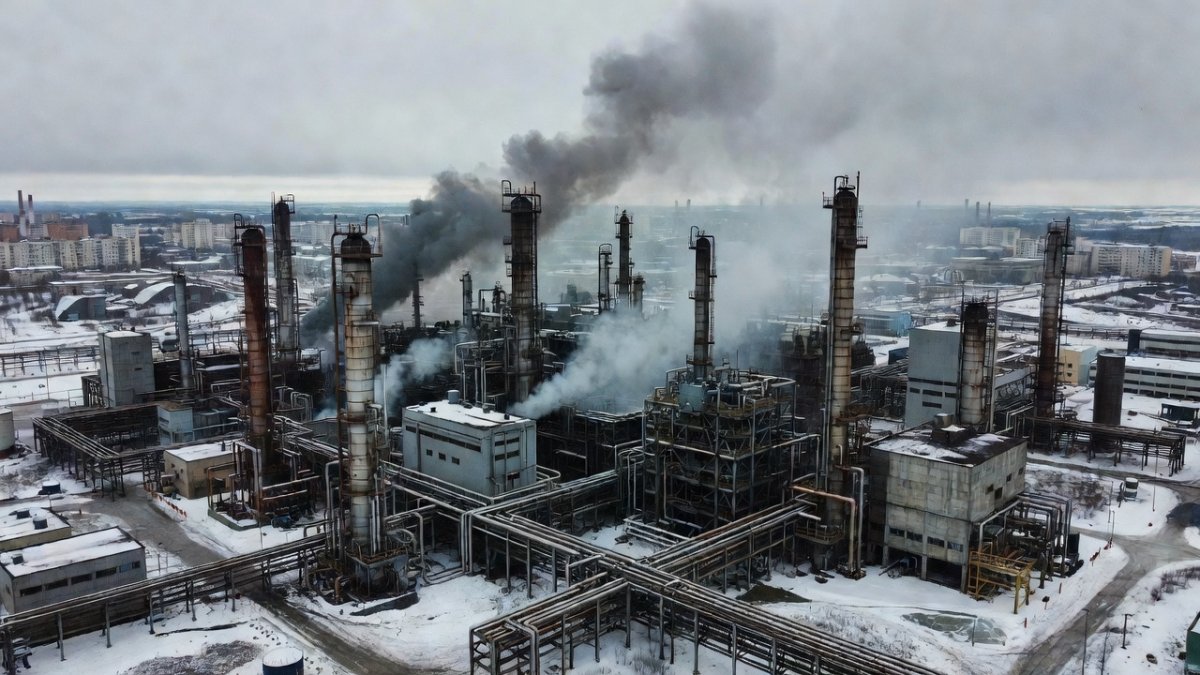
The Strike Reaches Deep into Siberia On Monday, Ukrainian drones struck the Gazprom Neft-operated refinery in Omsk, western Siberia, marking the deepest penetration of the conflict at a distance of up to 3,000 kilometers from launch points near the Ukrainian border. The facility, located roughly 2,500 kilometers from Ukraine, processes 23 million metric tons of crude oil annual
The Strike Reaches Deep into Siberia
On Monday, Ukrainian drones struck the Gazprom Neft-operated refinery in Omsk, western Siberia, marking the deepest penetration of the conflict at a distance of up to 3,000 kilometers from launch points near the Ukrainian border. The facility, located roughly 2,500 kilometers from Ukraine, processes 23 million metric tons of crude oil annually, equivalent to 460,000 barrels per day, and stands as one of Russia's largest gasoline producers. NASA satellite imagery captured multiple fire hotspots across the site shortly after the attack, confirming significant thermal activity consistent with structural damage. Ukraine's General Staff reported that the strike affected the primary oil-processing unit, rendering it inoperable and completing the targeting of all 11 largest gasoline-producing refineries in the country. This operation extends a drone campaign that has been active since mid-2025, demonstrating Ukraine's growing capacity for long-range precision strikes against energy infrastructure deep within Russian territory. The Omsk facility's remote location had previously been considered beyond effective reach, yet the successful breach of layered air defenses underscores evolving tactical adaptations by Ukrainian forces. Regional authorities noted immediate disruptions to local fuel distribution networks, with emergency measures activated to contain secondary fires and assess cascading effects on downstream supply chains serving Siberian industrial zones.
Russian Official Accounts of the Incident
Omsk Governor Vitaly Khotsenko publicly confirmed that multiple drones penetrated regional air defense systems, resulting in fires at the Gazprom Neft refinery complex. In statements issued this week, Khotsenko described the incident as an unprecedented breach, emphasizing that local emergency services responded rapidly to limit the spread of flames across processing units. Russian Foreign Ministry spokesperson Maria Zakharova attributed the attack to deliberate escalation by Kyiv, framing it within broader narratives of Western-supplied weaponry enabling strikes on civilian-adjacent energy assets. Official Russian accounts maintain that damage remains localized and that production at secondary units continues uninterrupted, though independent verification through satellite data suggests more extensive impact on core distillation capacity. These attributions contrast with Ukrainian claims of total disruption to the primary processing line, highlighting the challenge of reconciling state-controlled reporting with observable physical evidence. Analysts note that such official narratives serve to reassure domestic audiences while minimizing perceptions of vulnerability in remote industrial heartlands. The coordinated messaging from both regional and federal levels indicates a deliberate effort to control information flow regarding the strike's operational consequences.
Putin's Recognition of Fuel Shortages
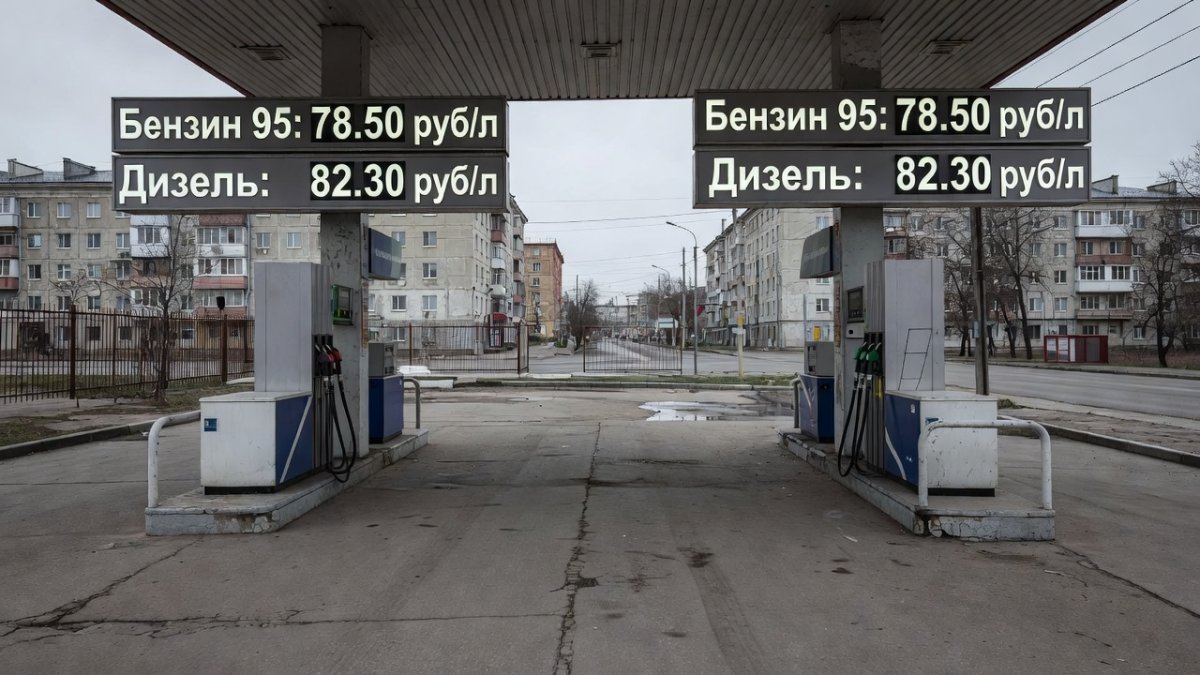
President Putin acknowledged a certain shortage of fuel during recent public remarks, marking a rare admission of strain on domestic energy supplies amid sustained targeting of refining infrastructure. Government data indicate gasoline reserves have fallen to 1.7 million metric tons, representing a 4 percent year-over-year decline that reflects cumulative losses from repeated strikes. Retail prices have risen 11.6 percent since January, reaching an average of 72.38 rubles per liter at pumps across affected regions. Fuel rationing measures have been introduced in multiple districts, including Crimea, to prioritize military and essential civilian needs while curbing speculative hoarding. These developments occur against a backdrop of broader economic pressures, where reduced refining output threatens both domestic consumption and export commitments. President Putin's comments suggest recognition that the cumulative effect of strikes on 11 refineries cannot be dismissed as isolated incidents. Regional authorities have been directed to implement allocation protocols, yet reports indicate uneven enforcement leading to localized shortages at commercial stations. The acknowledgment from the highest levels signals that energy security has emerged as a pressing concern requiring coordinated federal response beyond routine denial of operational impacts.
Ukraine's Systematic Targeting of Refining Capacity
Ukraine's campaign against Russian refining capacity has evolved into a methodical effort to degrade fuel production across multiple regions, with the Omsk strike representing the culmination of strikes on all 11 major gasoline producers. Beginning with facilities closer to the border in mid-2025, Ukrainian forces progressively extended reach to more distant sites, incorporating intelligence from satellite reconnaissance and on-ground assets. The Gazprom Neft Omsk refinery, Slavneft-Yanos in Yaroslavl, and Novatek's Ust-Luga complex have each sustained documented hits that reduced throughput and forced temporary shutdowns of key units. This pattern indicates a strategic focus on high-volume processors rather than scattered smaller targets, aiming to create measurable shortfalls in gasoline and diesel availability. Confirmed facts establish that at least six refineries experienced significant downtime exceeding two weeks following initial strikes, while official Russian claims of rapid repairs remain unverified by independent monitoring. The systematic nature of these operations reflects integration of long-range drone technology with real-time damage assessment, allowing Ukrainian planners to prioritize follow-on strikes where initial effects proved insufficient. Such targeting disrupts not only immediate fuel supplies but also the logistical backbone supporting industrial and agricultural sectors reliant on consistent petroleum product flows.
The June 2026 Offensive and Deep Strikes
The June 2026 offensive has intensified Ukraine's deep-strike operations, incorporating refined drone designs capable of sustained flight over 2,500 kilometers to reach previously secure Siberian installations. Strikes on the Gazprom Neft Omsk facility, combined with simultaneous actions against the Slavneft-Yanos refinery operated in partnership with Gazprom Neft and the Novatek Ust-Luga complex, demonstrate coordinated timing designed to overwhelm Russian defensive responses. In recent days, additional hits on petroleum storage at Kerch in Crimea further strained distribution networks already pressured by refinery outages. This phase of the campaign builds upon earlier successes in 2025, where initial targeting of border-region facilities established operational precedents for extended-range missions. Analysis suggests that Ukrainian forces have leveraged incremental technological improvements to maintain pressure on refining capacity, forcing Russian authorities to divert air defense assets from frontline positions. The offensive's focus on 11 specific refineries reflects calculated selection based on output volume and geographic distribution, maximizing economic and logistical disruption. While Russian officials attribute these strikes to external support, the pattern of repeated successful penetrations points to sustained Ukrainian investment in autonomous strike capabilities that continue to evolve despite countermeasures.
Specific Operations at Ust-Luga and Yaroslavl
Ukraine's Main Intelligence Directorate executed precision strikes on the Slavneft-Yanos refinery in Yaroslavl, located approximately 700 kilometers from the border, damaging storage and processing infrastructure critical to central Russian fuel distribution. Concurrent operations targeted the Novatek Ust-Luga complex in the Leningrad region, where export-oriented liquefaction and refining units sustained hits that curtailed both domestic supply and international shipment schedules. These actions complement the deeper Omsk strike by creating simultaneous pressure points across western and central Russia, complicating Russian efforts to reroute resources or implement emergency repairs. Confirmed impacts include fire damage to primary distillation columns at Yaroslavl and compromised loading terminals at Ust-Luga, according to satellite observations and Ukrainian operational summaries. Russian responses have included enhanced patrols and electronic warfare deployments, yet the frequency of successful strikes indicates gaps in coverage for dispersed industrial sites. The selection of these facilities underscores an intent to affect both regional consumption centers and export hubs, thereby amplifying the overall strain on Russia's petroleum sector. Operational details released by Ukrainian sources emphasize the use of low-observable drone variants to evade detection during the extended transit to target areas.
Economic Pressures and War Logistics
Sustained degradation of refining capacity has generated measurable economic pressures on Russian war logistics, as reduced gasoline and diesel output directly constrains military mobility and civilian transport networks. With 11 major refineries now affected, aggregate production shortfalls have necessitated imports from alternative sources and accelerated drawdowns from strategic reserves. The 4 percent decline in gasoline stocks to 1.7 million metric tons coincides with rising retail prices at 72.38 rubles per liter, creating affordability challenges for households and commercial operators alike. Fuel rationing across regions and Crimea illustrates the Kremlin's prioritization of defense requirements over unrestricted civilian access, a policy that risks amplifying regional discontent. Analysis framed around supply chain vulnerabilities reveals that strikes on Gazprom Neft, Novatek, and Slavneft facilities have forced military planners to implement conservation measures, including reduced training flights and optimized convoy routing. These constraints compound existing sanctions-related limitations on equipment maintenance and spare parts availability. The cumulative effect threatens to erode the logistical advantages Russia has maintained since the conflict's outset, particularly as Ukrainian forces continue to refine strike tactics against high-value energy nodes. Official claims of resilience contrast with observable price spikes and allocation restrictions that signal underlying fragility in the system.
Consequences for Ordinary Russians and Regional Stability
Ordinary Russians in affected regions face mounting difficulties from fuel rationing and elevated prices, with reports of extended queues at stations and informal black-market activity emerging in rural districts. The Omsk strike's impact on local supply has prompted Governor Vitaly Khotsenko to coordinate emergency distributions, yet residents report inconsistent availability that disrupts agricultural operations and personal travel. In Crimea, similar measures have heightened tensions among communities already navigating restricted movement and economic isolation. Broader regional stability concerns arise as fuel shortages intersect with inflation and reduced industrial output, potentially fueling localized protests or demands for federal intervention. Maria Zakharova's public statements attempt to externalize blame, yet domestic discourse increasingly questions the sustainability of prolonged conflict under resource constraints. These developments carry implications for political cohesion, particularly in Siberia and the Far East where distance from central authority amplifies perceptions of neglect. While no widespread unrest has materialized, the gradual erosion of living standards linked to energy availability represents a latent risk factor that Russian leadership must manage alongside military priorities.
Analysis and Outlook
The progression of Ukrainian deep strikes through June 2026 signals a strategic shift toward sustained economic attrition, with the Omsk operation exemplifying the reach now achievable against Russia's energy backbone. Confirmed facts regarding damage to 11 refineries, including the 23 million metric ton capacity at Gazprom Neft's Siberian site, establish a baseline of degraded output that official Russian accounts have yet to fully reconcile. President Putin's recognition of shortages, alongside concrete metrics such as the 1.7 million metric ton reserve level and 72.38 rubles per liter pricing, provides a factual anchor for assessing long-term consequences. Looking ahead, continued pressure on facilities operated by Novatek and Slavneft may compel further defensive reallocations or diplomatic overtures, though Ukrainian operational momentum suggests persistence in targeting remaining vulnerabilities. The interplay between these strikes and Russia's war logistics will likely shape the conflict's trajectory, as fuel constraints gradually limit both offensive potential and domestic resilience. This campaign underscores the expanding role of precision drone technology in modern conflicts, where remote infrastructure becomes a decisive theater of operations.
By Irina Volkov, Staff WriterThis article was produced with AI-assisted research and editorial support. Reporting is based on sources cited in the article.
What's Your Reaction?
 Like
0
Like
0
 Dislike
0
Dislike
0
 Love
0
Love
0
 Funny
0
Funny
0
 Wow
0
Wow
0
 Sad
0
Sad
0
 Angry
0
Angry
0

Russia/Eastern Europe Correspondent at Global1.News. Covering Russian politics, energy, security, and the shifting dynamics of the post-Soviet space. Provides clear-eyed analysis on one of the world's most opaque regions.















Comments (0)