
Türkiye's Diplomatic Leverage Key to Exposing Sudan's Proxy War Realities
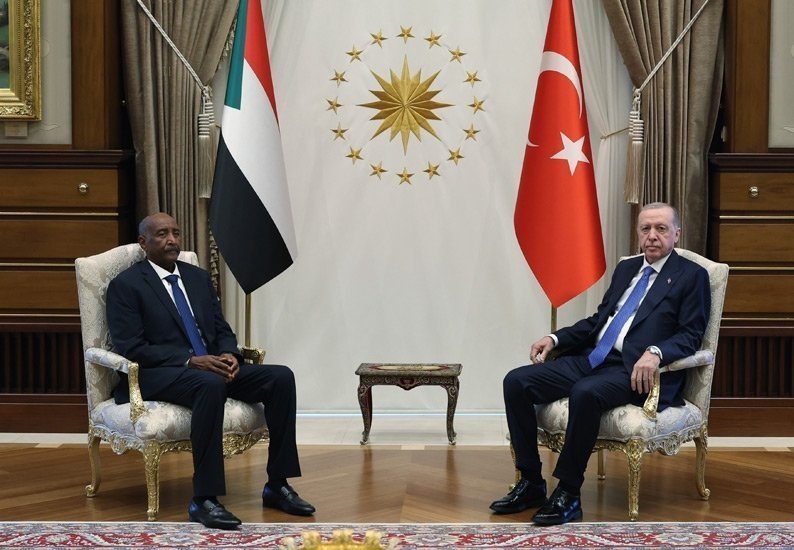
Türkiye's Diplomatic Leverage Key to Exposing Sudan's Proxy War Realities Beirut, Lebanon – June 23, 2026 — Amgad Fareid Eltayeb, political and foreign affairs adviser to the chairman of Sudan's Sovereignty Council, has emphasized that Türkiye's support for Sudan builds on longstanding historical bonds between the two nations, yet Khartoum anticipates deeper involvement from An
Türkiye's Diplomatic Leverage Key to Exposing Sudan's Proxy War Realities
Beirut, Lebanon – June 23, 2026 — Amgad Fareid Eltayeb, political and foreign affairs adviser to the chairman of Sudan's Sovereignty Council, has emphasized that Türkiye's support for Sudan builds on longstanding historical bonds between the two nations, yet Khartoum anticipates deeper involvement from Ankara. In remarks to Anadolu Agency, Eltayeb highlighted how Türkiye's extensive diplomatic network positions it uniquely to clarify the true character of the ongoing conflict and the existential threats confronting Sudan.
Historical Context of Sudan's Ongoing Crisis
The conflict in Sudan has now entered its fourth year, pitting the national army against the paramilitary Rapid Support Forces in a struggle that has produced the world's most severe humanitarian emergency. This situation traces its roots to the post-Bashir era, when internal political disputes intensified following the 2021 coup and erupted into full-scale war in April 2023. Eltayeb stressed that what began as domestic disagreements has transformed into a broader assault on Sudan's sovereignty.
The Rapid Support Forces, described by the adviser as a barbaric militia, stand accused of committing crimes without precedent in Sudan's modern history. These developments have shifted the narrative away from any portrayal of the fighting as a mere contest between two political factions or rival generals.
Türkiye's Unique Position in Regional Diplomacy
Eltayeb noted that Ankara's engagement reflects deep historical connections, yet he called for expanded Turkish involvement to address the crisis more effectively. Türkiye's growing outreach across Africa provides it with distinctive leverage in Middle East and African affairs, allowing it to illuminate the realities of the war for international audiences. This reach extends beyond traditional channels and aligns with broader Turkish interests in the Horn of Africa and surrounding regions.
By leveraging its diplomatic presence, Türkiye could help reframe global understanding of the conflict, moving beyond surface-level descriptions toward recognition of its proxy dimensions. Such efforts would complement existing Turkish support and respond to Sudanese expectations for more robust assistance.
Proxy Warfare and External Actor Involvement
The adviser argued that the war has evolved into a proxy conflict, with certain regional actors pursuing their own agendas through the Rapid Support Forces and aligned political groups. This dynamic connects directly to wider Gulf competition and struggles for influence in the Red Sea basin. Eltayeb warned that the Rapid Support Forces' operations threaten not only Sudan but also stability across the Horn of Africa, the Red Sea region, the Great Lakes area, and the Sahel.
He emphasized that the crisis stems from deliberate actions by criminals rather than any natural disaster, underscoring the need to identify those responsible before meaningful humanitarian relief can occur. Recognition of the Rapid Support Forces as a terrorist organization would represent a universal approach capable of restricting the maneuvering room available to external supporters and thereby shortening the conflict's duration.
International Community Shortcomings and Selective Standards
Eltayeb observed that the international community has not adequately heeded the voices of the Sudanese people. Warnings issued by the United Nations Security Council have proven insufficient to alter conditions on the ground. He further criticized the selective application of international law, which has allowed the situation to persist without decisive intervention.
Support for the Sudanese state against what Eltayeb termed the greatest existential threat in the country's history remains essential. Sudan's unity and territorial integrity carry implications far beyond its borders, affecting both neighboring regions and European stability through potential waves of displacement and statelessness.
Path Toward Stability and Democratic Transition
The Sudanese people seek to remain in their homeland, with returns already underway in areas where government forces have reestablished control. Eltayeb made clear that a genuine democratic transition can commence only after the restoration of state authority and the addressing of immediate security threats. This sequence prioritizes sovereignty before broader political reforms.
Regional implications of prolonged instability include heightened risks of spillover into adjacent territories, complicating security dynamics in the Horn of Africa and Red Sea geopolitics. Türkiye's potential to expose these interconnected realities could foster more coordinated international responses aligned with Sudanese priorities.
Broader Strategic Ramifications for the Region
The conflict's proxy character underscores how external involvement prolongs suffering and undermines state institutions. By highlighting these elements, Turkish diplomacy could contribute to narrowing opportunities for actors that benefit from continued fighting. Sudan's stability serves as a linchpin for wider African and Middle Eastern security architectures.
Ultimately, addressing the crisis requires confronting its root causes rather than managing symptoms alone. Eltayeb's statements reflect a consistent Sudanese position that external recognition of the Rapid Support Forces' role would mark a critical step toward resolution and regional de-escalation.
By Malik Hassan, Staff Writer
This article was produced with AI-assisted research and editorial support. Reporting is based on sources cited in the article.
What's Your Reaction?
 Like
0
Like
0
 Dislike
0
Dislike
0
 Love
0
Love
0
 Funny
0
Funny
0
 Wow
0
Wow
0
 Sad
0
Sad
0
 Angry
0
Angry
0

India/South Asia Correspondent at Global1.News. Analytical voice with a background in science and health journalism. Based in New Delhi, covering Indian politics, education, healthcare, technology, and policy. Breaks down complex data into clear, actionable reporting.










Comments (0)