
The Yazidi Doctor Giving Life Back to Women Who Survived Islamic State Captivity
The Day Sinjar Fell On 3 August 2014, Shireen was preparing for a high school examination inside her family home in Sinjar when Islamic State militants entered the town. The northern Iraqi community, home to a large Yazidi population, faced immediate and systematic targeting. Shireen, then 19, was taken directly from her house along with other family members in the chaos of the
The Day Sinjar Fell
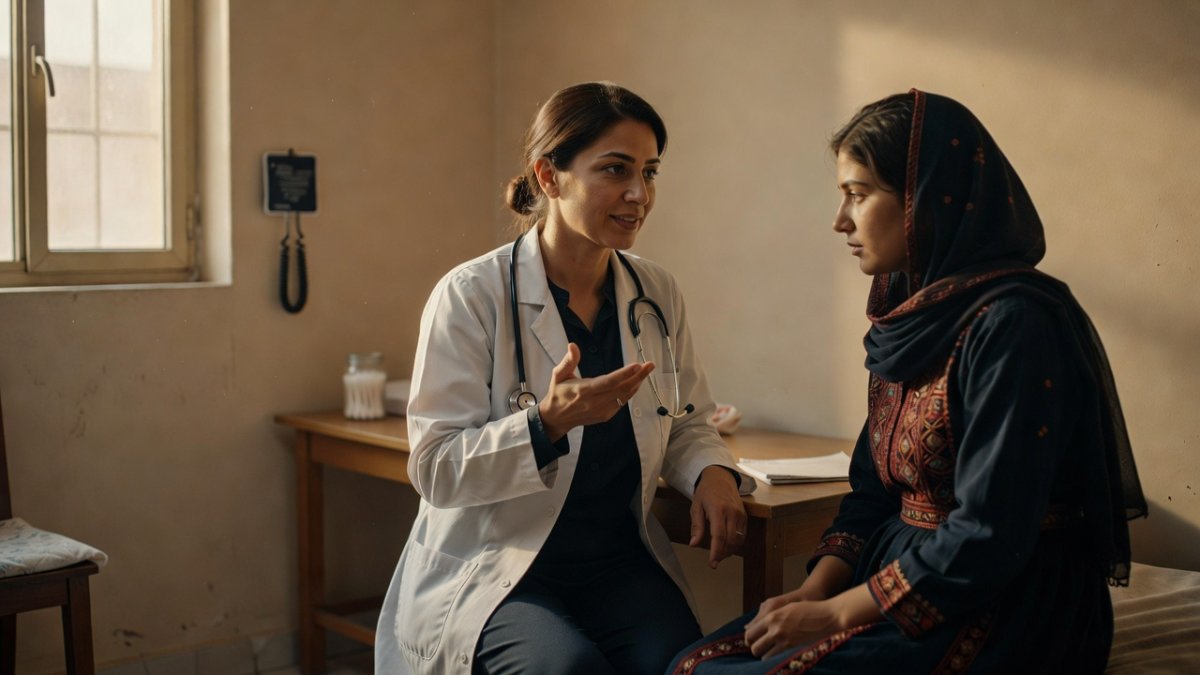
On 3 August 2014, Shireen was preparing for a high school examination inside her family home in Sinjar when Islamic State militants entered the town. The northern Iraqi community, home to a large Yazidi population, faced immediate and systematic targeting. Shireen, then 19, was taken directly from her house along with other family members in the chaos of the assault.
The events of that day marked the beginning of widespread abductions across Sinjar. Islamic State forces moved quickly through the area, separating families and transporting captives to locations including Tal Afar. Shireen was among those sold shortly afterward as a sex slave to a militant in that northwestern city. Her account reflects the sudden rupture experienced by thousands of Yazidi residents during the same period.
Forced Conversion and Religious Persecution
Shireen was told by her captors that the Yazidi reverence for Melek Tawwus, the Peacock Angel, equated to devil worship. Yazidi theology centers on belief in Yasdan and seven angels, with Melek Tawwus holding particular importance. Islamic State militants insisted on conversion to Islam as a condition of survival for those taken.
This pressure formed part of a broader pattern documented during the 2014 offensive. Captives faced repeated demands to renounce their faith while being held in various IS-controlled sites. Shireen later described how these assertions compounded the trauma of separation from her community and family traditions.
Life in Captivity Under Abu Omar
Three months after the initial sale, Shireen was transferred to Abu Omar, an Islamic State fighter in Mosul, becoming his third wife. She remained confined to his house for more than two years, prohibited from leaving even to access the garden. Two guards were stationed at the entrance at all times.
Daily routines consisted of cooking, cleaning, and household labor under constant surveillance. Abu Omar later brought two additional Yazidi girls to the residence, one aged six and the other ten. The younger child was assigned cleaning tasks, while Shireen endured repeated sexual violence. She recalled his statements of affection alongside the reality of assault, noting the profound contradiction that shaped her experience.
Family Losses and Lingering Uncertainty
During her captivity, Shireen learned that her uncle and several friends had been killed by Islamic State forces. Her father and one sister remain missing since the 2014 events in Sinjar. These absences continue to affect her sense of connection to her remaining relatives.
The scale of such losses across Yazidi families has been recorded by local authorities and international observers. Shireen’s account aligns with reports of targeted killings and disappearances that accompanied the occupation of Sinjar and surrounding areas. Many survivors returned to communities altered by these absences.
Release During the Mosul Campaign
In 2016, Iraqi forces liberated Shireen while conducting operations to retake Mosul. After more than two years of captivity, she returned to the Kurdistan region of Iraq. The transition brought immediate challenges, including depression and recurring nightmares tied to her experiences.
Reintegration required addressing both physical and psychological effects of prolonged confinement. Shireen sought care at facilities in Duhok, where medical staff documented the health consequences faced by women released from similar situations. The timing of her release coincided with intensified military efforts against remaining Islamic State positions in the city.
Dr. Nagham Nawzat and the Duhok Survivors Centre
Upon reaching Duhok, Shireen met Dr. Nagham Nawzat, a Yazidi gynaecologist born in Mosul in 1976. Nawzat graduated from Mosul Medical College in 2002 and later joined the Duhok Survivors Centre, the only facility in Iraq focused specifically on gender-based violence. The centre receives funding from the UN Population Fund.
Nawzat provided both medical examinations and sustained emotional support to survivors. Shireen credited this combination of care with her ability to continue after release. By July 2018, according to Hussein al-Qaidi, director of Kidnapped Affairs at the Kurdistan Regional Government in Duhok, 2,023 Yazidi women had been liberated from Islamic State areas. Nawzat had assisted an estimated 1,200 of them.
Recognition for Sustained Support Work
In March 2016, Dr. Nagham Nawzat received the International Women of Courage Award from then-US Secretary of State John Kerry. The recognition highlighted her role in delivering psychological support to women who survived captivity. At the time, she was 42 years old and had already treated hundreds of cases at the Duhok facility.
The award drew attention to the specialized services available in the Kurdistan region for survivors. Nawzat’s work addressed both immediate health needs and longer-term recovery, operating within a context where few comparable resources existed elsewhere in Iraq. Her background as a Yazidi physician from Mosul informed her approach to patient care.
The UN Designation of Genocide and Its Context
The United Nations has described the 2014 attacks on Yazidis as an ongoing genocide. Islamic State forces seized nearly one-third of Iraqi territory that year, resulting in at least 12,000 Yazidis killed or kidnapped. These figures encompass events across Sinjar and other northern districts.
Local governance structures in the Kurdistan region responded by establishing dedicated offices to track liberated individuals. The Directorate of Kidnapped Affairs in Duhok, led by figures such as Hussein al-Qaidi, maintains records of those released and coordinates with medical providers. This framework supports the documentation of cases like Shireen’s.
Continuing Recovery and Community Realities
Shireen’s return to daily life in the Kurdistan region illustrates the extended process faced by many survivors. Access to specialized care at the Duhok Survivors Centre has remained central to addressing both physical and mental health impacts. Without such services, she stated, her current situation would differ substantially.
The centre continues to receive women released from former Islamic State holdings. Nawzat’s involvement has extended across more than half of the documented liberations recorded by July 2018. These efforts occur alongside broader community efforts to rebuild in areas affected by the 2014 displacement and subsequent military operations.
By Fatima Al-Rashid, Staff WriterThis article was produced with AI-assisted research and editorial support. Reporting is based on sources cited in the article.
What's Your Reaction?
 Like
0
Like
0
 Dislike
0
Dislike
0
 Love
0
Love
0
 Funny
0
Funny
0
 Wow
0
Wow
0
 Sad
0
Sad
0
 Angry
0
Angry
0
Gulf/MENA Correspondent at Global1.News. Based in Doha, covering Gulf politics, energy markets, diplomacy, and development across the Middle East and North Africa. Tracks the economic transformation of the Gulf states.












Comments (0)