
Smotrich Seizes Control of Hebron's Ibrahimi Mosque, Ending Palestinian Authority
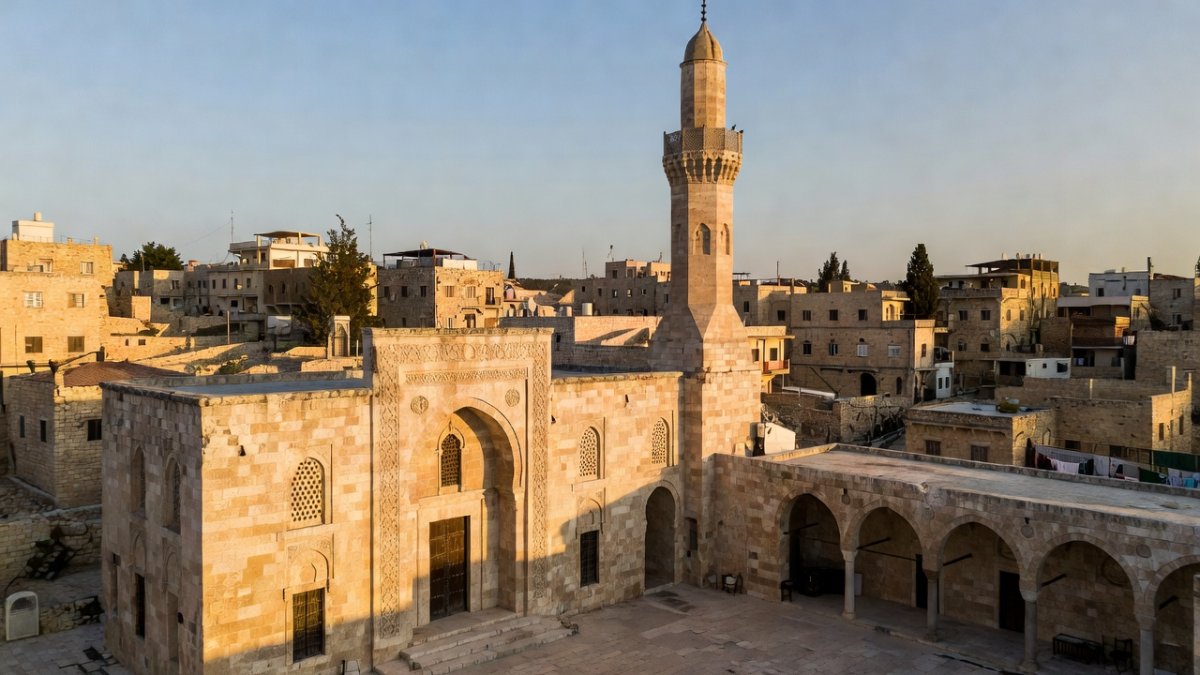
In a recent Middle East Eye report, Israeli Finance Minister Bezalel Smotrich announced that Israel will completely take over control of Hebron's Ibrahimi Mosque in the occupied Palestinian West Bank. The mosque, known to Jewish worshippers as the Cave of the Patriarchs, will no longer be administered by the city's Palestinian municipality but by an Israeli committee led by him
In a recent Middle East Eye report, Israeli Finance Minister Bezalel Smotrich announced that Israel will completely take over control of Hebron's Ibrahimi Mosque in the occupied Palestinian West Bank. The mosque, known to Jewish worshippers as the Cave of the Patriarchs, will no longer be administered by the city's Palestinian municipality but by an Israeli committee led by him. This administrative decision violates the Oslo Accords, as the minister himself pointed out, calling the move a historical correction that entrenches further Israeli settlement in Hebron.
Historical Context of Hebron and the Ibrahimi Mosque
Hebron stands as one of the oldest continuously inhabited cities in the world and holds profound religious significance for Muslims, Christians, and Jews. The Ibrahimi Mosque, built over the Cave of the Patriarchs, serves as a central place of worship for Palestinians in the city. For generations, local families have maintained the site through the Hebron Municipality, ensuring access for worshippers and preserving its role in daily religious life. The mosque's location in the Old City has made it a focal point of community gatherings and cultural heritage.
Since 1967, when Israeli forces occupied the West Bank, Hebron has experienced increasing restrictions. The Old City and surrounding areas now host settlement outposts that have altered the urban landscape. Palestinian residents navigate daily life amid these changes, with the mosque remaining a symbol of resilience. UNESCO inscribed the Hebron Old City and Ibrahimi Mosque on its World Heritage in Danger list in 2017, recognizing threats to its integrity from ongoing developments.
The presence of approximately 200 Israeli settler families in the H2 area alongside 40,000 Palestinians has created a divided urban environment. This coexistence occurs under military oversight, with the Ibrahimi Mosque area functioning as a restricted zone for many local inhabitants. Historical patterns of settlement expansion have gradually shifted control over key sites, affecting access and administration in ways that impact Palestinian heritage preservation efforts.
The 1994 massacre carried out by Baruch Goldstein, an Israeli settler who opened fire inside the Ibrahimi Mosque during Ramadan prayers killing 29 Palestinian worshippers, remains a defining trauma for the community. In the aftermath, the Israeli government imposed a segregation system that divided the mosque into Muslim and Jewish prayer sections, a partition that persists to this day and has fundamentally altered the character of the site as a place of worship.
The Hebron Protocol and Oslo Accords
The 1997 Hebron Protocol, signed by Israeli Prime Minister Benjamin Netanyahu and Palestinian leader Yasser Arafat, formed part of the Oslo Accords framework. It divided Hebron into H1, covering 80 percent of the city under Palestinian Authority control, and H2, encompassing the Old City and Ibrahimi Mosque under Israeli military authority. This agreement aimed to manage security arrangements while allowing limited Palestinian administration over municipal functions, including oversight of the mosque.
Under the protocol, the Palestinian Hebron Municipality retained responsibility for construction projects and daily management of the Ibrahimi Mosque. These provisions sought to balance competing claims while upholding international commitments. The arrangement persisted for nearly three decades despite periodic tensions, serving as a reference point for local governance in the divided city.
Smotrich described the protocol as "one of the most absurd clauses of the Oslo Accords" during his announcement. The decision to cancel these terms came after approval by Israel's Higher Planning Council, following a security cabinet decision on February 8, 2026. This step directly overrides the earlier agreements that had structured administration in Hebron for years. Hebron Mayor Yousef al-Jabari told Middle East Eye that the move sends a message that Smotrich "doesn't respect international agreements, the American administration, or even his own prime minister."
Details of Smotrich's Announcement
Israeli Finance Minister Bezalel Smotrich made the announcement during the inauguration of the Doreen settlement on Mount Hebron. He stated that the Hebron Agreements were cancelled, transferring authority over construction projects and the Ibrahimi Mosque from the Palestinian municipality to an Israeli committee under his leadership. Smotrich framed the move as "practical sovereignty" and "governance" rather than a mere planning adjustment.
The decision transfers control to a religious council associated with the Kiryat Arba settlement. This shift removes Palestinian municipal oversight from the mosque and surrounding properties. Smotrich presented the change as a correction to previous arrangements, emphasizing its role in solidifying Israeli administrative presence in the area. "For many years, one of the most absurd clauses of the Oslo Accords remained in place, when authorities related to the Jewish settlement in Hebron were dependent on Hebron's terror municipality," Smotrich said during the ceremony.
Implementation follows earlier restrictions, including a 15-day ban imposed by Israeli forces on mosque director Mu'taz Abu Sneineh and head custodian Hammam Abu Murkhiya earlier in 2026. The announcement aligns with intensified military activities in the region, including raids and deployments of military vehicles and bulldozers around the Old City. Far-right National Security Minister Itamar Ben Gvir marched through Hebron last week in a heavily secured convoy, signaling the government's coordinated approach to consolidating control.
Human Impact on Palestinian Residents
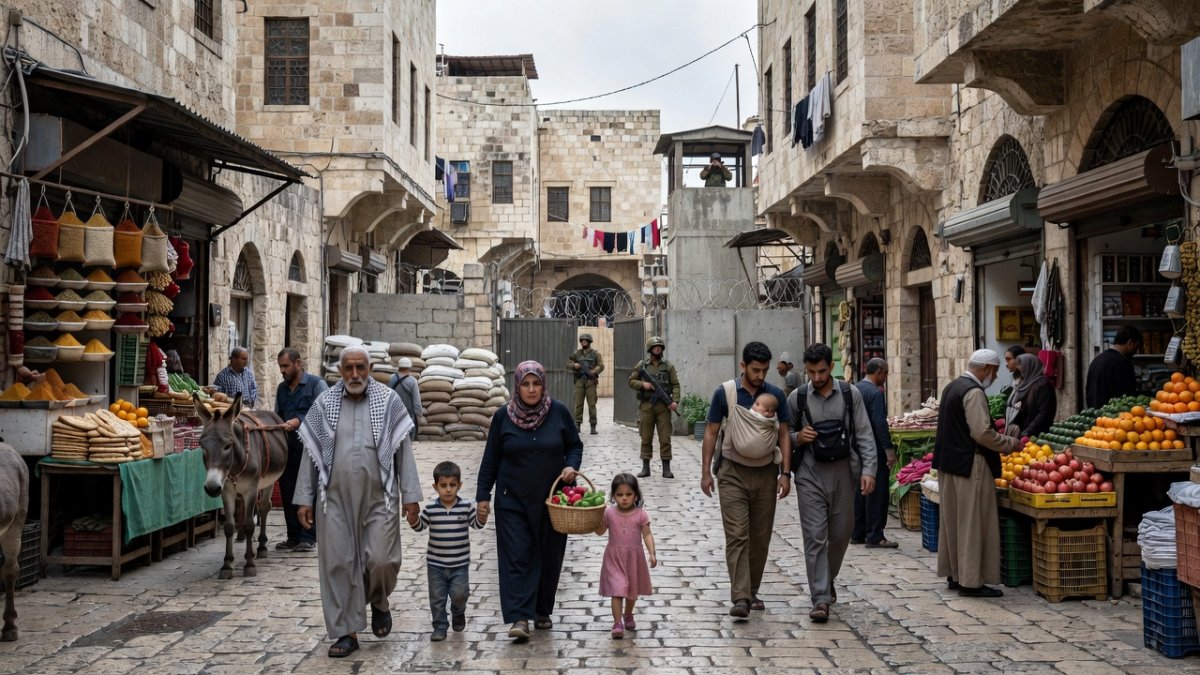
More than 7,000 Palestinians live in the area around the Ibrahimi Mosque alongside settlement outposts. Residents face over 120 checkpoints and gates that have restricted movement for more than 25 years. These barriers affect access to the mosque, schools, markets, and family homes, creating daily obstacles for families who have resided in the neighborhood for generations. The checkpoints have transformed the Old City into what residents describe as an open-air prison, where movement is constantly monitored and controlled.
Mayor Yousef al-Jabari described the decision as "a new settlement plan and an attempt to seize Hebron municipality properties and everything belonging to it in the Old City." He noted that the move signals disregard for international agreements and local governance structures. Palestinian families report increased difficulties in maintaining religious practices and community ties due to the layered restrictions already in place. Smotrich is "trying to use this measure for electioneering because he is approaching the Israeli elections," Jabari said.
Curfews and intensified raids have further disrupted routines in H2. Children navigate military vehicles on their way to school, while shopkeepers contend with limited customer access. The cumulative effect isolates residents from essential services and erodes the social fabric that has sustained the community through previous periods of tension. Local families who have lived in the Old City for centuries now face the prospect of complete administrative exclusion from the governance of their own religious and cultural sites.
Legal and International Implications
The announcement cancels the 1997 Hebron Protocol and contravenes elements of the Oslo Accords. Volker Turk, UN High Commissioner for Human Rights, stated in February 2026 that deepening Israeli control over Palestinian lands further violates international law. The transfer of planning and building powers in parts of Hebron, including the Ibrahimi Mosque, raises questions about compliance with existing treaties and international humanitarian law.
In April 2026, ICC prosecutors filed an application for an arrest warrant for Smotrich concerning forced displacement as a crime against humanity, the transfer of Israel's own population into occupied territory as a war crime, and persecution and apartheid as crimes against humanity. The Palestinian Authority condemned the move as a violation of signed agreements and international law, urging the international community and the United States to intervene. Abbas's office described the decision as "an extremely dangerous step" that undermines the two-state solution and broader regional stability.
Hebron's status as the largest city in the West Bank amplifies the broader legal ramifications. The decision affects municipal properties and religious sites previously managed under Palestinian authority, potentially setting precedents for other areas under similar administrative arrangements. The UNESCO World Heritage Committee, which added the site to its danger list in 2017, may now face renewed calls for protective measures.
Political Reactions from Palestinian and International Actors
Hamas and Islamic Jihad issued warnings against the occupation measures in al-Khalil, labeling the announcement an "unprecedented escalation." They called on Palestinians to resist the changes. The Palestinian Authority emphasized that the step disregards prior commitments and appealed for external diplomatic pressure to reverse the course. Hebron's mayor stated that the municipality would intensify outreach to UNESCO, the US administration, and other international partners to press for a halt to Israeli decisions concerning Hebron.
Far-right National Security Minister Itamar Ben Gvir marched through Hebron last week, highlighting internal Israeli political dynamics surrounding the decision. The move comes as Israel approaches legislative elections, with Smotrich positioning himself as a hardline figure on settlement expansion. Abbas's office reiterated calls for intervention, stressing the need to uphold agreements that have governed the region since the 1990s.
Regional observers note that the move occurs amid ongoing settlement activity across the occupied West Bank, which has accelerated significantly since the beginning of 2026. Palestinian officials continue to document the effects on local governance, while international bodies monitor compliance with humanitarian standards in the occupied territories. The European Union, which has a trade deal with Israel that a leaked document shows it could have suspended since 2017 over treaty violations, may face renewed pressure to respond.
Future Outlook and Potential Consequences
The transfer of authority to an Israeli committee signals further consolidation of control over key sites in Hebron. If implemented, this arrangement could expand settlement influence in the Old City and effectively eliminate the last remaining Palestinian municipal functions in H2. Local leaders anticipate continued challenges in preserving access to the Ibrahimi Mosque for worshippers and maintaining the site's character as a shared religious space.
Resistance calls from Palestinian factions suggest heightened tensions in the coming months. The decision's alignment with earlier security cabinet approvals indicates a structured approach to altering administrative realities on the ground. International responses may influence whether additional measures follow in other West Bank locations, particularly in areas where Palestinian and Israeli administrative responsibilities remain intertwined under existing agreements.
Residents of Hebron face an uncertain period as municipal properties transition under new oversight. The emphasis on practical sovereignty by Smotrich points to sustained policy direction, with potential ripple effects on daily life, religious practice, and community stability in the divided city. For the 40,000 Palestinians living in H2 alongside approximately 200 settler families, the cancellation of the Hebron Protocol represents not just a legal shift but a fundamental transformation of the environment in which they live, work, and worship.
By Fatima Al-Rashid, Staff Writer
This article was produced with AI-assisted research and editorial support. Reporting is based on sources cited in the article.
What's Your Reaction?
 Like
0
Like
0
 Dislike
0
Dislike
0
 Love
0
Love
0
 Funny
0
Funny
0
 Wow
0
Wow
0
 Sad
0
Sad
0
 Angry
0
Angry
0

Gulf/MENA Correspondent at Global1.News. Based in Doha, covering Gulf politics, energy markets, diplomacy, and development across the Middle East and North Africa. Tracks the economic transformation of the Gulf states.












Comments (0)